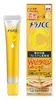
This brightening essence is formulated around Ascorbic Acid and Allantoin to brighten dull-looking skin and fade the look of dark spots.
This brightening moisturizer is formulated around Ascorbyl Glucoside and Dipotassium Glycyrrhizate to fade the look of dark spots and brighten dull-looking skin.

What's inside
What's inside
 Key Ingredients
Benefits
Concerns
Ingredients Side-by-side
Ascorbic Acid
Antioxidant






Pyridoxine Hcl
Skin ConditioningAllantoin
Skin Conditioning



O-Cymen-5-Ol
Antimicrobial
3-O-Ethyl Ascorbic Acid
Skin Conditioning
Ascorbyl Glucoside
Antioxidant
Ascorbyl Tetraisopalmitate
Antioxidant

Tocopherol
Antioxidant
Alpinia Katsumadai Seed Extract
Skin ConditioningCitrus Limon Fruit Extract
Masking
Citrus Grandis Fruit Extract
Astringent
Serine
Masking
Butylene Glycol
Humectant
Propanediol
Solvent
Isopentyldiol
Humectant
Propylene Glycol
Humectant
PEG-8
HumectantAlcohol Denat.
Antimicrobial

Poe/Pop Decyl Tetradecyl Ether
Sodium Metabisulfite
Antioxidant
EDTA
ChelatingParfum
Masking
Ascorbic Acid, Pyridoxine Hcl, Allantoin, O-Cymen-5-Ol, 3-O-Ethyl Ascorbic Acid, Ascorbyl Glucoside, Ascorbyl Tetraisopalmitate, Tocopherol, Alpinia Katsumadai Seed Extract, Citrus Limon Fruit Extract, Citrus Grandis Fruit Extract, Serine, Butylene Glycol, Propanediol, Isopentyldiol, Propylene Glycol, PEG-8, Alcohol Denat., Poe/Pop Decyl Tetradecyl Ether, Sodium Metabisulfite, EDTA, Parfum
Ascorbyl Glucoside
Antioxidant
Tocopheryl Acetate
Antioxidant
Dipotassium Glycyrrhizate
Humectant
O-Cymen-5-Ol
Antimicrobial
Salicylic Acid
Masking


Cajanus Cajan Leaf Extract
Skin ConditioningOenothera Biennis Flower Extract
AstringentSimmondsia Chinensis Seed Oil
Emollient
Lactic Acid
Buffering
Hydrolyzed Roe Extract
HumectantRosa Rubiginosa Seed Oil
Emollient
Disodium EDTA
ChelatingHydroxypropyl Methylcellulose
Emulsion StabilisingCarbomer
Emulsion StabilisingPotassium Hydroxide
BufferingCetearyl Alcohol
Emollient



Hydrogenated Castor Oil
Emollient
Glyceryl Stearate
Emollient
Pentylene Glycol
Skin Conditioning
Glycerin
Humectant
Paraffinum Liquidum
Emollient
Triethylhexanoin
MaskingCaprylic Acid
CleansingButylene Glycol
Humectant
Ascorbyl Glucoside, Tocopheryl Acetate, Dipotassium Glycyrrhizate, O-Cymen-5-Ol, Salicylic Acid, Cajanus Cajan Leaf Extract, Oenothera Biennis Flower Extract, Simmondsia Chinensis Seed Oil, Lactic Acid, Hydrolyzed Roe Extract, Rosa Rubiginosa Seed Oil, Disodium EDTA, Hydroxypropyl Methylcellulose, Carbomer, Potassium Hydroxide, Cetearyl Alcohol, Hydrogenated Castor Oil, Glyceryl Stearate, Pentylene Glycol, Glycerin, Paraffinum Liquidum, Triethylhexanoin, Caprylic Acid, Butylene Glycol
Reviews
Ingredients Explained
These ingredients are found in both products.
Ingredients higher up in an ingredient list are typically present in a larger amount.
Ascorbyl Glucoside (AA-2G) is one of the most stable vitamin C derivatives out there.
It's made by attaching a glucose molecule to ascorbic acid; this glucose "cap" shields the vitamin C from air, light, heat, and metal ions that normally cause pure ascorbic acid to oxidize.
Once on your skin, the enzyme alpha-glucosidase snips off the glucose and gradually releases active ascorbic acid right where it's needed. Basically, it behaves like a slow-release pro-vitamin C with less of a stinging that high-strength ascorbic acid can cause.
The research supports the classic vitamin C benefits as well. In lab and human studies, AA-2G slowed down the skin's production of melanin (the pigment behind dark spots) and helped shield skin cells against sun damage better than ascorbyl phosphate.
These studies also showed AA-2G released vitamin C over a longer period.
A frequently cited manufacturer trial found that a 2% AA-2G face cream significantly improved wrinkle depth and skin roughness after 45 days.
And in 2009, a clinical trial showed it meaningfully lightened dark patches on the gums compared to a placebo.
There's also collagen-synthesis support (since vitamin C is a required cofactor for that) and an antioxidant effect too.
Typical usage is usually between 0.5-5% and most studies/products land around 2%.
AA-2G performs best when formulated at a mildly acidic pH (~5-7) which is much gentler than the pH that pure vitamin C demands (~2.5-3.5).
Just one thing worth knowing: the in-skin conversation rate is only about 55-60% by weight. So a 5% AA-2G product delivers roughly 2.75-3% of actual active vitamin C. On top of that, skin absorption is relatively low because the ingredient is water-soluble.
Learn more about Ascorbyl GlucosideButylene Glycol (or BG) is used within cosmetic products for a few different reasons:
Overall, Butylene Glycol is a safe and well-rounded ingredient that works well with other ingredients.
Though this ingredient works well with most skin types, some people with sensitive skin may experience a reaction such as allergic rashes, closed comedones, or itchiness.
Learn more about Butylene GlycolThis ingredient is more commonly known as IPMP or Isopropyl Methylphenol. It is a preservative and has antimicrobial properties.
According to the EPA, this ingredient is allowed for use in cleansers, creams, powders, bath products, toothpaste, perfume, and more.


