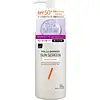
This chemical sunscreen covers the full UV range and blocks ~98% of UVB at SPF 50.

What's inside
What's inside
 Key Ingredients
Benefits
Concerns
Ingredients Side-by-side
Water
Skin ConditioningEthylhexyl Methoxycinnamate
UV Absorber


Alcohol
Antimicrobial



Dimethicone
Emollient

Silica
Abrasive


Bis-Ethylhexyloxyphenol Methoxyphenyl Triazine
UV Absorber
Dipropylene Glycol
HumectantDiethylamino Hydroxybenzoyl Hexyl Benzoate
UV Filter
Glyceryl Ethylhexanoate/Stearate/Adipate
EmollientAcrylates Copolymer
Glutathione



Scutellaria Baicalensis Root Extract
Astringent
Alteromonas Ferment Extract
Skin Conditioning
Allantoin
Skin Conditioning

Dipotassium Glycyrrhizate
Humectant
Succinoyl Atelocollagen
Skin Conditioning
Sodium Hyaluronate
Humectant
Ceramide Ng
Skin Conditioning
Ceramide NP
Skin Conditioning
Potassium Cetyl Phosphate
EmulsifyingNeopentyl Glycol Diethylhexanoate
Emollient
Carbomer
Emulsion StabilisingPotassium Hydroxide
BufferingBehenyl Alcohol
Emollient
Vp/Eicosene Copolymer
PEG/PPG/Polybutylene Glycol-8/5/3 Glycerin
HumectantOctocrylene
UV Absorber
Ethylhexyl Triazone
UV Absorber
Tocopherol
Antioxidant

Butylene Glycol
Humectant
Parfum
Masking

Phenoxyethanol
Preservative
Methylparaben
Preservative
Water, Ethylhexyl Methoxycinnamate, Alcohol, Dimethicone, Silica, Bis-Ethylhexyloxyphenol Methoxyphenyl Triazine, Dipropylene Glycol, Diethylamino Hydroxybenzoyl Hexyl Benzoate, Glyceryl Ethylhexanoate/Stearate/Adipate, Acrylates Copolymer, Glutathione, Scutellaria Baicalensis Root Extract, Alteromonas Ferment Extract, Allantoin, Dipotassium Glycyrrhizate, Succinoyl Atelocollagen, Sodium Hyaluronate, Ceramide Ng, Ceramide NP, Potassium Cetyl Phosphate, Neopentyl Glycol Diethylhexanoate, Carbomer, Potassium Hydroxide, Behenyl Alcohol, Vp/Eicosene Copolymer, PEG/PPG/Polybutylene Glycol-8/5/3 Glycerin, Octocrylene, Ethylhexyl Triazone, Tocopherol, Butylene Glycol, Parfum, Phenoxyethanol, Methylparaben
Water
Skin ConditioningDipropylene Glycol
HumectantParaffinum Liquidum
Emollient

Sodium Ascorbate
Antioxidant

3-Glyceryl Ascorbate
Antioxidant
Galactomyces Ferment Filtrate
Humectant
Hydrolyzed Sweet Almond Protein
Skin ConditioningHydrolyzed Rice Protein
Skin ConditioningHydrolyzed Soy Protein
Humectant
Prunus Amygdalus Dulcis Oil
Skin Conditioning
Oryza Sativa Starch
AbsorbentLactobacillus/Soymilk Ferment Filtrate
Skin ConditioningRetinol
Skin Conditioning

Steareth-13
EmulsifyingSorbitan Sesquioleate
Emulsifying
Carbomer
Emulsion StabilisingNiacinamide
Smoothing
Phenoxyethanol
Preservative
Parfum
Masking
Potassium Hydroxide
BufferingMethylparaben
Preservative
Hydroxyethylcellulose
Emulsion StabilisingGlycerin
Humectant
Caprylic/Capric Triglyceride
Masking
Butylene Glycol
Humectant
Tocopherol
Antioxidant
PEG-40 Hydrogenated Castor Oil
Emulsifying
Water, Dipropylene Glycol, Paraffinum Liquidum, Sodium Ascorbate, 3-Glyceryl Ascorbate, Galactomyces Ferment Filtrate, Hydrolyzed Sweet Almond Protein, Hydrolyzed Rice Protein, Hydrolyzed Soy Protein, Prunus Amygdalus Dulcis Oil, Oryza Sativa Starch, Lactobacillus/Soymilk Ferment Filtrate, Retinol, Steareth-13, Sorbitan Sesquioleate, Carbomer, Niacinamide, Phenoxyethanol, Parfum, Potassium Hydroxide, Methylparaben, Hydroxyethylcellulose, Glycerin, Caprylic/Capric Triglyceride, Butylene Glycol, Tocopherol, PEG-40 Hydrogenated Castor Oil
Ingredients Explained
These ingredients are found in both products.
Ingredients higher up in an ingredient list are typically present in a larger amount.
Butylene Glycol (or BG) is used within cosmetic products for a few different reasons:
Overall, Butylene Glycol is a safe and well-rounded ingredient that works well with other ingredients.
Though this ingredient works well with most skin types, some people with sensitive skin may experience a reaction such as allergic rashes, closed comedones, or itchiness.
Learn more about Butylene GlycolCarbomer is a synthetic thickening and gelling agent. It's basically the ingredient that gives a lot of serums, gels, creams, and sunscreens their smooth, non-sticky texture.
Although legally permitted at very high levels, carbomers are normally used at concentrations below 1%.
It also needs to be neutralized to actually thicken, and because it is a large molecule, it doesn't really penetrate the skin barrier.
Allergy-wise, the risk is very low. Clinical studies show carbomers have low potential for skin irritation/sensitization even at concentrations up to 100%.
A 2024 UK study patch-tested 1,302 patients and found true allergy to the parent group of carbomer to be rare with no confirmed relevant reactions.
Learn more about CarbomerDipropylene Glycol is a synthetically created humectant, stabilizer, and solvent.
This ingredient helps:
Dipropylene glycol is technically an alcohol, but it belongs to the glycol family (often considered part of the ‘good’ alcohols). This means it is hydrating and gentle on skin unlike drying solvent alcohols like denatured alcohol.
As a masking agent, Dipropylene Glycol can be used to cover the smell of other ingredients. However, it does not have a scent.
Studies show Dipropylene Glycol is considered safe to use in skincare.
Learn more about Dipropylene GlycolMethylparaben is a synthetic preservative and one of the most widely used in the world. It has a simple, but important job: prevent your products from going bad by stopping bacteria, yeast, and mold from growing.
Typical use levels are low, often 0.1-0.3%.
This is also one of the most heavily studied preservatives out there and major regulatory bodies have repeatedly given it the green light.
In 2023, the EU's Scientific Committee on Consumer Safety (SCCS) confirmed that this ingredient is safe up to 0.4% on its own, of up to 0.8% when mixed with other paraben esters.
Here's the science behind the noise behind parabens/hormones as well:
Methylparaben shows very weak estrogen-like activity in vitro tests (more than 1,000x weaker than your body's own estradiol). In vivo (live-organism) studies don't support a meaningful endocrine-disrupting effect either.
You get a stronger estrogenic effect from eating tofu, actually.
It's also a low sensitizer and allergic reactions are uncommon; they usually happen on damage or broken skin.
There is a caveat: France has proposed to formally re-examine its endocrine classification in 2025 so the regulatory conversation isn't fully closed as of yet.
But as it stands today, this ingredient is considered safe at permitted levels.
Learn more about MethylparabenParfum is a catch-all term for an ingredient or more that is used to give a scent to products.
Also called "fragrance", this ingredient can be a blend of hundreds of chemicals or plant oils. This means every product with "fragrance" or "parfum" in the ingredients list is a different mixture.
For instance, Habanolide is a proprietary trade name for a specific aroma chemical. When used as a fragrance ingredient in cosmetics, most aroma chemicals fall under the broad labeling category of “FRAGRANCE” or “PARFUM” according to EU and US regulations.
The term 'parfum' or 'fragrance' is not regulated in many countries. In many cases, it is up to the brand to define this term.
For instance, many brands choose to label themselves as "fragrance-free" because they are not using synthetic fragrances. However, their products may still contain ingredients such as essential oils that are considered a fragrance by INCI standards.
One example is Calendula flower extract. Calendula is an essential oil that still imparts a scent or 'fragrance'.
Depending on the blend, the ingredients in the mixture can cause allergies and sensitivities on the skin. Some ingredients that are known EU allergens include linalool and citronellol.
Parfum can also be used to mask or cover an unpleasant scent.
The bottom line is: not all fragrances/parfum/ingredients are created equally. If you are worried about fragrances, we recommend taking a closer look at an ingredient. And of course, we always recommend speaking with a professional.
Learn more about ParfumPhenoxyethanol is one of the most widely used preservatives in skincare (and for good reason!).
It has a large spectrum of antimicrobial activity and especially effective bacteria, yeast, and mold while only having a weak effect on your skin's natural microbiome.
On a cellular level, it disrupts the cell membranes of microbes by poking holes that make the cell leak. This shuts down the chemical reactions the microbe needs to make energy so it can no longer survive.
Another perk of this ingredient is that it stays functional across a wide pH range (3-10).
You'll often see it paired with boosters like Ethylhexylglycerin; one study showed that a 1:9 ratio of Ethylhexylglycerin to Phenoxyethanol damages bacterial membranes as effectively as doubling the Phenoxyethanol concentration on its own.
Typical use concentrations range from 0.3-1% depending on the formula, and this ingredient is capped at 1% int the EU.
Safety-wise, the fear mongering does not hold up to the evidence. The EU's Scientific Committee on Consumer Safety and FDA consider it safe as a preservative at up to 1%, including for children of all ages.
Adverse systemic effects only showed up in animal studies at exposures roughly 200x higher than what people get from cosmetics. And despite its very widespread use, this ingredient is a rare sensitizer and allergic reactions are uncommon.
Learn more about PhenoxyethanolPotassium Hydroxide (also known as potash) is a strong alkaline ingredient that does one job: it nudges a product's pH up so the whole formula lands in a skin-friendly range.
It's also the base that turns oils into liquid soap during the soap making process.
An expert safety panel reviewed it and found it safe when formulations are made to be non-irritating.
As a pH adjuster, it's typically used well under 1% though regulatory caps go much higher: 5% in nail cuticle removers and 2-4.5% in hair straighteners.
Though there is some concern for irritation from raw or high pH material, a well-balanced formula will be a non-issue for the vast majority of people.
Learn more about Potassium HydroxideTocopherol is a fat-soluble antioxidant known as Vitamin E.
You'll find this ingredient in the vast majority of skincare (for good reason). It works to neutralize free radicals, or unstable molecules generated by UV exposure, pollution, and other environmental stressors, before they can cause oxidative damage to your skin cells.
Topically applied tocopherol has been shown to protect against UV damage by ramping up the skin's own natural defense enzymes.
It also acts as a skin conditioning agent; some studies show that regular topical use can improve the skin's water-binding capacity over 2-4 weeks.
This ingredient is especially loved for being a team player. When combined with Vitamin C, the photoprotective effect of both ingredients roughly doubles and the combo also helps reduce UV-induced DNA damage.
This ingredient has some brightening potential but it's more of a prevention ingredient than spot-fader. Cell studies show it can slow down melanin production but it's worth noting that it's not the most powerful brightener out there.
In formulations, it also serves as a stabilizer that helps protect other oxidation-prone ingredients from degrading.
Concentrations usually range from 0.1-1% in most leave-on products.
Learn more about TocopherolWater. It's the most common cosmetic ingredient of all. You'll usually see it at the top of ingredient lists, meaning that it makes up the largest part of the product.
So why is it so popular? Water most often acts as a solvent - this means that it helps dissolve other ingredients into the formulation.
You'll also recognize water as that liquid we all need to stay alive. If you see this, drink a glass of water. Remember to stay hydrated!
Learn more about Water

