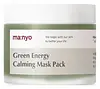
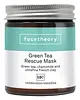
This wash off mask is made with Kaolin and Camellia Sinensis Leaf Extract for a rinse-off oil-control boost.
This wash off mask is made with Kaolin and Camellia Sinensis Leaf Extract for a rinse-off oil-control boost.


What's inside
What's inside
 Key Ingredients
Benefits
Concerns
Ingredients Side-by-side
Camellia Sinensis Leaf Water
Masking
Kaolin
Abrasive



Glycerin
Humectant


Cetearyl Olivate


Sorbitan Olivate
Emulsifying
Camellia Sinensis Leaf Extract
Antimicrobial




Artemisia Vulgaris Extract
Skin Conditioning
Phaseolus Radiatus Seed Extract
Skin ConditioningCentella Asiatica Extract
Cleansing
Camellia Sinensis Leaf Powder
Isoamyl Laurate
Emollient
Caprylic/Capric Triglyceride
Masking
Titanium Dioxide
Cosmetic Colorant

Melaleuca Alternifolia Leaf Water
Antimicrobial
Rosa Canina Fruit Extract
Astringent
Chlorella Vulgaris Powder
Skin ConditioningMaltodextrin
Absorbent
Tagetes Erecta Flower Extract
Perfuming
Caramel
Cosmetic ColorantZanthoxylum Piperitum Fruit Extract
Skin ConditioningPulsatilla Koreana Extract
Skin ConditioningUsnea Barbata Extract
Spirodela Polyrhiza Extract
Skin ConditioningChromium Oxide Greens
Squalane
Emollient
Aloe Barbadensis Leaf Juice
Skin Conditioning
Mentha Piperita Oil
Masking





Glyceryl Caprylate
Emollient1,2-Hexanediol
Skin Conditioning
Butylene Glycol
Humectant
Glycyrrhiza Glabra Root Extract
Bleaching
Persea Gratissima Fruit Extract
EmollientMacadamia Integrifolia Seed Oil
Skin Conditioning
Camellia Sinensis Leaf Water, Kaolin, Glycerin, Cetearyl Olivate, Sorbitan Olivate, Camellia Sinensis Leaf Extract, Artemisia Vulgaris Extract, Phaseolus Radiatus Seed Extract, Centella Asiatica Extract, Camellia Sinensis Leaf Powder, Isoamyl Laurate, Caprylic/Capric Triglyceride, Titanium Dioxide, Melaleuca Alternifolia Leaf Water, Rosa Canina Fruit Extract, Chlorella Vulgaris Powder, Maltodextrin, Tagetes Erecta Flower Extract, Caramel, Zanthoxylum Piperitum Fruit Extract, Pulsatilla Koreana Extract, Usnea Barbata Extract, Spirodela Polyrhiza Extract, Chromium Oxide Greens, Squalane, Aloe Barbadensis Leaf Juice, Mentha Piperita Oil, Glyceryl Caprylate, 1,2-Hexanediol, Butylene Glycol, Glycyrrhiza Glabra Root Extract, Persea Gratissima Fruit Extract, Macadamia Integrifolia Seed Oil
Water
Skin ConditioningKaolin
Abrasive
Glycerin
Humectant
Butyrospermum Parkii Butter
Skin Conditioning

Illite
Abrasive
Cetyl Alcohol
Emollient
Camellia Sinensis Leaf Extract
Antimicrobial
Argania Spinosa Kernel Oil
Emollient
Glyceryl Stearate Se
Emulsifying
Persea Gratissima Oil
Skin Conditioning
Simmondsia Chinensis Seed Oil
Emollient
Stearic Acid
Cleansing
Oryza Sativa Bran Oil
Emollient
Panthenol
Skin Conditioning
Tocopherol
Antioxidant
Sodium Ascorbyl Phosphate
Antioxidant
Sodium Levulinate
Skin ConditioningSodium Anisate
AntimicrobialGlyceryl Caprylate
EmollientLactic Acid
Buffering
Xanthan Gum
EmulsifyingChamomilla Recutita Flower Extract
Masking
Water, Kaolin, Glycerin, Butyrospermum Parkii Butter, Illite, Cetyl Alcohol, Camellia Sinensis Leaf Extract, Argania Spinosa Kernel Oil, Glyceryl Stearate Se, Persea Gratissima Oil, Simmondsia Chinensis Seed Oil, Stearic Acid, Oryza Sativa Bran Oil, Panthenol, Tocopherol, Sodium Ascorbyl Phosphate, Sodium Levulinate, Sodium Anisate, Glyceryl Caprylate, Lactic Acid, Xanthan Gum, Chamomilla Recutita Flower Extract
Ingredients Explained
These ingredients are found in both products.
Ingredients higher up in an ingredient list are typically present in a larger amount.
Camellia Sinensis Leaf Extract (tea extract) is one of the most well-researched plant extracts in skincare with an impressive resume.
Black tea, green tea, and oolong tea are all harvested from the Camellia Sinensis plant.
Studies show green tea extract and its catechins (like epigallocatechin gallate (EGCG)) help your skin cells product energy more efficiently and reducing the number of free-radicals that can damage your skin from the inside.
In lab-grown skin models, this translated to younger, healthier, and stronger skin.
There's also good sun protection data; researchers saw less DNA damage and redness on human skin when green tea was applied before UVB exposure. And the more they applied, the better the protection.
Needless to say, this ingredient shouldn't replace your sunscreen. But it is a great supportive ingredient that you can already find in many sunscreens and antioxidant serums.
A 2009 study found a 2% green tea lotion was effective for mild-to-moderate acne thanks to its anti-inflammatory and mild antimicrobial activity.
The quality of the extract matters a lot here:
Good extracts contain 50-90% catechins while lower quality ones are mostly there for marketing. We recommend reaching out to the brand if you have questions about the quality or source of their ingredients.
Human Repeated Insult Patch Testing showed no irritation or sensitization at use concentrations (0.86% in leave-on products and up to 30% as leaf water).
Learn more about Camellia Sinensis Leaf ExtractGlycerin (or glycerol) is a compound naturally found in your skin. It's a powerhouse humectant that pulls water into the stratum corneum.
Topically, glycerin does several things at once:
Your skin makes glycerin on its own (mostly from sebaceous oil breakdown) and shuttles it to your outermost layer of skin, or your epidermis, via aquaporin-3.
Aquaporin-3 is a transporter that is essential for normal skin hydration, elasticity, and repair. Interestingly, mice lacking in AQP3 have dry and less elastic skin that can be fully corrected with glycerin.
This ingredient is non-irritating, plays well with almost every ingredient, and works across all skin types. Typical use is anywhere between 3-10% but can go up to 79% in some leave-on products.
Just know very high concentrations (>40%) can feel tacky in low humidity.
Glycerin is the name for this ingredient in American English. British English uses Glycerol/Glycerine.
Learn more about GlycerinGlyceryl Caprylate comes from glycerin and caprylic acid. It is an emollient, co-emulsifier, and preservative booster.
Its short C8 fatty acid chain makes it behave differently from its longer-chain emollient cousins like Glyceryl Stearate. It feels more lightweight, fast-absorbing, and silky instead of rich and waxy.
As a co-emulsifier, its "head" and "tail" sit at the oil-water interface. But overall, the short C8 tail and not being water soluble means it doesn't really have the muscle to emulsify a formula on its own. That's why you'll often see it paired with a primary emulsifier like Cetearyl Glucoside.
Interestingly, Glyceryl Caprylate acts as a preservative booster. This is because its fatty-acid backbone disrupts microbial lipid membranes. It shows excellent activity against bacteria and yeast but is weaker against mold.
Typical concentrations range from 0.5-1% and this ingredient is generally non-irritating.
Because this ingredient has a C8 fatty acid chain, it is outside the range that the Malassezia yeast metabolizes (making it fungal acne safe).
Learn more about Glyceryl CaprylateKaolin is a clay. It is used for oil control and to help minimize pores. Like other clays, kaolin has the ability to absorb excess sebum or oil. This can help clean out pores and mattify the skin.
Some types of kaolin may have exfoliating properties. When water is added to kaolin, it becomes a paste with small abrasive particles.
Most kaolin is a white color, but may be pink/orange/red depending on where it comes from.
The name 'kaolin' comes from a Chinese village named 'Gaoling'. Kaolin clay comes from rocks rich in kaolinite. Kaolinite, the mineral, has a silicate layered structure. Kaolinite is formed from chemical weathering of aluminum siilicate minerals.
Besides skincare, kaolin is commonly used to make glossy paper, in ceramics, toothpaste, and as medicine to soothe stomach issues.
Learn more about Kaolin

