Luxe Organix Aloe Vera And Snail Soothing Gel Versus Luxe Organix Hyaluron Soothing Gel Youthful White
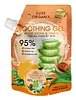
This calming moisturizer is formulated around Aloe Barbadensis Leaf Juice and Snail Secretion Filtrate to calm redness and hydrate skin.
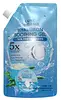
This brightening moisturizer is formulated around Panthenol and Sodium Hyaluronate to brighten dull-looking skin and hydrate skin.

What's inside
What's inside
 Key Ingredients
Benefits
Concerns
Ingredients Side-by-side
Aloe Barbadensis Leaf Juice
Skin Conditioning


Carbomer
Emulsion StabilisingSnail Secretion Filtrate
Skin Conditioning


PEG-60 Hydrogenated Castor Oil
Emulsifying


Triethanolamine
BufferingMethylpropanediol
SolventCollagen
Moisturising
Arbutin
Antioxidant



Phenoxyethanol
Preservative
Dipropylene Glycol
HumectantSodium Hyaluronate
Humectant
Glycerin
Humectant
Disodium EDTA
ChelatingAllantoin
Skin Conditioning
Chlorphenesin
Antimicrobial
Parfum
Masking



Centella Asiatica Extract
Cleansing
Portulaca Oleracea Extract
Skin Conditioning
Aloe Barbadensis Leaf Juice, Carbomer, Snail Secretion Filtrate, PEG-60 Hydrogenated Castor Oil, Triethanolamine, Methylpropanediol, Collagen, Arbutin, Phenoxyethanol, Dipropylene Glycol, Sodium Hyaluronate, Glycerin, Disodium EDTA, Allantoin, Chlorphenesin, Parfum, Centella Asiatica Extract, Portulaca Oleracea Extract
Water
Skin ConditioningDipropylene Glycol
HumectantButylene Glycol
Humectant
Glyceryl Stearate
Emollient
Disiloxane
Skin Conditioning
Sorbitan Olivate
Emulsifying
Cetyl Ethylhexanoate
EmollientPEG-100 Stearate
Surfactant
Arginine
Masking
Carbomer
Emulsion StabilisingCaprylyl Glycol
Emollient
Pentylene Glycol
Skin Conditioning
Hydroxyacetophenone
Antioxidant
Glycerin
Humectant
Panthenol
Skin Conditioning
Dehydroxanthan Gum
Emulsion StabilisingAdenosine
Skin Conditioning
Sodium Hyaluronate
Humectant
Sodium Hyaluronate Crosspolymer
Humectant
Hydrolyzed Hyaluronic Acid
Humectant
Hyaluronic Acid
Humectant
Hydrolyzed Sodium Hyaluronate
Skin Conditioning
Pantothenic Acid
Skin ConditioningCeramide NP
Skin Conditioning
Lactobacillus/Soymilk Ferment Filtrate
Skin ConditioningLactobacillus/Rye Flour Ferment
Skin ConditioningBacillus/Soybean Ferment Extract
Skin ConditioningPropanediol
Solvent
Thiamine Hcl
MaskingRiboflavin
Cosmetic ColorantNiacinamide
Smoothing



Pyridoxine
Skin ConditioningFolic Acid
Skin ConditioningCyanocobalamin
Skin ConditioningOctyldodecanol
Emollient
Hydrogenated Lecithin
Emulsifying
Disodium EDTA
ChelatingEthylhexylglycerin
Skin Conditioning1,2-Hexanediol
Skin Conditioning
Parfum
Masking
Citronellol
Perfuming
Geraniol
Perfuming
Water, Dipropylene Glycol, Butylene Glycol, Glyceryl Stearate, Disiloxane, Sorbitan Olivate, Cetyl Ethylhexanoate, PEG-100 Stearate, Arginine, Carbomer, Caprylyl Glycol, Pentylene Glycol, Hydroxyacetophenone, Glycerin, Panthenol, Dehydroxanthan Gum, Adenosine, Sodium Hyaluronate, Sodium Hyaluronate Crosspolymer, Hydrolyzed Hyaluronic Acid, Hyaluronic Acid, Hydrolyzed Sodium Hyaluronate, Pantothenic Acid, Ceramide NP, Lactobacillus/Soymilk Ferment Filtrate, Lactobacillus/Rye Flour Ferment, Bacillus/Soybean Ferment Extract, Propanediol, Thiamine Hcl, Riboflavin, Niacinamide, Pyridoxine, Folic Acid, Cyanocobalamin, Octyldodecanol, Hydrogenated Lecithin, Disodium EDTA, Ethylhexylglycerin, 1,2-Hexanediol, Parfum, Citronellol, Geraniol
Reviews
Ingredients Explained
These ingredients are found in both products.
Ingredients higher up in an ingredient list are typically present in a larger amount.
Carbomer is a synthetic thickening and gelling agent. It's basically the ingredient that gives a lot of serums, gels, creams, and sunscreens their smooth, non-sticky texture.
Although legally permitted at very high levels, carbomers are normally used at concentrations below 1%.
It also needs to be neutralized to actually thicken, and because it is a large molecule, it doesn't really penetrate the skin barrier.
Allergy-wise, the risk is very low. Clinical studies show carbomers have low potential for skin irritation/sensitization even at concentrations up to 100%.
A 2024 UK study patch-tested 1,302 patients and found true allergy to the parent group of carbomer to be rare with no confirmed relevant reactions.
Learn more about CarbomerDipropylene Glycol is a synthetically created humectant, stabilizer, and solvent.
This ingredient helps:
Dipropylene glycol is technically an alcohol, but it belongs to the glycol family (often considered part of the ‘good’ alcohols). This means it is hydrating and gentle on skin unlike drying solvent alcohols like denatured alcohol.
As a masking agent, Dipropylene Glycol can be used to cover the smell of other ingredients. However, it does not have a scent.
Studies show Dipropylene Glycol is considered safe to use in skincare.
Learn more about Dipropylene GlycolDisodium EDTA is a chelating agent. It grabs onto and deactivates metal ions that sneak into your products from water, packaging, or air.
This ingredient mainly works behind the scenes and helps with:
On top of that, this ingredient can counteract the effects of hard water by binding to the minerals in it.
One thing worth knowing is that Disodium EDTA has been shown to be a mild penetration enhancer. It can help other ingredients absorb into skin more effectively which can be a double-edged sword (great for actives, but can also make the active too strong if you have sensitive skin).
Clinical patch testing showed no significant skin irritation at typical use concentrations and minimal dermal absorption.
You'll most likely see this ingredient near the end of an ingredient list. It's typically found in concentrations less than 1%.
Learn more about Disodium EDTAGlycerin (or glycerol) is a compound naturally found in your skin. It's a powerhouse humectant that pulls water into the stratum corneum.
Topically, glycerin does several things at once:
Your skin makes glycerin on its own (mostly from sebaceous oil breakdown) and shuttles it to your outermost layer of skin, or your epidermis, via aquaporin-3.
Aquaporin-3 is a transporter that is essential for normal skin hydration, elasticity, and repair. Interestingly, mice lacking in AQP3 have dry and less elastic skin that can be fully corrected with glycerin.
This ingredient is non-irritating, plays well with almost every ingredient, and works across all skin types. Typical use is anywhere between 3-10% but can go up to 79% in some leave-on products.
Just know very high concentrations (>40%) can feel tacky in low humidity.
Glycerin is the name for this ingredient in American English. British English uses Glycerol/Glycerine.
Learn more about GlycerinParfum is a catch-all term for an ingredient or more that is used to give a scent to products.
Also called "fragrance", this ingredient can be a blend of hundreds of chemicals or plant oils. This means every product with "fragrance" or "parfum" in the ingredients list is a different mixture.
For instance, Habanolide is a proprietary trade name for a specific aroma chemical. When used as a fragrance ingredient in cosmetics, most aroma chemicals fall under the broad labeling category of “FRAGRANCE” or “PARFUM” according to EU and US regulations.
The term 'parfum' or 'fragrance' is not regulated in many countries. In many cases, it is up to the brand to define this term.
For instance, many brands choose to label themselves as "fragrance-free" because they are not using synthetic fragrances. However, their products may still contain ingredients such as essential oils that are considered a fragrance by INCI standards.
One example is Calendula flower extract. Calendula is an essential oil that still imparts a scent or 'fragrance'.
Depending on the blend, the ingredients in the mixture can cause allergies and sensitivities on the skin. Some ingredients that are known EU allergens include linalool and citronellol.
Parfum can also be used to mask or cover an unpleasant scent.
The bottom line is: not all fragrances/parfum/ingredients are created equally. If you are worried about fragrances, we recommend taking a closer look at an ingredient. And of course, we always recommend speaking with a professional.
Learn more about ParfumSodium Hyaluronate is the salt form of hyaluronic acid. It is a long sugar chain that is naturally found in your skin, joints, and connective tissue that maintains hydration and elasticity.
In skincare, it works as a humectant. It pulls water from the environment and deeper layers of skin and binds it to the surface.
Interestingly, the size of the molecule affects its behavior:
Some clinical evidence links low molecular weight versions to improved wrinkle depth, elasticity, anti-inflammatory effects, and barrier repair.
Many serums use a blend of both weights so you can get surface hydration plus longer-lasting and deeper effects.
You'll typically see concentrations between 0.1-2% for this ingredient.
Learn more about Sodium Hyaluronate

