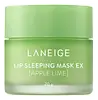
Laneige Lip Sleeping Mask EX Versus Fenty Beauty Plush Puddin’ Intensive Recovery Lip Mask With Pomegranate Sterols + Vitamin E
This hydrating lip mask is formulated around Butyrospermum Parkii Butter and Sodium Hyaluronate to hydrate lips and strengthen the lip barrier.
This hydrating lip mask is formulated around Bis-Diglyceryl Polyacyladipate-2 and Tocopherol to hydrate lips and strengthen the lip barrier.


What's inside
What's inside
 Key Ingredients
Benefits
Concerns
Ingredients Side-by-side
Diisostearyl Malate
EmollientHydrogenated Polyisobutene
EmollientPhytosteryl/Isostearyl/Cetyl/Stearyl/Behenyl Dimer Dilinoleate
Skin Conditioning

Hydrogenated Poly(C6-14 Olefin)
EmollientPolybutene
Microcrystalline Wax
Emulsion StabilisingButyrospermum Parkii Butter
Skin Conditioning




Synthetic Wax
Abrasive
Euphorbia Cerifera Cera
Astringent
Sucrose Tetrastearate Triacetate
Emollient
Hydrogenated Butylene/Ethylene/Styrene Copolymer
EmollientEthylene/Propylene/Styrene Copolymer
Mica
Cosmetic ColorantAroma


Astrocaryum Murumuru Seed Butter
Emollient
Dimethicone
Emollient

CI 77891
Cosmetic ColorantPolyglyceryl-2 Diisostearate
Emulsifying
Dehydroacetic Acid
Preservative
Methicone
Emollient
Copernicia Cerifera Wax
Silica
Abrasive

Polyglyceryl-2 Triisostearate
Emulsifying
CI 47005
Cosmetic ColorantWater
Skin ConditioningPolyhydroxystearic Acid
Emulsifying
CI 42090
Cosmetic ColorantPotassium Alginate
Emulsion StabilisingPropanediol
Solvent
Glycerin
Humectant
Alcohol
Antimicrobial


Lycium Barbarum Fruit Extract
Astringent
Vaccinium Macrocarpon Fruit Extract
AstringentFragaria Ananassa Fruit Extract
Skin Conditioning
Rubus Idaeus Fruit Extract
AstringentSapindus Mukorossi Fruit Extract
Skin ConditioningVaccinium Angustifolium Fruit Extract
Skin Protecting
Rubus Chamaemorus Seed Extract
Skin ConditioningCoffea Arabica Seed Extract
Masking
Chenopodium Quinoa Seed Extract
Skin Conditioning
Magnesium Sulfate
Calcium Chloride
AstringentSodium Hyaluronate
Humectant

Beta-Glucan
Skin Conditioning
Manganese Sulfate
Skin ConditioningZinc Sulfate
Antimicrobial
Ascorbyl Glucoside
Antioxidant


Diisostearyl Malate, Hydrogenated Polyisobutene, Phytosteryl/Isostearyl/Cetyl/Stearyl/Behenyl Dimer Dilinoleate, Hydrogenated Poly(C6-14 Olefin), Polybutene, Microcrystalline Wax, Butyrospermum Parkii Butter, Synthetic Wax, Euphorbia Cerifera Cera, Sucrose Tetrastearate Triacetate, Hydrogenated Butylene/Ethylene/Styrene Copolymer, Ethylene/Propylene/Styrene Copolymer, Mica, Aroma, Astrocaryum Murumuru Seed Butter, Dimethicone, CI 77891, Polyglyceryl-2 Diisostearate, Dehydroacetic Acid, Methicone, Copernicia Cerifera Wax, Silica, Polyglyceryl-2 Triisostearate, CI 47005, Water, Polyhydroxystearic Acid, CI 42090, Potassium Alginate, Propanediol, Glycerin, Alcohol, Lycium Barbarum Fruit Extract, Vaccinium Macrocarpon Fruit Extract, Fragaria Ananassa Fruit Extract, Rubus Idaeus Fruit Extract, Sapindus Mukorossi Fruit Extract, Vaccinium Angustifolium Fruit Extract, Rubus Chamaemorus Seed Extract, Coffea Arabica Seed Extract, Chenopodium Quinoa Seed Extract, Magnesium Sulfate, Calcium Chloride, Sodium Hyaluronate, Beta-Glucan, Manganese Sulfate, Zinc Sulfate, Ascorbyl Glucoside
Polybutene
Hydrogenated Polydecene
EmollientBis-Diglyceryl Polyacyladipate-2
Emollient
Ricinus Communis Seed Oil
Masking
Caprylic/Capric Triglyceride
Masking
Hydrogenated Styrene/Isoprene Copolymer
Polyethylene
Abrasive
Silica
Abrasive
Cocos Nucifera Oil
Masking
Malpighia Punicifolia Fruit Extract
Antioxidant
Punica Granatum Flower Extract
Skin Conditioning
Punica Granatum Sterols
Skin Conditioning
Tocopherol
Antioxidant

Tocopheryl Acetate
Antioxidant
Simmondsia Chinensis Seed Oil
Emollient
Aroma
Pentaerythrityl Tetra-Di-T-Butyl Hydroxyhydrocinnamate
Antioxidant
Polyglyceryl-3 Diisostearate
Emulsifying
Dicalcium Phosphate
Abrasive
Phenoxyethanol
Preservative
CI 77891
Cosmetic ColorantCI 19140
Cosmetic ColorantCI 77491
Cosmetic ColorantPolybutene, Hydrogenated Polydecene, Bis-Diglyceryl Polyacyladipate-2, Ricinus Communis Seed Oil, Caprylic/Capric Triglyceride, Hydrogenated Styrene/Isoprene Copolymer, Polyethylene, Silica, Cocos Nucifera Oil, Malpighia Punicifolia Fruit Extract, Punica Granatum Flower Extract, Punica Granatum Sterols, Tocopherol, Tocopheryl Acetate, Simmondsia Chinensis Seed Oil, Aroma, Pentaerythrityl Tetra-Di-T-Butyl Hydroxyhydrocinnamate, Polyglyceryl-3 Diisostearate, Dicalcium Phosphate, Phenoxyethanol, CI 77891, CI 19140, CI 77491
Reviews
Ingredients Explained
These ingredients are found in both products.
Ingredients higher up in an ingredient list are typically present in a larger amount.
Aroma refers to an ingredient, or mixture of ingredients, that impart or mask a flavor.
The name is slightly confusing. This is because INCI associates aroma with flavor instead of smell.
Here is the official definition from the The International Cosmetic Ingredient Dictionary and Handbook:
“Aroma is a term for ingredient labeling used to identify that a product contains a material or combination of materials normally added to a cosmetic to produce or to mask a particular flavor.”
INCI shows the only purpose of aroma to be "flavouring".
However, due to regulation differences, some companies may use aroma in place of parfum.
In Canada, this ingredient only has to be listed in concentrations above 1%.
Learn more about AromaCi 77891 is a white pigment from Titanium dioxide. It is naturally found in minerals such as rutile and ilmenite.
It's main function is to add a white color to cosmetics. It can also be mixed with other colors to create different shades.
Ci 77891 is commonly found in sunscreens due to its ability to block UV rays.
Learn more about CI 77891Polybutene is used to help control the viscosity of a product. This just means it helps adjusts the texture.
It is a polymer and does not get absorbed into the skin due to its large size.
Studies found this ingredient did not irritate skin in concentrations below 15%.
Learn more about PolybuteneSilica, also known as silicon dioxide, is a naturally occurring mineral. It is used as a fine, spherical, and porous powder in cosmetics.
Though it has exfoliant properties, the function of silica varies depending on the product.
The unique structure of silica enhances the spreadability and adds smoothness, making it a great texture enhancer.
It is also used as an active carrier, emulsifier, and mattifier due to its ability to absorb excess oil.
In some products, tiny microneedles called spicules are made from silica or hydrolyzed sponge. When you rub them in, they lightly polish away dead skin layers and enhance the penetration of active ingredients.
Learn more about Silica

