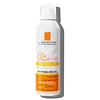
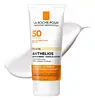
La Roche-Posay Anthelios XL Ultra-Light Sunscreen Mist SPF 50+ Versus La Roche-Posay Anthelios SPF 50 Gentle Lotion Mineral Sunscreen
This chemical sunscreen covers the full UV range and blocks ~98% of UVB at SPF 50.
This hybrid sunscreen covers the full UV range and blocks ~98% of UVB at SPF 50.

What's inside
What's inside
 Key Ingredients
Benefits
Concerns
Ingredients Side-by-side
Butane
Water
Skin ConditioningHomosalate
Skin Conditioning

Dicaprylyl Ether
Emollient
Octocrylene
UV Absorber

Ethylhexyl Salicylate
UV Absorber
Dimethicone
Emollient

Styrene/Acrylates Copolymer
Butyl Methoxydibenzoylmethane
UV Absorber
Drometrizole Trisiloxane
UV Absorber
PEG-30 Dipolyhydroxystearate
Emulsifying

Nylon-12

Dicaprylyl Carbonate
EmollientMethyl Methacrylate Crosspolymer
Cyclohexasiloxane
Emollient
Polymethylsilsesquioxane
P-Anisic Acid
MaskingCaprylyl Glycol
Emollient
Disodium EDTA
ChelatingDisteardimonium Hectorite
StabilisingDodecene
MaskingEthylhexyl Triazone
UV Absorber
Isododecane
EmollientLauryl PEG/PPG-18/18 Methicone
Skin Conditioning
PEG-8 Laurate
Emulsifying
Phenoxyethanol
Preservative
Poloxamer 407
EmulsifyingPoly C10-30 Alkyl Acrylate
Emulsion StabilisingPropylene Carbonate
SolventSodium Chloride
MaskingTocopherol
Antioxidant






Parfum
Masking

Butane, Water, Homosalate, Dicaprylyl Ether, Octocrylene, Ethylhexyl Salicylate, Dimethicone, Styrene/Acrylates Copolymer, Butyl Methoxydibenzoylmethane, Drometrizole Trisiloxane, PEG-30 Dipolyhydroxystearate, Nylon-12, Dicaprylyl Carbonate, Methyl Methacrylate Crosspolymer, Cyclohexasiloxane, Polymethylsilsesquioxane, P-Anisic Acid, Caprylyl Glycol, Disodium EDTA, Disteardimonium Hectorite, Dodecene, Ethylhexyl Triazone, Isododecane, Lauryl PEG/PPG-18/18 Methicone, PEG-8 Laurate, Phenoxyethanol, Poloxamer 407, Poly C10-30 Alkyl Acrylate, Propylene Carbonate, Sodium Chloride, Tocopherol, Parfum
Titanium Dioxide 5%
Cosmetic Colorant
Zinc Oxide 15%
Cosmetic Colorant
Water
Skin ConditioningC12-15 Alkyl Benzoate
AntimicrobialIsohexadecane
EmollientIsononyl Isononanoate
EmollientDicaprylyl Ether
Emollient
PEG-30 Dipolyhydroxystearate
Emulsifying
Polyglyceryl-4 Isostearate
Emulsifying
Dicaprylyl Carbonate
EmollientEthylene/Acrylic Acid Copolymer
Emulsion StabilisingTriethylhexanoin
MaskingSilica
Abrasive

Poly C10-30 Alkyl Acrylate
Emulsion StabilisingCitric Acid
Buffering
Phenoxyethanol
Preservative
Sodium Chloride
MaskingCaprylyl Glycol
Emollient
Diethylhexyl Syringylidenemalonate
Skin Protecting
Triethoxycaprylylsilane
Aluminum Hydroxide
EmollientStearic Acid
Cleansing
Aluminum Stearate
Cosmetic ColorantChlorphenesin
Antimicrobial
Disteardimonium Hectorite
StabilisingAlumina
Abrasive
Polyhydroxystearic Acid
Emulsifying
Tocopherol
Antioxidant
P-Anisic Acid
MaskingCapryloyl Salicylic Acid
Exfoliating
Xanthan Gum
EmulsifyingDisodium EDTA
ChelatingPropylene Carbonate
SolventCaprylic/Capric Triglyceride
Masking
Cassia Alata Leaf Extract
AstringentMaltodextrin
Absorbent
Titanium Dioxide 5%, Zinc Oxide 15%, Water, C12-15 Alkyl Benzoate, Isohexadecane, Isononyl Isononanoate, Dicaprylyl Ether, PEG-30 Dipolyhydroxystearate, Polyglyceryl-4 Isostearate, Dicaprylyl Carbonate, Ethylene/Acrylic Acid Copolymer, Triethylhexanoin, Silica, Poly C10-30 Alkyl Acrylate, Citric Acid, Phenoxyethanol, Sodium Chloride, Caprylyl Glycol, Diethylhexyl Syringylidenemalonate, Triethoxycaprylylsilane, Aluminum Hydroxide, Stearic Acid, Aluminum Stearate, Chlorphenesin, Disteardimonium Hectorite, Alumina, Polyhydroxystearic Acid, Tocopherol, P-Anisic Acid, Capryloyl Salicylic Acid, Xanthan Gum, Disodium EDTA, Propylene Carbonate, Caprylic/Capric Triglyceride, Cassia Alata Leaf Extract, Maltodextrin
Reviews
Ingredients Explained
These ingredients are found in both products.
Ingredients higher up in an ingredient list are typically present in a larger amount.
Caprylyl Glycol is a humectant, skin conditioner, emollient, and preservative booster derived from either caprylic acid or synthetically created.
Typical use levels vary from 0.3-1% as a preservative booster and go up to 2% to condition skin.
Because it is not a free-fatty acid, this ingredient is fungal acne safe (there's nothing for Malassezia to feed on).
Learn more about Caprylyl GlycolDicaprylyl Carbonate comes from carbonic acid and caprylyl alcohol, a fatty alcohol. It is an emollient and gives skin a velvet feel. The sources of Dicaprylyl Carbonate may be synthetic or from animals.
As an emollient, Dicaprylyl Carbonate creates a film on the skin. This film traps moisture in, keeping your skin soft and hydrated.
Dicaprylyl Ether is created from caprylic acid. It is a texture-enhancer and emollient.
As an emollient, Dicaprylyl Ether is non-comedogenic. It helps soften and smooth the skin by creating a barrier on top. This barrier helps trap moisture in, helping to hydrate the skin.
Dicaprylyl Ether gives a non-greasy feel and better spreadability to products.
Learn more about Dicaprylyl EtherDisodium EDTA is a chelating agent. It grabs onto and deactivates metal ions that sneak into your products from water, packaging, or air.
This ingredient mainly works behind the scenes and helps with:
On top of that, this ingredient can counteract the effects of hard water by binding to the minerals in it.
One thing worth knowing is that Disodium EDTA has been shown to be a mild penetration enhancer. It can help other ingredients absorb into skin more effectively which can be a double-edged sword (great for actives, but can also make the active too strong if you have sensitive skin).
Clinical patch testing showed no significant skin irritation at typical use concentrations and minimal dermal absorption.
You'll most likely see this ingredient near the end of an ingredient list. It's typically found in concentrations less than 1%.
Learn more about Disodium EDTADisteardimonium Hectorite comes from the clay mineral named hectorite. It is used to add thickness to a product.
It can also help stabilize a product by helping to disperse other ingredients.
Hectorite is a rare, white clay mineral.
Learn more about Disteardimonium Hectoritep-anisic acid is an aromatic compound that is naturally found in some plants. It is mainly used as a fragrance ingredient but also has preservative and antimicrobial properties.
The effectiveness of this ingredient as a preservative and antimicrobial depends on the pH (with more acidic being better). This is the reason you'll see this ingredient bundled with other preservatives.
This ingredient is an emulsifier that keeps the oily and watery parts of a formula blended together. Its real party trick is making thin, flowable, and very stable emulsions.
Typical use sits around 2-4% (a bit higher for sunscreens and foundations).
The Cosmetic Ingredient Review Expert Panel has concluded this ingredient to be safe in cosmetics and noted the large molecules aren't likely to be absorbed into skin.
Because it carries a fatty-acid ester component (stearic acid), it may not be fungal acne safe.
Learn more about PEG-30 DipolyhydroxystearatePhenoxyethanol is one of the most widely used preservatives in skincare (and for good reason!).
It has a large spectrum of antimicrobial activity and especially effective bacteria, yeast, and mold while only having a weak effect on your skin's natural microbiome.
On a cellular level, it disrupts the cell membranes of microbes by poking holes that make the cell leak. This shuts down the chemical reactions the microbe needs to make energy so it can no longer survive.
Another perk of this ingredient is that it stays functional across a wide pH range (3-10).
You'll often see it paired with boosters like Ethylhexylglycerin; one study showed that a 1:9 ratio of Ethylhexylglycerin to Phenoxyethanol damages bacterial membranes as effectively as doubling the Phenoxyethanol concentration on its own.
Typical use concentrations range from 0.3-1% depending on the formula, and this ingredient is capped at 1% int the EU.
Safety-wise, the fear mongering does not hold up to the evidence. The EU's Scientific Committee on Consumer Safety and FDA consider it safe as a preservative at up to 1%, including for children of all ages.
Adverse systemic effects only showed up in animal studies at exposures roughly 200x higher than what people get from cosmetics. And despite its very widespread use, this ingredient is a rare sensitizer and allergic reactions are uncommon.
Learn more about PhenoxyethanolPoly C10-30 Alkyl Acrylate is a synthetic polymer. It's a long chain built from acrylic acid units and each unit carries a fatty "tail" derived form a C10-30 alcohol.
Those oil-loving tails allow this ingredient to thicken oil phases, hold emulsions together, and cuts the tacky/greasy feel of heavy formulas.
Typical use levels sit around 0.1-3%, with 0.3-3% more common in leave-on emulsions.
This ingredient was reviewed as part of a group of 126 acrylates and concluded to be safe by the Cosmetic Ingredient Review Expert Panel.
Though acrylate contact allergy is real and well-documented, allergy risk is quite low. The cases of documented contact allergy are caused by unreacted monomers (more commonly found in gel nails, dental resins, and adhesives).
Learn more about Poly C10-30 Alkyl AcrylateThis ingredient is a solvent. It helps dissolve active ingredients and alter the texture of products.
Propylene Carbonate is commonly used in makeup and with clay, such as montmorillonite or bentonite.
Studies show this ingredient to be safe for cosmetics. When it is undiluted, it can cause skin irritation. (It is always diluted in skincare and makeup). This ingredient is water-soluble.
Propylene Carbonate is created from propylene glycol and carbonic acid.
Learn more about Propylene CarbonateChances are, you eat sodium chloride every day. Sodium Chloride is also known as table salt. This ingredient has many purposes in skincare: thickener, emulsifier, and exfoliator.
You'll most likely find this ingredient in cleansers where it is used to create a gel-like texture. As an emulsifier, it also prevents ingredients from separating.
You might see people debate whether Sodium Chloride is comedogenic, but there actually haven't been any comedogenic tests done on it. Either way, the overall formulation of a product matters a lot more than any single ingredient.
You might see this ingredient used in scrubs as a primary exfoliating ingredient.
Learn more about Sodium ChlorideTocopherol is a fat-soluble antioxidant known as Vitamin E.
You'll find this ingredient in the vast majority of skincare (for good reason). It works to neutralize free radicals, or unstable molecules generated by UV exposure, pollution, and other environmental stressors, before they can cause oxidative damage to your skin cells.
Topically applied tocopherol has been shown to protect against UV damage by ramping up the skin's own natural defense enzymes.
It also acts as a skin conditioning agent; some studies show that regular topical use can improve the skin's water-binding capacity over 2-4 weeks.
This ingredient is especially loved for being a team player. When combined with Vitamin C, the photoprotective effect of both ingredients roughly doubles and the combo also helps reduce UV-induced DNA damage.
This ingredient has some brightening potential but it's more of a prevention ingredient than spot-fader. Cell studies show it can slow down melanin production but it's worth noting that it's not the most powerful brightener out there.
In formulations, it also serves as a stabilizer that helps protect other oxidation-prone ingredients from degrading.
Concentrations usually range from 0.1-1% in most leave-on products.
Learn more about TocopherolWater. It's the most common cosmetic ingredient of all. You'll usually see it at the top of ingredient lists, meaning that it makes up the largest part of the product.
So why is it so popular? Water most often acts as a solvent - this means that it helps dissolve other ingredients into the formulation.
You'll also recognize water as that liquid we all need to stay alive. If you see this, drink a glass of water. Remember to stay hydrated!
Learn more about Water

