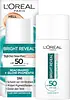
L'Oreal Bright Reveal Tinted Fluid Glow SPF 50 Versus Nude By Nature Hydra Serum Tinted Skin Perfector
This chemical sunscreen covers the full UV range and blocks ~98% of UVB at SPF 50.


What's inside
What's inside
 Key Ingredients
Benefits
Concerns
Ingredients Side-by-side
Water
Skin ConditioningDicaprylyl Carbonate
EmollientEthylhexyl Triazone
UV Absorber
Dimethicone
Emollient

Niacinamide
Smoothing










Propanediol
Solvent
Bis-Ethylhexyloxyphenol Methoxyphenyl Triazine
UV Absorber
Butyl Methoxydibenzoylmethane
UV Absorber
Phenylbenzimidazole Sulfonic Acid
UV Absorber
Methylene Bis-Benzotriazolyl Tetramethylbutylphenol
UV Filter
Silica
Abrasive
Alcohol Denat.
Antimicrobial




Hydroxyethylpiperazine Ethane Sulfonic Acid
BufferingDiethylamino Hydroxybenzoyl Hexyl Benzoate
UV Filter
Synthetic Fluorphlogopite
CI 77891
Cosmetic ColorantCetearyl Alcohol
Emollient




Hydroxyethyl Acrylate/Sodium Acryloyldimethyl Taurate Copolymer
Emulsion StabilisingCI 77492
Cosmetic ColorantCI 77491
Cosmetic ColorantCI 77499
Cosmetic ColorantMica
Cosmetic ColorantTocopherol
Antioxidant

Sodium Hydroxide
BufferingSodium Stearoyl Glutamate
CleansingHydroxyacetophenone
Antioxidant
Phenoxyethanol
Preservative
Trisodium Ethylenediamine Disuccinate
ChelatingPolyglyceryl-10 Laurate
Skin Conditioning
Cellulose
Absorbent
Polysorbate 60
Emulsifying
Xanthan Gum
EmulsifyingTin Oxide
Abrasive
Caprylyl Glycol
Emollient
Parfum
Masking

Sorbitan Isostearate
Emulsifying
Butylene Glycol
Humectant
Cetearyl Glucoside
Emulsifying
Lauroyl Lysine
Skin Conditioning
Inulin Lauryl Carbamate
Emulsion StabilisingGlycerin
Humectant
Water, Dicaprylyl Carbonate, Ethylhexyl Triazone, Dimethicone, Niacinamide, Propanediol, Bis-Ethylhexyloxyphenol Methoxyphenyl Triazine, Butyl Methoxydibenzoylmethane, Phenylbenzimidazole Sulfonic Acid, Methylene Bis-Benzotriazolyl Tetramethylbutylphenol, Silica, Alcohol Denat., Hydroxyethylpiperazine Ethane Sulfonic Acid, Diethylamino Hydroxybenzoyl Hexyl Benzoate, Synthetic Fluorphlogopite, CI 77891, Cetearyl Alcohol, Hydroxyethyl Acrylate/Sodium Acryloyldimethyl Taurate Copolymer, CI 77492, CI 77491, CI 77499, Mica, Tocopherol, Sodium Hydroxide, Sodium Stearoyl Glutamate, Hydroxyacetophenone, Phenoxyethanol, Trisodium Ethylenediamine Disuccinate, Polyglyceryl-10 Laurate, Cellulose, Polysorbate 60, Xanthan Gum, Tin Oxide, Caprylyl Glycol, Parfum, Sorbitan Isostearate, Butylene Glycol, Cetearyl Glucoside, Lauroyl Lysine, Inulin Lauryl Carbamate, Glycerin
Caprylic/Capric Triglyceride
Masking
Coco-Caprylate/Caprate
Emollient
Mica
Cosmetic ColorantShorea Robusta Resin
TonicHelianthus Annuus Seed Oil
Emollient
Kaolin
Abrasive
Polyhydroxystearic Acid
Emulsifying
Propanediol
Solvent
Simmondsia Chinensis Seed Oil
Emollient
Caprylhydroxamic Acid
ChelatingRicinus Communis Seed Oil
Masking
Terminalia Ferdinandiana Seed Oil
Antioxidant
Citrus Aurantium Dulcis Peel Oil
Masking
Citrus Paradisi Peel Oil
Masking
Carthamus Tinctorius Seed Oil
Masking
Tocopherol
Antioxidant
Sodium Hyaluronate
Humectant
Vanillin
Masking
Hydrogenated Castor Oil
Emollient
Limonene
Perfuming
CI 77491
Cosmetic ColorantCI 77492
Cosmetic ColorantCI 77499
Cosmetic ColorantCI 77891
Cosmetic ColorantCaprylic/Capric Triglyceride, Coco-Caprylate/Caprate, Mica, Shorea Robusta Resin, Helianthus Annuus Seed Oil, Kaolin, Polyhydroxystearic Acid, Propanediol, Simmondsia Chinensis Seed Oil, Caprylhydroxamic Acid, Ricinus Communis Seed Oil, Terminalia Ferdinandiana Seed Oil, Citrus Aurantium Dulcis Peel Oil, Citrus Paradisi Peel Oil, Carthamus Tinctorius Seed Oil, Tocopherol, Sodium Hyaluronate, Vanillin, Hydrogenated Castor Oil, Limonene, CI 77491, CI 77492, CI 77499, CI 77891
Reviews
Ingredients Explained
These ingredients are found in both products.
Ingredients higher up in an ingredient list are typically present in a larger amount.
Ci 77491 is also hydrated iron III oxide. It's sole purpose is to give a red/pink hue to products.
Iron III oxides are classified as inorganic chemicals for coloring.
Synthetically created Ci 77491 is considered safer than those naturally found. This is because the synthetically created version may contain less impurities. Iron oxides are generally non-toxic and non-allergenic.
Learn more about CI 77491CI 77492 is also hydrated iron III oxide. It's sole purpose is to give a yellow hue to products.
Iron III oxides are classified as inorganic chemicals for coloring.
Synthetically created CI 77492 is considered safer than those naturally found. This is because the synthetically created version may contain less impurities. Iron oxides are generally non-toxic and non-allergenic.
Learn more about CI 77492Ci 77499 is also hydrated iron III oxide. It is created from mixing red and black iron oxides. This helps give shades of darkness to a product.
Iron III oxides are classified as inorganic chemicals for coloring.
Ci 77891 is a white pigment from Titanium dioxide. It is naturally found in minerals such as rutile and ilmenite.
It's main function is to add a white color to cosmetics. It can also be mixed with other colors to create different shades.
Ci 77891 is commonly found in sunscreens due to its ability to block UV rays.
Learn more about CI 77891Mica is a naturally occurring mineral used to add shimmer and color in cosmetics. It can also help improve the texture of a product or give it an opaque, white/silver color.
Serecite is the name for very fine but ragged grains of mica.
This ingredient is often coated with metal oxides like titanium dioxide. Trace amounts of heavy metals may be found in mica, but these metals are not harmful in our personal products.
Mica has been used since prehistoric times throughout the world. Ancient Egyptian, Indian, Greek, Roman, Aztec, and Chinese civilizations have used mica.
Learn more about MicaPropanediol is an all-star ingredient. It softens, hydrates, and smooths the skin.
It’s often used to:
Propanediol is not likely to cause sensitivity and considered safe to use. It is derived from corn or petroleum with a clear color and no scent.
Learn more about PropanediolTocopherol is a fat-soluble antioxidant known as Vitamin E.
You'll find this ingredient in the vast majority of skincare (for good reason). It works to neutralize free radicals, or unstable molecules generated by UV exposure, pollution, and other environmental stressors, before they can cause oxidative damage to your skin cells.
Topically applied tocopherol has been shown to protect against UV damage by ramping up the skin's own natural defense enzymes.
It also acts as a skin conditioning agent; some studies show that regular topical use can improve the skin's water-binding capacity over 2-4 weeks.
This ingredient is especially loved for being a team player. When combined with Vitamin C, the photoprotective effect of both ingredients roughly doubles and the combo also helps reduce UV-induced DNA damage.
This ingredient has some brightening potential but it's more of a prevention ingredient than spot-fader. Cell studies show it can slow down melanin production but it's worth noting that it's not the most powerful brightener out there.
In formulations, it also serves as a stabilizer that helps protect other oxidation-prone ingredients from degrading.
Concentrations usually range from 0.1-1% in most leave-on products.
Learn more about Tocopherol

