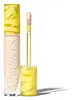
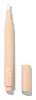
Kosas Revealer Super Creamy + Brightening Concealer Versus e.l.f. cosmetics Flawless Brightening Concealer

What's inside
What's inside
 Key Ingredients
Benefits
Concerns
No concerns
Ingredients Side-by-side
Water
Skin ConditioningCaprylic/Capric Triglyceride
Masking


Mica
Cosmetic ColorantOctyldodecanol
Emollient
Polyglyceryl-2 Dipolyhydroxystearate
Skin Conditioning

Ethylhexyl Olivate
Skin Conditioning
Undecane
EmollientGlycerin
Humectant
Polyhydroxystearic Acid
Emulsifying
Tridecane
Perfuming

Polyglyceryl-3 Diisostearate
Emulsifying


Galactoarabinan

Helianthus Annuus Seed Wax
Skin Conditioning
Arnica Montana Flower Extract
Masking
Caffeine
Skin Conditioning

Dunaliella Salina Extract
Skin ConditioningFoeniculum Vulgare Oil
Emollient
Glyceryl Oleate
Emollient
Helianthus Annuus Seed Oil
Emollient
Lecithin
Emollient
Maltodextrin
Absorbent
Palmitoyl Tripeptide-5
Skin Conditioning

Panthenol
Skin Conditioning
Rosmarinus Officinalis Extract
AntimicrobialSodium Hyaluronate
Humectant
Squalane
Emollient
Tocopherol
Antioxidant



Potassium Sorbate
Preservative
Sodium Benzoate
Masking
Water, Caprylic/Capric Triglyceride, Mica, Octyldodecanol, Polyglyceryl-2 Dipolyhydroxystearate, Ethylhexyl Olivate, Undecane, Glycerin, Polyhydroxystearic Acid, Tridecane, Polyglyceryl-3 Diisostearate, Galactoarabinan, Helianthus Annuus Seed Wax, Arnica Montana Flower Extract, Caffeine, Dunaliella Salina Extract, Foeniculum Vulgare Oil, Glyceryl Oleate, Helianthus Annuus Seed Oil, Lecithin, Maltodextrin, Palmitoyl Tripeptide-5, Panthenol, Rosmarinus Officinalis Extract, Sodium Hyaluronate, Squalane, Tocopherol, Potassium Sorbate, Sodium Benzoate
Water
Skin ConditioningDimethicone
Emollient
Butylene Glycol
Humectant
Triethylhexanoin
MaskingOctyldodecanol
Emollient
Mica
Cosmetic ColorantLauryl PEG-9 Polydimethylsiloxyethyl Dimethicone
Skin Conditioning
Silica
Abrasive


Magnesium Sulfate
Diglycerin
Humectant
Disteardimonium Hectorite
StabilisingPhenoxyethanol
Preservative
Lauryl PEG-10 Tris(Trimethylsiloxy)Silylethyl Dimethicone
Emulsifying
Propylene Carbonate
SolventTriethoxycaprylylsilane
Ethylhexylglycerin
Skin ConditioningCaprylyl Glycol
Emollient
Disodium EDTA
ChelatingDipropylene Glycol
HumectantSodium Citrate
BufferingTocopherol
Antioxidant
Sodium Hyaluronate
Humectant
Sodium
CI 77891
Cosmetic ColorantCI 77491
Cosmetic ColorantCI 77492
Cosmetic ColorantCI 77499
Cosmetic ColorantWater, Dimethicone, Butylene Glycol, Triethylhexanoin, Octyldodecanol, Mica, Lauryl PEG-9 Polydimethylsiloxyethyl Dimethicone, Silica, Magnesium Sulfate, Diglycerin, Disteardimonium Hectorite, Phenoxyethanol, Lauryl PEG-10 Tris(Trimethylsiloxy)Silylethyl Dimethicone, Propylene Carbonate, Triethoxycaprylylsilane, Ethylhexylglycerin, Caprylyl Glycol, Disodium EDTA, Dipropylene Glycol, Sodium Citrate, Tocopherol, Sodium Hyaluronate, Sodium, CI 77891, CI 77491, CI 77492, CI 77499
Reviews
Ingredients Explained
These ingredients are found in both products.
Ingredients higher up in an ingredient list are typically present in a larger amount.
Mica is a naturally occurring mineral used to add shimmer and color in cosmetics. It can also help improve the texture of a product or give it an opaque, white/silver color.
Serecite is the name for very fine but ragged grains of mica.
This ingredient is often coated with metal oxides like titanium dioxide. Trace amounts of heavy metals may be found in mica, but these metals are not harmful in our personal products.
Mica has been used since prehistoric times throughout the world. Ancient Egyptian, Indian, Greek, Roman, Aztec, and Chinese civilizations have used mica.
Learn more about MicaOctyldodecanol is a fatty alcohol sourced from plant oils like coconut or palm (or made synthetically).
It is:
You'll likely see this in many BHA products because this is the go-to solvent for salicylic acid.
This ingredient is typically used at levels between 2-20%.
Regarding fungal acne:
In 2019, this ingredient was tested against multiple Malassezia species (the yeast that causes fungal acne) and showed no growth.
Sodium Hyaluronate is the salt form of hyaluronic acid. It is a long sugar chain that is naturally found in your skin, joints, and connective tissue that maintains hydration and elasticity.
In skincare, it works as a humectant. It pulls water from the environment and deeper layers of skin and binds it to the surface.
Interestingly, the size of the molecule affects its behavior:
Some clinical evidence links low molecular weight versions to improved wrinkle depth, elasticity, anti-inflammatory effects, and barrier repair.
Many serums use a blend of both weights so you can get surface hydration plus longer-lasting and deeper effects.
You'll typically see concentrations between 0.1-2% for this ingredient.
Learn more about Sodium HyaluronateTocopherol is a fat-soluble antioxidant known as Vitamin E.
You'll find this ingredient in the vast majority of skincare (for good reason). It works to neutralize free radicals, or unstable molecules generated by UV exposure, pollution, and other environmental stressors, before they can cause oxidative damage to your skin cells.
Topically applied tocopherol has been shown to protect against UV damage by ramping up the skin's own natural defense enzymes.
It also acts as a skin conditioning agent; some studies show that regular topical use can improve the skin's water-binding capacity over 2-4 weeks.
This ingredient is especially loved for being a team player. When combined with Vitamin C, the photoprotective effect of both ingredients roughly doubles and the combo also helps reduce UV-induced DNA damage.
This ingredient has some brightening potential but it's more of a prevention ingredient than spot-fader. Cell studies show it can slow down melanin production but it's worth noting that it's not the most powerful brightener out there.
In formulations, it also serves as a stabilizer that helps protect other oxidation-prone ingredients from degrading.
Concentrations usually range from 0.1-1% in most leave-on products.
Learn more about TocopherolWater. It's the most common cosmetic ingredient of all. You'll usually see it at the top of ingredient lists, meaning that it makes up the largest part of the product.
So why is it so popular? Water most often acts as a solvent - this means that it helps dissolve other ingredients into the formulation.
You'll also recognize water as that liquid we all need to stay alive. If you see this, drink a glass of water. Remember to stay hydrated!
Learn more about Water

