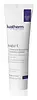
This acne moisturizer is formulated around Methyl Methacrylate Crosspolymer and Salicylic Acid to clear breakouts and balance excess oil.
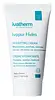
This barrier-repair moisturizer is formulated around Butyrospermum Parkii Butter and Simmondsia Chinensis Seed Oil to strengthen the skin barrier and hydrate skin.

What's inside
What's inside
 Key Ingredients
Benefits
Concerns
Ingredients Side-by-side
Water
Skin ConditioningButylene Glycol
Humectant

Cyclopentasiloxane
Emollient
Sodium Lactate
Buffering
Cyclohexasiloxane
Emollient
Butyrospermum Parkii Butter
Skin Conditioning




Alcohol Denat.
Antimicrobial


Acrylamide/Sodium Acryloyldimethyltaurate Copolymer
Emulsion StabilisingMethyl Methacrylate Crosspolymer

Isohexadecane
EmollientAmmonium Acryloyldimethyltaurate/Vp Copolymer
Polysorbate 80
Emulsifying
Parfum
Masking

Dimethiconol
Emollient
Paraffinum Liquidum
Emollient
Chlorphenesin
Antimicrobial
Salicylic Acid
Masking




Bisabolol
Antioxidant



Sorbitan Oleate
Emulsifying
O-Cymen-5-Ol
Antimicrobial
Tetrasodium EDTA
Piroctone Olamine
Preservative
Silica
Abrasive
Farnesol
Perfuming
Melaleuca Alternifolia Leaf Oil
Antioxidant
Citronellol
Perfuming
Alpha-Isomethyl Ionone
Perfuming
Hexyl Cinnamal
Perfuming
Linalool
Perfuming
Water, Butylene Glycol, Cyclopentasiloxane, Sodium Lactate, Cyclohexasiloxane, Butyrospermum Parkii Butter, Alcohol Denat., Acrylamide/Sodium Acryloyldimethyltaurate Copolymer, Methyl Methacrylate Crosspolymer, Isohexadecane, Ammonium Acryloyldimethyltaurate/Vp Copolymer, Polysorbate 80, Parfum, Dimethiconol, Paraffinum Liquidum, Chlorphenesin, Salicylic Acid, Bisabolol, Sorbitan Oleate, O-Cymen-5-Ol, Tetrasodium EDTA, Piroctone Olamine, Silica, Farnesol, Melaleuca Alternifolia Leaf Oil, Citronellol, Alpha-Isomethyl Ionone, Hexyl Cinnamal, Linalool
Water
Skin ConditioningHydrogenated Polyisobutene
EmollientGlycerin
Humectant
Ethylhexyl Stearate
Emollient
Propanediol
Solvent
Cetyl Alcohol
Emollient

Butyrospermum Parkii Butter
Skin Conditioning
Simmondsia Chinensis Seed Oil
Emollient
Cyclopentasiloxane
Emollient
Methyl Methacrylate Crosspolymer
Dimethicone
Emollient
Cyclohexasiloxane
Emollient
Glyceryl Stearate
Emollient
PEG-100 Stearate
Surfactant
Cera Alba
Emollient
Sodium Benzoate
Masking
Paraffinum Liquidum
Emollient
Glyceryl Acrylate/Acrylic Acid Copolymer
HumectantAcrylates/C10-30 Alkyl Acrylate Crosspolymer
Emulsion StabilisingBisabolol
Antioxidant
Carbomer
Emulsion StabilisingChlorphenesin
Antimicrobial
Phenoxyethanol
Preservative
Tocopheryl Acetate
Antioxidant
Chlorhexidine Digluconate
Antimicrobial
Silica
Abrasive
Viola Tricolor Extract
EmollientSodium Hydroxide
BufferingEthylhexylglycerin
Skin ConditioningTocopherol
Antioxidant

Water, Hydrogenated Polyisobutene, Glycerin, Ethylhexyl Stearate, Propanediol, Cetyl Alcohol, Butyrospermum Parkii Butter, Simmondsia Chinensis Seed Oil, Cyclopentasiloxane, Methyl Methacrylate Crosspolymer, Dimethicone, Cyclohexasiloxane, Glyceryl Stearate, PEG-100 Stearate, Cera Alba, Sodium Benzoate, Paraffinum Liquidum, Glyceryl Acrylate/Acrylic Acid Copolymer, Acrylates/C10-30 Alkyl Acrylate Crosspolymer, Bisabolol, Carbomer, Chlorphenesin, Phenoxyethanol, Tocopheryl Acetate, Chlorhexidine Digluconate, Silica, Viola Tricolor Extract, Sodium Hydroxide, Ethylhexylglycerin, Tocopherol
Ingredients Explained
These ingredients are found in both products.
Ingredients higher up in an ingredient list are typically present in a larger amount.
Bisabolol is a gentle skin conditioner, antioxidant, and soothing ingredient.
It's primary claim to fame is soothing and research shows topically applied bisabolol can quiet the chemical messengers that cause your skin to become inflamed, helping to sooth any irritation.
A clinical study found that applying 0.5% bisabolol daily for 8 weeks produced an average 9% decrease in skin pigmentation. Researchers found it can also suppress the process that leads to excess melanin production in skin.
In vitro studies found that bisabolol combined with propylene glycol significantly increased skin permeability by increasing lipid fluidity in the stratum corneum.
You'll likely see use concentrations quite low, usually 0.1-0.2%.
Overall, this is a well-tolerated ingredient that works well in formulas designed for sensitive, reactive, or post-procedure skin.
Learn more about BisabololThis ingredient is also known as shea butter. It is a plant-derived extract from the nuts of the Africa shea tree and one of the most well-studied emollients.
Because it has a high concentration of fatty acids (primarily oleic, stearic, and linoleic) it is able to form a protective barrier on the skin's surface. This helps seal in moisture and prevents transepidermal water loss (TEWL).
In vitro research found an increase in skin hydration by 58% and a decrease in TEWL by 37.8% after 24 hours of applying this ingredient (pretty impressive for a single ingredient!).
Besides hydration, shea butter also contains triterpenes that have anti-inflammatory potential. In particule, lupeol cinnamate has shown the highest anti-inflammatory activity in vivo.
Shea butter also contains vitamins A and E which may contribute to antioxidant activity.
While Shea Butter has an SPF rating of about 3-4, it is not a sunscreen replacement.
This ingredient may not be fungal acne safe because its fatty acids fall within the C11-C24 range that the Malassezia yeast can metabolize.
This ingredient shows up on a lot of "pore-clogging" lists but there's no real evidence behind that. It doesn't even have a comedogenic rating from an actual study; the numbers you'll find online come from blogs citing other blogs.
Ratings for other ingredients mostly come from a 1980s rabbit ear test. This test doesn't translate well to human skin or to real products because the ingredient sits at a much lower percentage.
Some people still find it breaks them out. So if that's you, definitely trust your skin. Just know this one's based on experience and not evidence.
Learn more about Butyrospermum Parkii ButterChlorphenesin is a synthetic preservative. It helps protect a product against bacteria in order to extend shelf life. In most cases, Chlorphenesin is paired with other preservatives such as phenoxyethanol and caprylyl glycol.
Chlorphenesin is a biocide. This means it is able to help fight the microorganisms on our skin. It is also able to fight odor-releasing bacteria.
Chlorphenesin is soluble in both water and glycerin.
Studies show Chlorphenesin is easily absorbed by our skin. You should speak with a skincare professional if you have concerns about using Chlorphenesin.
Learn more about ChlorphenesinCyclohexasiloxane is a type of silicone more commonly known as D6. It is an emollient and solvent.
Cyclohexasiloxane is used to evenly distribute ingredients throughout the product. When applied to the skin, Cyclohexasiloxane evaporates and leaves behind a silky feel.
As an emollient, it can help the skin feel soft and hydrated. It is also used to reduce frizz in hair products.
Learn more about CyclohexasiloxaneCyclopentasiloxane (D5) is a lightweight silicone that mostly acts as an emollient and solvent in cosmetics. Its the reason your products feel silky, fast-spreading, and non-greasy.
Since D5 is volatile, it does its thing and then evaporates off the skin quickly.
The safety profile of this ingredient is reassuring; the US CIR Expert Panel concluded D5 is safe as used in cosmetics and Health Canada concluded that D5 is not harmful to human health or the environment as currently used in cosmetics
There's a study that people mention about D5 in a rat study showing tumors. This study is related to long-term inhalation of high D5 levels.
Regulatory bodies have judged this study to be not applicable in topical skincare since skin absorption of D5 is very low and we're not really inhaling huge amounts of D5.
The only restriction for this ingredient is environmental. The European Chemicals Agency (ECHA) restricted D5 in wash-off cosmetics at or above 0.1% due to their persistence in water.
Learn more about CyclopentasiloxaneThis ingredient comes as a powder made up of small, porous, microbeads. It is used to add a silky feel to products and also helps absorb oil.
Paraffinum Liquidum is a highly-refined cosmetic-grade mineral oil. It is also known as liquid paraffin.
Despite its controversial reputation, the science is pretty clear: it's one of the most well-studied and effective moisturizing ingredients out there.
As an occlusive, it forms a protective layer on the skin that locks in moisture and prevents transepidermal water loss (TEWL). This makes it especially great for compromised skin barriers.
The "it clogs your pores" myth has been around for decades; a study found that industrial-grade mineral oil may be comedogenic but cosmetic-grade mineral oil is not (these two are very, very different).
A 2017 review concluded that cosmetic use of mineral oils and waxes does not present a risk to consumers due to absorption.
Mineral oil got a bad rap from the old rabbit ear studies. When tested on actual human skin, cosmetic-grade mineral oil showed no comedogenic activity. The rating of 0 is a correction of outdated science.
Mineral oil is an inert substance with no fatty acids so there's nothing to feed Malassezia. This ingredient is fungal acne safe.
Learn more about Paraffinum LiquidumSilica, also known as silicon dioxide, is a naturally occurring mineral. It is used as a fine, spherical, and porous powder in cosmetics.
Though it has exfoliant properties, the function of silica varies depending on the product.
The unique structure of silica enhances the spreadability and adds smoothness, making it a great texture enhancer.
It is also used as an active carrier, emulsifier, and mattifier due to its ability to absorb excess oil.
In some products, tiny microneedles called spicules are made from silica or hydrolyzed sponge. When you rub them in, they lightly polish away dead skin layers and enhance the penetration of active ingredients.
Learn more about SilicaWater. It's the most common cosmetic ingredient of all. You'll usually see it at the top of ingredient lists, meaning that it makes up the largest part of the product.
So why is it so popular? Water most often acts as a solvent - this means that it helps dissolve other ingredients into the formulation.
You'll also recognize water as that liquid we all need to stay alive. If you see this, drink a glass of water. Remember to stay hydrated!
Learn more about Water

