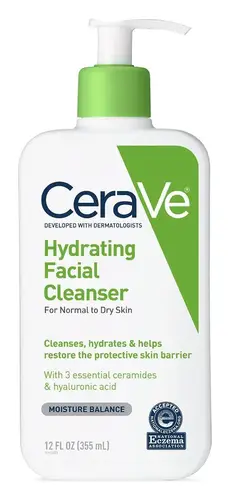
This oil-based cleanser is formulated around Lactic Acid to exfoliate and smooth skin.
This mild gel cleanser is made to cleanse without leaving your skin tight or dry.

What's inside
What's inside
 Key Ingredients
Benefits
Concerns
No concerns
Ingredients Side-by-side
Ethylhexyl Palmitate
Emollient




Paraffinum Liquidum
Emollient

Helianthus Annuus Seed Oil
Emollient
PEG-20 Glyceryl Triisostearate
Emollient
Caprylic/Capric Triglyceride
Masking

1,2-Hexanediol
Skin Conditioning
Tocopheryl Acetate
Antioxidant


Litsea Cubeba Fruit Oil
Masking

Pentaerythrityl Tetra-Di-T-Butyl Hydroxyhydrocinnamate
Antioxidant
Citrus Aurantium Dulcis Peel Oil
Masking
Lavandula Angustifolia Oil
Masking
Pelargonium Graveolens Oil
Masking
Water
Skin ConditioningCanarium Luzonicum Gum Nonvolatiles
MaskingRosmarinus Officinalis Leaf Oil
Masking
Eucalyptus Globulus Leaf Oil
Perfuming
Lactic Acid
Buffering






Glycolic Acid
Buffering

Citric Acid
Buffering
Citrus Aurantium Amara Flower Oil
Masking
Anthemis Nobilis Flower Oil
Masking
Camellia Japonica Seed Oil
Emollient
Argania Spinosa Kernel Oil
Emollient
Simmondsia Chinensis Seed Oil
Emollient
Glycerin
Humectant
Butylene Glycol
Humectant
Glycine
Buffering
Camellia Japonica Flower Extract
EmollientLysine
Skin ConditioningLeucine
Skin ConditioningMethionine
Skin ConditioningFicus Carica Fruit Extract
Humectant
Valine
MaskingCentella Asiatica Extract
Cleansing
Rhus Semialata Gall Extract
Skin ConditioningOxygen
Skin ConditioningCeramide NP
Skin Conditioning
Sodium Hyaluronate
Humectant
Cysteine
Antioxidant
Aspartic Acid
Masking
Isoleucine
Skin ConditioningAlanine
Masking
Arginine
Masking
Tyrosine
MaskingPhenylalanine
Masking
Proline
Skin Conditioning
Hydrogenated Lecithin
Emulsifying
Histidine
Humectant
Ethylhexyl Palmitate, Paraffinum Liquidum, Helianthus Annuus Seed Oil, PEG-20 Glyceryl Triisostearate, Caprylic/Capric Triglyceride, 1,2-Hexanediol, Tocopheryl Acetate, Litsea Cubeba Fruit Oil, Pentaerythrityl Tetra-Di-T-Butyl Hydroxyhydrocinnamate, Citrus Aurantium Dulcis Peel Oil, Lavandula Angustifolia Oil, Pelargonium Graveolens Oil, Water, Canarium Luzonicum Gum Nonvolatiles, Rosmarinus Officinalis Leaf Oil, Eucalyptus Globulus Leaf Oil, Lactic Acid, Glycolic Acid, Citric Acid, Citrus Aurantium Amara Flower Oil, Anthemis Nobilis Flower Oil, Camellia Japonica Seed Oil, Argania Spinosa Kernel Oil, Simmondsia Chinensis Seed Oil, Glycerin, Butylene Glycol, Glycine, Camellia Japonica Flower Extract, Lysine, Leucine, Methionine, Ficus Carica Fruit Extract, Valine, Centella Asiatica Extract, Rhus Semialata Gall Extract, Oxygen, Ceramide NP, Sodium Hyaluronate, Cysteine, Aspartic Acid, Isoleucine, Alanine, Arginine, Tyrosine, Phenylalanine, Proline, Hydrogenated Lecithin, Histidine
Water
Skin ConditioningGlycerin
Humectant
Sodium Cocoyl Alaninate
Surfactant
Lauryl Hydroxysultaine
CleansingLauryl Glucoside
CleansingQuillaja Saponaria Bark Extract
CleansingSodium Hyaluronate
Humectant
Hydrolyzed Hyaluronic Acid
Humectant
Hyaluronic Acid
Humectant
Acrylates/C10-30 Alkyl Acrylate Crosspolymer
Emulsion StabilisingCoco-Betaine
Cleansing
1,2-Hexanediol
Skin Conditioning
Caprylyl Glycol
Emollient
Coco-Glucoside
Cleansing
Sodium Cocoyl Isethionate
Cleansing
Sodium Myristoyl Glutamate
CleansingProtease
Exfoliating
Butylene Glycol
Humectant
Propanediol
Solvent
Benzyl Glycol
SolventHydrolyzed Glycosaminoglycans
HumectantSodium Hyaluronate Crosspolymer
Humectant
Ethylhexylglycerin
Skin ConditioningHydroxypropyltrimonium Hyaluronate
Sodium Acetylated Hyaluronate
Humectant
Citric Acid
Buffering
Sodium Chloride
MaskingWater, Glycerin, Sodium Cocoyl Alaninate, Lauryl Hydroxysultaine, Lauryl Glucoside, Quillaja Saponaria Bark Extract, Sodium Hyaluronate, Hydrolyzed Hyaluronic Acid, Hyaluronic Acid, Acrylates/C10-30 Alkyl Acrylate Crosspolymer, Coco-Betaine, 1,2-Hexanediol, Caprylyl Glycol, Coco-Glucoside, Sodium Cocoyl Isethionate, Sodium Myristoyl Glutamate, Protease, Butylene Glycol, Propanediol, Benzyl Glycol, Hydrolyzed Glycosaminoglycans, Sodium Hyaluronate Crosspolymer, Ethylhexylglycerin, Hydroxypropyltrimonium Hyaluronate, Sodium Acetylated Hyaluronate, Citric Acid, Sodium Chloride
Reviews
Ingredients Explained
These ingredients are found in both products.
Ingredients higher up in an ingredient list are typically present in a larger amount.
1,2-Hexanediol is a synthetic liquid and another multi-functional powerhouse.
It is a:
- Humectant, drawing moisture into the skin
- Emollient, helping to soften skin
- Solvent, dispersing and stabilizing formulas
- Preservative booster, enhancing the antimicrobial activity of other preservatives
Butylene Glycol (or BG) is used within cosmetic products for a few different reasons:
Overall, Butylene Glycol is a safe and well-rounded ingredient that works well with other ingredients.
Though this ingredient works well with most skin types, some people with sensitive skin may experience a reaction such as allergic rashes, closed comedones, or itchiness.
Learn more about Butylene GlycolCitric Acid is an alpha hydroxy acid (AHA) naturally found in citrus fruits like oranges, lemons, and limes.
Like other AHAs, citric acid can exfoliate skin by breaking down the bonds that hold dead skin cells together. This helps reveal smoother and brighter skin underneath.
However, this exfoliating effect only happens at high concentrations (20%) which can be hard to find in cosmetic products.
Due to this, citric acid is usually included in small amounts as a pH adjuster. This helps keep products slightly more acidic and compatible with skin's natural pH.
In skincare formulas, citric acid can:
While it can provide some skin benefits, research shows lactic acid and glycolic acid are generally more effective and less irritating exfoliants.
Most citric acid used in skincare today is made by fermenting sugars (usually from molasses). This synthetic version is identical to the natural citrus form but easier to stabilize and use in formulations.
Rosacea skin has a lower threshold for acids generally, with 62.5% of rosacea subjects in one study reacting to lactic acid in a sting test. This is why we mark citric acid as a potential rosacea trigger.
However, this ingredient shows up as a pH adjuster or chelator at roughly 0.1-1% in many products. These low levels are unlikely to be an issue for rosacea skin and becomes a potential trigger at exfoliating concentrations (20%). Because everybody's skin is unique, we recommend a patch test if you are unsure.
Learn more about Citric AcidGlycerin (or glycerol) is a compound naturally found in your skin. It's a powerhouse humectant that pulls water into the stratum corneum.
Topically, glycerin does several things at once:
Your skin makes glycerin on its own (mostly from sebaceous oil breakdown) and shuttles it to your outermost layer of skin, or your epidermis, via aquaporin-3.
Aquaporin-3 is a transporter that is essential for normal skin hydration, elasticity, and repair. Interestingly, mice lacking in AQP3 have dry and less elastic skin that can be fully corrected with glycerin.
This ingredient is non-irritating, plays well with almost every ingredient, and works across all skin types. Typical use is anywhere between 3-10% but can go up to 79% in some leave-on products.
Just know very high concentrations (>40%) can feel tacky in low humidity.
Glycerin is the name for this ingredient in American English. British English uses Glycerol/Glycerine.
Learn more about GlycerinSodium Hyaluronate is the salt form of hyaluronic acid. It is a long sugar chain that is naturally found in your skin, joints, and connective tissue that maintains hydration and elasticity.
In skincare, it works as a humectant. It pulls water from the environment and deeper layers of skin and binds it to the surface.
Interestingly, the size of the molecule affects its behavior:
Some clinical evidence links low molecular weight versions to improved wrinkle depth, elasticity, anti-inflammatory effects, and barrier repair.
Many serums use a blend of both weights so you can get surface hydration plus longer-lasting and deeper effects.
You'll typically see concentrations between 0.1-2% for this ingredient.
Learn more about Sodium HyaluronateWater. It's the most common cosmetic ingredient of all. You'll usually see it at the top of ingredient lists, meaning that it makes up the largest part of the product.
So why is it so popular? Water most often acts as a solvent - this means that it helps dissolve other ingredients into the formulation.
You'll also recognize water as that liquid we all need to stay alive. If you see this, drink a glass of water. Remember to stay hydrated!
Learn more about Water