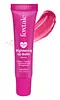
This brightening lip moisturizer is formulated around Tocopherol and Ascorbyl Palmitate to brighten dull-looking skin and hydrate lips.
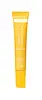
This barrier-repair lip moisturizer is formulated around Helianthus Annuus Seed Oil and Butyrospermum Parkii Butter to strengthen the lip barrier and hydrate lips.

What's inside
What's inside
 Key Ingredients
Benefits
Concerns
Ingredients Side-by-side
Hydrogenated Polyisobutene
EmollientDiisostearyl Malate
EmollientDisteardimonium Hectorite
StabilisingPropylene Carbonate
SolventOlive Oil Polyglyceryl-6 Esters
Emollient


Polyglyceryl-6 Pentaoleate
Emulsifying
Diethylamino Hydroxybenzoyl Hexyl Benzoate
UV Filter
Ethylhexyl Triazone
UV Absorber
Trihydroxystearin
Skin Conditioning
Cyclopentasiloxane
Emollient
Trimethylsiloxysilicate
Emollient
Aroma


Tocopherol
Antioxidant







Sodium Hyaluronate
Humectant
Ethylhexyl Palmitate
Emollient


Silica Dimethyl Silylate
EmollientButylene Glycol
Humectant
Pentylene Glycol
Skin Conditioning
Squalane
Emollient
Ascorbyl Palmitate
Antioxidant

Euterpe Oleracea Fruit Oil
Skin Conditioning
Rubus Idaeus Seed Oil
Emollient
Hydrolyzed Corn Starch
HumectantLauryl Laurate
Skin Conditioning
Methyl Diisopropyl Propionamide
MaskingEthyl Menthane Carboxamide
TonicMenthyl Lactate
Masking
Caffeine
Skin Conditioning
Hydrated Silica
Abrasive
Palmitoyl Tripeptide-1
Skin Conditioning

Tribehenin
Emollient
Sorbitan Isostearate
Emulsifying
Rebaudioside A
Skin ConditioningStevioside
MaskingPentaerythrityl Tetra-Di-T-Butyl Hydroxyhydrocinnamate
Antioxidant
Hydrogenated Polyisobutene, Diisostearyl Malate, Disteardimonium Hectorite, Propylene Carbonate, Olive Oil Polyglyceryl-6 Esters, Polyglyceryl-6 Pentaoleate, Diethylamino Hydroxybenzoyl Hexyl Benzoate, Ethylhexyl Triazone, Trihydroxystearin, Cyclopentasiloxane, Trimethylsiloxysilicate, Aroma, Tocopherol, Sodium Hyaluronate, Ethylhexyl Palmitate, Silica Dimethyl Silylate, Butylene Glycol, Pentylene Glycol, Squalane, Ascorbyl Palmitate, Euterpe Oleracea Fruit Oil, Rubus Idaeus Seed Oil, Hydrolyzed Corn Starch, Lauryl Laurate, Methyl Diisopropyl Propionamide, Ethyl Menthane Carboxamide, Menthyl Lactate, Caffeine, Hydrated Silica, Palmitoyl Tripeptide-1, Tribehenin, Sorbitan Isostearate, Rebaudioside A, Stevioside, Pentaerythrityl Tetra-Di-T-Butyl Hydroxyhydrocinnamate
Helianthus Annuus Seed Oil
Emollient
Hydrogenated Polyisobutene
EmollientEthylhexyl Methoxycinnamate
UV Absorber

Diisostearyl Malate
EmollientPolyglyceryl-3 Diisostearate
Emulsifying
Ethylhexyl Triazone
UV Absorber
Glyceryl Behenate/Eicosadioate
Emollient
Polyethylene
Abrasive
Caprylic/Capric Triglyceride
Masking
Kojic Dipalmitate
Emollient
Aroma
Tocotrienols
Skin Conditioning
Punica Granatum Seed Oil
Emollient
Butyrospermum Parkii Butter
Skin Conditioning
Persea Gratissima Oil
Skin Conditioning
Ascorbyl Palmitate
Antioxidant
Tocopherol
Antioxidant
Lecithin
Emollient
Paraffin
Skin Conditioning
Glycol Montanate
EmulsifyingSynthetic Wax
Abrasive
Caprylyl Glycol
Emollient
Vanillin
Masking
Sucralose
Skin ConditioningHelianthus Annuus Seed Oil, Hydrogenated Polyisobutene, Ethylhexyl Methoxycinnamate, Diisostearyl Malate, Polyglyceryl-3 Diisostearate, Ethylhexyl Triazone, Glyceryl Behenate/Eicosadioate, Polyethylene, Caprylic/Capric Triglyceride, Kojic Dipalmitate, Aroma, Tocotrienols, Punica Granatum Seed Oil, Butyrospermum Parkii Butter, Persea Gratissima Oil, Ascorbyl Palmitate, Tocopherol, Lecithin, Paraffin, Glycol Montanate, Synthetic Wax, Caprylyl Glycol, Vanillin, Sucralose
Ingredients Explained
These ingredients are found in both products.
Ingredients higher up in an ingredient list are typically present in a larger amount.
Aroma refers to an ingredient, or mixture of ingredients, that impart or mask a flavor.
The name is slightly confusing. This is because INCI associates aroma with flavor instead of smell.
Here is the official definition from the The International Cosmetic Ingredient Dictionary and Handbook:
“Aroma is a term for ingredient labeling used to identify that a product contains a material or combination of materials normally added to a cosmetic to produce or to mask a particular flavor.”
INCI shows the only purpose of aroma to be "flavouring".
However, due to regulation differences, some companies may use aroma in place of parfum.
In Canada, this ingredient only has to be listed in concentrations above 1%.
Learn more about AromaAscorbyl Palmitate is a fat-soluble form of vitamin C (Ascorbic Acid) made by combining it with palmitic acid.
It is able to blend easily into creams and oil-based formulas because it dissolves in oils rather than water.
As you may know, regular vitamin C is notorious for breaking down when exposed to sunlight and air. Ascorbyl Palmitate is more stable and degrades at a slower rate.
Research on whether it converts efficiently into active vitamin C once it's applied on your skin is still limited.
Some in-vitro studies suggest it may support collagen production, but it is not considered one of the stronger vitamin C derivatives, like:
Due to the palmitic acid base, this ingredient may not be fungal acne safe. Comedogenic studies have also shown this ingredient to have a rating of 2.
It's also worth keeping in mind that comedogenic and irritancy ratings are tested on individual ingredients, not finished formulas. The final product's formulation, concentration, and other ingredients all play a role in how something actually behaves on your skin.
Learn more about Ascorbyl PalmitateDiisostearyl Malate is an emollient and most often used in lip products. It comes from isostearyl alcohol, a fatty acid, and malic acid, an AHA.
As an emollient, Diisostearyl Malate helps create a thin film on your skin to trap moisture in. This helps keep your skin soft and smooth.
Ethylhexyl Triazone (aka Octyl Triazone) is an oil-soluble organic UVB filter. It has peak absorption around 314 nm, right in the middle of the UVB range.
This ingredient is described as one of the most effective UVB filters available and small concentrations are enough to deliver a high SPF thanks to its strong UV absorbing power.
Formulators love it for its stability; its ability to filter UV stays practically unchanged even under intense radiation and it can also help boost the photostability of less stable filters like avobenzone.
It's also a great pick for water resistant products because it's insoluble in water and has a good affinity for keratin.
Because it's a big, heavy molecule, the European Scientific Committee has found to to have very low dermal penetration and negative results for allergenicity.
In vitro testing also showed a low absorption rate and clean results on irritation.
Typical use levels are 1-5% with 5% being the maximum in the EU, Japan, and other markets that allow it. However, this ingredient is not approved yet in the US or Canada.
Learn more about Ethylhexyl TriazoneHydrogenated Polyisobutene is a synthetic polymer. Polymers are compounds with high molecular weight. Hydrogenated Polyisobutene is an emollient and texture enhancer.
In one study, Hydrogenated Polyisobutene showed better skin hydration levels than Caprylic/Capric Triglyceride. As an emollient, it helps keep your skin soft and hydrated by trapping moisture in.
Hydrogenated Polyisobutene is often used as a mineral oil replacement.
Learn more about Hydrogenated PolyisobuteneTocopherol is a fat-soluble antioxidant known as Vitamin E.
You'll find this ingredient in the vast majority of skincare (for good reason). It works to neutralize free radicals, or unstable molecules generated by UV exposure, pollution, and other environmental stressors, before they can cause oxidative damage to your skin cells.
Topically applied tocopherol has been shown to protect against UV damage by ramping up the skin's own natural defense enzymes.
It also acts as a skin conditioning agent; some studies show that regular topical use can improve the skin's water-binding capacity over 2-4 weeks.
This ingredient is especially loved for being a team player. When combined with Vitamin C, the photoprotective effect of both ingredients roughly doubles and the combo also helps reduce UV-induced DNA damage.
This ingredient has some brightening potential but it's more of a prevention ingredient than spot-fader. Cell studies show it can slow down melanin production but it's worth noting that it's not the most powerful brightener out there.
In formulations, it also serves as a stabilizer that helps protect other oxidation-prone ingredients from degrading.
Concentrations usually range from 0.1-1% in most leave-on products.
Learn more about Tocopherol

