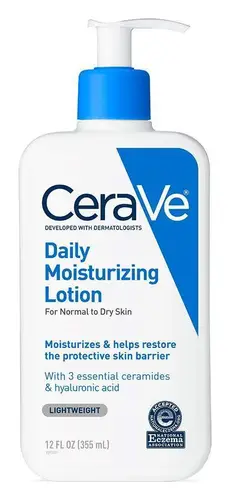
This barrier-repair moisturizer is formulated around Ceramide NP and Centella Asiatica Extract to strengthen the skin barrier and calm redness.

What's inside
What's inside
 Key Ingredients
Benefits
Concerns
Ingredients Side-by-side
Tretinoin
Skin Conditioning









Decyl Oleate
Emollient



Isopropyl Myristate
Emollient
Glyceryl Stearate
Emollient
Acetylated Lanolin Alcohol
Emollient
Ceteareth-30
CleansingCetyl Alcohol
Emollient

Proline
Skin Conditioning
PEG-400
Emulsion StabilisingUrea
Buffering

Hydrolyzed Collagen
Emollient
Methylparaben
Preservative


Propylparaben
Preservative
Lactic Acid
Buffering

Sodium Citrate
BufferingSodium Hydroxide
BufferingTocopherol
Antioxidant


Parfum
Masking

Water
Skin ConditioningGlycerin
Humectant
Caprylic/Capric Triglyceride
Masking
Cetearyl Alcohol
Emollient
Petrolatum
Emollient
Ceteareth-20
Cleansing
Dimethicone
Emollient
Cetyl Alcohol
Emollient
PEG-8 Distearate
Emulsifying
Ceramide NP
Skin Conditioning

Ceramide AP
Skin Conditioning
Ceramide EOP
Skin Conditioning
Phytosphingosine
Skin Conditioning
Sodium Hyaluronate
Humectant
Centella Asiatica Extract
Cleansing
Plukenetia Volubilis Seed Oil
Emollient
Sodium Lauroyl Lactylate
EmulsifyingEthylhexylglycerin
Skin ConditioningGlyceryl Stearate
Emollient
Madecassoside
Antioxidant
Panthenol
Skin Conditioning
Pantolactone
Humectant
Phenoxyethanol
Preservative
Propylene Glycol
Humectant
Allantoin
Skin Conditioning
Cholesterol
Emollient
Xanthan Gum
EmulsifyingCarbomer
Emulsion StabilisingPEG-100 Stearate
Surfactant
Tocopherol
Antioxidant
Caprylyl Glycol
Emollient
Triethanolamine
BufferingTetrasodium Glutamate Diacetate
ChelatingWater, Glycerin, Caprylic/Capric Triglyceride, Cetearyl Alcohol, Petrolatum, Ceteareth-20, Dimethicone, Cetyl Alcohol, PEG-8 Distearate, Ceramide NP, Ceramide AP, Ceramide EOP, Phytosphingosine, Sodium Hyaluronate, Centella Asiatica Extract, Plukenetia Volubilis Seed Oil, Sodium Lauroyl Lactylate, Ethylhexylglycerin, Glyceryl Stearate, Madecassoside, Panthenol, Pantolactone, Phenoxyethanol, Propylene Glycol, Allantoin, Cholesterol, Xanthan Gum, Carbomer, PEG-100 Stearate, Tocopherol, Caprylyl Glycol, Triethanolamine, Tetrasodium Glutamate Diacetate
Reviews
Alternatives
Ingredients Explained
These ingredients are found in both products.
Ingredients higher up in an ingredient list are typically present in a larger amount.
Cetyl Alcohol is a fatty alcohol. Fatty Alcohols are most often used as an emollient or to thicken a product.
Its main roles are:
Though it has "alcohol" in the name, it is not related to denatured alcohol or ethyl alcohol.
The FDA allows products labeled "alcohol-free" to have fatty alcohols.
This ingredient may not be fungal acne safe. It is a primary fatty alcohol with a chain length above 12 carbons. A study from 2019 show Malassezia can feed on fatty alcohols in this range, so it may trigger fungal acne in those prone to it.
Learn more about Cetyl AlcoholGlyceryl Stearate is made by reacting glycerin with stearic acid (typically sourced from plant oils like palm or coconut). It's an emulsifier, emollient, and mild occlusive.
Emulsifiers help ingredients like oil and water stay mixed so your formula stays nicely blended and uniform in texture.
This ingredient is typically used in concentrations between 1-10%. Studies have found it to be non-sensitizing, non-phototoxic, and non-photoallergenic.
A close cousin of this ingredient is Glyceryl Stearate SE ("self-emulsifying"). This just has a small amount of sodium or potassium stearate added so it can emulsify without a co-emulsifier.
Since this ingredient is an ester of a C18 fatty acid, it may not be fungal acne safe. The Malassezia yeast can potentially metabolize within the C11-C24 range.
Fun fact: The human body also creates Glyceryl Stearate naturally.
Learn more about Glyceryl StearateTocopherol is a fat-soluble antioxidant known as Vitamin E.
You'll find this ingredient in the vast majority of skincare (for good reason). It works to neutralize free radicals, or unstable molecules generated by UV exposure, pollution, and other environmental stressors, before they can cause oxidative damage to your skin cells.
Topically applied tocopherol has been shown to protect against UV damage by ramping up the skin's own natural defense enzymes.
It also acts as a skin conditioning agent; some studies show that regular topical use can improve the skin's water-binding capacity over 2-4 weeks.
This ingredient is especially loved for being a team player. When combined with Vitamin C, the photoprotective effect of both ingredients roughly doubles and the combo also helps reduce UV-induced DNA damage.
This ingredient has some brightening potential but it's more of a prevention ingredient than spot-fader. Cell studies show it can slow down melanin production but it's worth noting that it's not the most powerful brightener out there.
In formulations, it also serves as a stabilizer that helps protect other oxidation-prone ingredients from degrading.
Concentrations usually range from 0.1-1% in most leave-on products.
Learn more about Tocopherol