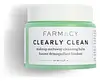
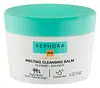
Farmacy Clearly Clean Makeup Meltaway Cleansing Balm Versus Sephora Collection Melting Cleansing Balm with Algae Extract
This oil-based makeup remover is made to dissolve makeup, sunscreen, and daily buildup.
This oil-based makeup remover is made to dissolve makeup, sunscreen, and daily buildup.


What's inside
What's inside
 Key Ingredients
Benefits
Concerns
Ingredients Side-by-side
Cetyl Ethylhexanoate
EmollientSynthetic Wax
Abrasive

Coco-Caprylate/Caprate
Emollient
Caprylic/Capric Triglyceride
Masking

Polyglyceryl-10 Dioleate
Emulsifying

Polyglyceryl-6 Dicaprate
EmulsifyingSorbitan Oleate Decylglucoside Crosspolymer
CleansingHelianthus Annuus Seed Oil
Emollient
Moringa Oleifera Seed Extract
Skin Conditioning
Carica Papaya Fruit Extract
Skin ConditioningMoringa Oleifera Leaf Water
Skin ConditioningPentylene Glycol
Skin Conditioning
Gluconolactone
Chelating







Polyglyceryl-6 Oleate
Emulsifying
Glyceryl Citrate/Lactate/Linoleate/Oleate
Emulsifying
Sorbitan Sesquioleate
Emulsifying
Potassium Olivate
EmulsifyingGlyceryl Caprylate
EmollientPolyglyceryl-3 Caprate
EmulsifyingPolyglyceryl-4 Cocoate
Emollient

Sodium Chloride
MaskingButylene Glycol
Humectant
Water
Skin ConditioningSodium Benzoate
Masking
Maltodextrin
Absorbent
Glyceryl Laurate
Emollient
Cetyl Ethylhexanoate, Synthetic Wax, Coco-Caprylate/Caprate, Caprylic/Capric Triglyceride, Polyglyceryl-10 Dioleate, Polyglyceryl-6 Dicaprate, Sorbitan Oleate Decylglucoside Crosspolymer, Helianthus Annuus Seed Oil, Moringa Oleifera Seed Extract, Carica Papaya Fruit Extract, Moringa Oleifera Leaf Water, Pentylene Glycol, Gluconolactone, Polyglyceryl-6 Oleate, Glyceryl Citrate/Lactate/Linoleate/Oleate, Sorbitan Sesquioleate, Potassium Olivate, Glyceryl Caprylate, Polyglyceryl-3 Caprate, Polyglyceryl-4 Cocoate, Sodium Chloride, Butylene Glycol, Water, Sodium Benzoate, Maltodextrin, Glyceryl Laurate
Helianthus Annuus Seed Oil
Emollient
Glycerin
Humectant
Hydrogenated Castor Oil
Emollient
Polyglyceryl-3 Caprate
EmulsifyingTribehenin
Emollient
Water
Skin ConditioningCoco-Caprylate/Caprate
Emollient
Behenyl Alcohol
Emollient
Polyglyceryl-4 Caprate
EmulsifyingCaprylyl Glycol
Emollient
Cocamidopropyl Betaine
Cleansing
Polyglyceryl-3 Stearate
Emulsifying
Maris Aqua
HumectantTocopherol
Antioxidant



Sodium Chloride
MaskingHydrolyzed Algin
Sodium Benzoate
Masking
Phenethyl Alcohol
MaskingLaminaria Digitata Extract
Skin Protecting
Chlorella Vulgaris Extract
Skin ConditioningSaccharide Isomerate
Humectant
Citric Acid
Buffering
CI 42090
Cosmetic ColorantHelianthus Annuus Seed Oil, Glycerin, Hydrogenated Castor Oil, Polyglyceryl-3 Caprate, Tribehenin, Water, Coco-Caprylate/Caprate, Behenyl Alcohol, Polyglyceryl-4 Caprate, Caprylyl Glycol, Cocamidopropyl Betaine, Polyglyceryl-3 Stearate, Maris Aqua, Tocopherol, Sodium Chloride, Hydrolyzed Algin, Sodium Benzoate, Phenethyl Alcohol, Laminaria Digitata Extract, Chlorella Vulgaris Extract, Saccharide Isomerate, Citric Acid, CI 42090
Reviews
Ingredients Explained
These ingredients are found in both products.
Ingredients higher up in an ingredient list are typically present in a larger amount.
Coco-Caprylate/Caprate is a lightweight ester created from coconut oil fatty acids, caprylic acid, and capric acid.
It is an emollient that helps soften skin and reduce transepidermal water loss (TEWL). What sets it apart from heavier emollients is its ultralight, non-greasy feel.
Once applied, this ingredient dries down quickly and leaves a dry, silky finish behind. This also helps improve spreadability and texture.
This ingredient has an excellent safety-record and is non-irritating.
Typical concentrations for cosmetics range from 0.5-62%.
Research on Malassezia growth found no growth on fatty acid esters with chain lengths shorter than 12 carbons (it prefers C11-24).
Since Coco-Caprylate/Caprate is built on C8 and C10 fatty acids, it is out of the range that Malassezia metabolizes, and therefore safe for fungal acne.
Learn more about Coco-Caprylate/CaprateHelianthus Annuus Seed Oil is a plant oil derived from the seeds of a sunflower.
It is rich in fatty acids, primarily linoleic acid and oleic acid. This gives it emollient and skin conditioning properties.
The reason this ingredient is so effective is because it forms a thin film on the skin that reduces transepidermal water loss (TEWL) while supplying linoleic acid to the stratum corneum to improve barrier strength.
The high linoleic acid content is particularly noteworthy for acne-prone skin.
Research suggests that acne-prone skin tends to be deficient in linoleic acid in sebum. Topical application may help replenish this to support a healthier follicular environment and less comedone-promoting sebum.
One randomized study found sunflower seed oil preserved skin barrier integrity in adult volunteers with and without atopic dermatitis (outperforming olive oil).
This ingredient is well-studied, gentle, and an effective emollient suitable for most skin types.
On fungal acne: This ingredient may not be Fungal acne (Malassezia folliculitis) safe. This is because it contains fatty acids with carbon chain lengths in the C11-C24 range.
Learn more about Helianthus Annuus Seed OilWe don't have a description for Polyglyceryl-3 Caprate yet.
Sodium Benzoate is a preservative. It's used in both cosmetic and food products to inhibit the growth of mold and bacteria. It is typically produced synthetically.
Both the US FDA and EU Health Committee have approved the use of sodium benzoate. In the US, levels of 0.1% (of the total product) are allowed.
Sodium benzoate works as a preservative by inhibiting the growth of bacteria inside of cells. It prevents the cell from fermenting a type of sugar using an enzyme called phosphofructokinase.
It is the salt of benzoic acid. Foods containing sodium benzoate include soda, salad dressings, condiments, fruit juices, wines, and snack foods.
Studies for using ascorbic acid and sodium benzoate in cosmetics are lacking, especially in skincare routines with multiple steps.
We always recommend speaking with a professional, such as a dermatologist, if you have any concerns.
Learn more about Sodium BenzoateChances are, you eat sodium chloride every day. Sodium Chloride is also known as table salt. This ingredient has many purposes in skincare: thickener, emulsifier, and exfoliator.
You'll most likely find this ingredient in cleansers where it is used to create a gel-like texture. As an emulsifier, it also prevents ingredients from separating.
You might see people debate whether Sodium Chloride is comedogenic, but there actually haven't been any comedogenic tests done on it. Either way, the overall formulation of a product matters a lot more than any single ingredient.
You might see this ingredient used in scrubs as a primary exfoliating ingredient.
Learn more about Sodium ChlorideWater. It's the most common cosmetic ingredient of all. You'll usually see it at the top of ingredient lists, meaning that it makes up the largest part of the product.
So why is it so popular? Water most often acts as a solvent - this means that it helps dissolve other ingredients into the formulation.
You'll also recognize water as that liquid we all need to stay alive. If you see this, drink a glass of water. Remember to stay hydrated!
Learn more about Water

