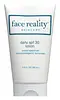
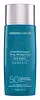
Face Reality Skincare Daily SPF30 Lotion Versus Colorescience Sunforgettable Total Protection Face Shield Classic SPF 50
This chemical sunscreen covers most of the UV range, lighter on the deep UVA that drives aging.
This hybrid sunscreen covers the full UV range and blocks ~98% of UVB at SPF 50.

What's inside
What's inside
 Key Ingredients
Benefits
Concerns
Ingredients Side-by-side
Ethylhexyl Salicylate 4.75%
UV Absorber

Benzophenone-3 4.25%
UV Absorber

Butyl Methoxydibenzoylmethane 3%
UV Absorber
Octocrylene 2.8%
UV Absorber
Acrylates/C12-22 Alkyl Methacrylate Copolymer
Aleurites Moluccanus Seed Oil
Skin Conditioning

Allantoin
Skin Conditioning




Butyloctyl Salicylate
Skin Conditioning
Benzoic Acid
Masking
C12-15 Alkyl Benzoate
AntimicrobialCamellia Sinensis Leaf Extract
Antimicrobial




Cetearyl Alcohol
Emollient



Cyclopentasiloxane
Emollient
Dimethicone
Emollient
Ethylhexylglycerin
Skin ConditioningGlycereth-2 Cocoate
Emulsifying
Glycerin
Humectant
Helianthus Annuus Seed Oil
Emollient
Macadamia Ternifolia Seed Oil
Emollient
Magnesium Aluminum Silicate
Absorbent
Phenoxyethanol
Preservative
Polyacrylate Crosspolymer-6
Emulsion StabilisingPotassium Cetyl Phosphate
EmulsifyingTetrasodium EDTA
ChelatingTocopheryl Acetate
Antioxidant
Tocopherol
Antioxidant
Water
Skin ConditioningEthylhexyl Salicylate 4.75%, Benzophenone-3 4.25%, Butyl Methoxydibenzoylmethane 3%, Octocrylene 2.8%, Acrylates/C12-22 Alkyl Methacrylate Copolymer, Aleurites Moluccanus Seed Oil, Allantoin, Butyloctyl Salicylate, Benzoic Acid, C12-15 Alkyl Benzoate, Camellia Sinensis Leaf Extract, Cetearyl Alcohol, Cyclopentasiloxane, Dimethicone, Ethylhexylglycerin, Glycereth-2 Cocoate, Glycerin, Helianthus Annuus Seed Oil, Macadamia Ternifolia Seed Oil, Magnesium Aluminum Silicate, Phenoxyethanol, Polyacrylate Crosspolymer-6, Potassium Cetyl Phosphate, Tetrasodium EDTA, Tocopheryl Acetate, Tocopherol, Water
Zinc Oxide 12%
Cosmetic Colorant
Water
Skin ConditioningC12-15 Alkyl Benzoate
AntimicrobialButyloctyl Salicylate
Skin Conditioning
Isododecane
EmollientLauryl PEG-8 Dimethicone
Surfactant
Dimethicone/Vinyl Dimethicone Crosspolymer
Skin Conditioning
Propanediol
Solvent
Dimethicone
Emollient
Caprylyl Methicone
Skin Conditioning
Niacinamide
Smoothing


Tridecyl Salicylate
Skin Conditioning
Trilaureth-4 Phosphate
EmulsifyingDimethiconol/Propylsilsesquioxane/Silicate Crosspolymer
Lauryl PEG-10 Tris(Trimethylsiloxy)Silylethyl Dimethicone
Emulsifying
Maltodextrin
Absorbent
Sodium Chloride
MaskingDisodium Lauriminodipropionate
CleansingTocopheryl Phosphate
CleansingBisabolol
Antioxidant
Ethylhexylglycerin
Skin ConditioningAllantoin
Skin Conditioning
Dimethylmethoxy Chromanol
Antioxidant
Caesalpinia Spinosa Fruit Pod Extract
Tremella Fuciformis Sporocarp Extract
Antioxidant
Helianthus Annuus Sprout Extract
Skin ConditioningCaprylyl Glycol
Emollient
Hexylene Glycol
EmulsifyingTetrasodium Glutamate Diacetate
ChelatingIsoceteth-10
EmulsifyingSilica
Abrasive
Sodium Hydroxide
BufferingPhenoxyethanol
Preservative
Sodium Benzoate
Masking
Benzoic Acid
Masking
Dehydroacetic Acid
Preservative
CI 77491
Cosmetic ColorantCI 77492
Cosmetic ColorantCI 77499
Cosmetic ColorantZinc Oxide 12%, Water, C12-15 Alkyl Benzoate, Butyloctyl Salicylate, Isododecane, Lauryl PEG-8 Dimethicone, Dimethicone/Vinyl Dimethicone Crosspolymer, Propanediol, Dimethicone, Caprylyl Methicone, Niacinamide, Tridecyl Salicylate, Trilaureth-4 Phosphate, Dimethiconol/Propylsilsesquioxane/Silicate Crosspolymer, Lauryl PEG-10 Tris(Trimethylsiloxy)Silylethyl Dimethicone, Maltodextrin, Sodium Chloride, Disodium Lauriminodipropionate, Tocopheryl Phosphate, Bisabolol, Ethylhexylglycerin, Allantoin, Dimethylmethoxy Chromanol, Caesalpinia Spinosa Fruit Pod Extract, Tremella Fuciformis Sporocarp Extract, Helianthus Annuus Sprout Extract, Caprylyl Glycol, Hexylene Glycol, Tetrasodium Glutamate Diacetate, Isoceteth-10, Silica, Sodium Hydroxide, Phenoxyethanol, Sodium Benzoate, Benzoic Acid, Dehydroacetic Acid, CI 77491, CI 77492, CI 77499
Reviews
Ingredients Explained
These ingredients are found in both products.
Ingredients higher up in an ingredient list are typically present in a larger amount.
Allantoin is a soothing ingredient known for its protective and moisturizing properties; it's basically a quiet workhorse ingredient you can find in a huge range of cosmetics.
Though it can be derived from the comfrey plant, allantoin is produced synthetically for cosmetic products to ensure purity.
Research shows it can encourage your skin cells to turn over and renew by stimulating keratinocyte and fibroblast proliferation.
It also has mild keratolytic properties to help loosen and shed dead skin cells without being harsh.
Studies also suggest allantoin can help calm inflammation by dialing down some of the chemical signals your skin sends out when it is irritated.
This ingredient is typically used in the 0.1-0.5% range, and the FDA recognizes it as a skin protectant in OTC products up to 2%.
Overall, allantoin is a wonderful addition to most routines; it is stable across a wide pH range (~4-8), works well with other ingredients, and is considered non-sensitizing/non-irritating.
Fun fact: Allantoin is naturally occurring in comfrey root, beets, chamomile, and wheat sprouts. Our bodies even produce it as a byproduct of uric acid metabolism.
Learn more about AllantoinBenzoic Acid is an organic acid that shows up in cosmetics as a preservative. It helps keep a product from spoiling by holding back the growth of yeast, mold, and some bacteria.
This ingredient also functions as a fragrance ingredient that helps mask the unpleasant scent of other ingredients.
The way it works is worth understanding; benzoic acid works when the formula is acidic. It is able to sneak into a microbe's cell and mess up how it functions to stop it from growing in an acidic product.
However, the acid switches to an inactive form and stops working if a product isn't acidic enough (above ~5 pH). This is why you'll often see it in low pH products or teamed up with other preservatives to cover the gap.
Safety wise, it's one of the better studied preservatives out there.
The Cosmetic Ingredient Review Expert Panel has concluded this ingredient to be safe for use in cosmetic formulations at concentrations up to 5%.
A large international review found this ingredient had no effects on the human body and had low irritation potential.
Just so you know, real world use is usually much lower than the 5% ceiling (usually 1% of less).
The EU caps it at 2.5% in rinse-off products, 1.7% in oral care, and 0.5% in leave-on products.
One thing worth mentioning (it's nothing to worry about): some people get a little stinging or flushing where they apply it. This isn't a true allergy; it's a temporary and harmless reaction. This is the same kind of mild tingle you might notice from sorbic acid.
Learn more about Benzoic AcidButyloctyl Salicylate is a chemical UV filter structurally similar to octisalate. It is a photostabilizer, SPF booster, emollient and solvent. This ingredient helps evenly spread out ingredients.
According to a manufacturer, it is suitable for pairing with micro Titanium Dioxide, Zinc Oxide, and pigments.
Photostabilizers help stabilize UV-filters and prevents them from degrading quickly.
Learn more about Butyloctyl SalicylateC12-15 Alkyl Benzoate is a lightweight emollient made by combinig benzoic acid with fatty alcohols that are 12-15 carbons long.
In cosmetics, it plays several roles:
The Cosmetic Review Expert Panel has concluded the alkyl benzoate group to be safe as used in cosmetics; it wasn't found to be a skin irritant and unlikely to be absorbed due to its low water solubility.
This report recorded almost 1000 reported uses with concentrations up to 59% in leave-on products but your cosmetics will typically use 0.5-15% depending on the product.
It's often called a "SPF booster": this is because it keeps UV filters properly dissolved and evenly distributed to support a sunscreen's performance. It doesn't actually raise SPF on its own.
Overall, this ingredient is well tolerated.
This ingredient is fungal acne safe because it is an ester of benzoic acid.
Think of this ingredient as two parts stuck together: an oily part and an acid part. Malassezia only gets a meal when it can snip off a fatty acid to eat. With C12-15 Alkyl Benzoate, the acid part is benzoic acid, which isn't a fatty acid and which the yeast can't use as food.
Benzoic acid is actually used as a preservative to stop yeast from growing.
The oily part is a blend of C12-15 fatty alcohols but fatty alcohols in this size range can support only a little Malassezia growth (mostly for one species of Malassezia as well).
In the ingredient, those alcohols stay locked inside the molecule. The yeast can only reach them by snipping the benzoate bond, and that type of bond is harder for it to cut than a normal fatty bond.
So not much gets released. And whatever does get snipped comes packaged with benzoic acid, which discourages yeast growth.
Learn more about C12-15 Alkyl BenzoateDimethicone is a type of synthetic silicone created from natural materials such as quartz. It is also known as polydimethylsiloxane.
What it does:
Dimethicone comes in different viscosities:
Depending on the viscosity, dimethicone has different properties.
Ingredients lists don't always show which type is used, so we recommend reaching out to the brand if you have questions about the viscosity.
This ingredient is unlikely to cause irritation because it does not get absorbed into skin. However, people with silicone allergies should be careful about using this ingredient.
Note: Dimethicone may contribute to pilling. This is because it is not oil or water soluble, so pilling may occur when layered with products. When mixed with heavy oils in a formula, the outcome is also quite greasy.
Learn more about DimethiconeEthylhexylglycerin is created from glycerin. It is a multitasker ingredient that:
The CIR Expert Panel found minimal skin absorption or sensitization of any kind in a safety assessment. Though this ingredient is considered well-tolerated, a small number of cases of allergic dermatitis have been published since 2002. Just be sure to patch test if you are unsure.
Industry-reported use ranges from 8% in rinse-off products and 2% in leave-on formulations.
Learn more about EthylhexylglycerinPhenoxyethanol is one of the most widely used preservatives in skincare (and for good reason!).
It has a large spectrum of antimicrobial activity and especially effective bacteria, yeast, and mold while only having a weak effect on your skin's natural microbiome.
On a cellular level, it disrupts the cell membranes of microbes by poking holes that make the cell leak. This shuts down the chemical reactions the microbe needs to make energy so it can no longer survive.
Another perk of this ingredient is that it stays functional across a wide pH range (3-10).
You'll often see it paired with boosters like Ethylhexylglycerin; one study showed that a 1:9 ratio of Ethylhexylglycerin to Phenoxyethanol damages bacterial membranes as effectively as doubling the Phenoxyethanol concentration on its own.
Typical use concentrations range from 0.3-1% depending on the formula, and this ingredient is capped at 1% int the EU.
Safety-wise, the fear mongering does not hold up to the evidence. The EU's Scientific Committee on Consumer Safety and FDA consider it safe as a preservative at up to 1%, including for children of all ages.
Adverse systemic effects only showed up in animal studies at exposures roughly 200x higher than what people get from cosmetics. And despite its very widespread use, this ingredient is a rare sensitizer and allergic reactions are uncommon.
Learn more about PhenoxyethanolWater. It's the most common cosmetic ingredient of all. You'll usually see it at the top of ingredient lists, meaning that it makes up the largest part of the product.
So why is it so popular? Water most often acts as a solvent - this means that it helps dissolve other ingredients into the formulation.
You'll also recognize water as that liquid we all need to stay alive. If you see this, drink a glass of water. Remember to stay hydrated!
Learn more about Water

