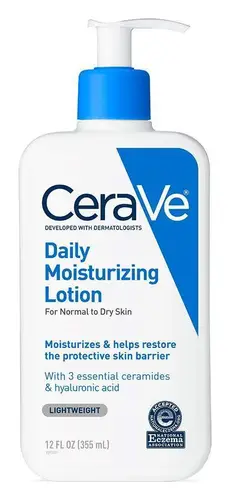
This barrier-repair moisturizer is formulated around Panthenol and Squalane to strengthen the skin barrier and hydrate skin.
This barrier-repair moisturizer is formulated around Niacinamide and Cholesterol to strengthen the skin barrier and hydrate skin.


What's inside
What's inside
 Key Ingredients
Benefits
Concerns
Ingredients Side-by-side
Water
Skin ConditioningDipropylene Glycol
HumectantGlycerin
Humectant


Butylene Glycol
Humectant
1,2-Hexanediol
Skin Conditioning
Panthenol
Skin Conditioning

Caprylic/Capric Triglyceride
Masking
Hydrogenated Polydecene
EmollientSqualane
Emollient
Cetearyl Olivate


Vinyldimethicone

Sorbitan Olivate
Emulsifying
Carbomer
Emulsion StabilisingAllantoin
Skin Conditioning
Ectoin
Skin Conditioning
Glyceryl Stearate Se
Emulsifying


Ceramide NP
Skin Conditioning
Hydrogenated Lecithin
Emulsifying
Sodium Hyaluronate
Humectant
Hydrolyzed Hyaluronic Acid
Humectant
Hydrolyzed Sodium Hyaluronate
Skin Conditioning
Hyaluronic Acid
Humectant
Hydroxypropyltrimonium Hyaluronate
Potassium Hyaluronate
Skin ConditioningPentylene Glycol
Skin Conditioning
Sodium Hyaluronate Crosspolymer
Humectant
Sodium Acetylated Hyaluronate
Humectant
Xylitylglucoside
Humectant
Anhydroxylitol
Humectant
Xylitol
Humectant
Tromethamine
BufferingSodium Phytate
ChelatingEthylhexylglycerin
Skin ConditioningWater, Dipropylene Glycol, Glycerin, Butylene Glycol, 1,2-Hexanediol, Panthenol, Caprylic/Capric Triglyceride, Hydrogenated Polydecene, Squalane, Cetearyl Olivate, Vinyldimethicone, Sorbitan Olivate, Carbomer, Allantoin, Ectoin, Glyceryl Stearate Se, Ceramide NP, Hydrogenated Lecithin, Sodium Hyaluronate, Hydrolyzed Hyaluronic Acid, Hydrolyzed Sodium Hyaluronate, Hyaluronic Acid, Hydroxypropyltrimonium Hyaluronate, Potassium Hyaluronate, Pentylene Glycol, Sodium Hyaluronate Crosspolymer, Sodium Acetylated Hyaluronate, Xylitylglucoside, Anhydroxylitol, Xylitol, Tromethamine, Sodium Phytate, Ethylhexylglycerin
Water
Skin ConditioningPentylene Glycol
Skin Conditioning
Diethylhexyl Malate
EmollientGlyceryl Stearate
Emollient
PEG-100 Stearate
Surfactant
Cetearyl Alcohol
Emollient
Ammonium Acryloyldimethyltaurate/Vp Copolymer
C12-15 Alkyl Benzoate
AntimicrobialIsononyl Isononanoate
EmollientPhenoxyethanol
Preservative
Ethylhexylglycerin
Skin ConditioningVigna Radiata Seed Extract
Skin ConditioningNiacinamide
Smoothing






Clitoria Ternatea Flower Extract
Skin ConditioningCholesterol
Emollient
Sodium Polyacrylate
Absorbent
Hydrogenated Polydecene
EmollientSodium Polyacryloyldimethyl Taurate
Emulsion StabilisingTrideceth-10
CleansingEDTA
ChelatingGlycerin
Humectant
1,2-Hexanediol
Skin Conditioning
Ceramide NP
Skin Conditioning
Glyceryl Stearate Se
Emulsifying
Acetylphytosphingosine
Skin ConditioningCeramide AP
Skin Conditioning
Glyceryl Stearate Citrate
Emollient
Phytosphingosine
Skin Conditioning
Tetraacetylphytosphingosine
Skin ConditioningOligopeptide-1
Skin Conditioning
Hexapeptide-11
Skin Conditioning
Copper Tripeptide-1
Skin Conditioning
Water, Pentylene Glycol, Diethylhexyl Malate, Glyceryl Stearate, PEG-100 Stearate, Cetearyl Alcohol, Ammonium Acryloyldimethyltaurate/Vp Copolymer, C12-15 Alkyl Benzoate, Isononyl Isononanoate, Phenoxyethanol, Ethylhexylglycerin, Vigna Radiata Seed Extract, Niacinamide, Clitoria Ternatea Flower Extract, Cholesterol, Sodium Polyacrylate, Hydrogenated Polydecene, Sodium Polyacryloyldimethyl Taurate, Trideceth-10, EDTA, Glycerin, 1,2-Hexanediol, Ceramide NP, Glyceryl Stearate Se, Acetylphytosphingosine, Ceramide AP, Glyceryl Stearate Citrate, Phytosphingosine, Tetraacetylphytosphingosine, Oligopeptide-1, Hexapeptide-11, Copper Tripeptide-1
Ingredients Explained
These ingredients are found in both products.
Ingredients higher up in an ingredient list are typically present in a larger amount.
1,2-Hexanediol is a synthetic liquid and another multi-functional powerhouse.
It is a:
- Humectant, drawing moisture into the skin
- Emollient, helping to soften skin
- Solvent, dispersing and stabilizing formulas
- Preservative booster, enhancing the antimicrobial activity of other preservatives
Ceramide NP (formerly known as Ceramide 3) is one of the skin's naturally occurring lipids.
Since ceramides are the major lipid components of the skin, they are crucial for maintaining skin barrier and hydration. Ceramide NP most closely mirrors the dominant kind in human skin amongst ceramide subtypes.
This ceramide works by slotting into gaps within the stratum corneum's lipid matrix to limit trans-epidermal water loss (TEWL) and shield the skin against external irritants.
A study with 312 patients found that using a ceramide-containing routine for 4 weeks reduced the severity of atopic dermatitis by over 61%.
Another clinical study in subjects aged 60 and older found that a ceramide body wash and moisturizer improved skin dryness and itchy skin in 15 days.
Overall, ceramides are considered non-irritating and safety tests have found little to no observable adverse effects from using this ingredient.
Ceramide NP is usually sourced from plants (like soybean or rice bran), or produced synthetically.
Learn more about Ceramide NPEthylhexylglycerin is created from glycerin. It is a multitasker ingredient that:
The CIR Expert Panel found minimal skin absorption or sensitization of any kind in a safety assessment. Though this ingredient is considered well-tolerated, a small number of cases of allergic dermatitis have been published since 2002. Just be sure to patch test if you are unsure.
Industry-reported use ranges from 8% in rinse-off products and 2% in leave-on formulations.
Learn more about EthylhexylglycerinGlycerin (or glycerol) is a compound naturally found in your skin. It's a powerhouse humectant that pulls water into the stratum corneum.
Topically, glycerin does several things at once:
Your skin makes glycerin on its own (mostly from sebaceous oil breakdown) and shuttles it to your outermost layer of skin, or your epidermis, via aquaporin-3.
Aquaporin-3 is a transporter that is essential for normal skin hydration, elasticity, and repair. Interestingly, mice lacking in AQP3 have dry and less elastic skin that can be fully corrected with glycerin.
This ingredient is non-irritating, plays well with almost every ingredient, and works across all skin types. Typical use is anywhere between 3-10% but can go up to 79% in some leave-on products.
Just know very high concentrations (>40%) can feel tacky in low humidity.
Glycerin is the name for this ingredient in American English. British English uses Glycerol/Glycerine.
Learn more about GlycerinGlyceryl Stearate SE is a self-emulsifying (SE) form of Glyceryl Stearate. It comes with a small amount of soap (usually potassium or sodium stearate) that gives it the "SE" part.
That soap lets it pull oil and water together on its own which is why it shows up as an emulsifier, thickener, and emollient.
Industry survey data shows this ingredient is used around 1-5% but Glyceryl Stearate goes as high at 17% in a leave-on deodorant.
Safety-wise, it's pretty boring: it's been deemed safe for topical use in 1982 and again most recently in 2021 by the CIR. Human repeat insult patch tests come back non-irritating, non-sensitizing, non-phototoxic, and non-photoallergenic.
This ingredient does carry a comedogenic rating of 3 from the old rabbit-ear assay. Just remember testing finished products in humans showed that formulas built with "comedogenic" ingredients are not necessarily comedogenic themselves. It's worth patch testing if you're breakout prone, and always listen to your skin.
The Malassezia yeast can potentially metabolize the stearic acid in this ingredient, so it may not be fungal acne safe.
Allergy is rare: a 310-patient patch test study of common emulsifiers found this ingredient was not a meaningful reactor. Isolated case reports do exist so a true contact allergy is possible but uncommon.
Learn more about Glyceryl Stearate SeHydrogenated Polydecene is a synthetic emollient. It forms a non-occlusive film on the skin's surface to provide a silky feel without being greasy.
In vivo studies in volunteers with atopic and dry skin showed no irritation or intolerance. The volunteers also saw a positive effect in dryness, scaling, and roughness after 28 days of use.
Concentrations up to 100% in guinea pig tests found it to be non-sensitizing and completely safe for use in cosmetics.
Learn more about Hydrogenated PolydecenePentylene Glycol (1,2-pentanediol) is a multitasking little diol with three main roles in a formula:
Research on alkanediols (the family pentylene glycol belongs to) show they work by disrupting microbial cell membranes. This disruption helps the primary preservative system in a product work more effectively at lower doses.
On the safety side, the Cosmetic Ingredient Review Expert Panel has concluded this ingredient to be safe as used in current cosmetic practices + concentrations.
Typical use levels in a formula run about 1-5%.
Learn more about Pentylene GlycolWater. It's the most common cosmetic ingredient of all. You'll usually see it at the top of ingredient lists, meaning that it makes up the largest part of the product.
So why is it so popular? Water most often acts as a solvent - this means that it helps dissolve other ingredients into the formulation.
You'll also recognize water as that liquid we all need to stay alive. If you see this, drink a glass of water. Remember to stay hydrated!
Learn more about Water