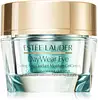
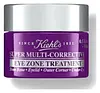
Estée Lauder DayWear Eye Cooling Anti-Oxidant Moisture Gel Creme Versus Kiehl's Super Multi-Corrective Anti-Aging Eye Cream
This calming eye moisturizer is formulated around Cucumis Sativus Fruit Extract and Ergothioneine to calm redness and hydrate skin.
This anti-aging eye moisturizer is formulated around Niacinamide and Palmitoyl Tetrapeptide-7 to soften the look of wrinkles and refine skin texture.

What's inside
What's inside
 Key Ingredients
Benefits
Concerns
Ingredients Side-by-side
Water
Skin ConditioningDimethicone
Emollient

Butylene Glycol
Humectant

Trisiloxane
Skin Conditioning
Glycerin
Humectant
Ammonium Acryloyldimethyltaurate/Vp Copolymer
Trehalose
Humectant
Sucrose
Humectant
Algae Extract
EmollientCucumis Sativus Fruit Extract
Emollient

Ascophyllum Nodosum Extract
Skin ConditioningAsparagopsis Armata Extract
Skin ProtectingErgothioneine
Antioxidant

Thermus Thermophillus Ferment
Skin ConditioningDipotassium Glycyrrhizate
Humectant
Sodium Hyaluronate
Humectant
Caffeine
Skin Conditioning
Artemia Extract
Skin ConditioningAcetyl Glucosamine
Skin Conditioning
Palmaria Palmata Extract
Skin ProtectingHydrolyzed Rice Extract
Skin Conditioning
Lauryl PCA
HumectantOleth-10
EmulsifyingLauryl PEG-9 Polydimethylsiloxyethyl Dimethicone
Skin Conditioning
Sorbitol
Humectant
Sodium PCA
Humectant
Urea
Buffering

Tetrahexyldecyl Ascorbate
Antioxidant

Tocopheryl Acetate
Antioxidant
Carbomer
Emulsion StabilisingCitric Acid
Buffering

Polyquaternium-51
Skin Conditioning
Ethylbisiminomethylguaiacol Manganese Chloride
Antioxidant
Potassium Sorbate
Preservative
Cyclodextrin
AbsorbentTromethamine
BufferingDisodium EDTA
BHT
Antioxidant
Phenoxyethanol
Preservative
CI 19140
Cosmetic ColorantCI 42090
Cosmetic ColorantWater, Dimethicone, Butylene Glycol, Trisiloxane, Glycerin, Ammonium Acryloyldimethyltaurate/Vp Copolymer, Trehalose, Sucrose, Algae Extract, Cucumis Sativus Fruit Extract, Ascophyllum Nodosum Extract, Asparagopsis Armata Extract, Ergothioneine, Thermus Thermophillus Ferment, Dipotassium Glycyrrhizate, Sodium Hyaluronate, Caffeine, Artemia Extract, Acetyl Glucosamine, Palmaria Palmata Extract, Hydrolyzed Rice Extract, Lauryl PCA, Oleth-10, Lauryl PEG-9 Polydimethylsiloxyethyl Dimethicone, Sorbitol, Sodium PCA, Urea, Tetrahexyldecyl Ascorbate, Tocopheryl Acetate, Carbomer, Citric Acid, Polyquaternium-51, Ethylbisiminomethylguaiacol Manganese Chloride, Potassium Sorbate, Cyclodextrin, Tromethamine, Disodium EDTA, BHT, Phenoxyethanol, CI 19140, CI 42090
Water
Skin ConditioningDimethicone
Emollient
Glycerin
Humectant
Hydroxypropyl Tetrahydropyrantriol
Skin ConditioningNiacinamide
Smoothing


Alcohol Denat.
Antimicrobial



Propylene Glycol
Humectant
Silica
Abrasive
Propanediol
Solvent
Polysilicone-11
PEG-10 Dimethicone
Skin Conditioning
Di-C12-13 Alkyl Malate
EmollientVaccinium Myrtillus Seed Oil
Skin Conditioning
Dimethicone/PEG-10/15 Crosspolymer
Hydroxyethylpiperazine Ethane Sulfonic Acid
BufferingBis-PEG/PPG-16/16 PEG/PPG-16/16 Dimethicone
Emollient
Potassium Cetyl Phosphate
EmulsifyingCarbomer
Emulsion StabilisingCeteareth-20
CleansingCaffeine
Skin Conditioning
Sodium Citrate
BufferingSodium Hyaluronate
Humectant
Sodium Hydroxide
BufferingSodium Lactate
Buffering
Palmitoyl Tetrapeptide-7
Skin Conditioning
Palmitoyl Tripeptide-1
Skin Conditioning
Adenosine
Skin Conditioning
Ammonium Polyacryloyldimethyl Taurate
Emulsion StabilisingBoron Nitride
Absorbent
Dipropylene Glycol
HumectantCaprylic/Capric Triglyceride
Masking
Caprylyl Glycol
Emollient
Trisodium Ethylenediamine Disuccinate
Polysorbate 20
Emulsifying
Acrylates/C10-30 Alkyl Acrylate Crosspolymer
Emulsion StabilisingButylene Glycol
Humectant
Tocopherol
Antioxidant
Pentaerythrityl Tetra-Di-T-Butyl Hydroxyhydrocinnamate
Antioxidant
Chlorhexidine Digluconate
Antimicrobial
Chlorphenesin
Antimicrobial
Water, Dimethicone, Glycerin, Hydroxypropyl Tetrahydropyrantriol, Niacinamide, Alcohol Denat., Propylene Glycol, Silica, Propanediol, Polysilicone-11, PEG-10 Dimethicone, Di-C12-13 Alkyl Malate, Vaccinium Myrtillus Seed Oil, Dimethicone/PEG-10/15 Crosspolymer, Hydroxyethylpiperazine Ethane Sulfonic Acid, Bis-PEG/PPG-16/16 PEG/PPG-16/16 Dimethicone, Potassium Cetyl Phosphate, Carbomer, Ceteareth-20, Caffeine, Sodium Citrate, Sodium Hyaluronate, Sodium Hydroxide, Sodium Lactate, Palmitoyl Tetrapeptide-7, Palmitoyl Tripeptide-1, Adenosine, Ammonium Polyacryloyldimethyl Taurate, Boron Nitride, Dipropylene Glycol, Caprylic/Capric Triglyceride, Caprylyl Glycol, Trisodium Ethylenediamine Disuccinate, Polysorbate 20, Acrylates/C10-30 Alkyl Acrylate Crosspolymer, Butylene Glycol, Tocopherol, Pentaerythrityl Tetra-Di-T-Butyl Hydroxyhydrocinnamate, Chlorhexidine Digluconate, Chlorphenesin
Reviews
Ingredients Explained
These ingredients are found in both products.
Ingredients higher up in an ingredient list are typically present in a larger amount.
Butylene Glycol (or BG) is used within cosmetic products for a few different reasons:
Overall, Butylene Glycol is a safe and well-rounded ingredient that works well with other ingredients.
Though this ingredient works well with most skin types, some people with sensitive skin may experience a reaction such as allergic rashes, closed comedones, or itchiness.
Learn more about Butylene GlycolCaffeine is a naturally occurring plant compound found in coffee beans, tea leaves, cocoa pods, and guarana.
As an antioxidant, caffeine protects your skin from free radical damage caused by UV exposure and envionrmnetal stressors.
Early research also shows that caffeine can help calm redness, soothe irritated skin, and support hair growth by stimulating microcirculation in the scalp.
You might have seen eye creams marketing caffeine as a depuffing ingredient. This is because it is a vasoconstrictor meaning it can temporarily constrict blood vessels, though clinical evidence for this specific use is still limited.
Most skincare products contain this ingredient at concentrations between 1-6%. It is able to penetrate skin easily regardless of skin type or thickness.
Just so you know, a very small number of case reports describe caffeine-induced allergy. This ingredient is generally well-tolerated, non-irritating, and non-sensitizing for the majority of people.
Learn more about CaffeineCarbomer is a synthetic thickening and gelling agent. It's basically the ingredient that gives a lot of serums, gels, creams, and sunscreens their smooth, non-sticky texture.
Although legally permitted at very high levels, carbomers are normally used at concentrations below 1%.
It also needs to be neutralized to actually thicken, and because it is a large molecule, it doesn't really penetrate the skin barrier.
Allergy-wise, the risk is very low. Clinical studies show carbomers have low potential for skin irritation/sensitization even at concentrations up to 100%.
A 2024 UK study patch-tested 1,302 patients and found true allergy to the parent group of carbomer to be rare with no confirmed relevant reactions.
Learn more about CarbomerDimethicone is a type of synthetic silicone created from natural materials such as quartz. It is also known as polydimethylsiloxane.
What it does:
Dimethicone comes in different viscosities:
Depending on the viscosity, dimethicone has different properties.
Ingredients lists don't always show which type is used, so we recommend reaching out to the brand if you have questions about the viscosity.
This ingredient is unlikely to cause irritation because it does not get absorbed into skin. However, people with silicone allergies should be careful about using this ingredient.
Note: Dimethicone may contribute to pilling. This is because it is not oil or water soluble, so pilling may occur when layered with products. When mixed with heavy oils in a formula, the outcome is also quite greasy.
Learn more about DimethiconeGlycerin (or glycerol) is a compound naturally found in your skin. It's a powerhouse humectant that pulls water into the stratum corneum.
Topically, glycerin does several things at once:
Your skin makes glycerin on its own (mostly from sebaceous oil breakdown) and shuttles it to your outermost layer of skin, or your epidermis, via aquaporin-3.
Aquaporin-3 is a transporter that is essential for normal skin hydration, elasticity, and repair. Interestingly, mice lacking in AQP3 have dry and less elastic skin that can be fully corrected with glycerin.
This ingredient is non-irritating, plays well with almost every ingredient, and works across all skin types. Typical use is anywhere between 3-10% but can go up to 79% in some leave-on products.
Just know very high concentrations (>40%) can feel tacky in low humidity.
Glycerin is the name for this ingredient in American English. British English uses Glycerol/Glycerine.
Learn more about GlycerinSodium Hyaluronate is the salt form of hyaluronic acid. It is a long sugar chain that is naturally found in your skin, joints, and connective tissue that maintains hydration and elasticity.
In skincare, it works as a humectant. It pulls water from the environment and deeper layers of skin and binds it to the surface.
Interestingly, the size of the molecule affects its behavior:
Some clinical evidence links low molecular weight versions to improved wrinkle depth, elasticity, anti-inflammatory effects, and barrier repair.
Many serums use a blend of both weights so you can get surface hydration plus longer-lasting and deeper effects.
You'll typically see concentrations between 0.1-2% for this ingredient.
Learn more about Sodium HyaluronateWater. It's the most common cosmetic ingredient of all. You'll usually see it at the top of ingredient lists, meaning that it makes up the largest part of the product.
So why is it so popular? Water most often acts as a solvent - this means that it helps dissolve other ingredients into the formulation.
You'll also recognize water as that liquid we all need to stay alive. If you see this, drink a glass of water. Remember to stay hydrated!
Learn more about Water

