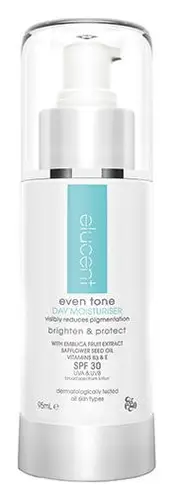
This brightening moisturizer is formulated around Niacinamide and Lactic Acid to fade the look of dark spots and brighten dull-looking skin.


What's inside
What's inside
 Key Ingredients
Benefits
Concerns
Ingredients Side-by-side
Bis-Ethylhexyloxyphenol Methoxyphenyl Triazine
UV Absorber
Butyl Methoxydibenzoylmethane
UV Absorber
Methylene Bis-Benzotriazolyl Tetramethylbutylphenol
UV Filter
Ethylhexyl Methoxycinnamate
UV Absorber

Pyridoxine Hydroxybenzoate
Antioxidant
Cyclomethicone
Emollient
C12-15 Alkyl Benzoate
AntimicrobialNiacinamide
Smoothing











Sodium Lactate
Buffering
Isostearic Acid
Cleansing



PEG-100 Stearate
Surfactant
Glyceryl Stearate
Emollient
Carthamus Tinctorius Seed Oil
Masking
Magnesium Aluminum Silicate
Absorbent
Butylene Glycol
Humectant
Cetyl Alcohol
Emollient

Phyllanthus Emblica Fruit Extract
HumectantTocopherol
Antioxidant
Decyl Glucoside
Cleansing
Dimethicone
Emollient
Lactic Acid
Buffering
Xanthan Gum
EmulsifyingParfum
Masking

Disodium EDTA
ChelatingPropylene Glycol
Humectant
Linalool
Perfuming
Bis-Ethylhexyloxyphenol Methoxyphenyl Triazine, Butyl Methoxydibenzoylmethane, Methylene Bis-Benzotriazolyl Tetramethylbutylphenol, Ethylhexyl Methoxycinnamate, Pyridoxine Hydroxybenzoate, Cyclomethicone, C12-15 Alkyl Benzoate, Niacinamide, Sodium Lactate, Isostearic Acid, PEG-100 Stearate, Glyceryl Stearate, Carthamus Tinctorius Seed Oil, Magnesium Aluminum Silicate, Butylene Glycol, Cetyl Alcohol, Phyllanthus Emblica Fruit Extract, Tocopherol, Decyl Glucoside, Dimethicone, Lactic Acid, Xanthan Gum, Parfum, Disodium EDTA, Propylene Glycol, Linalool
Water
Skin ConditioningSodium Laureth Sulfate
Cleansing

Glycol Stearate
Emollient
Methyl Gluceth-20
Humectant
Glyceryl Stearate
Emollient
Chamomilla Recutita Flower Extract
Masking
Aloe Barbadensis Leaf Juice Powder
Skin Conditioning
Cocamidopropyl Betaine
Cleansing
Sodium Cocoyl Glutamate
Cleansing
Disodium Cocoyl Glutamate
Cleansing
Sodium Hyaluronate
Humectant
Sodium PCA
Humectant
Hydroxyethylcellulose
Emulsion StabilisingCaprylyl Glycol
Emollient
Hexylene Glycol
EmulsifyingPropylene Glycol
Humectant
Citric Acid
Buffering
Phytic Acid
Chelating
Phenoxyethanol
Preservative
Water, Sodium Laureth Sulfate, Glycol Stearate, Methyl Gluceth-20, Glyceryl Stearate, Chamomilla Recutita Flower Extract, Aloe Barbadensis Leaf Juice Powder, Cocamidopropyl Betaine, Sodium Cocoyl Glutamate, Disodium Cocoyl Glutamate, Sodium Hyaluronate, Sodium PCA, Hydroxyethylcellulose, Caprylyl Glycol, Hexylene Glycol, Propylene Glycol, Citric Acid, Phytic Acid, Phenoxyethanol
Ingredients Explained
These ingredients are found in both products.
Ingredients higher up in an ingredient list are typically present in a larger amount.
Glyceryl Stearate is made by reacting glycerin with stearic acid (typically sourced from plant oils like palm or coconut). It's an emulsifier, emollient, and mild occlusive.
Emulsifiers help ingredients like oil and water stay mixed so your formula stays nicely blended and uniform in texture.
This ingredient is typically used in concentrations between 1-10%. Studies have found it to be non-sensitizing, non-phototoxic, and non-photoallergenic.
A close cousin of this ingredient is Glyceryl Stearate SE ("self-emulsifying"). This just has a small amount of sodium or potassium stearate added so it can emulsify without a co-emulsifier.
Since this ingredient is an ester of a C18 fatty acid, it may not be fungal acne safe. The Malassezia yeast can potentially metabolize within the C11-C24 range.
Fun fact: The human body also creates Glyceryl Stearate naturally.
Learn more about Glyceryl StearatePropylene Glycol is a synthetic, colorless, odorless liquid that has been a staple in cosmetics for decades. It is a skin conditioning agent, humectant, and solvent.
As a humectant, it draw water to the skin to reduce flaking and restore suppleness. It's also a solvent that helps dissolve other actives and keeps formulas stable across temperature changes.
The CIR Expert Panel has confirmed this ingredient to be nontoxic and clinical studies show no sensitization at cosmetic use concentrations.
True allergic reactions are quite rare: a 15-year retrospective study of 6,751 patients found only 0.31% had a positive reaction (and less than half were considered clinically relevant).
It seemed that when sensitization does occur, it's most commonly linked to topical medication (like corticosteroids) and not cosmetics. Allergic contact dermatitis also appears largely limited to individuals with underlying skin conditions.
Overall, propylene glycol is a well-studied ingredient that most people can tolerate without issue.
Learn more about Propylene Glycol


