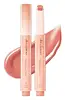
This barrier-repair lip moisturizer is formulated around Argania Spinosa Kernel Oil and Simmondsia Chinensis Seed Oil to strengthen the lip barrier and hydrate lips.
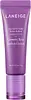
This barrier-repair lip moisturizer is formulated around Butyrospermum Parkii Butter to strengthen the lip barrier and hydrate lips.

What's inside
What's inside
 Key Ingredients
Benefits
Concerns
Ingredients Side-by-side
Hydrogenated Polyisobutene
EmollientDipentaerythrityl Tetrahydroxystearate/Tetraisostearate
Skin Conditioning

Ethylhexyl Hydroxystearate
Emollient
Tridecyl Trimellitate
EmollientMethyl Hydrogenated Rosinate
Perfuming

Phytosteryl/Isostearyl/Cetyl/Stearyl/Behenyl Dimer Dilinoleate
Skin Conditioning
Propylene Glycol Dibenzoate
Skin ConditioningSynthetic Wax
Abrasive

Diisostearyl Malate
EmollientParaffin
Skin Conditioning
Argania Spinosa Kernel Oil
Emollient





Simmondsia Chinensis Seed Oil
Emollient
Acer Saccharum Extract
Skin ConditioningEuterpe Oleracea Fruit Extract
Fragaria Chiloensis Fruit Extract
Skin Conditioning
Lycium Chinense Fruit Extract
Antioxidant
Morus Nigra Fruit Extract
Skin ConditioningRibes Nigrum Fruit Extract
Astringent
Rubus Fruticosus Fruit Extract
AstringentRubus Idaeus Fruit Extract
AstringentVaccinium Angustifolium Fruit Extract
Skin Protecting
Vaccinium Macrocarpon Fruit Extract
AstringentVaccinium Myrtillus Fruit Extract
Skin ConditioningPhytosteryl Macadamiate
Skin Conditioning
Silica Silylate
Emollient
Sorbitan Isostearate
Emulsifying
Vp/Hexadecene Copolymer
Dextrin Palmitate
Emulsifying
Microcrystalline Wax
Emulsion StabilisingPolyglyceryl-2 Triisostearate
Emulsifying
Cera Microcristallina
Emulsion StabilisingPolyglyceryl-2 Diisostearate
Emulsifying
Water
Skin ConditioningButylene Glycol
Humectant
Ethylhexylglycerin
Skin ConditioningPhenoxyethanol
Preservative
CI 77891
Cosmetic ColorantCI 77491
Cosmetic ColorantCI 77492
Cosmetic ColorantCI 15850
Cosmetic ColorantCI 15985
Cosmetic ColorantCI 77499
Cosmetic ColorantHydrogenated Polyisobutene, Dipentaerythrityl Tetrahydroxystearate/Tetraisostearate, Ethylhexyl Hydroxystearate, Tridecyl Trimellitate, Methyl Hydrogenated Rosinate, Phytosteryl/Isostearyl/Cetyl/Stearyl/Behenyl Dimer Dilinoleate, Propylene Glycol Dibenzoate, Synthetic Wax, Diisostearyl Malate, Paraffin, Argania Spinosa Kernel Oil, Simmondsia Chinensis Seed Oil, Acer Saccharum Extract, Euterpe Oleracea Fruit Extract, Fragaria Chiloensis Fruit Extract, Lycium Chinense Fruit Extract, Morus Nigra Fruit Extract, Ribes Nigrum Fruit Extract, Rubus Fruticosus Fruit Extract, Rubus Idaeus Fruit Extract, Vaccinium Angustifolium Fruit Extract, Vaccinium Macrocarpon Fruit Extract, Vaccinium Myrtillus Fruit Extract, Phytosteryl Macadamiate, Silica Silylate, Sorbitan Isostearate, Vp/Hexadecene Copolymer, Dextrin Palmitate, Microcrystalline Wax, Polyglyceryl-2 Triisostearate, Cera Microcristallina, Polyglyceryl-2 Diisostearate, Water, Butylene Glycol, Ethylhexylglycerin, Phenoxyethanol, CI 77891, CI 77491, CI 77492, CI 15850, CI 15985, CI 77499
Hydrogenated Polyisobutene
EmollientPhytosteryl/Isostearyl/Cetyl/Stearyl/Behenyl Dimer Dilinoleate
Skin Conditioning
Hydrogenated Poly(C6-14 Olefin)
EmollientDiisostearyl Malate
EmollientPolybutene
Phytosteryl Isostearyl Dimer Dilinoleate
EmollientCera Microcristallina
Emulsion StabilisingButyrospermum Parkii Butter
Skin Conditioning

Sucrose Tetrastearate Triacetate
Emollient
Ethylene/Propylene/Styrene Copolymer
Synthetic Wax
Abrasive
Mica
Cosmetic ColorantEuphorbia Cerifera Cera
Astringent
Astrocaryum Murumuru Seed Butter
Emollient
Parfum
Masking
Candelilla Wax Esters
CI 77891
Cosmetic ColorantPolyglyceryl-2 Diisostearate
Emulsifying
Dimethicone
Emollient
Dehydroacetic Acid
Preservative
Butylene/Ethylene/Styrene Copolymer
Methicone
Emollient
Copernicia Cerifera Cera
Emollient
Polyglyceryl-2 Triisostearate
Emulsifying
CI 15850
Cosmetic ColorantPentaerythrityl Tetra-Di-T-Butyl Hydroxyhydrocinnamate
Antioxidant
CI 42090
Cosmetic ColorantPolyhydroxystearic Acid
Emulsifying
BHT
Antioxidant
Hydrogenated Polyisobutene, Phytosteryl/Isostearyl/Cetyl/Stearyl/Behenyl Dimer Dilinoleate, Hydrogenated Poly(C6-14 Olefin), Diisostearyl Malate, Polybutene, Phytosteryl Isostearyl Dimer Dilinoleate, Cera Microcristallina, Butyrospermum Parkii Butter, Sucrose Tetrastearate Triacetate, Ethylene/Propylene/Styrene Copolymer, Synthetic Wax, Mica, Euphorbia Cerifera Cera, Astrocaryum Murumuru Seed Butter, Parfum, Candelilla Wax Esters, CI 77891, Polyglyceryl-2 Diisostearate, Dimethicone, Dehydroacetic Acid, Butylene/Ethylene/Styrene Copolymer, Methicone, Copernicia Cerifera Cera, Polyglyceryl-2 Triisostearate, CI 15850, Pentaerythrityl Tetra-Di-T-Butyl Hydroxyhydrocinnamate, CI 42090, Polyhydroxystearic Acid, BHT
Reviews
Ingredients Explained
These ingredients are found in both products.
Ingredients higher up in an ingredient list are typically present in a larger amount.
Cera Microcristallina, aka microcrystalline wax, is a petroleum-derived wax that helps thicken texture and stabilize the oils in formulas.
It also has mild occlusive properties that creates a film on skin to slow down water loss.
The CIR Expert Panel has concluded this ingredient to be safe as used in cosmetics.
This ingredient is refined to a cosmetic grade with high purity. It is chemically inert, stable, and doesn't clog pores (petroleum has a comedogenic rating of 0).
Malassezia feeds on fatty acids roughly in the C11-24 range and this ingredient contains none of those. Since there's no plausible food source for it here, this ingredient is fungal acne safe.
Learn more about Cera MicrocristallinaCi 15850 is the pigment color red. It is an azo dye and created synthetically.
Azo dyes need to be thoroughly purified before use. This allows them to be more stable and longer-lasting.
This ingredient is common in foundations, lipsticks, and blushes. This color is described as brown/orangey red.
It has many secondary names such as Red 6 and Red 7. According to a manufacturer, Red 6 usually contains aluminum.
Learn more about CI 15850Ci 77891 is a white pigment from Titanium dioxide. It is naturally found in minerals such as rutile and ilmenite.
It's main function is to add a white color to cosmetics. It can also be mixed with other colors to create different shades.
Ci 77891 is commonly found in sunscreens due to its ability to block UV rays.
Learn more about CI 77891Diisostearyl Malate is an emollient and most often used in lip products. It comes from isostearyl alcohol, a fatty acid, and malic acid, an AHA.
As an emollient, Diisostearyl Malate helps create a thin film on your skin to trap moisture in. This helps keep your skin soft and smooth.
Hydrogenated Polyisobutene is a synthetic polymer. Polymers are compounds with high molecular weight. Hydrogenated Polyisobutene is an emollient and texture enhancer.
In one study, Hydrogenated Polyisobutene showed better skin hydration levels than Caprylic/Capric Triglyceride. As an emollient, it helps keep your skin soft and hydrated by trapping moisture in.
Hydrogenated Polyisobutene is often used as a mineral oil replacement.
Learn more about Hydrogenated PolyisobuteneThis is a plant-derived ester that functions as a skin conditioner. It's basically a two linoleic acid molecules combined with fatty alcohols.
In practice, it works as a rich emollient that helps reduce moisture loss and give skin a soft appearance.
The phytosterol part of this ingredient brings an added structural bonus: phytosterols are structurally similar to cholesterol so they can fit right into the stratum corneum's lipid matrix to help reinforce the skin barrier.
Due to its molecular structure, this ingredient delivers a cushiony and glossy feeling without being excessively greasy.
It did not produce skin irritation or sensitization in clinical studies, and this ingredient is deemed safe to use in cosmetics at current practices.
Because this ingredient contains C16, C18, and C22 fatty chains, it may not be Malassezia/fungal acne safe. The Malassezia yeast potentially feeds on fatty acids in the C11-C24 range.
Learn more about Phytosteryl/Isostearyl/Cetyl/Stearyl/Behenyl Dimer DilinoleatePolyglyceryl-2 Diisostearate isn't fungal acne safe.
Polyglyceryl-2 Triisostearate is a plant-derived emulsifier and pigment-dispersing agent with a non-sticky skin feel.
It helps products glide on smoothly and prevents oil and water from separating in a formula, making it suitable for sunscreen and makeup formulations.
The EU inventory of cosmetics has no use restrictions on this ingredient and it is considered well-tolerated.
This ingredient may not be fungal acne safe because it is derived from isostearic acid.
Learn more about Polyglyceryl-2 TriisostearateSynthetic Wax is a manufactured hydrocarbon wax. In formulas, it works as an occlusive emollient that helps reduce water loss and improves the spreadability of products.
Research comparing synthetic wax to traditional mineral-derived products found that formulas containing it perform as well for skin hydration.
It is considered non-comedogenic and vegan-friendly.
This ingredient has a well-established safety record by the CIR Expert Panel for Cosmetic Ingredient Safety.
Synthetic Waxes are straight/branched-chain hydrocarbons with no ester bond or fatty acids. That means there is nothing for the Malassezia yeast to feed on.
Learn more about Synthetic Wax

