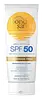
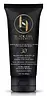
bondi sands Fragrance Free Sunscreen Daily Face Lotion SPF 50+ Versus Black Girl Sunscreen Sunscreen SPF 30


What's inside
What's inside
 Key Ingredients
Benefits
Concerns
Ingredients Side-by-side
Butyl Methoxydibenzoylmethane 3%
UV Absorber
Homosalate 10%
Skin Conditioning
Ethylhexyl Salicylate 5%
UV Absorber
Octocrylene 8%
UV Absorber

Water
Skin ConditioningCera Alba
Emollient



Aloe Barbadensis Leaf Juice
Skin Conditioning

Isopropyl Palmitate
Emollient
Cetearyl Alcohol
Emollient

Cyclopentasiloxane
Emollient
Cyclohexasiloxane
Emollient
Ceteareth-20
CleansingHydroxyacetophenone
Antioxidant
Carbomer
Emulsion StabilisingBenzyl Alcohol
Perfuming



Saccharide Isomerate
Humectant
Phenoxyethanol
Preservative
Sodium Stearoyl Glutamate
CleansingTriethanolamine
BufferingTocopheryl Acetate
Antioxidant

Sodium Chloride
MaskingCitric Acid
Buffering

Butyl Methoxydibenzoylmethane 3%, Homosalate 10%, Ethylhexyl Salicylate 5%, Octocrylene 8%, Water, Cera Alba, Aloe Barbadensis Leaf Juice, Isopropyl Palmitate, Cetearyl Alcohol, Cyclopentasiloxane, Cyclohexasiloxane, Ceteareth-20, Hydroxyacetophenone, Carbomer, Benzyl Alcohol, Saccharide Isomerate, Phenoxyethanol, Sodium Stearoyl Glutamate, Triethanolamine, Tocopheryl Acetate, Sodium Chloride, Citric Acid
Butyl Methoxydibenzoylmethane 3%
UV Absorber
Homosalate 10%
Skin Conditioning
Ethylhexyl Salicylate 5%
UV Absorber
Octocrylene 2.75%
UV Absorber
Acrylates/C10-30 Alkyl Acrylate Crosspolymer
Emulsion StabilisingAcrylates/C12-22 Alkyl Methacrylate Copolymer
Aloe Barbadensis Leaf Juice
Skin Conditioning
Butylphthalimide
Skin ConditioningCarbomer
Emulsion StabilisingDaucus Carota Sativa Seed Oil
Emollient
Disodium EDTA
Ethylhexylglycerin
Skin ConditioningHelianthus Annuus Seed Oil
Emollient
Hydroxypropyl Methylcellulose
Emulsion StabilisingIsopropylphthalimide
Skin ConditioningLecithin
Emollient
Persea Gratissima Oil
Skin Conditioning
Phenoxyethanol
Preservative
Propylene Glycol
Humectant
Simmondsia Chinensis Seed Oil
Emollient
Sodium Hydroxide
BufferingSorbitan Oleate
Emulsifying
Theobroma Cacao Seed Butter
Emollient
Tocopheryl Acetate
Antioxidant
Water
Skin ConditioningButyl Methoxydibenzoylmethane 3%, Homosalate 10%, Ethylhexyl Salicylate 5%, Octocrylene 2.75%, Acrylates/C10-30 Alkyl Acrylate Crosspolymer, Acrylates/C12-22 Alkyl Methacrylate Copolymer, Aloe Barbadensis Leaf Juice, Butylphthalimide, Carbomer, Daucus Carota Sativa Seed Oil, Disodium EDTA, Ethylhexylglycerin, Helianthus Annuus Seed Oil, Hydroxypropyl Methylcellulose, Isopropylphthalimide, Lecithin, Persea Gratissima Oil, Phenoxyethanol, Propylene Glycol, Simmondsia Chinensis Seed Oil, Sodium Hydroxide, Sorbitan Oleate, Theobroma Cacao Seed Butter, Tocopheryl Acetate, Water
Reviews
Ingredients Explained
These ingredients are found in both products.
Ingredients higher up in an ingredient list are typically present in a larger amount.
Aloe Barbadensis Leaf Juice comes from leaves of the aloe plant. Aloe Barbadensis Leaf Juice is best known for helping to soothe sunburns. It is also anti-inflammatory, moisturizing, antiseptic, and can help heal wounds.
Aloe is packed with good stuff including Vitamins A, C, and E. These vitamins are antioxidants, which help fight free-radicals and the damage they may cause. Free-radicals are molecules that may damage your skin cells, such as pollution.
Aloe Barbadensis Leaf Juice also contains sugars. These sugars come in the form of monosaccharides and polysaccharides, folic acid, and choline. These sugars are able to help bind moisture to skin.
It also contains minerals such as calcium, 12 anthraquinones, fatty acids, amino acids, and Vitamin B12.
Learn more about Aloe Barbadensis Leaf JuiceAlso known as Avobenzone, this ingredient is an oil-soluble used to absorb the full spectrum of UVA rays (peak 357 nm).
It's one of the most effective UVA filters available but has a major caveat of photostability: avobenzone is susceptible to photodegradation.
This means it can lose efficacy when exposed to sunlight without the help of a stabilizing agent.
Studies show antioxidants (like vitamin E or vitamin C) and some UV filters (like octocrylene and Tinosorb S) can meaningfully improve its stability in a formulation.
The maximum allowable concentration according to regulation is 3% in the US + Canada, and 5% in the EU, Australia, China, Korea, and ASEAN countries.
It has a well-support safety profile: a comprehensive 2025 review found minimal toxicity with no evidence of carcinogenicity.
Overall, avobenzone is a safe and regulated ingredient used in sunscreen for over 40 years.
Learn more about Butyl MethoxydibenzoylmethaneCarbomer is a high-molecular weight polymer of acrylic acid. It is used to form gels and thicken formulas.
Due to its large molecular size, carbomer has minimal skin penetration and is considered an inert ingredient.
A high amount of carbomer can cause pilling or balling up of products. Don't worry, most products contain 1% or less of carbomer.
Learn more about CarbomerEthylhexyl Salicylate is an organic compound used to block UV rays. It primarily absorbs UVB rays but offers a small amount of UVA protection as well.
Commonly found in sunscreens, Ethylhexyl Salicylate is created from salicylic acid and 2-ethylhexanol. You might know salicylic acid as the effective acne fighter ingredient and BHA.
The ethylhexanol in this ingredient is a fatty alcohol and helps hydrate your skin, similar to oils. It is an emollient, which means it traps moisture into the skin.
According to manufacturers, Ethylhexyl Salicylate absorbs UV wavelength of 295-315 nm, with a peak absorption at 307-310 nm. UVA rays are linked to long term skin damage, such as hyperpigmentation. UVB rays emit more energy and are capable of damaging our DNA. UVB rays cause sunburn.
Learn more about Ethylhexyl SalicylateHomosalate is a chemical sunscreen filter that provides protection in the UV-B range (280nm - 320 nm), with a peak protection at 306 nm. It is internationally approved for use in sunscreens.
Homosalate is not photo-stable, meaning it's strength as a UV filter degrades over time with exposure to the sun. Because of this, it's often used in combination with other chemical sunscreen filters as avobenzone (which protects from the UV-A range). Homosalate also helps act as a solvent for harder-to-dissolve UV filters.
(Part of the reason that sunscreens need to be frequently re-applied is due to the photo instability of many chemical sunscreen filters)
Currently, homosalate is approved in concentrations up to 10% in the EU and 15% in the US. The FDA is currently doing further research on the effects of homosalate, and it is possible that these approved concentrations will change in the future.
Learn more about HomosalateOctocrylene is an oil-soluble organic UV filter that mainly absorbs UVB and short wave UVA II light.
Its real superpower is teamwork: octocrylene is remarkably photostable and is most famous for stabilizing avobenzone (the workhorse UVA filter).
This ingredient is commonly used to enhance both UVB and UVA protection due to its unique property in stabilizing avobenzone. It also pulls double duty by boosting water resistance and giving formulas a smooth, spreadable feel.
The EU's Scientific Committee on Consumer Safety (SCCS) has deemed octocrylene to be safe as a UV-filter at concentrations up to 10% (capped at 9% in propellant sprays). The US also permits it up to 10%.
Two things worth knowing:
You'll usually see this ingredient used in concentrations between 2-10% (higher amounts when used as a stabilizer for avobenzone).
Learn more about OctocrylenePhenoxyethanol is a preservative that has germicide, antimicrobial, and aromatic properties. Studies show that phenoxyethanol can prevent microbial growth. By itself, it has a scent that is similar to that of a rose.
It's often used in formulations along with Caprylyl Glycol to preserve the shelf life of products.
Tocopheryl Acetate is AKA Vitamin E. It is an antioxidant and protects your skin from free radicals. Free radicals damage the skin by breaking down collagen.
One study found using Tocopheryl Acetate with Vitamin C decreased the number of sunburned cells.
Tocopheryl Acetate is commonly found in both skincare and dietary supplements.
Learn more about Tocopheryl AcetateWater. It's the most common cosmetic ingredient of all. You'll usually see it at the top of ingredient lists, meaning that it makes up the largest part of the product.
So why is it so popular? Water most often acts as a solvent - this means that it helps dissolve other ingredients into the formulation.
You'll also recognize water as that liquid we all need to stay alive. If you see this, drink a glass of water. Remember to stay hydrated!
Learn more about Water
