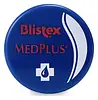
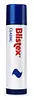
Blistex MedPlus Tiegel Versus Blistex Classic
This barrier-repair lip moisturizer is formulated around Cera Alba and Simmondsia Chinensis Seed Oil to strengthen the lip barrier and hydrate lips.

What's inside
What's inside
 Key Ingredients
Benefits
Concerns
Ingredients Side-by-side
Lanolin
Emollient




Hydrogenated Coconut Oil
Emollient


Cera Alba
Emollient
Ricinus Communis Seed Oil
Masking
Homosalate
Skin Conditioning

Olea Europaea Fruit Oil
Masking
Theobroma Cacao Seed Butter
Emollient
Ethylhexyl Salicylate
UV Absorber
Stearyl Alcohol
Emollient
Hydrogenated Castor Oil
Emollient
Camphor
Masking

Euphorbia Cerifera Cera
Astringent
Menthol
Masking
Vitis Vinifera Seed Oil
Emollient
Arachidyl Alcohol
Emollient
Arachidyl Glucoside
EmulsifyingBehenyl Alcohol
Emollient
Butyrospermum Parkii Butter
Skin Conditioning
Benzyl Alcohol
Perfuming


Beta-Carotene
Skin ConditioningDaucus Carota Sativa Root Extract
Skin Conditioning
Eucalyptus Globulus Leaf Oil
Perfuming
Eugenia Caryophyllus Flower Oil
Masking
Eugenol
Perfuming
Glycine Soja Oil
Emollient
Limonene
Perfuming
Menthoxypropanediol
Masking
Menthyl Lactate
Masking
Methyl Salicylate
Perfuming
Parfum
Masking
Saccharin
MaskingTocopherol
Antioxidant



Zea Mays Oil
Emulsifying
Lanolin, Hydrogenated Coconut Oil, Cera Alba, Ricinus Communis Seed Oil, Homosalate, Olea Europaea Fruit Oil, Theobroma Cacao Seed Butter, Ethylhexyl Salicylate, Stearyl Alcohol, Hydrogenated Castor Oil, Camphor, Euphorbia Cerifera Cera, Menthol, Vitis Vinifera Seed Oil, Arachidyl Alcohol, Arachidyl Glucoside, Behenyl Alcohol, Butyrospermum Parkii Butter, Benzyl Alcohol, Beta-Carotene, Daucus Carota Sativa Root Extract, Eucalyptus Globulus Leaf Oil, Eugenia Caryophyllus Flower Oil, Eugenol, Glycine Soja Oil, Limonene, Menthoxypropanediol, Menthyl Lactate, Methyl Salicylate, Parfum, Saccharin, Tocopherol, Zea Mays Oil
Hydrogenated Coconut Oil
Emollient
Cera Alba
Emollient
Ethylhexyl Methoxycinnamate
UV Absorber
Simmondsia Chinensis Seed Oil
Emollient
Helianthus Annuus Seed Oil
Emollient
Canola Oil
Emollient
Jojoba Esters
Emollient
Tocopheryl Acetate
Antioxidant
Dimethicone
Emollient
Chamomilla Recutita Flower Extract
Masking
Phenoxyethanol
Preservative
Isopropyl Myristate
Emollient
Vanillin
Masking
Aloe Barbadensis Leaf Juice
Skin Conditioning
Saccharin
MaskingAlumina
Abrasive
Polyhydroxystearic Acid
Emulsifying
Silica
Abrasive

BHT
Antioxidant
CI 77891
Cosmetic ColorantHydrogenated Coconut Oil, Cera Alba, Ethylhexyl Methoxycinnamate, Simmondsia Chinensis Seed Oil, Helianthus Annuus Seed Oil, Canola Oil, Jojoba Esters, Tocopheryl Acetate, Dimethicone, Chamomilla Recutita Flower Extract, Phenoxyethanol, Isopropyl Myristate, Vanillin, Aloe Barbadensis Leaf Juice, Saccharin, Alumina, Polyhydroxystearic Acid, Silica, BHT, CI 77891
Reviews
Ingredients Explained
These ingredients are found in both products.
Ingredients higher up in an ingredient list are typically present in a larger amount.
This is another name for beeswax; it's a natural wax produced by honey bees to build their honeycomb.
Because it forms a protective layer on your skin, it can help lock in moisture and reduce water loss. It is also widely used as a thickener and emulsifier in lip balms and lotions. Research suggests beeswax containing moisturizers can support skin barrier integrity.
In comedogenic testing, Beeswax scored a 0-2, which is on the low end. Whether or not a product clogs your pores really comes down to the formula as a whole (not any single ingredient on its own) and your skin.
Beeswax is not vegan since it is animal-derived. It cannot be removed with water, but can be taken off with an oil cleanser.
People with a known Propolis allergy also report to have reactions from beeswax.
Beeswax's wax esters are derived primarily from palmitic and oleic acid (C16 and C18:1). Both of these fall within the C11-C24 feeding window.
The Malassezia yeast can potentially cleave these esters and release usable fatty acids, so this ingredient may not be fungal acne safe. However, not everyone will react to this ingredient.
Learn more about Cera AlbaHydrogenated Coconut Oil is regular coconut oil that's been run through a process that "fills in" the last few reactive spots on its fat molecules with hydrogen.
This results in a firmer, waxier, and more shelf-stable fat that melts around body temperature. This is why formulators use it as an emollient and a structuring agent for balms, sticks, and thick creams.
It doesn't do anything active and just sits on skin to soften it and slow water loss.
The CIR reviews of this ingredient reported concentration usage across a wide range (0.0001% - 70%) depending on the product type. You'll most likely see double digits (~1-5%) in emulsions and double digits in sticks + balms.
This ingredient may not be fungal acne safe; the Malassezia yeast feeds on chains longer than 12 carbons which is exactly what this ingredient is built from (C12, C14, C16, and C18).
It's worth being honest that the lab picture isn't one-directional: medium-chain triglycerides and medium-chain free fatty acids were actually toxic to Malassezia in vitro, suppressing M. furfur and M. sympodialis. However, there's no human skin data showing that protective effect holds in a real formula.
The risk of allergies is low; Hydrogenated Coconut Oil caused no irritation after a single patch application and no sign of sensitization on retest 14 days late. This is also a refined triglyceride with no coconut protein left, so it's not likely to trigger coconut food allergies. But if you have reacted to coconut in cosmetics before, it's best to avoid this ingredient.
This ingredient shows up on a lot of ""pore-clogging"" lists but there's no real evidence behind that. It doesn't even have a comedogenic rating from an actual study; the numbers you'll find online come from blogs citing other blogs.
Ratings for other ingredients mostly come from a 1980s rabbit ear test. This test doesn't translate well to human skin or to real products because the ingredient sits at a much lower percentage. Some people still find it breaks them out. So if that's you, definitely trust your skin.
Learn more about Hydrogenated Coconut OilWe don't have a description for Saccharin yet.


