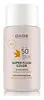
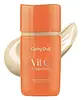
BABE Laboratorios Super Fluid Color Sunscreen SPF 50 Versus Cathy Doll Vit C Ampoule Foundation SPF 50+ PA+++
This chemical sunscreen covers the full UV range and blocks ~98% of UVB at SPF 50.


What's inside
What's inside
 Key Ingredients
Benefits
Concerns
Ingredients Side-by-side
Water
Skin ConditioningDicaprylyl Carbonate
EmollientEthylhexyl Methoxycinnamate
UV Absorber


Propanediol
Solvent

Dibutyl Adipate
EmollientButyl Methoxydibenzoylmethane
UV Absorber
Ethylhexyl Triazone
UV Absorber
Hydrogenated Palm Kernel Glycerides
EmollientBis-Ethylhexyloxyphenol Methoxyphenyl Triazine
UV Absorber
C20-22 Alkyl Phosphate
EmulsifyingCI 77891
Cosmetic ColorantC20-22 Alcohols
Emulsion Stabilising
Benzotriazolyl Dodecyl P-Cresol
UV AbsorberSodium Hyaluronate
Humectant


Carnosine
Skin Conditioning
Tocopherol
Antioxidant



Caprylyl/Capryl Glucoside
CleansingHydrogenated Palm Glycerides
Emollient

1,2-Hexanediol
Skin Conditioning
CI 77492
Cosmetic ColorantXanthan Gum
EmulsifyingCI 77491
Cosmetic ColorantPolyacrylate Crosspolymer-6
Emulsion StabilisingParfum
Masking


CI 77499
Cosmetic ColorantBHT
Antioxidant
Sodium Hydroxide
BufferingO-Cymen-5-Ol
Antimicrobial
Citric Acid
Buffering
Water, Dicaprylyl Carbonate, Ethylhexyl Methoxycinnamate, Propanediol, Dibutyl Adipate, Butyl Methoxydibenzoylmethane, Ethylhexyl Triazone, Hydrogenated Palm Kernel Glycerides, Bis-Ethylhexyloxyphenol Methoxyphenyl Triazine, C20-22 Alkyl Phosphate, CI 77891, C20-22 Alcohols, Benzotriazolyl Dodecyl P-Cresol, Sodium Hyaluronate, Carnosine, Tocopherol, Caprylyl/Capryl Glucoside, Hydrogenated Palm Glycerides, 1,2-Hexanediol, CI 77492, Xanthan Gum, CI 77491, Polyacrylate Crosspolymer-6, Parfum, CI 77499, BHT, Sodium Hydroxide, O-Cymen-5-Ol, Citric Acid
Water
Skin ConditioningCyclopentasiloxane
Emollient
Hippophae Rhamnoides Water
Masking
Titanium Dioxide
Cosmetic Colorant
Ethylhexyl Methoxycinnamate
UV Absorber
Zinc Oxide
Cosmetic Colorant
Caprylic/Capric Triglyceride
Masking
Butylene Glycol
Humectant
Phenyl Trimethicone
Skin Conditioning
Lauryl PEG-10 Tris(Trimethylsiloxy)Silylethyl Dimethicone
Emulsifying
Arbutin
Antioxidant
Sorbitan Sesquioleate
Emulsifying
Cetyl PEG/PPG-10/1 Dimethicone
Emulsifying
Sodium Chloride
MaskingStearalkonium Hectorite
Gel FormingDimethicone
Emollient
1,2-Hexanediol
Skin Conditioning
Vinyl Dimethicone/Methicone Silsesquioxane Crosspolymer
Caprylyl Glycol
Emollient
Dimethicone/Vinyl Dimethicone Crosspolymer
Skin Conditioning
Tribehenin
Emollient
Triethoxycaprylylsilane
Pentylene Glycol
Skin Conditioning
Ethylhexylglycerin
Skin ConditioningAdenosine
Skin Conditioning
Niacinamide
Smoothing



Tocopheryl Acetate
Antioxidant
Ascorbic Acid
Antioxidant
Ceramide NP
Skin Conditioning
Citrus Aurantium Dulcis Fruit Extract
MaskingCitrus Paradisi Fruit Extract
Skin ConditioningTocopherol
Antioxidant
CI 77492
Cosmetic ColorantCI 77491
Cosmetic ColorantCI 77499
Cosmetic ColorantWater, Cyclopentasiloxane, Hippophae Rhamnoides Water, Titanium Dioxide, Ethylhexyl Methoxycinnamate, Zinc Oxide, Caprylic/Capric Triglyceride, Butylene Glycol, Phenyl Trimethicone, Lauryl PEG-10 Tris(Trimethylsiloxy)Silylethyl Dimethicone, Arbutin, Sorbitan Sesquioleate, Cetyl PEG/PPG-10/1 Dimethicone, Sodium Chloride, Stearalkonium Hectorite, Dimethicone, 1,2-Hexanediol, Vinyl Dimethicone/Methicone Silsesquioxane Crosspolymer, Caprylyl Glycol, Dimethicone/Vinyl Dimethicone Crosspolymer, Tribehenin, Triethoxycaprylylsilane, Pentylene Glycol, Ethylhexylglycerin, Adenosine, Niacinamide, Tocopheryl Acetate, Ascorbic Acid, Ceramide NP, Citrus Aurantium Dulcis Fruit Extract, Citrus Paradisi Fruit Extract, Tocopherol, CI 77492, CI 77491, CI 77499
Reviews
Ingredients Explained
These ingredients are found in both products.
Ingredients higher up in an ingredient list are typically present in a larger amount.
1,2-Hexanediol is a synthetic liquid and another multi-functional powerhouse.
It is a:
- Humectant, drawing moisture into the skin
- Emollient, helping to soften skin
- Solvent, dispersing and stabilizing formulas
- Preservative booster, enhancing the antimicrobial activity of other preservatives
Ci 77491 is also hydrated iron III oxide. It's sole purpose is to give a red/pink hue to products.
Iron III oxides are classified as inorganic chemicals for coloring.
Synthetically created Ci 77491 is considered safer than those naturally found. This is because the synthetically created version may contain less impurities. Iron oxides are generally non-toxic and non-allergenic.
Learn more about CI 77491CI 77492 is also hydrated iron III oxide. It's sole purpose is to give a yellow hue to products.
Iron III oxides are classified as inorganic chemicals for coloring.
Synthetically created CI 77492 is considered safer than those naturally found. This is because the synthetically created version may contain less impurities. Iron oxides are generally non-toxic and non-allergenic.
Learn more about CI 77492Ci 77499 is also hydrated iron III oxide. It is created from mixing red and black iron oxides. This helps give shades of darkness to a product.
Iron III oxides are classified as inorganic chemicals for coloring.
This ingredient is also known as Octinoxate and is one of the oldest and most widely used chemical UV filters in skincare.
It has a simple job: soap up UVB radiation (290-320 nm), the wavelengths responsible for sunburn and a big chunk of long-term sun damage.
In formulas, it's always paired with a separate UVA filter because octinoxate solely protects skin from UVB.
Because it's an oil-soluble liquid, it's easy to blend into the oil phase of lotions/creams and gives a cosmetically elegant feel.
The one quirk about formulating this ingredient is photostability; the molecule slowly changes shape into a less effective version when sunlight hits it. So the longer you're in the sun, the weaker its protection gets. The drop can be more than 30% in some formulas.
It also doesn't play nice with Avobenzone (the common UVA filter) since avobenzone destabilizes octinoxate and the two degrade each other. But don't worry: brands have solved this issue by adding photostabilizers like Tinosorb S to prevent degradation and keep SPF stable under heavy UV exposure.
The maximum allowed level is 10% in the EU and Australia, 7.5% in the US and Canada, and 20% in Japan.
The Cosmetic Ingredient Review Panel has concluded this ingredient to be safe in cosmetics up to 10%.
One last thing worth knowing for context:
Octinoxate has been the subject of ongoing review in Europe where the Scientific Committee on Consumer Safety's (SCCS) 2025 final opinion is that this ingredient is an endocrine-active substance.
Lab and animal studies suggest it can act a bit like a hormone in the body (mildly mimicking estrogen and slightly blocking male hormones). It's important to know this hasn't really been shown to happen in everyday human use.
This ingredient is also banned in Hawaii over coral reef concerns.
Learn more about Ethylhexyl MethoxycinnamateTocopherol is a fat-soluble antioxidant known as Vitamin E.
You'll find this ingredient in the vast majority of skincare (for good reason). It works to neutralize free radicals, or unstable molecules generated by UV exposure, pollution, and other environmental stressors, before they can cause oxidative damage to your skin cells.
Topically applied tocopherol has been shown to protect against UV damage by ramping up the skin's own natural defense enzymes.
It also acts as a skin conditioning agent; some studies show that regular topical use can improve the skin's water-binding capacity over 2-4 weeks.
This ingredient is especially loved for being a team player. When combined with Vitamin C, the photoprotective effect of both ingredients roughly doubles and the combo also helps reduce UV-induced DNA damage.
This ingredient has some brightening potential but it's more of a prevention ingredient than spot-fader. Cell studies show it can slow down melanin production but it's worth noting that it's not the most powerful brightener out there.
In formulations, it also serves as a stabilizer that helps protect other oxidation-prone ingredients from degrading.
Concentrations usually range from 0.1-1% in most leave-on products.
Learn more about TocopherolWater. It's the most common cosmetic ingredient of all. You'll usually see it at the top of ingredient lists, meaning that it makes up the largest part of the product.
So why is it so popular? Water most often acts as a solvent - this means that it helps dissolve other ingredients into the formulation.
You'll also recognize water as that liquid we all need to stay alive. If you see this, drink a glass of water. Remember to stay hydrated!
Learn more about Water

