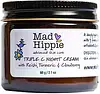
This anti-aging night moisturizer is formulated around Aloe Barbadensis Leaf Juice and Resveratrol to soften the look of wrinkles and hydrate skin.
This brightening night moisturizer is formulated around Tetrahexyldecyl Ascorbate and Magnesium Ascorbyl Phosphate to brighten dull-looking skin.

What's inside
What's inside
 Key Ingredients
Benefits
Concerns
Ingredients Side-by-side
Aloe Barbadensis Leaf Juice
Skin Conditioning


Water
Skin ConditioningDicaprylyl Carbonate
EmollientStearyl Alcohol
Emollient


Linum Usitatissimum Seed Oil
Perfuming




Cetyl Alcohol
Emollient
Ethylhexyl Palmitate
Emollient
Glyceryl Stearate
Emollient
Malus Domestica Fruit Cell Culture Extract
Skin ConditioningTheobroma Cacao Seed Butter
Emollient
Allantoin
Skin Conditioning

Resveratrol
Antioxidant


Ubiquinone
Antioxidant
Hydrolyzed Rice Protein
Skin ConditioningSodium Hyaluronate
Humectant
Lycium Barbarum Fruit Extract
Astringent
Fagus Sylvatica Bud Extract
TonicTocopherol
Antioxidant

Magnesium Ascorbyl Phosphate
Antioxidant


Borago Officinalis Seed Oil
Emollient
Persea Gratissima Oil
Skin Conditioning
Rosa Canina Fruit Oil
Emollient
Oenothera Biennis Oil
Emollient
Squalane
Emollient
Camellia Sinensis Leaf Extract
Antimicrobial
Aspalathus Linearis Extract
Skin ConditioningHibiscus Sabdariffa Flower Extract
Skin ConditioningRiboflavin
Cosmetic ColorantPhenethyl Alcohol
MaskingEthylhexylglycerin
Skin ConditioningEthyl Vanillate
Perfuming
Symphytum Officinale Callus Culture Extract
Skin ConditioningAloe Barbadensis Leaf Juice, Water, Dicaprylyl Carbonate, Stearyl Alcohol, Linum Usitatissimum Seed Oil, Cetyl Alcohol, Ethylhexyl Palmitate, Glyceryl Stearate, Malus Domestica Fruit Cell Culture Extract, Theobroma Cacao Seed Butter, Allantoin, Resveratrol, Ubiquinone, Hydrolyzed Rice Protein, Sodium Hyaluronate, Lycium Barbarum Fruit Extract, Fagus Sylvatica Bud Extract, Tocopherol, Magnesium Ascorbyl Phosphate, Borago Officinalis Seed Oil, Persea Gratissima Oil, Rosa Canina Fruit Oil, Oenothera Biennis Oil, Squalane, Camellia Sinensis Leaf Extract, Aspalathus Linearis Extract, Hibiscus Sabdariffa Flower Extract, Riboflavin, Phenethyl Alcohol, Ethylhexylglycerin, Ethyl Vanillate, Symphytum Officinale Callus Culture Extract
Water
Skin ConditioningCarthamus Tinctorius Seed Oil
Masking
Isopropyl Palmitate
Emollient
Tetrahexyldecyl Ascorbate
Antioxidant
Magnesium Ascorbyl Phosphate
Antioxidant
Ascorbyl Glucoside
Antioxidant
Cetyl Alcohol
Emollient
Glycerin
Humectant
Polyglyceryl-2 Stearate
Emulsifying
Glyceryl Stearate
Emollient
Stearyl Alcohol
Emollient
Stearic Acid
Cleansing
Inonotus Obliquus Extract
Skin ConditioningGanoderma Lucidum Extract
Skin Protecting
Butyrospermum Parkii Butter
Skin Conditioning
Phenethyl Alcohol
MaskingCaprylyl Glycol
Emollient
Ethylhexylglycerin
Skin ConditioningCalendula Officinalis Flower Extract
Masking
Rubus Chamaemorus Fruit Extract
Antioxidant
Ribes Nigrum Seed Oil
Emollient
Squalane
Emollient
Sodium PCA
Humectant
Xanthan Gum
EmulsifyingCitrus Aurantium Dulcis Peel Oil
Masking
Hyaluronic Acid
Humectant
Tocotrienols
Skin Conditioning
Curcuma Longa Root Extract
Antioxidant
Chlorella Pyrenoidosa Extract
Skin ConditioningAllantoin
Skin Conditioning
Ceramide NP
Skin Conditioning
Riboflavin
Cosmetic ColorantWater, Carthamus Tinctorius Seed Oil, Isopropyl Palmitate, Tetrahexyldecyl Ascorbate, Magnesium Ascorbyl Phosphate, Ascorbyl Glucoside, Cetyl Alcohol, Glycerin, Polyglyceryl-2 Stearate, Glyceryl Stearate, Stearyl Alcohol, Stearic Acid, Inonotus Obliquus Extract, Ganoderma Lucidum Extract, Butyrospermum Parkii Butter, Phenethyl Alcohol, Caprylyl Glycol, Ethylhexylglycerin, Calendula Officinalis Flower Extract, Rubus Chamaemorus Fruit Extract, Ribes Nigrum Seed Oil, Squalane, Sodium PCA, Xanthan Gum, Citrus Aurantium Dulcis Peel Oil, Hyaluronic Acid, Tocotrienols, Curcuma Longa Root Extract, Chlorella Pyrenoidosa Extract, Allantoin, Ceramide NP, Riboflavin
Reviews
Ingredients Explained
These ingredients are found in both products.
Ingredients higher up in an ingredient list are typically present in a larger amount.
Allantoin is a soothing ingredient known for its protective and moisturizing properties; it's basically a quiet workhorse ingredient you can find in a huge range of cosmetics.
Though it can be derived from the comfrey plant, allantoin is produced synthetically for cosmetic products to ensure purity.
Research shows it can encourage your skin cells to turn over and renew by stimulating keratinocyte and fibroblast proliferation.
It also has mild keratolytic properties to help loosen and shed dead skin cells without being harsh.
Studies also suggest allantoin can help calm inflammation by dialing down some of the chemical signals your skin sends out when it is irritated.
This ingredient is typically used in the 0.1-0.5% range, and the FDA recognizes it as a skin protectant in OTC products up to 2%.
Overall, allantoin is a wonderful addition to most routines; it is stable across a wide pH range (~4-8), works well with other ingredients, and is considered non-sensitizing/non-irritating.
Fun fact: Allantoin is naturally occurring in comfrey root, beets, chamomile, and wheat sprouts. Our bodies even produce it as a byproduct of uric acid metabolism.
Learn more about AllantoinCetyl Alcohol is a fatty alcohol. Fatty Alcohols are most often used as an emollient or to thicken a product.
Its main roles are:
Though it has "alcohol" in the name, it is not related to denatured alcohol or ethyl alcohol.
The FDA allows products labeled "alcohol-free" to have fatty alcohols.
This ingredient may not be fungal acne safe. It is a primary fatty alcohol with a chain length above 12 carbons. A study from 2019 show Malassezia can feed on fatty alcohols in this range, so it may trigger fungal acne in those prone to it.
Learn more about Cetyl AlcoholEthylhexylglycerin is created from glycerin. It is a multitasker ingredient that:
The CIR Expert Panel found minimal skin absorption or sensitization of any kind in a safety assessment. Though this ingredient is considered well-tolerated, a small number of cases of allergic dermatitis have been published since 2002. Just be sure to patch test if you are unsure.
Industry-reported use ranges from 8% in rinse-off products and 2% in leave-on formulations.
Learn more about EthylhexylglycerinGlyceryl Stearate is made by reacting glycerin with stearic acid (typically sourced from plant oils like palm or coconut). It's an emulsifier, emollient, and mild occlusive.
Emulsifiers help ingredients like oil and water stay mixed so your formula stays nicely blended and uniform in texture.
This ingredient is typically used in concentrations between 1-10%. Studies have found it to be non-sensitizing, non-phototoxic, and non-photoallergenic.
A close cousin of this ingredient is Glyceryl Stearate SE ("self-emulsifying"). This just has a small amount of sodium or potassium stearate added so it can emulsify without a co-emulsifier.
Since this ingredient is an ester of a C18 fatty acid, it may not be fungal acne safe. The Malassezia yeast can potentially metabolize within the C11-C24 range.
Fun fact: The human body also creates Glyceryl Stearate naturally.
Learn more about Glyceryl StearateMagnesium Ascorbyl Phosphate (MAP) is a water-soluble form of Vitamin C. It is used in skincare because it tends to be more formulation friendly than pure vitamin C (ascorbic acid).
According to research, MAP has three major benefits:
While MAP is gentler on the skin than ascorbic acid, it is thought to be less easily absorbed into the skin.
In a well-known absorption study, pure vitamin C increased skin vitamin C levels when formulated correctly, but derivatives like MAP did not in that experiment. This suggests MAP may not always convert into active vitamin C in the skin.
Due to MAP's stability up to a pH level of 7, it is more stable to air and sunlight exposure than ascorbic acid. The best pH range for MAP is between 5 and 6.
Learn more about Magnesium Ascorbyl PhosphatePhenethyl Alcohol is a colorless and aromatic alohol. It is naturally occuring in essential oils.
The scent of this ingredient is floral and often compared to rose.
Like other alcohols, this ingredient helps prevent the growth of bacteria. However, its main purpose is to impact a fragrance.
Learn more about Phenethyl AlcoholRiboflavin is Vitamin B2. Our bodies use riboflavin in the creation of skin, digestive tract lining, and blood cells.
Riboflavin is naturally found in Royal Jelly.
Foods rich in riboflavin include eggs, milk, organ meat, cheese, and yogurt.
Learn more about other types of Vitamin B:
Learn more about RiboflavinSqualane is the hydrogenated and shelf-stable form of squalene (a lipid that naturally occurs in human sebum).
It is an emollient and skin conditioning agent that is able to integrate seamlessly into the skin's lipid barrier without clogging pores.
This is due to how structurally similar it is to what your skin already produces.
Though it is mostly an emollient that helps soften and hydrate skin, it also has some humectant and occlusive action. Humectants help the skin retain moisture while occlusives seal it in, making squalane a triple-threat moisturizer.
Research shows it has antioxidant capabilities that help protect against stressors like UV exposure, specifically UVA induced oxidative stress. This study also found that it supports collagen biosynthesis in human dermal fibroblasts.
No clinical study has reported significant adverse effects and irritation reactions are very rare from this ingredient (even at 100% concentration).
Overall, it's a fantastic ingredient for hydration and is suitable for all skin types.
This depends on the source. Squalane can be derived from both plants and animals. Most squalane used in skincare comes from plants.
Please note: the source of squalane is only known if disclosed by the brand. We recommend reaching out to the brand if you have any questions about their squalane.
Read more about squalene with an "e".
Though squalane is often called an oil, it’s technically not one. It is a hydrocarbon, meaning it is only made of carbon and hydrogen. True oils are triglycerides and made of fatty acids and glycerol.
The term “oil-free” isn’t regulated so companies can define it however they want. Some exclude all oils, while others just avoid mineral oil or comedogenic oils.
Squalane has a comedogenic rating of 1 from the original 1972 study that tested raw ingredients under occlusion on rabbit ears. This system is not standardized or peer-reviewed, and using the raw ingredients is very different from how diluted cosmetic formulations are used on human skin.
A comedogenic rating of 1 means it is "unlikely to clog pores" according to the original rating system.
The overall formula of a product matters more than the individual ingredients on whether or not it will cause clogged pores.
Learn more about SqualaneStearyl Alcohol is a type of fatty alcohol from stearic acid. It is a white, waxy compound used to emulsify ingredients used as an emollient or to thicken a product.
Emollients help soothe and hydrate the skin by trapping moisture.
Fatty alcohols are usually derived from natural fats and oils and therefore do not have the same drying or irritating effect as solvent (ethanol) alcohols.
The FDA allows products labeled "alcohol-free" to have fatty alcohols.
This ingredient may not be fungal acne safe. It is a primary fatty alcohol with a chain length above 12 carbons. A study from 2019 show Malassezia can feed on fatty alcohols in this range, so it may trigger fungal acne in those prone to it.
Learn more about Stearyl AlcoholWater. It's the most common cosmetic ingredient of all. You'll usually see it at the top of ingredient lists, meaning that it makes up the largest part of the product.
So why is it so popular? Water most often acts as a solvent - this means that it helps dissolve other ingredients into the formulation.
You'll also recognize water as that liquid we all need to stay alive. If you see this, drink a glass of water. Remember to stay hydrated!
Learn more about Water

