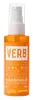
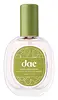
Verb Curl Oil Versus Dae Prickly Pear Hair Oil

What's inside
What's inside
 Key Ingredients
No key ingredients
Benefits
Concerns
Ingredients Side-by-side
Prunus Amygdalus Dulcis Oil
Skin Conditioning





Diheptyl Succinate
EmollientArgania Spinosa Kernel Oil
Emollient



Persea Gratissima Oil
Skin Conditioning
Simmondsia Chinensis Seed Oil
Emollient
Ricinus Communis Seed Oil
Masking
Ximenia Americana Seed Oil
Emollient
Parfum
Masking

Helianthus Annuus Seed Oil
Emollient
Helianthus Annuus Seed Extract
Skin Conditioning
Helianthus Annuus Flower Extract
Skin ConditioningHelianthus Annuus Sprout Extract
Skin ConditioningCapryloyl Glycerin/Sebacic Acid Copolymer
Skin ConditioningEthylhexylglycerin
Skin ConditioningWater
Skin ConditioningButylene Glycol
Humectant
Propylene Glycol
Humectant
Phenoxyethanol
Preservative
Sodium Benzoate
Masking
Acetylcedrene
Perfuming
Alpha-Isomethyl Ionone
Perfuming
Amyl Salicylate
Perfuming
Benzyl Cinnamate
Perfuming
Benzyl Salicylate
Perfuming
Citronellol
Perfuming
Limonene
Perfuming
Geraniol
Perfuming
Hexyl Cinnamal
Perfuming
Hydroxycitronellal
Perfuming
Linalool
Perfuming
Linalyl Acetate
Masking
Pinene
Masking
Terpineol
Masking
Prunus Amygdalus Dulcis Oil, Diheptyl Succinate, Argania Spinosa Kernel Oil, Persea Gratissima Oil, Simmondsia Chinensis Seed Oil, Ricinus Communis Seed Oil, Ximenia Americana Seed Oil, Parfum, Helianthus Annuus Seed Oil, Helianthus Annuus Seed Extract, Helianthus Annuus Flower Extract, Helianthus Annuus Sprout Extract, Capryloyl Glycerin/Sebacic Acid Copolymer, Ethylhexylglycerin, Water, Butylene Glycol, Propylene Glycol, Phenoxyethanol, Sodium Benzoate, Acetylcedrene, Alpha-Isomethyl Ionone, Amyl Salicylate, Benzyl Cinnamate, Benzyl Salicylate, Citronellol, Limonene, Geraniol, Hexyl Cinnamal, Hydroxycitronellal, Linalool, Linalyl Acetate, Pinene, Terpineol
Cyclopentasiloxane
Emollient
Dimethicone
Emollient
Caprylyl Methicone
Skin Conditioning
C13-15 Alkane
SolventEthyl Macadamiate
Skin Conditioning
Opuntia Ficus-Indica Seed Oil
Emollient
Argania Spinosa Kernel Oil
Emollient
Parfum
Masking
Limnanthes Alba Seed Oil
Skin Conditioning
Plukenetia Volubilis Seed Oil
Emollient
Eclipta Prostrata Extract
Skin Conditioning
Melia Azadirachta Leaf Extract
Skin ConditioningMoringa Oleifera Seed Oil
Emollient
Tocopherol
Antioxidant




Cyclopentasiloxane, Dimethicone, Caprylyl Methicone, C13-15 Alkane, Ethyl Macadamiate, Opuntia Ficus-Indica Seed Oil, Argania Spinosa Kernel Oil, Parfum, Limnanthes Alba Seed Oil, Plukenetia Volubilis Seed Oil, Eclipta Prostrata Extract, Melia Azadirachta Leaf Extract, Moringa Oleifera Seed Oil, Tocopherol
Ingredients Explained
These ingredients are found in both products.
Ingredients higher up in an ingredient list are typically present in a larger amount.
You may know this ingredient as argan oil. It has emollient and skin conditioning properties that help soften skin and reinforce the lipid barrier.
The fatty acid profile of argan oil is roughly 45-55% oleic acid, 28-36% linoleic acid, 10-15% palmitic acid, and 5-7% stearic acid. It also contains vitamin E, sterols, squalene, and polyphenols like ferulic acid.
Two clinical studies in postmenopausal women found that applying argan oil for 60 days significantly improved skin elasticity and moisturization (reduced transepidermal water loss and increased epidermal water content).
Since it is high in oleic and linoleic acid, this ingredient may not be fungal acne safe. Both of these fall in the C11-C24 range that Malassezia yeast can metabolize.
Learn more about Argania Spinosa Kernel OilParfum is a catch-all term for an ingredient or more that is used to give a scent to products.
Also called "fragrance", this ingredient can be a blend of hundreds of chemicals or plant oils. This means every product with "fragrance" or "parfum" in the ingredients list is a different mixture.
For instance, Habanolide is a proprietary trade name for a specific aroma chemical. When used as a fragrance ingredient in cosmetics, most aroma chemicals fall under the broad labeling category of “FRAGRANCE” or “PARFUM” according to EU and US regulations.
The term 'parfum' or 'fragrance' is not regulated in many countries. In many cases, it is up to the brand to define this term.
For instance, many brands choose to label themselves as "fragrance-free" because they are not using synthetic fragrances. However, their products may still contain ingredients such as essential oils that are considered a fragrance by INCI standards.
One example is Calendula flower extract. Calendula is an essential oil that still imparts a scent or 'fragrance'.
Depending on the blend, the ingredients in the mixture can cause allergies and sensitivities on the skin. Some ingredients that are known EU allergens include linalool and citronellol.
Parfum can also be used to mask or cover an unpleasant scent.
The bottom line is: not all fragrances/parfum/ingredients are created equally. If you are worried about fragrances, we recommend taking a closer look at an ingredient. And of course, we always recommend speaking with a professional.
Learn more about Parfum

