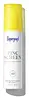
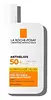
Supergoop! Zincscreen 100% Mineral Lotion SPF 40 Versus La Roche-Posay Anthelios Ultra Fluid Face Lotion SPF 50+
This mineral sunscreen covers the full UV range and blocks ~98% of UVB at SPF 40.
This chemical sunscreen covers the full UV range and blocks ~98% of UVB at SPF 50.


What's inside
What's inside
 Key Ingredients
Benefits
Concerns
Ingredients Side-by-side
Zinc Oxide 13%
Cosmetic Colorant


Water
Skin ConditioningTetradecane
Perfuming

Cetearyl Nonanoate
EmollientEthylhexyl Palmitate
Emollient




Caprylic/Capric Triglyceride
Masking


Isopropyl Palmitate
Emollient
Isopropyl Myristate
Emollient
Glycerin
Humectant
Polyglyceryl-3 Diisostearate
Emulsifying
Mica
Cosmetic ColorantPropanediol
Solvent
Disteardimonium Hectorite
StabilisingGluconolactone
Skin Conditioning





Polyglyceryl-6 Polyricinoleate
Emulsifying
Brassica Campestris/Aleurites Fordi Oil Copolymer
Skin Conditioning
Polyhydroxystearic Acid
Emulsifying
Sodium Chloride
MaskingMagnesium Sulfate
Fructose
Humectant
Octyldodecyl Oleate
Emollient
Tocopherol
Antioxidant



Cocos Nucifera Fruit Extract
Emollient
Sodium Benzoate
Masking
CI 77492
Cosmetic ColorantDodecane
Emollient
Hexadecane
Perfuming
CI 77891
Cosmetic ColorantWithania Somnifera Flower Extract
Skin ConditioningCI 77491
Cosmetic ColorantVaccinium Angustifolium Fruit Extract
Skin Protecting
Silica
Abrasive
Calcium Gluconate
HumectantZinc Oxide 13%, Water, Tetradecane, Cetearyl Nonanoate, Ethylhexyl Palmitate, Caprylic/Capric Triglyceride, Isopropyl Palmitate, Isopropyl Myristate, Glycerin, Polyglyceryl-3 Diisostearate, Mica, Propanediol, Disteardimonium Hectorite, Gluconolactone, Polyglyceryl-6 Polyricinoleate, Brassica Campestris/Aleurites Fordi Oil Copolymer, Polyhydroxystearic Acid, Sodium Chloride, Magnesium Sulfate, Fructose, Octyldodecyl Oleate, Tocopherol, Cocos Nucifera Fruit Extract, Sodium Benzoate, CI 77492, Dodecane, Hexadecane, CI 77891, Withania Somnifera Flower Extract, CI 77491, Vaccinium Angustifolium Fruit Extract, Silica, Calcium Gluconate
Drometrizole Trisiloxane 7%
UV Absorber
Bis-Ethylhexyloxyphenol Methoxyphenyl Triazine 5%
Skin Conditioning
Ethylhexyl Salicylate 5%
UV Absorber
Octocrylene 5%
UV Absorber
Butyl Methoxydibenzoylmethane 3%
UV Absorber
Homosalate 2%
Skin Conditioning
Phenylbenzimidazole Sulfonic Acid 0.5%
UV Absorber
Water
Skin ConditioningAlcohol Denat.
Antimicrobial

Silica
Abrasive
Isopropyl Myristate
Emollient
Glycerin
Humectant
Diisopropyl Sebacate
EmollientC12-22 Alkyl Acrylate/Hydroxyethylacrylate Copolymer
StabilisingPropanediol
Solvent
Perlite
Absorbent
Tocopherol
Antioxidant
Triethanolamine
BufferingCaprylyl Glycol
Emollient
Trisodium Ethylenediamine Disuccinate
Disodium EDTA
Hydroxyethylcellulose
Emulsion StabilisingAcrylates/C10-30 Alkyl Acrylate Crosspolymer
Emulsion StabilisingDrometrizole Trisiloxane 7%, Bis-Ethylhexyloxyphenol Methoxyphenyl Triazine 5%, Ethylhexyl Salicylate 5%, Octocrylene 5%, Butyl Methoxydibenzoylmethane 3%, Homosalate 2%, Phenylbenzimidazole Sulfonic Acid 0.5%, Water, Alcohol Denat., Silica, Isopropyl Myristate, Glycerin, Diisopropyl Sebacate, C12-22 Alkyl Acrylate/Hydroxyethylacrylate Copolymer, Propanediol, Perlite, Tocopherol, Triethanolamine, Caprylyl Glycol, Trisodium Ethylenediamine Disuccinate, Disodium EDTA, Hydroxyethylcellulose, Acrylates/C10-30 Alkyl Acrylate Crosspolymer
Reviews
Ingredients Explained
These ingredients are found in both products.
Ingredients higher up in an ingredient list are typically present in a larger amount.
Glycerin (or glycerol) is a compound naturally found in your skin. It's a powerhouse humectant that pulls water into the stratum corneum.
Topically, glycerin does several things at once:
Your skin makes glycerin on its own (mostly from sebaceous oil breakdown) and shuttles it to your outermost layer of skin, or your epidermis, via aquaporin-3.
Aquaporin-3 is a transporter that is essential for normal skin hydration, elasticity, and repair. Interestingly, mice lacking in AQP3 have dry and less elastic skin that can be fully corrected with glycerin.
This ingredient is non-irritating, plays well with almost every ingredient, and works across all skin types. Typical use is anywhere between 3-10% but can go up to 79% in some leave-on products.
Just know very high concentrations (>40%) can feel tacky in low humidity.
Glycerin is the name for this ingredient in American English. British English uses Glycerol/Glycerine.
Learn more about GlycerinIsopropyl Myristate is an ester made by combining isopropyl alcohol with myristic acid.
It is primarily an emollient and penetration enhancer that gives products a lightweight, silky feel without the heaviness of oils.
This ingredient is generally considered non-toxic, non-irritating, and has low absorption potential.
You might have heard that this ingredient clogs pores. This reputation comes from the older rabbit ear studies which are more sensitive than human skin to clogging.
Dermatologist Dr. Zoe Draelos has also confirmed in a peer-reviewed paper that products containing comedogenic ingredients are not necessarily comedogenic themselves.
A small subset of people (~2%) may experience contact sensitivity so patch testing is a reasonable idea if you have reactive skin.
Since this ingredient is an ester of myristic acid (a C14 fatty acid), it falls within the carbon chain range that is known to feed Malassezia. This ingredient may not be fungal acne safe.
Learn more about Isopropyl MyristatePropanediol is an all-star ingredient. It softens, hydrates, and smooths the skin.
It’s often used to:
Propanediol is not likely to cause sensitivity and considered safe to use. It is derived from corn or petroleum with a clear color and no scent.
Learn more about PropanediolSilica, also known as silicon dioxide, is a naturally occurring mineral. It is used as a fine, spherical, and porous powder in cosmetics.
Though it has exfoliant properties, the function of silica varies depending on the product.
The unique structure of silica enhances the spreadability and adds smoothness, making it a great texture enhancer.
It is also used as an active carrier, emulsifier, and mattifier due to its ability to absorb excess oil.
In some products, tiny microneedles called spicules are made from silica or hydrolyzed sponge. When you rub them in, they lightly polish away dead skin layers and enhance the penetration of active ingredients.
Learn more about SilicaTocopherol is a fat-soluble antioxidant known as Vitamin E.
You'll find this ingredient in the vast majority of skincare (for good reason). It works to neutralize free radicals, or unstable molecules generated by UV exposure, pollution, and other environmental stressors, before they can cause oxidative damage to your skin cells.
Topically applied tocopherol has been shown to protect against UV damage by ramping up the skin's own natural defense enzymes.
It also acts as a skin conditioning agent; some studies show that regular topical use can improve the skin's water-binding capacity over 2-4 weeks.
This ingredient is especially loved for being a team player. When combined with Vitamin C, the photoprotective effect of both ingredients roughly doubles and the combo also helps reduce UV-induced DNA damage.
This ingredient has some brightening potential but it's more of a prevention ingredient than spot-fader. Cell studies show it can slow down melanin production but it's worth noting that it's not the most powerful brightener out there.
In formulations, it also serves as a stabilizer that helps protect other oxidation-prone ingredients from degrading.
Concentrations usually range from 0.1-1% in most leave-on products.
Learn more about TocopherolWater. It's the most common cosmetic ingredient of all. You'll usually see it at the top of ingredient lists, meaning that it makes up the largest part of the product.
So why is it so popular? Water most often acts as a solvent - this means that it helps dissolve other ingredients into the formulation.
You'll also recognize water as that liquid we all need to stay alive. If you see this, drink a glass of water. Remember to stay hydrated!
Learn more about Water

