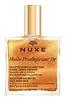
This hydrating oil is formulated around Macadamia Integrifolia Seed Oil and Prunus Amygdalus Dulcis Oil to hydrate skin and strengthen the skin barrier.


What's inside
What's inside
 Key Ingredients
Benefits
Concerns
Ingredients Side-by-side
Isododecane
EmollientHydrogenated Polydecene
EmollientTapioca Starch
Mica
Cosmetic ColorantEthylene/Propylene/Styrene Copolymer
Parfum
Masking




Cocos Nucifera Oil
Masking





Helianthus Annuus Seed Oil
Emollient
Gossypium Herbaceum Seed Oil
Skin Conditioning
Euterpe Oleracea Fruit Oil
Skin Conditioning
Theobroma Grandiflorum Seed Butter
Skin Conditioning
Aloe Barbadensis Leaf Extract
Emollient

Phenoxyethanol
Preservative
Butylene/Ethylene/Styrene Copolymer
Tocopheryl Acetate
Antioxidant


Ethylhexylglycerin
Skin ConditioningEthylene Brassylate
MaskingPentaerythrityl Tetra-Di-T-Butyl Hydroxyhydrocinnamate
Antioxidant
Tocopherol
Antioxidant


CI 77491
Cosmetic ColorantCI 77499
Cosmetic ColorantCI 77891
Cosmetic ColorantBenzyl Alcohol
Perfuming

Benzyl Salicylate
Perfuming
Coumarin
Perfuming
Hydroxycitronellal
Perfuming
Limonene
Perfuming
Isododecane, Hydrogenated Polydecene, Tapioca Starch, Mica, Ethylene/Propylene/Styrene Copolymer, Parfum, Cocos Nucifera Oil, Helianthus Annuus Seed Oil, Gossypium Herbaceum Seed Oil, Euterpe Oleracea Fruit Oil, Theobroma Grandiflorum Seed Butter, Aloe Barbadensis Leaf Extract, Phenoxyethanol, Butylene/Ethylene/Styrene Copolymer, Tocopheryl Acetate, Ethylhexylglycerin, Ethylene Brassylate, Pentaerythrityl Tetra-Di-T-Butyl Hydroxyhydrocinnamate, Tocopherol, CI 77491, CI 77499, CI 77891, Benzyl Alcohol, Benzyl Salicylate, Coumarin, Hydroxycitronellal, Limonene
Coco-Caprylate/Caprate
Emollient
Macadamia Integrifolia Seed Oil
Skin Conditioning
Dicaprylyl Ether
Emollient
Caprylic/Capric Triglyceride
Masking
Prunus Amygdalus Dulcis Oil
Skin Conditioning
Corylus Avellana Seed Oil
Emollient
Mica
Cosmetic ColorantCamellia Oleifera Seed Oil
Skin Conditioning
Parfum
Masking
Camellia Japonica Seed Oil
Emollient
Castor Oil/Ipdi Copolymer
CI 77891
Cosmetic ColorantArgania Spinosa Kernel Oil
Emollient
Borago Officinalis Seed Oil
Emollient
Tocopherol
Antioxidant
CI 77491
Cosmetic ColorantHelianthus Annuus Seed Oil
Emollient
Tocopheryl Acetate
Antioxidant
Rosmarinus Officinalis Leaf Extract
AntimicrobialPolyglyceryl-3 Diisostearate
Emulsifying
Water
Skin ConditioningAscorbic Acid
Antioxidant


Solanum Lycopersicum Fruit Extract
Antioxidant
Linalool
Perfuming
Limonene
Perfuming
Citronellol
Perfuming
Geraniol
Perfuming
Coco-Caprylate/Caprate, Macadamia Integrifolia Seed Oil, Dicaprylyl Ether, Caprylic/Capric Triglyceride, Prunus Amygdalus Dulcis Oil, Corylus Avellana Seed Oil, Mica, Camellia Oleifera Seed Oil, Parfum, Camellia Japonica Seed Oil, Castor Oil/Ipdi Copolymer, CI 77891, Argania Spinosa Kernel Oil, Borago Officinalis Seed Oil, Tocopherol, CI 77491, Helianthus Annuus Seed Oil, Tocopheryl Acetate, Rosmarinus Officinalis Leaf Extract, Polyglyceryl-3 Diisostearate, Water, Ascorbic Acid, Solanum Lycopersicum Fruit Extract, Linalool, Limonene, Citronellol, Geraniol
Ingredients Explained
These ingredients are found in both products.
Ingredients higher up in an ingredient list are typically present in a larger amount.
Ci 77491 is also hydrated iron III oxide. It's sole purpose is to give a red/pink hue to products.
Iron III oxides are classified as inorganic chemicals for coloring.
Synthetically created Ci 77491 is considered safer than those naturally found. This is because the synthetically created version may contain less impurities. Iron oxides are generally non-toxic and non-allergenic.
Learn more about CI 77491Ci 77891 is a white pigment from Titanium dioxide. It is naturally found in minerals such as rutile and ilmenite.
It's main function is to add a white color to cosmetics. It can also be mixed with other colors to create different shades.
Ci 77891 is commonly found in sunscreens due to its ability to block UV rays.
Learn more about CI 77891Helianthus Annuus Seed Oil is a plant oil derived from the seeds of a sunflower.
It is rich in fatty acids, primarily linoleic acid and oleic acid. This gives it emollient and skin conditioning properties.
The reason this ingredient is so effective is because it forms a thin film on the skin that reduces transepidermal water loss (TEWL) while supplying linoleic acid to the stratum corneum to improve barrier strength.
The high linoleic acid content is particularly noteworthy for acne-prone skin.
Research suggests that acne-prone skin tends to be deficient in linoleic acid in sebum. Topical application may help replenish this to support a healthier follicular environment and less comedone-promoting sebum.
One randomized study found sunflower seed oil preserved skin barrier integrity in adult volunteers with and without atopic dermatitis (outperforming olive oil).
This ingredient is well-studied, gentle, and an effective emollient suitable for most skin types.
On fungal acne: This ingredient may not be Fungal acne (Malassezia folliculitis) safe. This is because it contains fatty acids with carbon chain lengths in the C11-C24 range.
Learn more about Helianthus Annuus Seed OilLimonene is the compound that gives citrus peel its smell.
In skincare, it shows up as a standalone fragrance ingredient or as a natural compound of citrus and other essential oils.
You'll typically see this ingredient used in very small amounts; anything above 0.001% in a leave-on product or 0.01% in a rinse-off has to be named on the label in the EU. The citrus oils that carry it sit around 0.5-1% in a finished formula.
Fresh limonene is a weak allergen; the real issue is that it slowly reacts with air and then breaks down from oxidation to create hydroperoxides (which are strong sensitizers). This is why suppliers are required to keep the peroxide value below 20 mmol.
Positive reactions in people being investigated for eczema vary:
It's worth skipping if you have a known fragrance allergy or a compromised barrier, but the risk is low for most people.
Older or long-opened products are also more likely to bother you than fresh ones due to oxidation.
Learn more about LimoneneMica is a naturally occurring mineral used to add shimmer and color in cosmetics. It can also help improve the texture of a product or give it an opaque, white/silver color.
Serecite is the name for very fine but ragged grains of mica.
This ingredient is often coated with metal oxides like titanium dioxide. Trace amounts of heavy metals may be found in mica, but these metals are not harmful in our personal products.
Mica has been used since prehistoric times throughout the world. Ancient Egyptian, Indian, Greek, Roman, Aztec, and Chinese civilizations have used mica.
Learn more about MicaParfum is a catch-all term for an ingredient or more that is used to give a scent to products.
Also called "fragrance", this ingredient can be a blend of hundreds of chemicals or plant oils. This means every product with "fragrance" or "parfum" in the ingredients list is a different mixture.
For instance, Habanolide is a proprietary trade name for a specific aroma chemical. When used as a fragrance ingredient in cosmetics, most aroma chemicals fall under the broad labeling category of “FRAGRANCE” or “PARFUM” according to EU and US regulations.
The term 'parfum' or 'fragrance' is not regulated in many countries. In many cases, it is up to the brand to define this term.
For instance, many brands choose to label themselves as "fragrance-free" because they are not using synthetic fragrances. However, their products may still contain ingredients such as essential oils that are considered a fragrance by INCI standards.
One example is Calendula flower extract. Calendula is an essential oil that still imparts a scent or 'fragrance'.
Depending on the blend, the ingredients in the mixture can cause allergies and sensitivities on the skin. Some ingredients that are known EU allergens include linalool and citronellol.
Parfum can also be used to mask or cover an unpleasant scent.
The bottom line is: not all fragrances/parfum/ingredients are created equally. If you are worried about fragrances, we recommend taking a closer look at an ingredient. And of course, we always recommend speaking with a professional.
Learn more about ParfumTocopherol is a fat-soluble antioxidant known as Vitamin E.
You'll find this ingredient in the vast majority of skincare (for good reason). It works to neutralize free radicals, or unstable molecules generated by UV exposure, pollution, and other environmental stressors, before they can cause oxidative damage to your skin cells.
Topically applied tocopherol has been shown to protect against UV damage by ramping up the skin's own natural defense enzymes.
It also acts as a skin conditioning agent; some studies show that regular topical use can improve the skin's water-binding capacity over 2-4 weeks.
This ingredient is especially loved for being a team player. When combined with Vitamin C, the photoprotective effect of both ingredients roughly doubles and the combo also helps reduce UV-induced DNA damage.
This ingredient has some brightening potential but it's more of a prevention ingredient than spot-fader. Cell studies show it can slow down melanin production but it's worth noting that it's not the most powerful brightener out there.
In formulations, it also serves as a stabilizer that helps protect other oxidation-prone ingredients from degrading.
Concentrations usually range from 0.1-1% in most leave-on products.
Learn more about TocopherolTocopheryl Acetate is a stable, shelf-friendly form of vitamin E.
Formulators love it because plain vitamin E oxidizes quickly once it hits air. This acetate version stays stable and resists going off, helping to extend a product's shelf life.
It's actually inactive on its own and works like a slow-release "storage" form; the enzymes in your skin called esterases gradually convert it into active vitamin E over time.
One in vivo study showed 5% of the acetate in the living layer of the epidermis converted to vitamin E after 5 days of application. This study also found the skin gained protection against UV damage even though the conversion was slow and small.
Once converted, vitamin E acts as a skin's main fat-soluble antioxidant that fights free radicals to protect skin from damage.
Topical vitamin E generally boosts the skin's photoprotection, and it reduced UV-damage in animal models.
This ingredient has some brightening potential but it's more of a prevention ingredient than spot-fader. Cell studies show it can slow down melanin production but it's worth noting that it's not the most powerful brightener out there.
Overall, it has a pretty solid safety profile and has been found to be non-irritating and non-comedogenic. Allergic reactions may happen but stay rare due to how widely the ingredient gets used.
The concentration will vary depending on the formula; industry data shows 0.1% in baby lotions, 3% in lipsticks, and 5% in foot powders. You can also find this ingredient at 100% in a pure vitamin E oil.
Most leave-on skincare keeps it at the lower end, often between 0.5-1%.
Learn more about Tocopheryl Acetate

