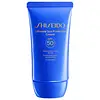
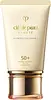
This hybrid sunscreen covers the full UV range and blocks ~98% of UVB at SPF 50.
This hybrid sunscreen covers the full UV range and blocks ~98% of UVB at SPF 50.

What's inside
What's inside
 Key Ingredients
Benefits
Concerns
Ingredients Side-by-side
Ethylhexyl Salicylate 3%
UV Absorber

Octocrylene 3%
UV Absorber

Zinc Oxide 19.4%
Cosmetic Colorant
Water
Skin ConditioningDiisopropyl Sebacate
EmollientIsopropyl Myristate
Emollient



Alcohol Denat.
Antimicrobial

PEG/PPG-9/2 Dimethyl Ether
Skin ConditioningGlycerin
Humectant


Alcohol
Antimicrobial
PPG-3 Dipivalate
Skin ConditioningTalc
Abrasive
Polyglyceryl-6 Polyricinoleate
Emulsifying
Silica
Abrasive
Dextrin Palmitate
Emulsifying
Dextrin Palmitate/Ethylhexanoate
Emulsifying
Acrylamides/Dmapa Acrylates/Methoxy PEG Methacrylate Copolymer
Dipotassium Glycyrrhizate
Humectant

Aminoethanesulfinic Acid
Antioxidant
PEG/PPG-14/7 Dimethyl Ether
Skin ConditioningSaxifraga Sarmentosa Extract
Skin ConditioningCamellia Sinensis Leaf Extract
Antimicrobial

Eucheuma Serra/Grateloupia Sparsa/Saccharina Angustata/Ulva Linza/Undaria Pinnatifida Extract
EmollientSodium Hyaluronate
Humectant
Sophora Angustifolia Root Extract
Skin ConditioningSaccharina Angustata/Undaria Pinnatifida Extract
EmollientHydrogen Dimethicone

Dimethylacrylamide/Sodium Acryloyldimethyltaurate Crosspolymer
Hydroxypropyl Methylcellulose Stearoxy Ether
Succinoglycan
Skin ConditioningTocopherol
Antioxidant

BHT
Antioxidant
Butylene Glycol
Humectant
Stearic Acid
Cleansing
Sodium Metabisulfite
Antioxidant
PEG-6
HumectantBis-Butyldimethicone Polyglyceryl-3
Cleansing
Syzygium Jambos Leaf Extract
Skin ConditioningChlorphenesin
Antimicrobial
Parfum
Masking

Ethylhexyl Salicylate 3%, Octocrylene 3%, Zinc Oxide 19.4%, Water, Diisopropyl Sebacate, Isopropyl Myristate, Alcohol Denat., PEG/PPG-9/2 Dimethyl Ether, Glycerin, Alcohol, PPG-3 Dipivalate, Talc, Polyglyceryl-6 Polyricinoleate, Silica, Dextrin Palmitate, Dextrin Palmitate/Ethylhexanoate, Acrylamides/Dmapa Acrylates/Methoxy PEG Methacrylate Copolymer, Dipotassium Glycyrrhizate, Aminoethanesulfinic Acid, PEG/PPG-14/7 Dimethyl Ether, Saxifraga Sarmentosa Extract, Camellia Sinensis Leaf Extract, Eucheuma Serra/Grateloupia Sparsa/Saccharina Angustata/Ulva Linza/Undaria Pinnatifida Extract, Sodium Hyaluronate, Sophora Angustifolia Root Extract, Saccharina Angustata/Undaria Pinnatifida Extract, Hydrogen Dimethicone, Dimethylacrylamide/Sodium Acryloyldimethyltaurate Crosspolymer, Hydroxypropyl Methylcellulose Stearoxy Ether, Succinoglycan, Tocopherol, BHT, Butylene Glycol, Stearic Acid, Sodium Metabisulfite, PEG-6, Bis-Butyldimethicone Polyglyceryl-3, Syzygium Jambos Leaf Extract, Chlorphenesin, Parfum
Ethylhexyl Methoxycinnamate 7.4%
UV Absorber
Octocrylene 3%
UV Absorber
Zinc Oxide 16.4%
Cosmetic Colorant
Water
Skin ConditioningDipropylene Glycol
HumectantIsohexadecane
EmollientIsopropyl Myristate
Emollient
Glycerin
Humectant
Sd Alcohol 40-B
Astringent
Lauryl PEG-9 Polydimethylsiloxyethyl Dimethicone
Skin Conditioning
Dimethicone
Emollient
Polymethyl Methacrylate
Disteardimonium Hectorite
StabilisingPolymethylsilsesquioxane
PEG/PPG-14/7 Dimethyl Ether
Skin ConditioningPolybutylene Glycol/PPG-9/1 Copolymer
Skin ConditioningMacadamia Seed Oil Polyglyceryl-6 Esters Behenate
Emollient
PEG-6
HumectantPEG-32
HumectantSilica
Abrasive
Trehalose
Humectant
Tocopheryl Acetate
Antioxidant
Polyquaternium-51
Skin Conditioning
Sodium Acetylated Hyaluronate
Humectant
Dipotassium Glycyrrhizate
Humectant
Saxifraga Sarmentosa Extract
Skin ConditioningGinkgo Biloba Leaf Extract
Skin Conditioning
Thymus Serpyllum Extract
Skin ConditioningCrataegus Monogyna Flower Extract
Skin ConditioningHydrolyzed Silk
Humectant
2-O-Ethyl Ascorbic Acid
Skin Conditioning

Scutellaria Baicalensis Root Extract
Astringent
Uncaria Gambir Extract
AstringentGarcinia Mangostana Bark Extract
Skin ConditioningHibiscus Sabdariffa Flower Extract
Skin ConditioningPanax Ginseng Root Extract
Emollient
Bupleurum Falcatum Root Extract
Skin ConditioningHydrolyzed Conchiolin Protein
Skin ConditioningHydrogenated Polydecene
EmollientHydrogen Dimethicone
Isostearic Acid
Cleansing
Butylene Glycol
Humectant
Trisodium EDTA
ChelatingTalc
Abrasive
Alcohol
Antimicrobial
BHT
Antioxidant
Tocopherol
Antioxidant
Triethoxycaprylylsilane
Theanine
EmollientPhenoxyethanol
Preservative
Parfum
Masking
Iron Oxides
Titanium Dioxide
Cosmetic Colorant
Mica
Cosmetic ColorantEthylhexyl Methoxycinnamate 7.4%, Octocrylene 3%, Zinc Oxide 16.4%, Water, Dipropylene Glycol, Isohexadecane, Isopropyl Myristate, Glycerin, Sd Alcohol 40-B, Lauryl PEG-9 Polydimethylsiloxyethyl Dimethicone, Dimethicone, Polymethyl Methacrylate, Disteardimonium Hectorite, Polymethylsilsesquioxane, PEG/PPG-14/7 Dimethyl Ether, Polybutylene Glycol/PPG-9/1 Copolymer, Macadamia Seed Oil Polyglyceryl-6 Esters Behenate, PEG-6, PEG-32, Silica, Trehalose, Tocopheryl Acetate, Polyquaternium-51, Sodium Acetylated Hyaluronate, Dipotassium Glycyrrhizate, Saxifraga Sarmentosa Extract, Ginkgo Biloba Leaf Extract, Thymus Serpyllum Extract, Crataegus Monogyna Flower Extract, Hydrolyzed Silk, 2-O-Ethyl Ascorbic Acid, Scutellaria Baicalensis Root Extract, Uncaria Gambir Extract, Garcinia Mangostana Bark Extract, Hibiscus Sabdariffa Flower Extract, Panax Ginseng Root Extract, Bupleurum Falcatum Root Extract, Hydrolyzed Conchiolin Protein, Hydrogenated Polydecene, Hydrogen Dimethicone, Isostearic Acid, Butylene Glycol, Trisodium EDTA, Talc, Alcohol, BHT, Tocopherol, Triethoxycaprylylsilane, Theanine, Phenoxyethanol, Parfum, Iron Oxides, Titanium Dioxide, Mica
Ingredients Explained
These ingredients are found in both products.
Ingredients higher up in an ingredient list are typically present in a larger amount.
This ingredient is also called ethanol or ethyl alcohol. It is denatured, meaning made undrinkable for cosmetic use.
In formulas, it:
Is it bad for your skin?
The answer comes down to concentration. Patch and wash studies have found highly concentrated alcohol-based hand rubs (60-100%) cause less barrier disruption than washing with a basic detergent like SLS. The only measurable effect in these studies was a temporary dip in skin hydration.
Concentrations below 12-15% in leave-on cosmetics is generally well-tolerated. Concentrations above start to see increased transepidermal water loss (TEWL) and reduced hydration.
In concentrations about 58%, it creates temporary channels in your skin's lipid layers to become more permeable and allow other ingredients to slip through easily.
This ingredient can be up to 80% of the formula in alcohol-based perfumes.
Overall, this ingredient is probably harmless if found lower down an ingredients list but worth side-eyeing if it's high up (especially if your barrier is already struggling).
Alcohol can worsen dry skin, eczema, and oily skin, especially at higher concentrations. This is because it can increase transepidermal water loss and decrease hydration to disrupt the skin barrier.
According to the National Rosacea Society based in the US, you should be mindful of products with these alcohols in the top half of ingredients.
True allergic contact dermatitis to ethanol is uncommon, but be sure to patch test if you have dry or sensitive skin.
Learn more about AlcoholBHT is a synthetic antioxidant and preservative.
As an antioxidant, it helps your body fight off free-radicals. Free-radicals are molecules that may damage your skin cells.
As a preservative, it is used to stabilize products and prevent them from degrading. Specifically, BHT prevents degradation from oxidation.
The concerns related to BHT come from oral studies; this ingredient is currently allowed for use by both the FDA and EU.
However, it was recently restricted for use in the UK as of April 2024.
Learn more about BHTButylene Glycol (or BG) is used within cosmetic products for a few different reasons:
Overall, Butylene Glycol is a safe and well-rounded ingredient that works well with other ingredients.
Though this ingredient works well with most skin types, some people with sensitive skin may experience a reaction such as allergic rashes, closed comedones, or itchiness.
Learn more about Butylene GlycolDipotassium Glycyrrhizate comes from licorice root.
Extracts of licorice have demonstrated to have antibacterial, anti‐inflammatory, antiviral, antioxidant properties.
One component, glabridin, has extra potent antioxidant and soothing properties. It has also been found to block pigmentation from UVB rays in guinea pigs.
Licorice Root also contains a flavonoid. Flavonoids are a natural substance from in plants. Flavonoids also have antioxidant properties.
Another component, glycyrrhizin, has been found to have anti-inflammatory and antimicrobial benefits. This may make licorice root extract effective at treating acne. However, more research is needed to support this.
Liquiritin is one of the flavone compounds found in licorice. It has been found to help lighten skin by preventing tyrosinase from reacting with tyrosine. When the two react, protein is converted to melanin. Melanin is the substance in your body that gives your features pigmentation.
Licorice root is native to Southern Europe and Asia. It has been used in traditional Chinese medicine to help with respiratory issues.
Learn more about Dipotassium GlycyrrhizateGlycerin (or glycerol) is a compound naturally found in your skin. It's a powerhouse humectant that pulls water into the stratum corneum.
Topically, glycerin does several things at once:
Your skin makes glycerin on its own (mostly from sebaceous oil breakdown) and shuttles it to your outermost layer of skin, or your epidermis, via aquaporin-3.
Aquaporin-3 is a transporter that is essential for normal skin hydration, elasticity, and repair. Interestingly, mice lacking in AQP3 have dry and less elastic skin that can be fully corrected with glycerin.
This ingredient is non-irritating, plays well with almost every ingredient, and works across all skin types. Typical use is anywhere between 3-10% but can go up to 79% in some leave-on products.
Just know very high concentrations (>40%) can feel tacky in low humidity.
Glycerin is the name for this ingredient in American English. British English uses Glycerol/Glycerine.
Learn more about GlycerinHydrogen dimethicone is a silicone-based ingredient. It is mainly used to alter the texture and spread of a product without adding "stickiness".
Isopropyl Myristate is an ester made by combining isopropyl alcohol with myristic acid.
It is primarily an emollient and penetration enhancer that gives products a lightweight, silky feel without the heaviness of oils.
This ingredient is generally considered non-toxic, non-irritating, and has low absorption potential.
This ingredient does have a comedogenic rating of 3-5, but this doesn't mean a formula with this ingredient will clog pores.
Dermatologist Dr. Zoe Draelos has also confirmed in a peer-reviewed paper that products containing comedogenic ingredients are not necessarily comedogenic themselves.
A small subset of people (~2%) may experience contact sensitivity so patch testing is a reasonable idea if you have reactive skin.
Since this ingredient is an ester of myristic acid (a C14 fatty acid), it falls within the carbon chain range that is known to feed Malassezia. This ingredient may not be fungal acne safe.
Learn more about Isopropyl MyristateOctocrylene is an oil-soluble organic UV filter that mainly absorbs UVB and short wave UVA II light.
Its real superpower is teamwork: octocrylene is remarkably photostable and is most famous for stabilizing avobenzone (the workhorse UVA filter).
This ingredient is commonly used to enhance both UVB and UVA protection due to its unique property in stabilizing avobenzone. It also pulls double duty by boosting water resistance and giving formulas a smooth, spreadable feel.
The EU's Scientific Committee on Consumer Safety (SCCS) has deemed octocrylene to be safe as a UV-filter at concentrations up to 10% (capped at 9% in propellant sprays). The US also permits it up to 10%.
Two things worth knowing:
You'll usually see this ingredient used in concentrations between 2-10% (higher amounts when used as a stabilizer for avobenzone).
Learn more about OctocryleneParfum is a catch-all term for an ingredient or more that is used to give a scent to products.
Also called "fragrance", this ingredient can be a blend of hundreds of chemicals or plant oils. This means every product with "fragrance" or "parfum" in the ingredients list is a different mixture.
For instance, Habanolide is a proprietary trade name for a specific aroma chemical. When used as a fragrance ingredient in cosmetics, most aroma chemicals fall under the broad labeling category of “FRAGRANCE” or “PARFUM” according to EU and US regulations.
The term 'parfum' or 'fragrance' is not regulated in many countries. In many cases, it is up to the brand to define this term.
For instance, many brands choose to label themselves as "fragrance-free" because they are not using synthetic fragrances. However, their products may still contain ingredients such as essential oils that are considered a fragrance by INCI standards.
One example is Calendula flower extract. Calendula is an essential oil that still imparts a scent or 'fragrance'.
Depending on the blend, the ingredients in the mixture can cause allergies and sensitivities on the skin. Some ingredients that are known EU allergens include linalool and citronellol.
Parfum can also be used to mask or cover an unpleasant scent.
The bottom line is: not all fragrances/parfum/ingredients are created equally. If you are worried about fragrances, we recommend taking a closer look at an ingredient. And of course, we always recommend speaking with a professional.
Learn more about ParfumWe don't have a description for PEG-6 yet.
We don't have a description for PEG/PPG-14/7 Dimethyl Ether yet.
We don't have a description for Saxifraga Sarmentosa Extract yet.
Silica, also known as silicon dioxide, is a naturally occurring mineral. It is used as a fine, spherical, and porous powder in cosmetics.
Though it has exfoliant properties, the function of silica varies depending on the product.
The unique structure of silica enhances the spreadability and adds smoothness, making it a great texture enhancer.
It is also used as an active carrier, emulsifier, and mattifier due to its ability to absorb excess oil.
In some products, tiny microneedles called spicules are made from silica or hydrolyzed sponge. When you rub them in, they lightly polish away dead skin layers and enhance the penetration of active ingredients.
Learn more about SilicaTalc is a clay mineral. It helps absorb moisture and improve the texture of products. Like other types of clay, Talc can have a slight exfoliating effect on skin. Talc can be added to increase the volume of products.
Some Baby powders are made by combining talc with corn starch. The word "talc" comes from Latin and originates from Arabic. Talc is a mineral commonly found throughout the world.
If you have any concerns about using talc, we recommend checking out the FDA's official page.
Learn more about TalcTocopherol is a fat-soluble antioxidant known as Vitamin E.
You'll find this ingredient in the vast majority of skincare (for good reason). It works to neutralize free radicals, or unstable molecules generated by UV exposure, pollution, and other environmental stressors, before they can cause oxidative damage to your skin cells.
Topically applied tocopherol has been shown to protect against UV damage by ramping up the skin's own natural defense enzymes.
It also acts as a skin conditioning agent; some studies show that regular topical use can improve the skin's water-binding capacity over 2-4 weeks.
This ingredient is especially loved for being a team player. When combined with Vitamin C, the photoprotective effect of both ingredients roughly doubles and the combo also helps reduce UV-induced DNA damage.
This ingredient has some brightening potential but it's more of a prevention ingredient than spot-fader. Cell studies show it can slow down melanin production but it's worth noting that it's not the most powerful brightener out there.
In formulations, it also serves as a stabilizer that helps protect other oxidation-prone ingredients from degrading.
Concentrations usually range from 0.1-1% in most leave-on products.
Learn more about TocopherolWater. It's the most common cosmetic ingredient of all. You'll usually see it at the top of ingredient lists, meaning that it makes up the largest part of the product.
So why is it so popular? Water most often acts as a solvent - this means that it helps dissolve other ingredients into the formulation.
You'll also recognize water as that liquid we all need to stay alive. If you see this, drink a glass of water. Remember to stay hydrated!
Learn more about WaterZinc Oxide (ZO) is a mineral broad-spectrum UV filter and the broadest-spectrum filter recognized by the FDA. It covers everything from UVB through to long-wave UVA.
On top of sun protection, it has skin protectant and skin-soothing properties too.
Here's a myth worth busting: mineral filters are usually described as working by "reflecting" or "bouncing" UV off your skin.
That's mostly not true: when researchers actually measured it, ZO and Titanium Dioxide reflect only about 4-5% of UV (less than SPF 2 worth of protection).
The vast majority of the work (~95%) is done by absorption, similar to chemical UV filters. ZO is a semiconductor that absorbs UV photos through its energy band gap.
So the old "physical blocker vs. chemical absorber" framing is really an oversimplification.
Zinc Oxide is one of the most effective broad-spectrum UV filters out there. It protects across UVB, UVA2, and UVA1 with a flat, even absorption curve across the whole UVA-UVB range.
That uniform UVA coverage is its standout feature; titanium dioxide skews more toward UVB as its particle size drops so ZO gives more consistent and extended UVA protection.
It's also very photostable. As an inorganic oxide, ZO doesn't break down in sunlight the way some organic filters can, so it holds up over a day of wear.
This ingredient is gentle and soothing, making it go-to for sunscreens aimed at sensitive skin, rosacea, or ecezma-prone skin, babies, and children.
It's also unlikely to cause the "eye sting" that some sunscreen ingredients are known for, and regulatory agencies broadly consider it non-toxic and safe for topical use.
Beyond sun protection, ZO is also a recognized OTC skin protectant. It forms a breathable barrier that shields skin from moisture and irritation while supporting healing. This is why you'll see it as a classic active in diaper rash creams.
The only downside to ZO is that it can leave a visible white cast, especially on deeper skin tones. This is the main reason mineral sunscreens have historically felt less cosmetically elegant than chemical or hybrid formulas.
Zinc Oxide comes in both non-nano and nano forms. The dividing line is 100nm and anything under is classified as a nanomaterial by the EU.
The nano version scatters less visible light which cuts down white case and gives a lighter, more wearable texture.
Another thing worth understanding about formulation:
Uncoated ZO has some inherent photocatalytic activity. This just means it can generate reactive oxygen species under UV. It's exactly why cosmetic-grade ZO is almost always surface-coated; this coating suppresses that reactivity and improves how the powder disperses and feels.
A well-formulated coated ZO largely sidesteps this issue.
Zinc Oxide is commonly used anywhere from 10% up to the regulatory maximum in sunscreens (25%).
Mineral-only broad-spectrum products often land in the 15-25% range to hit higher SPF and UVA values. Keep in mind SPF performance depends heavily on particle size, dispersion, and the rest of the formula, and not just the percentage.
As an OTC skin protectant like diaper creams, ZO typically runs higher at roughly 10-40%.
This ingredient is generally easy to work with and doesn't photodegrade.
The only thing to know is that uncoated ZO can be a bit reactive in a formula.
Under UV, it can break down sensitive ingredients like other actives or UV filters. This is another reason coated versions are standard. ZO can also react with very acidic ingredients or throw off stability of some creams. A good formula will get around this with the right coatings and dispersion.
The EU's Scientific Committee on Consumer Safety has concluded that ZO nanoparticles "can be considered to not pose any risk of adverse effects in humans after application on healthy, intact or sunburnt skin".
You might hear that ZO is "toxic"; this is because an in-vitro (test tube) study suggested micronized ZO had potential phototoxicity. In vivo (human) investigations have disputed this and the results have come back reassuring.
So does ZO penetrate skin? The short answer is no, not in any way that matters.
The most relevant evidence comes from real-world human studies: in one, volunteers applied ZO nanoparticle sunscreen hourly for six hours and daily for five days. The advanced imaging showed the particles stayed on the surface and never reached the living epidermis, and no cellular toxicity was found.
Other in-vivo and ex-vivo work agree; ZO nanoparticles don't cross the stratum corneum, even on flexed, massaged, or barrier-impaired skin.
A small amount of solubilized zinc ions can dissolve off the particles and enter the upper skin. But the quantities are tiny compared to the zinc already naturally present in your body, and studies haven't found this to cause local toxicity.
The sunscreen bans you've heard of (like Hawaii's) are aimed at two chemical filters, Oxybenzone and Octinoxate. ZO itself it not banned and is often recommended instead.
So far, there's no solid evidence that any form of ZO harms reefs. It is an ongoing and active area of study, and worth keeping an eye on.
If you're traveling somewhere with these rules, a non-nano mineral sunscreen is the safe bet.
Learn more about Zinc Oxide

