This brightening serum is formulated around Niacinamide and Alpha-Arbutin to fade the look of dark spots and brighten dull-looking skin.
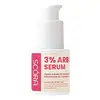
This brightening serum is formulated around Alpha-Arbutin and Glycyrrhiza Glabra Root Extract to brighten dull-looking skin and fade the look of dark spots.

What's inside
What's inside
 Key Ingredients
Benefits
Concerns
Ingredients Side-by-side
Water
Skin ConditioningNiacinamide
Smoothing











Alpha-Arbutin
Antioxidant

Tranexamic Acid
Astringent
Butylene Glycol
Humectant
Glycerin
Humectant
Allantoin
Skin Conditioning
DMDM Hydantoin
Preservative


Xanthan Gum
EmulsifyingCitric Acid
Buffering

Disodium EDTA
ChelatingPEG-12 Dimethicone
Skin Conditioning
Hydroxypropyl Methylcellulose
Emulsion StabilisingPEG-12 Allyl Ether
PEG-12
HumectantCystoseira Tamariscifolia Extract
Skin Conditioning
Phenoxyethanol
Preservative
Sodium Chloride
MaskingWater
Skin ConditioningCyclopentasiloxane
Emollient
Alpha-Arbutin
Antioxidant
Butylene Glycol
Humectant
Glycyrrhiza Glabra Root Extract
Bleaching
Galactomyces Ferment Filtrate
Humectant
Centella Asiatica Extract
Cleansing
Portulaca Oleracea Extract
Skin Conditioning
Glycerin
Humectant
3-O-Ethyl Ascorbic Acid
Skin Conditioning
Alaria Esculenta Extract
Skin Protecting
Dimethylmethoxy Chromanyl Palmitate
Skin Conditioning
Sodium Hyaluronate
Humectant
Lactobacillus Ferment Filtrate
Skin ConditioningPhenoxyethanol
Preservative
Polyacrylamide
C13-14 Isoparaffin
Emollient
Laureth-7
EmulsifyingPEG-40 Hydrogenated Castor Oil
Emulsifying
Sodium Benzoate
Masking
Dipotassium Glycyrrhizate
Humectant
Allantoin
Skin Conditioning
DMDM Hydantoin
Preservative
Sodium PCA
Humectant
Parfum
Masking

Tetrasodium EDTA
ChelatingPropanediol
Solvent
1,2-Hexanediol
Skin Conditioning
Iodopropynyl Butylcarbamate
Preservative
Avena Sativa Kernel Extract
Abrasive
Potassium Sorbate
Preservative
Water, Cyclopentasiloxane, Alpha-Arbutin, Butylene Glycol, Glycyrrhiza Glabra Root Extract, Galactomyces Ferment Filtrate, Centella Asiatica Extract, Portulaca Oleracea Extract, Glycerin, 3-O-Ethyl Ascorbic Acid, Alaria Esculenta Extract, Dimethylmethoxy Chromanyl Palmitate, Sodium Hyaluronate, Lactobacillus Ferment Filtrate, Phenoxyethanol, Polyacrylamide, C13-14 Isoparaffin, Laureth-7, PEG-40 Hydrogenated Castor Oil, Sodium Benzoate, Dipotassium Glycyrrhizate, Allantoin, DMDM Hydantoin, Sodium PCA, Parfum, Tetrasodium EDTA, Propanediol, 1,2-Hexanediol, Iodopropynyl Butylcarbamate, Avena Sativa Kernel Extract, Potassium Sorbate
Reviews
Ingredients Explained
These ingredients are found in both products.
Ingredients higher up in an ingredient list are typically present in a larger amount.
Allantoin is a soothing ingredient known for its protective and moisturizing properties; it's basically a quiet workhorse ingredient you can find in a huge range of cosmetics.
Though it can be derived from the comfrey plant, allantoin is produced synthetically for cosmetic products to ensure purity.
Research shows it can encourage your skin cells to turn over and renew by stimulating keratinocyte and fibroblast proliferation.
It also has mild keratolytic properties to help loosen and shed dead skin cells without being harsh.
Studies also suggest allantoin can help calm inflammation by dialing down some of the chemical signals your skin sends out when it is irritated.
This ingredient is typically used in the 0.1-0.5% range, and the FDA recognizes it as a skin protectant in OTC products up to 2%.
Overall, allantoin is a wonderful addition to most routines; it is stable across a wide pH range (~4-8), works well with other ingredients, and is considered non-sensitizing/non-irritating.
Fun fact: Allantoin is naturally occurring in comfrey root, beets, chamomile, and wheat sprouts. Our bodies even produce it as a byproduct of uric acid metabolism.
Learn more about AllantoinAlpha-Arbutin is a brightening active used to fade dark spots, melasma, and post-acne marks. Structurally, it is a hydroquinone with a sugar molecule attached (but is much gentler than raw hydroquinone).
It has a pretty elegant way of working; it slots into tyrosinase, or the key enzyme that your skin uses to make melanin), and competitively blocks it so your skin produces less pigment over time.
There are two forms of arbutin and alpha is the better one to reach for: it works at lower amounts, absorbs into skin more easily, and has a strong safety record.
The science backs this up too: lab and animal studies confirm it lowers melanin by blocking tyosinase and the more you use (up to a point), the more it works.
Human studies look good too.
A 2024 trial found a cream with 5% alpha-arbutin and 2% kojic acid worked about as well as a prescription melasma cream but with fewer side effects. Another study showed 2% alpha-arbutin paired with 10% Trihydroxybenzoic Acid Glucoside and sunscreen faded dark spots and melasma without causing irritation.
Concentration-wise, most serums land in the 1-2% range.
The EU's Scientific Committee on Consumer Safety concluded that alpha-arbutin is safe in face creams up to 2% and body lotions up to 0.5%.
Overall, this is a well-studied and low-irritation brightener that's a great pick for anyone dealing with uneven skin tone. It also pairs well with vitamin C, niacinamide, and sunscreen.
Learn more about Alpha-ArbutinButylene Glycol (or BG) is used within cosmetic products for a few different reasons:
Overall, Butylene Glycol is a safe and well-rounded ingredient that works well with other ingredients.
Though this ingredient works well with most skin types, some people with sensitive skin may experience a reaction such as allergic rashes, closed comedones, or itchiness.
Learn more about Butylene GlycolDMDM Hydantoin has antimicrobial and antifungal properties. It is a preservative that works by slowly releasing formaldehyde over time.
So what's formaldehyde?
DMDM Hydantoin is approved for use in cosmetics all around the world.
In the EU, this ingredient is allowed in personal products up to 0.6 percent.
You might have heard of the class-action lawsuit about it causing hair loss. According to chemists, there has not been a link found between this ingredient and hair loss.
The Hydantoin part of this ingredient is created by reacting glycolic acid and urea.
You can check out alternatives to Dmdm Hydantoin:
phenoxyethanol, potassium sorbate, and sodium benzoate.
Glycerin (or glycerol) is a compound naturally found in your skin. It's a powerhouse humectant that pulls water into the stratum corneum.
Topically, glycerin does several things at once:
Your skin makes glycerin on its own (mostly from sebaceous oil breakdown) and shuttles it to your outermost layer of skin, or your epidermis, via aquaporin-3.
Aquaporin-3 is a transporter that is essential for normal skin hydration, elasticity, and repair. Interestingly, mice lacking in AQP3 have dry and less elastic skin that can be fully corrected with glycerin.
This ingredient is non-irritating, plays well with almost every ingredient, and works across all skin types. Typical use is anywhere between 3-10% but can go up to 79% in some leave-on products.
Just know very high concentrations (>40%) can feel tacky in low humidity.
Glycerin is the name for this ingredient in American English. British English uses Glycerol/Glycerine.
Learn more about GlycerinPhenoxyethanol is one of the most widely used preservatives in skincare (and for good reason!).
It has a large spectrum of antimicrobial activity and especially effective bacteria, yeast, and mold while only having a weak effect on your skin's natural microbiome.
On a cellular level, it disrupts the cell membranes of microbes by poking holes that make the cell leak. This shuts down the chemical reactions the microbe needs to make energy so it can no longer survive.
Another perk of this ingredient is that it stays functional across a wide pH range (3-10).
You'll often see it paired with boosters like Ethylhexylglycerin; one study showed that a 1:9 ratio of Ethylhexylglycerin to Phenoxyethanol damages bacterial membranes as effectively as doubling the Phenoxyethanol concentration on its own.
Typical use concentrations range from 0.3-1% depending on the formula, and this ingredient is capped at 1% int the EU.
Safety-wise, the fear mongering does not hold up to the evidence. The EU's Scientific Committee on Consumer Safety and FDA consider it safe as a preservative at up to 1%, including for children of all ages.
Adverse systemic effects only showed up in animal studies at exposures roughly 200x higher than what people get from cosmetics. And despite its very widespread use, this ingredient is a rare sensitizer and allergic reactions are uncommon.
Learn more about PhenoxyethanolWater. It's the most common cosmetic ingredient of all. You'll usually see it at the top of ingredient lists, meaning that it makes up the largest part of the product.
So why is it so popular? Water most often acts as a solvent - this means that it helps dissolve other ingredients into the formulation.
You'll also recognize water as that liquid we all need to stay alive. If you see this, drink a glass of water. Remember to stay hydrated!
Learn more about Water

