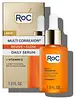
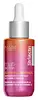
RoC Multi Correxion Revive And Glow Daily Serum Versus StriVectin Super-C Retinol Brighten & Correct Vitamin C Serum
This brightening serum is formulated around 3-O-Ethyl Ascorbic Acid to brighten dull-looking skin and refine skin texture.
This brightening serum is formulated around Sodium Ascorbyl Phosphate and Ascorbic Acid to brighten dull-looking skin and soften the look of wrinkles.


What's inside
What's inside
 Key Ingredients
Benefits
Concerns
Ingredients Side-by-side
Water
Skin ConditioningPropanediol
Solvent

PPG-24-Glycereth-24
EmulsifyingGlycerin
Humectant
3-O-Ethyl Ascorbic Acid
Skin Conditioning




Troxerutin
Skin Conditioning
Cistus Monspeliensis Flower/Leaf/Stem Extract
Nonapeptide-1
Skin Conditioning
Polygonum Aviculare Extract
EmollientTerminalia Ferdinandiana Fruit Extract
Antioxidant
PEG-40 Hydrogenated Castor Oil
Emulsifying


Sodium Polyacryloyldimethyl Taurate
Emulsion StabilisingPPG-26-Buteth-26
Skin ConditioningMaltodextrin
Absorbent
Caprylyl Glycol
Emollient
Potassium Sorbate
Preservative
Sodium Phosphate
BufferingSodium Benzoate
Masking
1,2-Hexanediol
Skin Conditioning
Tetrasodium EDTA
ChelatingDisodium Phosphate
BufferingCitric Acid
Buffering
Caprylhydroxamic Acid
ChelatingParfum
Masking



Limonene
Perfuming
Linalool
Perfuming
Citral
Perfuming
CI 15985
Cosmetic ColorantWater, Propanediol, PPG-24-Glycereth-24, Glycerin, 3-O-Ethyl Ascorbic Acid, Troxerutin, Cistus Monspeliensis Flower/Leaf/Stem Extract, Nonapeptide-1, Polygonum Aviculare Extract, Terminalia Ferdinandiana Fruit Extract, PEG-40 Hydrogenated Castor Oil, Sodium Polyacryloyldimethyl Taurate, PPG-26-Buteth-26, Maltodextrin, Caprylyl Glycol, Potassium Sorbate, Sodium Phosphate, Sodium Benzoate, 1,2-Hexanediol, Tetrasodium EDTA, Disodium Phosphate, Citric Acid, Caprylhydroxamic Acid, Parfum, Limonene, Linalool, Citral, CI 15985
Water
Skin ConditioningSodium Ascorbyl Phosphate
Antioxidant
Glycereth-7 Triacetate
EmollientPentylene Glycol
Skin Conditioning
Polysorbate 20
Emulsifying
Dipropylene Glycol
HumectantGlycerin
Humectant
Dimethyl Isosorbide
SolventAscorbyl Glucoside
Antioxidant
Ascorbic Acid
Antioxidant
Malpighia Glabra Fruit Juice
Skin ConditioningRetinol
Skin Conditioning


Sodium Hyaluronate
Humectant
Myristyl Nicotinate
Skin ConditioningTamarindus Indica Seed Polysaccharide
Skin ConditioningOrobanche Rapum Extract
Skin ProtectingMalus Domestica Fruit Cell Culture Extract
Skin ConditioningCamellia Sinensis Leaf Extract
Antimicrobial
Xylitylglucoside
Humectant
Bacillus/Sea Salt Ferment Filtrate
Skin ConditioningHydroxymethoxyphenyl Decanone
Skin ConditioningAnhydroxylitol
Humectant
Adenosine
Skin Conditioning
Xylitol
Humectant
Glucose
Humectant
Ethylhexylglycerin
Skin ConditioningLecithin
Emollient
Xanthan Gum
EmulsifyingAcrylates/C10-30 Alkyl Acrylate Crosspolymer
Emulsion StabilisingPropanediol
Solvent
Maltodextrin
Absorbent
Rhizobian Gum
Mica
Cosmetic ColorantParfum
Masking
Limonene
Perfuming
Linalool
Perfuming
Geraniol
Perfuming
Citral
Perfuming
Citronellol
Perfuming
Benzyl Benzoate
Antimicrobial
Chlorphenesin
Antimicrobial
Phenoxyethanol
Preservative
BHT
Antioxidant
BHA
Antioxidant
Sodium Benzoate
Masking
Potassium Sorbate
Preservative
CI 77491
Cosmetic ColorantCI 77891
Cosmetic ColorantWater, Sodium Ascorbyl Phosphate, Glycereth-7 Triacetate, Pentylene Glycol, Polysorbate 20, Dipropylene Glycol, Glycerin, Dimethyl Isosorbide, Ascorbyl Glucoside, Ascorbic Acid, Malpighia Glabra Fruit Juice, Retinol, Sodium Hyaluronate, Myristyl Nicotinate, Tamarindus Indica Seed Polysaccharide, Orobanche Rapum Extract, Malus Domestica Fruit Cell Culture Extract, Camellia Sinensis Leaf Extract, Xylitylglucoside, Bacillus/Sea Salt Ferment Filtrate, Hydroxymethoxyphenyl Decanone, Anhydroxylitol, Adenosine, Xylitol, Glucose, Ethylhexylglycerin, Lecithin, Xanthan Gum, Acrylates/C10-30 Alkyl Acrylate Crosspolymer, Propanediol, Maltodextrin, Rhizobian Gum, Mica, Parfum, Limonene, Linalool, Geraniol, Citral, Citronellol, Benzyl Benzoate, Chlorphenesin, Phenoxyethanol, BHT, BHA, Sodium Benzoate, Potassium Sorbate, CI 77491, CI 77891
Reviews
Ingredients Explained
These ingredients are found in both products.
Ingredients higher up in an ingredient list are typically present in a larger amount.
Citral is the molecule responsible for the fresh lemon scent in lemon, lime, and lemongrass. It is a fragrance ingredient that can be created from plant essential oils or synthetically.
Though Citral has documented antimicrobial activity against acne bacteria (which is where the marketing claims about it being good for acne-prone skin originate), real formulas use it at fragrance-level concentrations under 1% so there's likely no skin benefit.
You should know this ingredient is a known EU fragrance allergen.
Animal studies classifies this ingredient as a weak-to-moderate skin sensitizer and clinical patch testing on eczema patients confirmed it to be both a contact allergen and irritant.
The term 'citral' is a collective term for two geometric isomers: geranial/Citral A and neral/Citral B.
The term 'fragrance' is not regulated in many countries. In many cases, it is up to the brand to define this term. For instance, many brands choose to label themselves as "fragrance-free" because they are not using synthetic fragrances. However, their products may still contain ingredients such as essential oils that are considered a fragrance.
Learn more about CitralGlycerin (or glycerol) is a compound naturally found in your skin. It's a powerhouse humectant that pulls water into the stratum corneum.
Topically, glycerin does several things at once:
Your skin makes glycerin on its own (mostly from sebaceous oil breakdown) and shuttles it to your outermost layer of skin, or your epidermis, via aquaporin-3.
Aquaporin-3 is a transporter that is essential for normal skin hydration, elasticity, and repair. Interestingly, mice lacking in AQP3 have dry and less elastic skin that can be fully corrected with glycerin.
This ingredient is non-irritating, plays well with almost every ingredient, and works across all skin types. Typical use is anywhere between 3-10% but can go up to 79% in some leave-on products.
Just know very high concentrations (>40%) can feel tacky in low humidity.
Glycerin is the name for this ingredient in American English. British English uses Glycerol/Glycerine.
Learn more about GlycerinLimonene is a fragrance that adds scent and taste to a formulation.
It's found in the peel oil of citrus fruits and other plants such as lavender and eucalyptus. The scent of limonene is generally described as "sweet citrus".
Limonene acts as an antioxidant, meaning it helps neutralize free radicals.
When exposed to air, oxidized limonene may sensitize the skin. Because of this, limonene is often avoided by people with sensitive skin.
The term 'fragrance' is not regulated in many countries. In many cases, it is up to the brand to define this term. For instance, many brands choose to label themselves as "fragrance-free" because they are not using synthetic fragrances. However, their products may still contain ingredients such as essential oils that are considered a fragrance.
Learn more about LimoneneLinalool is a fragrance and helps add scent to products. It's derived from common plants such as cinnamon, mint, citrus, and lavender.
Like Limonene, this ingredient oxidizes when exposed to air. Oxidized linalool can cause allergies and skin sensitivity.
This ingredient has a scent that is floral, spicy tropical, and citrus-like.
Learn more about LinaloolMaltodextrin is a plant-derived carbohydrate made by breaking down starch (usually from corn, potato, or rice). In cosmetic formulas, it's a multitasking absorbent, emulsion stabilizer, and skin conditioner.
This ingredient is mostly used to stabilize emulsions and improve the powdery, non-greasy feel of products (like dry shampoos).
Safety-wise, this ingredient is pretty solid; it's even recognized as a food additive. Both animal and clinical studies found no adverse effects at the levels used in cosmetics.
Industry data shows this ingredient is used up to 45.7% in spray products and up to 33% in powder products.
Learn more about MaltodextrinParfum is a catch-all term for an ingredient or more that is used to give a scent to products.
Also called "fragrance", this ingredient can be a blend of hundreds of chemicals or plant oils. This means every product with "fragrance" or "parfum" in the ingredients list is a different mixture.
For instance, Habanolide is a proprietary trade name for a specific aroma chemical. When used as a fragrance ingredient in cosmetics, most aroma chemicals fall under the broad labeling category of “FRAGRANCE” or “PARFUM” according to EU and US regulations.
The term 'parfum' or 'fragrance' is not regulated in many countries. In many cases, it is up to the brand to define this term.
For instance, many brands choose to label themselves as "fragrance-free" because they are not using synthetic fragrances. However, their products may still contain ingredients such as essential oils that are considered a fragrance by INCI standards.
One example is Calendula flower extract. Calendula is an essential oil that still imparts a scent or 'fragrance'.
Depending on the blend, the ingredients in the mixture can cause allergies and sensitivities on the skin. Some ingredients that are known EU allergens include linalool and citronellol.
Parfum can also be used to mask or cover an unpleasant scent.
The bottom line is: not all fragrances/parfum/ingredients are created equally. If you are worried about fragrances, we recommend taking a closer look at an ingredient. And of course, we always recommend speaking with a professional.
Learn more about ParfumPotassium Sorbate is a preservative used to prevent yeast and mold in products. It is commonly found in both cosmetic and food products.
This ingredient comes from potassium salt derived from sorbic acid. Sorbic acid is a natural antibiotic and effective against fungus.
Both potassium sorbate and sorbic acid can be found in baked goods, cheeses, dried meats, dried fruit, ice cream, pickles, wine, yogurt, and more.
You'll often find this ingredient used with other preservatives.
Learn more about Potassium SorbatePropanediol is an all-star ingredient. It softens, hydrates, and smooths the skin.
It’s often used to:
Propanediol is not likely to cause sensitivity and considered safe to use. It is derived from corn or petroleum with a clear color and no scent.
Learn more about PropanediolSodium Benzoate is a preservative. It's used in both cosmetic and food products to inhibit the growth of mold and bacteria. It is typically produced synthetically.
Both the US FDA and EU Health Committee have approved the use of sodium benzoate. In the US, levels of 0.1% (of the total product) are allowed.
Sodium benzoate works as a preservative by inhibiting the growth of bacteria inside of cells. It prevents the cell from fermenting a type of sugar using an enzyme called phosphofructokinase.
It is the salt of benzoic acid. Foods containing sodium benzoate include soda, salad dressings, condiments, fruit juices, wines, and snack foods.
Studies for using ascorbic acid and sodium benzoate in cosmetics are lacking, especially in skincare routines with multiple steps.
We always recommend speaking with a professional, such as a dermatologist, if you have any concerns.
Learn more about Sodium BenzoateWater. It's the most common cosmetic ingredient of all. You'll usually see it at the top of ingredient lists, meaning that it makes up the largest part of the product.
So why is it so popular? Water most often acts as a solvent - this means that it helps dissolve other ingredients into the formulation.
You'll also recognize water as that liquid we all need to stay alive. If you see this, drink a glass of water. Remember to stay hydrated!
Learn more about Water

