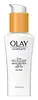
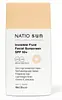
Olay Complete UV365 Daily Moisturizer with Broad Spectrum SPF 30 Versus Natio Invisible Fluid Facial Sunscreen SPF 50+
This barrier-repair day moisturizer is formulated around Niacinamide and Panthenol to strengthen the skin barrier and hydrate skin.
This chemical sunscreen covers the full UV range and blocks ~98% of UVB at SPF 50.


What's inside
What's inside
 Key Ingredients
Benefits
Concerns
Ingredients Side-by-side
Ethylhexyl Methoxycinnamate 7.5%
UV Absorber


Ethylhexyl Salicylate 2.5%
UV Absorber
Octocrylene 2.5%
UV Absorber
Zinc Oxide 7%
Cosmetic Colorant
Water
Skin ConditioningIsohexadecane
EmollientGlycerin
Humectant


Niacinamide
Smoothing








Panthenol
Skin Conditioning
Camellia Sinensis Leaf Extract
Antimicrobial
Tocopheryl Acetate
Antioxidant
Aloe Barbadensis Leaf Extract
Emollient
Steareth-21
CleansingCyclopentasiloxane
Emollient
Polyacrylamide
Stearyl Alcohol
Emollient


Polymethylsilsesquioxane
Polyethylene
Abrasive
C13-14 Isoparaffin
Emollient
Behenyl Alcohol
Emollient
DMDM Hydantoin
Preservative
Cetyl Alcohol
Emollient
Triethoxycaprylylsilane
PEG/PPG-20/20 Dimethicone
Emulsifying
Laureth-7
EmulsifyingSteareth-2
EmulsifyingOleth-3 Phosphate
SurfactantDisodium EDTA
ChelatingIodopropynyl Butylcarbamate
Preservative
Ethylhexyl Methoxycinnamate 7.5%, Ethylhexyl Salicylate 2.5%, Octocrylene 2.5%, Zinc Oxide 7%, Water, Isohexadecane, Glycerin, Niacinamide, Panthenol, Camellia Sinensis Leaf Extract, Tocopheryl Acetate, Aloe Barbadensis Leaf Extract, Steareth-21, Cyclopentasiloxane, Polyacrylamide, Stearyl Alcohol, Polymethylsilsesquioxane, Polyethylene, C13-14 Isoparaffin, Behenyl Alcohol, DMDM Hydantoin, Cetyl Alcohol, Triethoxycaprylylsilane, PEG/PPG-20/20 Dimethicone, Laureth-7, Steareth-2, Oleth-3 Phosphate, Disodium EDTA, Iodopropynyl Butylcarbamate
Bis-Ethylhexyloxyphenol Methoxyphenyl Triazine
UV Absorber
Butyl Methoxydibenzoylmethane
UV Absorber
Ethylhexyl Triazone
UV Absorber
Octocrylene
UV Absorber
Acrylates/C10-30 Alkyl Acrylate Crosspolymer
Emulsion StabilisingC12-15 Alkyl Benzoate
AntimicrobialAloe Barbadensis Leaf Juice
Skin Conditioning
Magnesium Aluminum Silicate
Absorbent
Dibutyl Adipate
EmollientTocopheryl Acetate
Antioxidant
Tetrasodium EDTA
ChelatingGlycerin
Humectant
Hydrated Silica
Abrasive
Hydroxyacetophenone
Antioxidant
Isocetyl Alcohol
Emollient
Microcrystalline Cellulose
AbsorbentPhenoxyethanol
Preservative
Water
Skin ConditioningVp/Hexadecene Copolymer
Oryza Sativa Bran Wax
Skin Conditioning
Sodium Stearoyl Glutamate
CleansingTriacontanyl Pvp
HumectantTriethanolamine
BufferingBis-Ethylhexyloxyphenol Methoxyphenyl Triazine, Butyl Methoxydibenzoylmethane, Ethylhexyl Triazone, Octocrylene, Acrylates/C10-30 Alkyl Acrylate Crosspolymer, C12-15 Alkyl Benzoate, Aloe Barbadensis Leaf Juice, Magnesium Aluminum Silicate, Dibutyl Adipate, Tocopheryl Acetate, Tetrasodium EDTA, Glycerin, Hydrated Silica, Hydroxyacetophenone, Isocetyl Alcohol, Microcrystalline Cellulose, Phenoxyethanol, Water, Vp/Hexadecene Copolymer, Oryza Sativa Bran Wax, Sodium Stearoyl Glutamate, Triacontanyl Pvp, Triethanolamine
Reviews
Ingredients Explained
These ingredients are found in both products.
Ingredients higher up in an ingredient list are typically present in a larger amount.
Glycerin (or glycerol) is a compound naturally found in your skin. It's a powerhouse humectant that pulls water into the stratum corneum.
Topically, glycerin does several things at once:
Your skin makes glycerin on its own (mostly from sebaceous oil breakdown) and shuttles it to your outermost layer of skin, or your epidermis, via aquaporin-3.
Aquaporin-3 is a transporter that is essential for normal skin hydration, elasticity, and repair. Interestingly, mice lacking in AQP3 have dry and less elastic skin that can be fully corrected with glycerin.
This ingredient is non-irritating, plays well with almost every ingredient, and works across all skin types. Typical use is anywhere between 3-10% but can go up to 79% in some leave-on products.
Just know very high concentrations (>40%) can feel tacky in low humidity.
Glycerin is the name for this ingredient in American English. British English uses Glycerol/Glycerine.
Learn more about GlycerinOctocrylene is an oil-soluble organic UV filter that mainly absorbs UVB and short wave UVA II light.
Its real superpower is teamwork: octocrylene is remarkably photostable and is most famous for stabilizing avobenzone (the workhorse UVA filter).
This ingredient is commonly used to enhance both UVB and UVA protection due to its unique property in stabilizing avobenzone. It also pulls double duty by boosting water resistance and giving formulas a smooth, spreadable feel.
The EU's Scientific Committee on Consumer Safety (SCCS) has deemed octocrylene to be safe as a UV-filter at concentrations up to 10% (capped at 9% in propellant sprays). The US also permits it up to 10%.
Two things worth knowing:
You'll usually see this ingredient used in concentrations between 2-10% (higher amounts when used as a stabilizer for avobenzone).
Learn more about OctocryleneTocopheryl Acetate is a stable, shelf-friendly form of vitamin E.
Formulators love it because plain vitamin E oxidizes quickly once it hits air. This acetate version stays stable and resists going off, helping to extend a product's shelf life.
It's actually inactive on its own and works like a slow-release "storage" form; the enzymes in your skin called esterases gradually convert it into active vitamin E over time.
One in vivo study showed 5% of the acetate in the living layer of the epidermis converted to vitamin E after 5 days of application. This study also found the skin gained protection against UV damage even though the conversion was slow and small.
Once converted, vitamin E acts as a skin's main fat-soluble antioxidant that fights free radicals to protect skin from damage.
Topical vitamin E generally boosts the skin's photoprotection, and it reduced UV-damage in animal models.
This ingredient has some brightening potential but it's more of a prevention ingredient than spot-fader. Cell studies show it can slow down melanin production but it's worth noting that it's not the most powerful brightener out there.
Overall, it has a pretty solid safety profile and has been found to be non-irritating and non-comedogenic. Allergic reactions may happen but stay rare due to how widely the ingredient gets used.
The concentration will vary depending on the formula; industry data shows 0.1% in baby lotions, 3% in lipsticks, and 5% in foot powders. You can also find this ingredient at 100% in a pure vitamin E oil.
Most leave-on skincare keeps it at the lower end, often between 0.5-1%.
Learn more about Tocopheryl AcetateWater. It's the most common cosmetic ingredient of all. You'll usually see it at the top of ingredient lists, meaning that it makes up the largest part of the product.
So why is it so popular? Water most often acts as a solvent - this means that it helps dissolve other ingredients into the formulation.
You'll also recognize water as that liquid we all need to stay alive. If you see this, drink a glass of water. Remember to stay hydrated!
Learn more about Water

