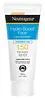
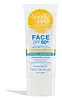
Neutrogena Hydro Boost Face Lotion Sunscreen SPF 50 Versus bondi sands SPF 50+ Fragrance Free Hydrating Tinted Face Lotion
This chemical sunscreen covers the full UV range and blocks ~98% of UVB at SPF 50.
This chemical sunscreen covers most of the UV range, lighter on the deep UVA that drives aging.


What's inside
What's inside
 Key Ingredients
Benefits
Concerns
Ingredients Side-by-side
Bis-Ethylhexyloxyphenol Methoxyphenyl Triazine
UV Absorber
Butyl Methoxydibenzoylmethane
UV Absorber
Ethylhexyl Triazone
UV Absorber
Homosalate
Skin Conditioning
Methylene Bis-Benzotriazolyl Tetramethylbutylphenol
UV Filter
Octocrylene
UV Absorber

1,2-Hexanediol
Skin Conditioning
Acacia Senegal Gum
MaskingAcrylates Copolymer
Acrylates/Dimethicone Copolymer
Skin Conditioning
CI 42090
Cosmetic ColorantCaprylyl Glycol
Emollient
Cetyl Dimethicone
Emollient
Citric Acid
Buffering


Silica
Abrasive


Decyl Glucoside
Cleansing
Decylene Glycol
Skin ConditioningDibutyl Adipate
EmollientDicaprylyl Carbonate
EmollientDimethicone
Emollient
Disodium EDTA
ChelatingTocopheryl Acetate
Antioxidant

Parfum
Masking

Glyceryl Stearate
Emollient
Hyaluronic Acid
Humectant


Hydroxyacetophenone
Antioxidant
Menthyl Lactate
Masking
Pentylene Glycol
Skin Conditioning
Phenoxyethanol
Preservative
Polyglyceryl-3 Methylglucose Distearate
Emulsifying
Potassium Cetyl Phosphate
EmulsifyingPropylene Glycol
Humectant
Water
Skin ConditioningSodium Hydroxide
BufferingSolvent Violet 13
Cera Alba
Emollient

Xanthan Gum
EmulsifyingBis-Ethylhexyloxyphenol Methoxyphenyl Triazine, Butyl Methoxydibenzoylmethane, Ethylhexyl Triazone, Homosalate, Methylene Bis-Benzotriazolyl Tetramethylbutylphenol, Octocrylene, 1,2-Hexanediol, Acacia Senegal Gum, Acrylates Copolymer, Acrylates/Dimethicone Copolymer, CI 42090, Caprylyl Glycol, Cetyl Dimethicone, Citric Acid, Silica, Decyl Glucoside, Decylene Glycol, Dibutyl Adipate, Dicaprylyl Carbonate, Dimethicone, Disodium EDTA, Tocopheryl Acetate, Parfum, Glyceryl Stearate, Hyaluronic Acid, Hydroxyacetophenone, Menthyl Lactate, Pentylene Glycol, Phenoxyethanol, Polyglyceryl-3 Methylglucose Distearate, Potassium Cetyl Phosphate, Propylene Glycol, Water, Sodium Hydroxide, Solvent Violet 13, Cera Alba, Xanthan Gum
4-Methylbenzylidene Camphor
UV Absorber
Ethylhexyl Triazone
UV Absorber
Butyl Methoxydibenzoylmethane
UV Absorber
Octocrylene
UV Absorber
Caprylyl Glycol
Emollient
Caprylic Acid
CleansingWater
Skin ConditioningC12-15 Alkyl Benzoate
AntimicrobialCera Alba
Emollient
Silica
Abrasive
PEG-15 Cocamine
EmulsifyingAmmonium Acryloyldimethyltaurate/Vp Copolymer
PEG-40 Stearate
Emulsifying
Saccharide Isomerate
Humectant
CI 77491
Cosmetic ColorantCaprylhydroxamic Acid
ChelatingGlycerin
Humectant
CI 77492
Cosmetic ColorantHydroxyethylcellulose
Emulsion StabilisingPanthenol
Skin Conditioning
Citric Acid
Buffering
Sodium Citrate
BufferingCI 77499
Cosmetic ColorantAloe Barbadensis Leaf Juice
Skin Conditioning
Tocopheryl Acetate
Antioxidant
4-Methylbenzylidene Camphor, Ethylhexyl Triazone, Butyl Methoxydibenzoylmethane, Octocrylene, Caprylyl Glycol, Caprylic Acid, Water, C12-15 Alkyl Benzoate, Cera Alba, Silica, PEG-15 Cocamine, Ammonium Acryloyldimethyltaurate/Vp Copolymer, PEG-40 Stearate, Saccharide Isomerate, CI 77491, Caprylhydroxamic Acid, Glycerin, CI 77492, Hydroxyethylcellulose, Panthenol, Citric Acid, Sodium Citrate, CI 77499, Aloe Barbadensis Leaf Juice, Tocopheryl Acetate
Reviews
Ingredients Explained
These ingredients are found in both products.
Ingredients higher up in an ingredient list are typically present in a larger amount.
Also known as Avobenzone, this ingredient is an oil-soluble used to absorb the full spectrum of UVA rays (peak 357 nm).
It's one of the most effective UVA filters available but has a major caveat of photostability: avobenzone is susceptible to photodegradation.
This means it can lose efficacy when exposed to sunlight without the help of a stabilizing agent.
Studies show antioxidants (like vitamin E or vitamin C) and some UV filters (like octocrylene and Tinosorb S) can meaningfully improve its stability in a formulation.
The maximum allowable concentration according to regulation is 3% in the US + Canada, and 5% in the EU, Australia, China, Korea, and ASEAN countries.
It has a well-support safety profile: a comprehensive 2025 review found minimal toxicity with no evidence of carcinogenicity.
Overall, avobenzone is a safe and regulated ingredient used in sunscreen for over 40 years.
Learn more about Butyl MethoxydibenzoylmethaneCaprylyl Glycol is a humectant, skin conditioner, emollient, and preservative booster derived from either caprylic acid or synthetically created.
Typical use levels vary from 0.3-1% as a preservative booster and go up to 2% to condition skin.
Because it is not a free-fatty acid, this ingredient is fungal acne safe (there's nothing for Malassezia to feed on).
Learn more about Caprylyl GlycolThis is another name for beeswax; it's a natural wax produced by honey bees to build their honeycomb.
Because it forms a protective layer on your skin, it can help lock in moisture and reduce water loss. It is also widely used as a thickener and emulsifier in lip balms and lotions. Research suggests beeswax containing moisturizers can support skin barrier integrity.
In comedogenic testing, Beeswax scored a 0-2, which is on the low end. Whether or not a product clogs your pores really comes down to the formula as a whole (not any single ingredient on its own) and your skin.
Beeswax is not vegan since it is animal-derived. It cannot be removed with water, but can be taken off with an oil cleanser.
People with a known Propolis allergy also report to have reactions from beeswax.
Beeswax's wax esters are derived primarily from palmitic and oleic acid (C16 and C18:1). Both of these fall within the C11-C24 feeding window.
The Malassezia yeast can potentially cleave these esters and release usable fatty acids, so this ingredient may not be fungal acne safe. However, not everyone will react to this ingredient.
Learn more about Cera AlbaCitric Acid is an alpha hydroxy acid (AHA) naturally found in citrus fruits like oranges, lemons, and limes.
Like other AHAs, citric acid can exfoliate skin by breaking down the bonds that hold dead skin cells together. This helps reveal smoother and brighter skin underneath.
However, this exfoliating effect only happens at high concentrations (20%) which can be hard to find in cosmetic products.
Due to this, citric acid is usually included in small amounts as a pH adjuster. This helps keep products slightly more acidic and compatible with skin's natural pH.
In skincare formulas, citric acid can:
While it can provide some skin benefits, research shows lactic acid and glycolic acid are generally more effective and less irritating exfoliants.
Most citric acid used in skincare today is made by fermenting sugars (usually from molasses). This synthetic version is identical to the natural citrus form but easier to stabilize and use in formulations.
Rosacea skin has a lower threshold for acids generally, with 62.5% of rosacea subjects in one study reacting to lactic acid in a sting test. This is why we mark citric acid as a potential rosacea trigger.
However, this ingredient shows up as a pH adjuster or chelator at roughly 0.1-1% in many products. These low levels are unlikely to be an issue for rosacea skin and becomes a potential trigger at exfoliating concentrations (20%). Because everybody's skin is unique, we recommend a patch test if you are unsure.
Learn more about Citric AcidEthylhexyl Triazone (aka Octyl Triazone) is an oil-soluble organic UVB filter. It has peak absorption around 314 nm, right in the middle of the UVB range.
This ingredient is described as one of the most effective UVB filters available and small concentrations are enough to deliver a high SPF thanks to its strong UV absorbing power.
Formulators love it for its stability; its ability to filter UV stays practically unchanged even under intense radiation and it can also help boost the photostability of less stable filters like avobenzone.
It's also a great pick for water resistant products because it's insoluble in water and has a good affinity for keratin.
Because it's a big, heavy molecule, the European Scientific Committee has found to to have very low dermal penetration and negative results for allergenicity.
In vitro testing also showed a low absorption rate and clean results on irritation.
Typical use levels are 1-5% with 5% being the maximum in the EU, Japan, and other markets that allow it. However, this ingredient is not approved yet in the US or Canada.
Learn more about Ethylhexyl TriazoneOctocrylene is an oil-soluble organic UV filter that mainly absorbs UVB and short wave UVA II light.
Its real superpower is teamwork: octocrylene is remarkably photostable and is most famous for stabilizing avobenzone (the workhorse UVA filter).
This ingredient is commonly used to enhance both UVB and UVA protection due to its unique property in stabilizing avobenzone. It also pulls double duty by boosting water resistance and giving formulas a smooth, spreadable feel.
The EU's Scientific Committee on Consumer Safety (SCCS) has deemed octocrylene to be safe as a UV-filter at concentrations up to 10% (capped at 9% in propellant sprays). The US also permits it up to 10%.
Two things worth knowing:
You'll usually see this ingredient used in concentrations between 2-10% (higher amounts when used as a stabilizer for avobenzone).
Learn more about OctocryleneSilica, also known as silicon dioxide, is a naturally occurring mineral. It is used as a fine, spherical, and porous powder in cosmetics.
Though it has exfoliant properties, the function of silica varies depending on the product.
The unique structure of silica enhances the spreadability and adds smoothness, making it a great texture enhancer.
It is also used as an active carrier, emulsifier, and mattifier due to its ability to absorb excess oil.
In some products, tiny microneedles called spicules are made from silica or hydrolyzed sponge. When you rub them in, they lightly polish away dead skin layers and enhance the penetration of active ingredients.
Learn more about SilicaTocopheryl Acetate is a stable, shelf-friendly form of vitamin E.
Formulators love it because plain vitamin E oxidizes quickly once it hits air. This acetate version stays stable and resists going off, helping to extend a product's shelf life.
It's actually inactive on its own and works like a slow-release "storage" form; the enzymes in your skin called esterases gradually convert it into active vitamin E over time.
One in vivo study showed 5% of the acetate in the living layer of the epidermis converted to vitamin E after 5 days of application. This study also found the skin gained protection against UV damage even though the conversion was slow and small.
Once converted, vitamin E acts as a skin's main fat-soluble antioxidant that fights free radicals to protect skin from damage.
Topical vitamin E generally boosts the skin's photoprotection, and it reduced UV-damage in animal models.
This ingredient has some brightening potential but it's more of a prevention ingredient than spot-fader. Cell studies show it can slow down melanin production but it's worth noting that it's not the most powerful brightener out there.
Overall, it has a pretty solid safety profile and has been found to be non-irritating and non-comedogenic. Allergic reactions may happen but stay rare due to how widely the ingredient gets used.
The concentration will vary depending on the formula; industry data shows 0.1% in baby lotions, 3% in lipsticks, and 5% in foot powders. You can also find this ingredient at 100% in a pure vitamin E oil.
Most leave-on skincare keeps it at the lower end, often between 0.5-1%.
Learn more about Tocopheryl AcetateWater. It's the most common cosmetic ingredient of all. You'll usually see it at the top of ingredient lists, meaning that it makes up the largest part of the product.
So why is it so popular? Water most often acts as a solvent - this means that it helps dissolve other ingredients into the formulation.
You'll also recognize water as that liquid we all need to stay alive. If you see this, drink a glass of water. Remember to stay hydrated!
Learn more about Water

