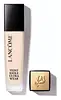
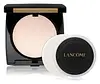
Lancôme Teint Idole Ultra 24H Long Wear Matte Foundation Versus Lancôme Dual Finish Powder Foundation

What's inside
What's inside
 Key Ingredients
Benefits
Concerns
Ingredients Side-by-side
Water
Skin ConditioningDimethicone
Emollient

Isododecane
EmollientAlcohol Denat.
Antimicrobial




Trimethylsiloxysilicate
Emollient
Butylene Glycol
Humectant

PEG-10 Dimethicone
Skin Conditioning
Perlite
Absorbent

Synthetic Fluorphlogopite
Moringa Oleifera Seed Extract
Skin Conditioning
Polymnia Sonchifolia Root Juice
Skin ConditioningCalcium Aluminum Borosilicate
Glycerin
Humectant
Dipentaerythrityl Tetrahydroxystearate/Tetraisostearate
Skin Conditioning
Alpha-Glucan Oligosaccharide
Cleansing
Sodium Hyaluronate
Humectant


Silica
Abrasive
Silica Silylate
Emollient
Hdi/Trimethylol Hexyllactone Crosspolymer
Cellulose
Absorbent
Aluminum Hydroxide
EmollientMagnesium Sulfate
Nylon-12

Disodium Phosphate
BufferingDisodium Stearoyl Glutamate
CleansingIsopropyl Lauroyl Sarcosinate
Skin ConditioningHydrogen Dimethicone
Citric Acid
Buffering

Diisopropyl Sebacate
EmollientBis-PEG/PPG-14/14 Dimethicone
Emollient
Lactobacillus
Skin ConditioningMaltodextrin
Absorbent
Disteardimonium Hectorite
StabilisingBHT
Antioxidant
Tocopherol
Antioxidant

Phenoxyethanol
Preservative
Titanium Dioxide
Cosmetic Colorant
Iron Oxides
Water, Dimethicone, Isododecane, Alcohol Denat., Trimethylsiloxysilicate, Butylene Glycol, PEG-10 Dimethicone, Perlite, Synthetic Fluorphlogopite, Moringa Oleifera Seed Extract, Polymnia Sonchifolia Root Juice, Calcium Aluminum Borosilicate, Glycerin, Dipentaerythrityl Tetrahydroxystearate/Tetraisostearate, Alpha-Glucan Oligosaccharide, Sodium Hyaluronate, Silica, Silica Silylate, Hdi/Trimethylol Hexyllactone Crosspolymer, Cellulose, Aluminum Hydroxide, Magnesium Sulfate, Nylon-12, Disodium Phosphate, Disodium Stearoyl Glutamate, Isopropyl Lauroyl Sarcosinate, Hydrogen Dimethicone, Citric Acid, Diisopropyl Sebacate, Bis-PEG/PPG-14/14 Dimethicone, Lactobacillus, Maltodextrin, Disteardimonium Hectorite, BHT, Tocopherol, Phenoxyethanol, Titanium Dioxide, Iron Oxides
Talc
Abrasive
Paraffinum Liquidum
Emollient

Squalane
Emollient
Zinc Laurate
Stearic Acid
Cleansing
Linalool
Perfuming

Geraniol
Perfuming
Glyceryl Stearate
Emollient
Triethanolamine
BufferingIsoeugenol
Perfuming
Cholesterol
Emollient
Coumarin
Perfuming
Aluminum Myristates/Palmitates
Emulsion StabilisingCinnamyl Alcohol
Perfuming
Farnesol
Perfuming
Limonene
Perfuming
Lanolin
Emollient
Hydroxycitronellal
Perfuming
Petrolatum
Emollient
Citronellol
Perfuming
Benzyl Benzoate
Antimicrobial
Benzyl Salicylate
Perfuming
Parfum
Masking
Alpha-Isomethyl Ionone
Perfuming
Hydroxyisohexyl 3-Cyclohexene Carboxaldehyde
Masking
Hexyl Cinnamal
Perfuming
Butylparaben
Masking
Mica
Cosmetic ColorantTitanium Dioxide
Cosmetic Colorant
Iron Oxides
Talc, Paraffinum Liquidum, Squalane, Zinc Laurate, Stearic Acid, Linalool, Geraniol, Glyceryl Stearate, Triethanolamine, Isoeugenol, Cholesterol, Coumarin, Aluminum Myristates/Palmitates, Cinnamyl Alcohol, Farnesol, Limonene, Lanolin, Hydroxycitronellal, Petrolatum, Citronellol, Benzyl Benzoate, Benzyl Salicylate, Parfum, Alpha-Isomethyl Ionone, Hydroxyisohexyl 3-Cyclohexene Carboxaldehyde, Hexyl Cinnamal, Butylparaben, Mica, Titanium Dioxide, Iron Oxides
Reviews
Ingredients Explained
These ingredients are found in both products.
Ingredients higher up in an ingredient list are typically present in a larger amount.
Titanium Dioxide (TD) is a mineral UV filter widely used in sunscreens and cosmetics.
It's one of only two UV filters officially classified as "mineral" by regulatory agencies (the other being Zinc Oxide).
A really common myth is that mineral filters work by reflecting UV light off your skin like tiny mirrors.
They don't only do that; modern research shows TD protects mostly by absorbing UV radiation, the same way chemical filters do.
When researchers measured this, reflection accounted for only about 4-5% of the protection (and less than SPF 2 on its own). The other ~95% comes from absorption: the UV photons hit the particle and their energy gets soaked up by its semiconductor band gap rather than bouncing off.
So "reflects vs. absorbs" was never really the right way to split mineral from chemical filters.
TD gives broad-spectrum protection that's strongest in the UVB and UVA-2 range and weaker in the UVA-1 range. Its UVA protection isn't quite as strong as Zinc Oxide's which is why you'll often see the two paired together.
Together, they make a solid broad-spectrum system.
TD is a great pick for sensitive, acne-prone, or redness-prone skin because it's non-irritating and chemically inert. Regulatory reviews classify it as a non-sensitizer and mild-to-non-irritant.
It's also unlikely to cause the "eye sting" some chemical filters are known for.
The main trade-off is cosmetic; TD can leave a white cast and has a thicker texture. This is why mineral sunscreens are often less cosmetically elegant than chemical or hybrid formulas (and harder to shade-match on deeper skin tones).
Formulators often use micronized or nano-sized TD to cut down on white case and improve spreadability. Smaller particles scatter less visible light so the formula looks less chalky while still filtering UV.
TD is almost always bundled with coatings like Alumina, Silica, Stearic Acid, or Dimethicone. These coatings do two important jobs:
TD can be used at up to 25% in a finished sunscreen; this is the regulatory ceiling in both the US and the EU.
In practice, the amount in any given product varies a lot depending on the target SPF and whether it's paired with other UV filters.
TD is one of the most heavily vetted sunscreen ingredients out there. It is approved as a UV filter in all major markets worldwide, including the US, EU, UK, Japan, Korea, China, Australia, and Canada.
The safety evidence is solid. There was an old worry that nano particles might absorb through skin into the body but multiple studies (including on damaged, sunburned, and UV-irradiated skin) have shown that TD stays on the surface and the layer of dead skin cells on top of everything else.
There's also no evidence of carcinogenicity, mutagenicity, or reproductive toxicity from dermal exposure of this ingredient.
For those who have seen the headline about a 2022 EU ban on TD, that was on TD as a food additive (a complete separate use from topical sunscreen).
There are ongoing questions about how nano-TD might affect marine ecosystems. As of now, there has been no conclusive evidence that any form of TD (or any other sunscreen filter) harms coral reefs or marine life.
The science is still developing and it's a space worth watching rather than packing over.
However, several destinations have reef-safety sunscreen rules that restrict certain chemical filters and steer visitors toward mineral, non-nano options. If you're traveling somewhere with these rules, a non-nano mineral sunscreen is the safe bet.
Learn more about Titanium DioxideThis ingredient is a combination of red, black, and yellow iron oxide pigments. This combination of colors is usually found in foundation, because it results in a "skin" color.
The EU typically uses CI numbers for colorants when applicable, such as CI 77489. In the US, iron oxides are regulated as color additives and "iron oxides" is the most commonly used name in US cosmetic practice.
A 2021 paper looked at skincare formulations containing iron oxides and found that they reduced transmission of blue light when measured optically. In simple terms, the pigment particles helped block or scatter part of the visible light spectrum in lab testing and the authors suggest this could translate into better protection against blue-light-related skin effects.
There is also clinical and experimental research showing that tinted products containing iron oxides can reduce visible light-induced pigmentation:
Please note, whether a product reduces visible or blue light depends on things like:
In the EU's CosIng database, iron oxides are only listed as a colorant. CosIng groups ingredients by their main cosmetic role, such as colorant, preservative, or UV filter.
Though studies say iron oxides can "attenuate blue light", they're describing an optical property and not an officially recognized cosmetic function.
So CosIng isn’t contradicting the research. It’s just classifying iron oxides by what they officially are: pigments that add color.
Learn more about Iron Oxides

