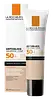
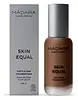
La Roche-Posay Anthelios Mineral One SPF 50+ Tinted Sunscreen Versus Madara Skin Equal Soft Glow Foundation SPF15
This hybrid sunscreen covers the full UV range and blocks ~98% of UVB at SPF 50.


What's inside
What's inside
 Key Ingredients
Benefits
Concerns
Ingredients Side-by-side
Titanium Dioxide 13.6%
Cosmetic Colorant

Water
Skin ConditioningDiisopropyl Sebacate
EmollientGlycerin
Humectant


Alcohol Denat.
Antimicrobial




Isopropyl Palmitate
Emollient


Caprylic/Capric Triglyceride
Masking
Propanediol
Solvent
Ethylhexyl Methoxycrylene
Skin Conditioning
Diethylhexyl Syringylidenemalonate
Skin Protecting
Polyglyceryl-6 Polyricinoleate
Emulsifying
Isocetyl Stearate
Emollient
CI 77891
Cosmetic ColorantAluminum Hydroxide
EmollientStearic Acid
Cleansing
Tocopherol
Antioxidant





Polyhydroxystearic Acid
Emulsifying
Caprylyl Glycol
Emollient
Aluminum Stearate
Cosmetic ColorantStearalkonium Hectorite
Gel FormingAlumina
Abrasive
Parfum
Masking

Xanthan Gum
EmulsifyingSclerotium Gum
Emulsion StabilisingLecithin
Emollient
Pullulan
Sodium Lauroyl Glutamate
SurfactantLysine
Skin ConditioningSodium Hyaluronate
Humectant
Magnesium Chloride
Silica
Abrasive

Citric Acid
Buffering
CI 77491
Cosmetic ColorantCI 77492
Cosmetic ColorantCI 77499
Cosmetic ColorantTitanium Dioxide 13.6%, Water, Diisopropyl Sebacate, Glycerin, Alcohol Denat., Isopropyl Palmitate, Caprylic/Capric Triglyceride, Propanediol, Ethylhexyl Methoxycrylene, Diethylhexyl Syringylidenemalonate, Polyglyceryl-6 Polyricinoleate, Isocetyl Stearate, CI 77891, Aluminum Hydroxide, Stearic Acid, Tocopherol, Polyhydroxystearic Acid, Caprylyl Glycol, Aluminum Stearate, Stearalkonium Hectorite, Alumina, Parfum, Xanthan Gum, Sclerotium Gum, Lecithin, Pullulan, Sodium Lauroyl Glutamate, Lysine, Sodium Hyaluronate, Magnesium Chloride, Silica, Citric Acid, CI 77491, CI 77492, CI 77499
Aloe Barbadensis Leaf Juice
Skin Conditioning
Dicaprylyl Carbonate
EmollientIsoamyl Laurate
Emollient
Zinc Oxide
Cosmetic Colorant
Butylene Glycol
Humectant
Polyglyceryl-3 Polyricinoleate
Emulsifying
Oryza Sativa Bran Oil
Emollient
Vegetable Oil
Skin Conditioning
Helianthus Annuus Seed Wax
Skin Conditioning
Oryza Sativa Bran Wax
Skin Conditioning
Rhus Succedanea Fruit Wax
Polyglyceryl-3 Diisostearate
Emulsifying
Sodium Chloride
MaskingSodium PCA
Humectant
Xanthan Gum
EmulsifyingSodium Dehydroacetate
Preservative
Paeonia Lactiflora Root Extract
Skin ConditioningVaccinium Myrtillus Fruit Extract
Skin ConditioningAluminum Hydroxide
EmollientAroma
Glycolipids
Skin ConditioningHydrolyzed Hyaluronic Acid
Humectant
Sodium Hyaluronate
Humectant
Ascorbyl Palmitate
Antioxidant
Tocopherol
Antioxidant
Potassium Hydroxide
BufferingLimonene
Perfuming
Linalool
Perfuming
CI 77891
Cosmetic ColorantCI 77491
Cosmetic ColorantCI 77492
Cosmetic ColorantCI 77499
Cosmetic ColorantAloe Barbadensis Leaf Juice, Dicaprylyl Carbonate, Isoamyl Laurate, Zinc Oxide, Butylene Glycol, Polyglyceryl-3 Polyricinoleate, Oryza Sativa Bran Oil, Vegetable Oil, Helianthus Annuus Seed Wax, Oryza Sativa Bran Wax, Rhus Succedanea Fruit Wax, Polyglyceryl-3 Diisostearate, Sodium Chloride, Sodium PCA, Xanthan Gum, Sodium Dehydroacetate, Paeonia Lactiflora Root Extract, Vaccinium Myrtillus Fruit Extract, Aluminum Hydroxide, Aroma, Glycolipids, Hydrolyzed Hyaluronic Acid, Sodium Hyaluronate, Ascorbyl Palmitate, Tocopherol, Potassium Hydroxide, Limonene, Linalool, CI 77891, CI 77491, CI 77492, CI 77499
Reviews
Ingredients Explained
These ingredients are found in both products.
Ingredients higher up in an ingredient list are typically present in a larger amount.
Aluminum Hydroxide is a form of aluminum. It can be naturally found in nature as the mineral gibbsite. In cosmetics, Aluminum Hydroxide is used as a colorant, pH adjuster, and absorbent.
As a colorant, Aluminum Hydroxide may add opacity, or reduce the transparency. Aluminum hydroxide is contains both basic and acidic properties.
According to manufacturers, this ingredient is an emollient and humectant. This means it helps hydrate the skin.
In medicine, this ingredient is used to help relieve heartburn and help heal ulcers.
There is currently no credible scientific evidence linking aluminum hydroxide in cosmetics to increased cancer risk.
Major health organizations allow the use of aluminum hydroxide in personal care products and have not flagged it as a carcinogenic risk at typical usage levels.
Learn more about Aluminum HydroxideCi 77491 is also hydrated iron III oxide. It's sole purpose is to give a red/pink hue to products.
Iron III oxides are classified as inorganic chemicals for coloring.
Synthetically created Ci 77491 is considered safer than those naturally found. This is because the synthetically created version may contain less impurities. Iron oxides are generally non-toxic and non-allergenic.
Learn more about CI 77491CI 77492 is also hydrated iron III oxide. It's sole purpose is to give a yellow hue to products.
Iron III oxides are classified as inorganic chemicals for coloring.
Synthetically created CI 77492 is considered safer than those naturally found. This is because the synthetically created version may contain less impurities. Iron oxides are generally non-toxic and non-allergenic.
Learn more about CI 77492Ci 77499 is also hydrated iron III oxide. It is created from mixing red and black iron oxides. This helps give shades of darkness to a product.
Iron III oxides are classified as inorganic chemicals for coloring.
Ci 77891 is a white pigment from Titanium dioxide. It is naturally found in minerals such as rutile and ilmenite.
It's main function is to add a white color to cosmetics. It can also be mixed with other colors to create different shades.
Ci 77891 is commonly found in sunscreens due to its ability to block UV rays.
Learn more about CI 77891Sodium Hyaluronate is the salt form of hyaluronic acid. It is a long sugar chain that is naturally found in your skin, joints, and connective tissue that maintains hydration and elasticity.
In skincare, it works as a humectant. It pulls water from the environment and deeper layers of skin and binds it to the surface.
Interestingly, the size of the molecule affects its behavior:
Some clinical evidence links low molecular weight versions to improved wrinkle depth, elasticity, anti-inflammatory effects, and barrier repair.
Many serums use a blend of both weights so you can get surface hydration plus longer-lasting and deeper effects.
You'll typically see concentrations between 0.1-2% for this ingredient.
Learn more about Sodium HyaluronateTocopherol is a fat-soluble antioxidant known as Vitamin E.
You'll find this ingredient in the vast majority of skincare (for good reason). It works to neutralize free radicals, or unstable molecules generated by UV exposure, pollution, and other environmental stressors, before they can cause oxidative damage to your skin cells.
Topically applied tocopherol has been shown to protect against UV damage by ramping up the skin's own natural defense enzymes.
It also acts as a skin conditioning agent; some studies show that regular topical use can improve the skin's water-binding capacity over 2-4 weeks.
This ingredient is especially loved for being a team player. When combined with Vitamin C, the photoprotective effect of both ingredients roughly doubles and the combo also helps reduce UV-induced DNA damage.
This ingredient has some brightening potential but it's more of a prevention ingredient than spot-fader. Cell studies show it can slow down melanin production but it's worth noting that it's not the most powerful brightener out there.
In formulations, it also serves as a stabilizer that helps protect other oxidation-prone ingredients from degrading.
Concentrations usually range from 0.1-1% in most leave-on products.
Learn more about TocopherolXanthan gum is used as a stabilizer and thickener within cosmetic products. It helps give products a sticky, thick feeling - preventing them from being too runny.
On the technical side of things, xanthan gum is a polysaccharide - a combination consisting of multiple sugar molecules bonded together.
Xanthan gum is a pretty common and great ingredient. It is a natural, non-toxic, non-irritating ingredient that is also commonly used in food products.
Learn more about Xanthan Gum

