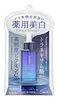
This brightening serum is formulated around Tranexamic Acid and Ascorbyl Glucoside to brighten dull-looking skin and fade the look of dark spots.
This brightening serum is formulated around Galactomyces Ferment Filtrate and Niacinamide to brighten dull-looking skin and fade the look of dark spots.

What's inside
What's inside
 Key Ingredients

Benefits
Concerns
Ingredients Side-by-side
Tranexamic Acid
Astringent




Ascorbyl Glucoside
Antioxidant



Ceramide Ns
Skin Conditioning


Oryza Sativa Bran Extract
Skin Conditioning
Pisum Sativum Extract
Skin ConditioningHydrolyzed Conchiolin Protein
Skin ConditioningSilk Extract
Skin ConditioningCoix Lacryma-Jobi Ma-Yuen Seed Extract
Skin ConditioningGlycine Soja Extract
Skin Conditioning1,4-Cyclohexanedicarboxylic Acid
Glycerin
Humectant
Butylene Glycol
Humectant
Polyglycerin-6
HumectantAlcohol Denat.
Antimicrobial




Potassium Hydroxide
BufferingPEG-8 Castor Oil
Emulsifying

Hedta
AbsorbentPolyvinylalcohol Crosspolymer
Polysorbate 20
Emulsifying
Sodium Citrate
BufferingCitric Acid
Buffering
Sodium Metabisulfite
Antioxidant
Phenoxyethanol
Preservative
Sodium Paraben
Preservative
Water
Skin ConditioningTranexamic Acid, Ascorbyl Glucoside, Ceramide Ns, Oryza Sativa Bran Extract, Pisum Sativum Extract, Hydrolyzed Conchiolin Protein, Silk Extract, Coix Lacryma-Jobi Ma-Yuen Seed Extract, Glycine Soja Extract, 1,4-Cyclohexanedicarboxylic Acid, Glycerin, Butylene Glycol, Polyglycerin-6, Alcohol Denat., Potassium Hydroxide, PEG-8 Castor Oil, Hedta, Polyvinylalcohol Crosspolymer, Polysorbate 20, Sodium Citrate, Citric Acid, Sodium Metabisulfite, Phenoxyethanol, Sodium Paraben, Water
Galactomyces Ferment Filtrate
Humectant
Niacinamide
Smoothing




Butylene Glycol
Humectant
Diglycerin
Humectant
Ascorbyl Glucoside
Antioxidant
3-O-Ethyl Ascorbic Acid
Skin Conditioning
Ascorbic Acid
Antioxidant
Trisodium Ascorbyl Palmitate Phosphate
Antioxidant
Magnesium Ascorbyl Phosphate
Antioxidant
Ceramide NP
Skin Conditioning
Betaine
Humectant
Centella Asiatica Extract
Cleansing
Scutellaria Baicalensis Root Extract
Astringent
Polygonum Cuspidatum Root Extract
Antioxidant
Glycyrrhiza Glabra Root Extract
Bleaching
Camellia Sinensis Leaf Extract
Antimicrobial
Rosmarinus Officinalis Leaf Extract
AntimicrobialChamomilla Recutita Flower Extract
Masking
Phellodendron Amurense Bark Extract
Skin ConditioningTripropylene Glycol
Antioxidant
Hydrogenated Lecithin
Emulsifying
Phytosterols
Skin Conditioning
PEG-60 Hydrogenated Castor Oil
Emulsifying
Ethylhexylglycerin
Skin Conditioning1,2-Hexanediol
Skin Conditioning
Potassium Hydroxide
BufferingCitric Acid
Buffering
Sodium Citrate
BufferingEtidronic Acid
ChelatingWater
Skin ConditioningSodium Metabisulfite
Antioxidant
Lavandula Angustifolia Oil
Masking


Citrus Limon Peel Oil
Masking
Citrus Aurantifolia Oil
Cleansing
Lemongrass Oil
Juniperus Communis Fruit Oil
Masking
Rosmarinus Officinalis Leaf Oil
Masking
Galactomyces Ferment Filtrate, Niacinamide, Butylene Glycol, Diglycerin, Ascorbyl Glucoside, 3-O-Ethyl Ascorbic Acid, Ascorbic Acid, Trisodium Ascorbyl Palmitate Phosphate, Magnesium Ascorbyl Phosphate, Ceramide NP, Betaine, Centella Asiatica Extract, Scutellaria Baicalensis Root Extract, Polygonum Cuspidatum Root Extract, Glycyrrhiza Glabra Root Extract, Camellia Sinensis Leaf Extract, Rosmarinus Officinalis Leaf Extract, Chamomilla Recutita Flower Extract, Phellodendron Amurense Bark Extract, Tripropylene Glycol, Hydrogenated Lecithin, Phytosterols, PEG-60 Hydrogenated Castor Oil, Ethylhexylglycerin, 1,2-Hexanediol, Potassium Hydroxide, Citric Acid, Sodium Citrate, Etidronic Acid, Water, Sodium Metabisulfite, Lavandula Angustifolia Oil, Citrus Limon Peel Oil, Citrus Aurantifolia Oil, Lemongrass Oil, Juniperus Communis Fruit Oil, Rosmarinus Officinalis Leaf Oil
Alternatives
Ingredients Explained
These ingredients are found in both products.
Ingredients higher up in an ingredient list are typically present in a larger amount.
Ascorbyl Glucoside (AA-2G) is one of the most stable vitamin C derivatives out there.
It's made by attaching a glucose molecule to ascorbic acid; this glucose "cap" shields the vitamin C from air, light, heat, and metal ions that normally cause pure ascorbic acid to oxidize.
Once on your skin, the enzyme alpha-glucosidase snips off the glucose and gradually releases active ascorbic acid right where it's needed. Basically, it behaves like a slow-release pro-vitamin C with less of a stinging that high-strength ascorbic acid can cause.
The research supports the classic vitamin C benefits as well. In lab and human studies, AA-2G slowed down the skin's production of melanin (the pigment behind dark spots) and helped shield skin cells against sun damage better than ascorbyl phosphate.
These studies also showed AA-2G released vitamin C over a longer period.
A frequently cited manufacturer trial found that a 2% AA-2G face cream significantly improved wrinkle depth and skin roughness after 45 days.
And in 2009, a clinical trial showed it meaningfully lightened dark patches on the gums compared to a placebo.
There's also collagen-synthesis support (since vitamin C is a required cofactor for that) and an antioxidant effect too.
Typical usage is usually between 0.5-5% and most studies/products land around 2%.
AA-2G performs best when formulated at a mildly acidic pH (~5-7) which is much gentler than the pH that pure vitamin C demands (~2.5-3.5).
Just one thing worth knowing: the in-skin conversation rate is only about 55-60% by weight. So a 5% AA-2G product delivers roughly 2.75-3% of actual active vitamin C. On top of that, skin absorption is relatively low because the ingredient is water-soluble.
Learn more about Ascorbyl GlucosideButylene Glycol (or BG) is used within cosmetic products for a few different reasons:
Overall, Butylene Glycol is a safe and well-rounded ingredient that works well with other ingredients.
Though this ingredient works well with most skin types, some people with sensitive skin may experience a reaction such as allergic rashes, closed comedones, or itchiness.
Learn more about Butylene GlycolCitric Acid is an alpha hydroxy acid (AHA) naturally found in citrus fruits like oranges, lemons, and limes.
Like other AHAs, citric acid can exfoliate skin by breaking down the bonds that hold dead skin cells together. This helps reveal smoother and brighter skin underneath.
However, this exfoliating effect only happens at high concentrations (20%) which can be hard to find in cosmetic products.
Due to this, citric acid is usually included in small amounts as a pH adjuster. This helps keep products slightly more acidic and compatible with skin's natural pH.
In skincare formulas, citric acid can:
While it can provide some skin benefits, research shows lactic acid and glycolic acid are generally more effective and less irritating exfoliants.
Most citric acid used in skincare today is made by fermenting sugars (usually from molasses). This synthetic version is identical to the natural citrus form but easier to stabilize and use in formulations.
Rosacea skin has a lower threshold for acids generally, with 62.5% of rosacea subjects in one study reacting to lactic acid in a sting test. This is why we mark citric acid as a potential rosacea trigger.
However, this ingredient shows up as a pH adjuster or chelator at roughly 0.1-1% in many products. These low levels are unlikely to be an issue for rosacea skin and becomes a potential trigger at exfoliating concentrations (20%). Because everybody's skin is unique, we recommend a patch test if you are unsure.
Learn more about Citric AcidPotassium Hydroxide (also known as potash) is a strong alkaline ingredient that does one job: it nudges a product's pH up so the whole formula lands in a skin-friendly range.
It's also the base that turns oils into liquid soap during the soap making process.
An expert safety panel reviewed it and found it safe when formulations are made to be non-irritating.
As a pH adjuster, it's typically used well under 1% though regulatory caps go much higher: 5% in nail cuticle removers and 2-4.5% in hair straighteners.
Though there is some concern for irritation from raw or high pH material, a well-balanced formula will be a non-issue for the vast majority of people.
Learn more about Potassium HydroxideSodium Citrate is the sodium salts of citric acid. In skincare, it is used to alter pH levels and acts as a preservative.
Its main functions are to maintain the pH of a product and neutralize metal ions.
The acidity of our skin is maintained by our glands and skin biome; normal pH level of skin is slightly acidic (~4.75-5.5).
Being slightly acidic allows our skin to create an "acid mantle". This acid mantle is a thin barrier that protects our skin from bacteria and contaminants.
Learn more about Sodium CitrateSodium metabisulfite is also known as Sodium Pyrosulfite. It is a preservative, antioxidant, and disinfectant.
As a preservative, it helps stabilize cosmetic formulas without affecting their color or scent.
Water. It's the most common cosmetic ingredient of all. You'll usually see it at the top of ingredient lists, meaning that it makes up the largest part of the product.
So why is it so popular? Water most often acts as a solvent - this means that it helps dissolve other ingredients into the formulation.
You'll also recognize water as that liquid we all need to stay alive. If you see this, drink a glass of water. Remember to stay hydrated!
Learn more about Water

