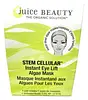
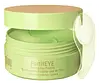
Juice Beauty Stem Cellular Instant Eye Lift Algae Mask - Single Versus Pixi Beauty FortifEYE Eye Patches
This hydrating eye mask is formulated around Aloe Barbadensis Leaf Juice and Hyaluronic Acid to hydrate skin and calm redness.


What's inside
What's inside
 Key Ingredients
Benefits
Concerns
Ingredients Side-by-side
Aloe Barbadensis Leaf Juice
Skin Conditioning


Glycerin
Humectant

Leuconostoc/Radish Root Ferment Filtrate
Antimicrobial

Malus Domestica Fruit Cell Culture Extract
Skin ConditioningVitis Vinifera Fruit Extract
Skin ConditioningCitrus Limon Leaf Cell Extract
Skin ConditioningXanthan Gum
EmulsifyingAlgin
MaskingVitis Vinifera Seed Extract
Antimicrobial
Hyaluronic Acid
Humectant

Magnesium Ascorbyl Phosphate
Antioxidant



Cucumis Sativus Extract
Skin Conditioning
Camellia Sinensis Leaf Extract
Antimicrobial
Chamomilla Recutita Extract
Skin Conditioning
Lavandula Angustifolia Extract
Skin Conditioning

Calendula Officinalis Flower Extract
Masking
Arnica Montana Flower Extract
Masking
Cellulose Gum
Emulsion StabilisingCaprylic/Capric Triglyceride
Masking
Citric Acid
Buffering
Sorbitol
Humectant
Aloe Barbadensis Leaf Juice, Glycerin, Leuconostoc/Radish Root Ferment Filtrate, Malus Domestica Fruit Cell Culture Extract, Vitis Vinifera Fruit Extract, Citrus Limon Leaf Cell Extract, Xanthan Gum, Algin, Vitis Vinifera Seed Extract, Hyaluronic Acid, Magnesium Ascorbyl Phosphate, Cucumis Sativus Extract, Camellia Sinensis Leaf Extract, Chamomilla Recutita Extract, Lavandula Angustifolia Extract, Calendula Officinalis Flower Extract, Arnica Montana Flower Extract, Cellulose Gum, Caprylic/Capric Triglyceride, Citric Acid, Sorbitol
Water
Skin ConditioningGlycerin
Humectant
Carrageenan



Cocos Nucifera Fruit Extract
Emollient
Pinus Sylvestris Leaf Extract
TonicRetinol
Skin Conditioning


Hydrogenated Lecithin
Emulsifying
Tocopheryl Acetate
Antioxidant
Octapeptide-7
Skin Protecting
Sh-Decapeptide-7
Antioxidant
Sh-Octapeptide-4
Antioxidant
Sh-Oligopeptide-9
Humectant
Sh-Pentapeptide-19
Skin Conditioning
Aloe Barbadensis Leaf Extract
Emollient
Ricinus Communis Seed Oil
Masking
Adenosine
Skin Conditioning
Allantoin
Skin Conditioning
Caffeine
Skin Conditioning
Propanediol
Solvent
Polyglyceryl-10 Laurate
Skin Conditioning
Ceratonia Siliqua Gum
EmollientSucrose
Humectant
Calcium Lactate
AstringentCalcium Chloride
AstringentCellulose Gum
Emulsion StabilisingPotassium Chloride
Cyamopsis Tetragonoloba Gum
Emulsion StabilisingArginine
Masking
Hydrolyzed Extensin
Skin ConditioningDipotassium Glycyrrhizate
Humectant
Synthetic Fluorphlogopite
Maltodextrin
Absorbent
Sodium Hyaluronate
Humectant
Ethylhexylglycerin
Skin ConditioningTitanium Dioxide
Cosmetic Colorant

Chromium Oxide Greens
Polysorbate 20
Emulsifying
Butylene Glycol
Humectant
Pentylene Glycol
Skin Conditioning
Ethyl Hexanediol
Solvent1,2-Hexanediol
Skin Conditioning
Chlorphenesin
Antimicrobial
Disodium EDTA
ChelatingWater, Glycerin, Carrageenan, Cocos Nucifera Fruit Extract, Pinus Sylvestris Leaf Extract, Retinol, Hydrogenated Lecithin, Tocopheryl Acetate, Octapeptide-7, Sh-Decapeptide-7, Sh-Octapeptide-4, Sh-Oligopeptide-9, Sh-Pentapeptide-19, Aloe Barbadensis Leaf Extract, Ricinus Communis Seed Oil, Adenosine, Allantoin, Caffeine, Propanediol, Polyglyceryl-10 Laurate, Ceratonia Siliqua Gum, Sucrose, Calcium Lactate, Calcium Chloride, Cellulose Gum, Potassium Chloride, Cyamopsis Tetragonoloba Gum, Arginine, Hydrolyzed Extensin, Dipotassium Glycyrrhizate, Synthetic Fluorphlogopite, Maltodextrin, Sodium Hyaluronate, Ethylhexylglycerin, Titanium Dioxide, Chromium Oxide Greens, Polysorbate 20, Butylene Glycol, Pentylene Glycol, Ethyl Hexanediol, 1,2-Hexanediol, Chlorphenesin, Disodium EDTA
Reviews
Alternatives
Ingredients Explained
These ingredients are found in both products.
Ingredients higher up in an ingredient list are typically present in a larger amount.
Cellulose Gum is a water-soluble polymer that comes from cellulose. It is used to change the texture of a product and to help stabilize emulsions.
As an emulsifier, cellulose gum specifically thicken the texture of water-based products.
This ingredient is considered hypoallergenic and non-toxic. Cellulose Gum can be found in cosmetics, food, and other household goods such as paper products.
Learn more about Cellulose GumGlycerin (or glycerol) is a compound naturally found in your skin. It's a powerhouse humectant that pulls water into the stratum corneum.
Topically, glycerin does several things at once:
Your skin makes glycerin on its own (mostly from sebaceous oil breakdown) and shuttles it to your outermost layer of skin, or your epidermis, via aquaporin-3.
Aquaporin-3 is a transporter that is essential for normal skin hydration, elasticity, and repair. Interestingly, mice lacking in AQP3 have dry and less elastic skin that can be fully corrected with glycerin.
This ingredient is non-irritating, plays well with almost every ingredient, and works across all skin types. Typical use is anywhere between 3-10% but can go up to 79% in some leave-on products.
Just know very high concentrations (>40%) can feel tacky in low humidity.
Glycerin is the name for this ingredient in American English. British English uses Glycerol/Glycerine.
Learn more about Glycerin

