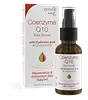
This anti-aging serum is formulated around Ubiquinone and Sodium Hyaluronate to soften the look of wrinkles and hydrate skin.
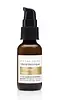
This brightening serum is formulated around Camellia Sinensis Leaf Extract and Tetrahexyldecyl Ascorbate to brighten dull-looking skin and soften the look of wrinkles.

What's inside
What's inside
 Key Ingredients
Benefits
Concerns
Ingredients Side-by-side

Camellia Sinensis Leaf Extract
Antimicrobial







Water
Skin ConditioningTetrahexyldecyl Ascorbate
Antioxidant


Glycerin
Humectant
Simmondsia Chinensis Seed Oil
Emollient


Brassica Oleracea Italica Seed Oil
Emollient
Vitis Vinifera Seed Oil
Emollient
Lactobacillus
Skin Conditioning3-Glyceryl Ascorbate
Antioxidant
Magnesium Ascorbyl Phosphate
Antioxidant
Sodium Ascorbyl Phosphate
Antioxidant
Leuconostoc/Radish Root Ferment Filtrate
Antimicrobial
Helianthus Annuus Seed Oil
Emollient
Ferulic Acid
Antimicrobial
Cocos Nucifera Fruit Extract
Emollient


Tocopherol
Antioxidant

Beta-Glucan
Skin Conditioning
Ganoderma Lucidum Extract
Skin Protecting
Sodium Salicylate
Preservative
Beta-Sitosterol
Emulsion Stabilising
Cetearyl Olivate
Dicrateria Rotunda Oil
Skin Conditioning
Silybum Marianum Seed Extract
Skin ConditioningBehenyl Alcohol
Emollient
Sorbitan Olivate
Emulsifying
Xanthan Gum
EmulsifyingSqualene
Emollient
Lecithin
Emollient
Glutathione
Thioctic Acid
Antioxidant
Curcuma Longa Root Extract
Antioxidant
Glycine Soja Oil
Emollient
Propanediol
Solvent
Potassium Sorbate
Preservative
Citric Acid
Buffering
Camellia Sinensis Leaf Extract, Water, Tetrahexyldecyl Ascorbate, Glycerin, Simmondsia Chinensis Seed Oil, Brassica Oleracea Italica Seed Oil, Vitis Vinifera Seed Oil, Lactobacillus, 3-Glyceryl Ascorbate, Magnesium Ascorbyl Phosphate, Sodium Ascorbyl Phosphate, Leuconostoc/Radish Root Ferment Filtrate, Helianthus Annuus Seed Oil, Ferulic Acid, Cocos Nucifera Fruit Extract, Tocopherol, Beta-Glucan, Ganoderma Lucidum Extract, Sodium Salicylate, Beta-Sitosterol, Cetearyl Olivate, Dicrateria Rotunda Oil, Silybum Marianum Seed Extract, Behenyl Alcohol, Sorbitan Olivate, Xanthan Gum, Squalene, Lecithin, Glutathione, Thioctic Acid, Curcuma Longa Root Extract, Glycine Soja Oil, Propanediol, Potassium Sorbate, Citric Acid
Ingredients Explained
These ingredients are found in both products.
Ingredients higher up in an ingredient list are typically present in a larger amount.
Cetearyl Olivate is a plant-derived emulsifier and texture enhancer. It helps keep the oil and water phases from separating so your formulas stay stable.
You'll likely see it combined with Sorbitan Olivate (together sold as the trade name Olivem 1000). This combination generates a liquid crystal structure that closely resemble the lipid organization of the stratum corneum.
These "skin-like" liquid crystals improve skin barrier integrity and promote the delivery of actives into the skin.
This ingredient is well-tolerated and has no significant sensitization data.
Because it is derived from the fatty acids in olive oil, this ingredient may not be fungal acne safe.
Learn more about Cetearyl OlivateCocos Nucifera Fruit Extract (coconut extract) is a water-soluble extract from coconut fruit.
It's a skin conditioning agent that helps keep the skin soft and hydrated. This ingredient is different from coconut oil with a totally different composition.
Direct research on this extract is limited and mostly comes from supplier safety dossiers:
Human testing found it to be non-irritating or sensitizing in a 50-subject occlusive patch test.
Real-world concentrations are very low: industry survey data puts it at 0.0007% to 0.02% in face and neck products, 0.0005% in moisturizers and cleansers, and up to 0.04% in hair conditioners.
Most human clinical skin research on coconut is on virgin coconut oil and not this extract. For example, a randomized double-blind trial found virgin coconut oil as effective and safe as mineral oil for mild to moderate xerosis with significant improvement in hydration and skin surface lipids. However, you can't transfer that to a water-based fruit extract at 0.01%.
There's no comedogenicity data for this specific ingredient; the "coconut clogs pores" reputation comes from coconut oil which scored high on the old rabbit ear assay.
That method tested pure ingredients on rabbit ears and later work showed the results translate inconsistently to human skin.
Some people still find it breaks them out. So if that's you, definitely trust your skin.
Learn more about Cocos Nucifera Fruit ExtractGlycerin (or glycerol) is a compound naturally found in your skin. It's a powerhouse humectant that pulls water into the stratum corneum.
Topically, glycerin does several things at once:
Your skin makes glycerin on its own (mostly from sebaceous oil breakdown) and shuttles it to your outermost layer of skin, or your epidermis, via aquaporin-3.
Aquaporin-3 is a transporter that is essential for normal skin hydration, elasticity, and repair. Interestingly, mice lacking in AQP3 have dry and less elastic skin that can be fully corrected with glycerin.
This ingredient is non-irritating, plays well with almost every ingredient, and works across all skin types. Typical use is anywhere between 3-10% but can go up to 79% in some leave-on products.
Just know very high concentrations (>40%) can feel tacky in low humidity.
Glycerin is the name for this ingredient in American English. British English uses Glycerol/Glycerine.
Learn more about GlycerinLactobacillus is the INCI name for the live, whole lactic bacteria culture itself and is classified as a skin conditioning agent.
It is the same genus of probiotic that you can find in yogurt or fermented foods and it shows up at low levels naturally on human skin.
This ingredient is more of a microbiome agent rather than an active; it helps rebalance the skin's microbial community.
The bacteria and their metabolites produce lactic acid and other antimicrobial compounds that crowd out the "bad bacteria". Research on Lactobacillus strains shows activity against pathogens and acne-causing bacteria.
One strain, Lactobacillus plantarum, has also been shown to boost collagen synthesis and lower melanin synthesis in lab and clinical observation.
The most eye-catching data comes from acne research, a topical cream with live lactobacilli was well-tolerated and improved skin hydration by 37.3% after 14 days of use and 45.6% after 28 days.
Sources for this ingredient are usually fermented substrates like dairy, soy, or rice.
In general, this is a low-irritation and well-tolerated ingredient that plays nice with most of your routine.
One thing to keep in mind is that live bacteria are hard to keep alive inside of a skincare product. They struggle to survive on the shelf and don't get along with the preservatives that stop products from spoiling.
That's why you'll see ferment and postbiotic forms instead, like Lactobacillus Ferment or Lactobacillus Ferment Lysate.
There isn't a fixed percentage for this ingredient since it is dosed by strain and viable count.
On the fungal acne front: Lactobacillus is a bacterium (not a fungus). The whole culture contains no fatty acids, esters, or oils that Malassezia can feed on so it is considered fungal acne safe.
Learn more about LactobacillusLeuconostoc/Radish Root Ferment Filtrate is a natural preservative. It comes from fermenting radish roots with a bacteria called leuconostoc. The trade name for this ingredient is Leucidal.
Leuconostoc comes from lactic acid.
This ingredient has antimicrobial properties and helps prevent the growth of bacteria in a product.
Leuconostoc is used to make the traditional Korean side-dish, kimchi. It is also used to make sourdough bread (both incredibly yummy foods).
Learn more about Leuconostoc/Radish Root Ferment FiltrateJojoba oil is one of the most well-studied plant-derived ingredients in cosmetics. It is an emollient with a special structure.
Because it is made up of 97-98% wax esters, it closely mirrors the linear monoesters found in human sebum. This makes it skin compatible, non-greasy, and lightweight.
Unlike other plant oils, jojoba wax doesn't easily penetrate skin. It mostly works in the uppermost layers as an emollient. This just means it forms a light barrier on the skin to help retain moisture.
Formulations with jojoba esters up to 90% reduced transepidermal water loss (TEWL) and increased barrier recovery by 81% (outperforming bisabolol at 47%).
Besides barrier support, the science also suggests jojoba to have anti-inflammatory effects and potential applications for skin infections, aging, and wound healing.
Fun fact: Indigenous cultures have used jojoba as a moisturizer and to help treat burns for centuries.
Fungal acne: The Malassezia yeast is known to metabolize fatty acids in the C11-24 range and jojoba's dominant fatty acid components fall into this range. This ingredient may not be fungal acne safe.
Learn more about Simmondsia Chinensis Seed OilSorbitan Olivate is created from the fatty acids in olive oil and sorbitol.
This ingredient is an oil in water emulsifier. It helps stabilize a product by preventing oils and waters from separating. Sorbitan Olivate also helps hydrate the skin.
This ingredient is also known as part of Olivem 1000, with Cetearyl Olivate being the other part.
According to a manufacturer, this ingredient helps preserve the natural microbiome of skin. Having a healthy microbiome helps keep our skin healthy and protects against harmful bacteria.
Please note, having a healthy microbiome is different from fungal acne; a healthy microbiome includes small amounts of yeast that normally live on your skin without causing problems.
Fungal acne happens when one type of yeast (Malassezia) grows out of control. This is usually because it's feeding on certain oils or fatty acids. Due to the olive oil base, this ingredient may not be fungal acne safe.
Learn more about Sorbitan OlivateWater. It's the most common cosmetic ingredient of all. You'll usually see it at the top of ingredient lists, meaning that it makes up the largest part of the product.
So why is it so popular? Water most often acts as a solvent - this means that it helps dissolve other ingredients into the formulation.
You'll also recognize water as that liquid we all need to stay alive. If you see this, drink a glass of water. Remember to stay hydrated!
Learn more about WaterXanthan gum is used as a stabilizer and thickener within cosmetic products. It helps give products a sticky, thick feeling - preventing them from being too runny.
On the technical side of things, xanthan gum is a polysaccharide - a combination consisting of multiple sugar molecules bonded together.
Xanthan gum is a pretty common and great ingredient. It is a natural, non-toxic, non-irritating ingredient that is also commonly used in food products.
Learn more about Xanthan Gum

