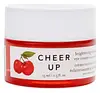
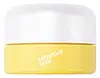
Farmacy Cheer Up Brightening Vitamin C Eye Cream with Acerola Cherry Versus Saturday Skin Yuzu Vitamin C Bright Eye Cream
This brightening eye moisturizer is formulated around Ascorbyl Tetraisopalmitate and Caffeine to fade the look of dark spots.
This brightening eye moisturizer is formulated around Panthenol and Niacinamide to brighten dull-looking skin and soften the look of wrinkles.


What's inside
What's inside
 Key Ingredients
Benefits
Concerns
Ingredients Side-by-side
Water
Skin ConditioningDiisostearyl Malate
EmollientPentaerythrityl Tetraisostearate
Emollient

Pentylene Glycol
Skin Conditioning
Ascorbyl Tetraisopalmitate
Antioxidant


Orbignya Oleifera Seed Oil
Emollient

Phytosterols
Skin Conditioning
Caprylic/Capric Triglyceride
Masking
3-Glyceryl Ascorbate
Antioxidant
Glycerin
Humectant
Acrylates/C10-30 Alkyl Acrylate Crosspolymer
Emulsion StabilisingMalpighia Punicifolia Fruit Extract
Antioxidant
Caffeine
Skin Conditioning
Sodium Hyaluronate
Humectant

Hydrolyzed Sodium Hyaluronate
Skin Conditioning
Sodium Acetylated Hyaluronate
Humectant
Sodium Hyaluronate Crosspolymer
Humectant
Hydrolyzed Plukenetia Volubilis Seed Extract
Emulsion StabilisingLinoleic Acid
Cleansing
Phospholipids
Skin Conditioning
Bisabolol
Antioxidant
Helianthus Annuus Extract
Emollient
Physalis Angulata Extract
Skin ProtectingBis-Diglyceryl Polyacyladipate-1
Emollient
Oryza Sativa Bran Extract
Skin Conditioning
Tocopherol
Antioxidant

Hexamidine Diisethionate
Emollient
Sodium Phytate
ChelatingMelia Azadirachta Extract
Skin ConditioningMoringa Oleifera Seed Oil
Emollient

Ethylhexylglycerin
Skin ConditioningPotassium Hydroxide
BufferingRosmarinus Officinalis Leaf Extract
AntimicrobialButylene Glycol
Humectant
Citric Acid
Buffering
Sodium Benzoate
Masking
Water, Diisostearyl Malate, Pentaerythrityl Tetraisostearate, Pentylene Glycol, Ascorbyl Tetraisopalmitate, Orbignya Oleifera Seed Oil, Phytosterols, Caprylic/Capric Triglyceride, 3-Glyceryl Ascorbate, Glycerin, Acrylates/C10-30 Alkyl Acrylate Crosspolymer, Malpighia Punicifolia Fruit Extract, Caffeine, Sodium Hyaluronate, Hydrolyzed Sodium Hyaluronate, Sodium Acetylated Hyaluronate, Sodium Hyaluronate Crosspolymer, Hydrolyzed Plukenetia Volubilis Seed Extract, Linoleic Acid, Phospholipids, Bisabolol, Helianthus Annuus Extract, Physalis Angulata Extract, Bis-Diglyceryl Polyacyladipate-1, Oryza Sativa Bran Extract, Tocopherol, Hexamidine Diisethionate, Sodium Phytate, Melia Azadirachta Extract, Moringa Oleifera Seed Oil, Ethylhexylglycerin, Potassium Hydroxide, Rosmarinus Officinalis Leaf Extract, Butylene Glycol, Citric Acid, Sodium Benzoate
Water
Skin ConditioningGlycerin
Humectant
Behenyl Alcohol
Emollient
C12-15 Alkyl Benzoate
AntimicrobialPanthenol
Skin Conditioning
Diphenylsiloxy Phenyl Trimethicone
Skin Conditioning
Hydrogenated Coco-Glycerides
Emollient
Niacinamide
Smoothing




Pentylene Glycol
Skin Conditioning
Synthetic Beeswax
Emulsion Stabilising
C12-16 Alcohols
EmollientButylene Glycol Dicaprylate/Dicaprate
EmollientMethyl Trimethicone
Skin Conditioning
Palmitic Acid
Emollient
Hydrogenated Lecithin
Emulsifying
Diphenyl Dimethicone
Emollient
Polymethylsilsesquioxane
Chlorella Vulgaris Extract
Skin ConditioningGlucose
Humectant
Butylene Glycol
Humectant
Fructooligosaccharides
Humectant
Fructose
Humectant
Hydroxyacetophenone
Antioxidant
Acrylates/C10-30 Alkyl Acrylate Crosspolymer
Emulsion StabilisingTromethamine
Buffering3-O-Ethyl Ascorbic Acid
Skin Conditioning
Diglycerin
Humectant
Xanthan Gum
EmulsifyingEthylhexylglycerin
Skin ConditioningCaffeine
Skin Conditioning
Adenosine
Skin Conditioning
Sodium Phytate
Chelating1,2-Hexanediol
Skin Conditioning
Glyceryl Glucoside
Humectant
Citrus Junos Fruit Extract
Skin ConditioningCholesterol
Emollient
PEG-800
HumectantPhenoxyethanol
Preservative
Polysorbate 20
Emulsifying
Tocopherol
Antioxidant
Sh-Oligopeptide-1
Skin Conditioning
Sh-Polypeptide-1
Skin Conditioning
Oligopeptide-2
Skin Conditioning
Sh-Polypeptide-22
Skin Conditioning
Sh-Polypeptide-45
Skin Conditioning
Sh-Polypeptide-8
Humectant
Sh-Polypeptide-9
Skin Conditioning
Water, Glycerin, Behenyl Alcohol, C12-15 Alkyl Benzoate, Panthenol, Diphenylsiloxy Phenyl Trimethicone, Hydrogenated Coco-Glycerides, Niacinamide, Pentylene Glycol, Synthetic Beeswax, C12-16 Alcohols, Butylene Glycol Dicaprylate/Dicaprate, Methyl Trimethicone, Palmitic Acid, Hydrogenated Lecithin, Diphenyl Dimethicone, Polymethylsilsesquioxane, Chlorella Vulgaris Extract, Glucose, Butylene Glycol, Fructooligosaccharides, Fructose, Hydroxyacetophenone, Acrylates/C10-30 Alkyl Acrylate Crosspolymer, Tromethamine, 3-O-Ethyl Ascorbic Acid, Diglycerin, Xanthan Gum, Ethylhexylglycerin, Caffeine, Adenosine, Sodium Phytate, 1,2-Hexanediol, Glyceryl Glucoside, Citrus Junos Fruit Extract, Cholesterol, PEG-800, Phenoxyethanol, Polysorbate 20, Tocopherol, Sh-Oligopeptide-1, Sh-Polypeptide-1, Oligopeptide-2, Sh-Polypeptide-22, Sh-Polypeptide-45, Sh-Polypeptide-8, Sh-Polypeptide-9
Reviews
Ingredients Explained
These ingredients are found in both products.
Ingredients higher up in an ingredient list are typically present in a larger amount.
Acrylates/C10-30 Alkyl Acrylate Crosspolymer is a synthetic polymer. It is used to thicken, emulsify, and improve the texture of products.
As an emulsifier, it helps stabilize oil-in-water emulsions to give products an elegant feel when applied.
It can also form a thin protective film on skin. One study found that a formula using this polymer helped slow down how quickly other ingredients (like DEET) were absorbed through skin.
A 2024 study of over 1,300 patients confirmed that sensitization to this ingredient is rare. It is also non-mutagenic and has a clean track record.
Learn more about Acrylates/C10-30 Alkyl Acrylate CrosspolymerButylene Glycol (or BG) is used within cosmetic products for a few different reasons:
Overall, Butylene Glycol is a safe and well-rounded ingredient that works well with other ingredients.
Though this ingredient works well with most skin types, some people with sensitive skin may experience a reaction such as allergic rashes, closed comedones, or itchiness.
Learn more about Butylene GlycolCaffeine is a naturally occurring plant compound found in coffee beans, tea leaves, cocoa pods, and guarana.
As an antioxidant, caffeine protects your skin from free radical damage caused by UV exposure and envionrmnetal stressors.
Early research also shows that caffeine can help calm redness, soothe irritated skin, and support hair growth by stimulating microcirculation in the scalp.
You might have seen eye creams marketing caffeine as a depuffing ingredient. This is because it is a vasoconstrictor meaning it can temporarily constrict blood vessels, though clinical evidence for this specific use is still limited.
Most skincare products contain this ingredient at concentrations between 1-6%. It is able to penetrate skin easily regardless of skin type or thickness.
Just so you know, a very small number of case reports describe caffeine-induced allergy. This ingredient is generally well-tolerated, non-irritating, and non-sensitizing for the majority of people.
Learn more about CaffeineEthylhexylglycerin is created from glycerin. It is a multitasker ingredient that:
The CIR Expert Panel found minimal skin absorption or sensitization of any kind in a safety assessment. Though this ingredient is considered well-tolerated, a small number of cases of allergic dermatitis have been published since 2002. Just be sure to patch test if you are unsure.
Industry-reported use ranges from 8% in rinse-off products and 2% in leave-on formulations.
Learn more about EthylhexylglycerinGlycerin (or glycerol) is a compound naturally found in your skin. It's a powerhouse humectant that pulls water into the stratum corneum.
Topically, glycerin does several things at once:
Your skin makes glycerin on its own (mostly from sebaceous oil breakdown) and shuttles it to your outermost layer of skin, or your epidermis, via aquaporin-3.
Aquaporin-3 is a transporter that is essential for normal skin hydration, elasticity, and repair. Interestingly, mice lacking in AQP3 have dry and less elastic skin that can be fully corrected with glycerin.
This ingredient is non-irritating, plays well with almost every ingredient, and works across all skin types. Typical use is anywhere between 3-10% but can go up to 79% in some leave-on products.
Just know very high concentrations (>40%) can feel tacky in low humidity.
Glycerin is the name for this ingredient in American English. British English uses Glycerol/Glycerine.
Learn more about GlycerinPentylene Glycol (1,2-pentanediol) is a multitasking little diol with three main roles in a formula:
Research on alkanediols (the family pentylene glycol belongs to) show they work by disrupting microbial cell membranes. This disruption helps the primary preservative system in a product work more effectively at lower doses.
On the safety side, the Cosmetic Ingredient Review Expert Panel has concluded this ingredient to be safe as used in current cosmetic practices + concentrations.
Typical use levels in a formula run about 1-5%.
Learn more about Pentylene GlycolSodium Phytate is the sodium salt of Phytic acid, a compound that plants store phosphorus in. It's the plant-derived alternative to ingredients like Disodium EDTA.
In skincare, this ingredient is a chelator that grabs onto trace metal ions like iron and copper that sneak into formulas through water/raw materials.
Those metals speed up oxidation so binding them keeps oils, fragrance, and actives from going off, stops color changes, and helps the preservative system work harder.
Survey data shows usage levels range from 0.0099%-0.5% in leave-on products, 0.025%-0.3% in rinse-off, and up to 0.05% in eye-area products. Suppliers typically recommend a range between 0.05-0.5%.
Learn more about Sodium PhytateTocopherol is a fat-soluble antioxidant known as Vitamin E.
You'll find this ingredient in the vast majority of skincare (for good reason). It works to neutralize free radicals, or unstable molecules generated by UV exposure, pollution, and other environmental stressors, before they can cause oxidative damage to your skin cells.
Topically applied tocopherol has been shown to protect against UV damage by ramping up the skin's own natural defense enzymes.
It also acts as a skin conditioning agent; some studies show that regular topical use can improve the skin's water-binding capacity over 2-4 weeks.
This ingredient is especially loved for being a team player. When combined with Vitamin C, the photoprotective effect of both ingredients roughly doubles and the combo also helps reduce UV-induced DNA damage.
This ingredient has some brightening potential but it's more of a prevention ingredient than spot-fader. Cell studies show it can slow down melanin production but it's worth noting that it's not the most powerful brightener out there.
In formulations, it also serves as a stabilizer that helps protect other oxidation-prone ingredients from degrading.
Concentrations usually range from 0.1-1% in most leave-on products.
Learn more about TocopherolWater. It's the most common cosmetic ingredient of all. You'll usually see it at the top of ingredient lists, meaning that it makes up the largest part of the product.
So why is it so popular? Water most often acts as a solvent - this means that it helps dissolve other ingredients into the formulation.
You'll also recognize water as that liquid we all need to stay alive. If you see this, drink a glass of water. Remember to stay hydrated!
Learn more about Water

