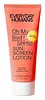
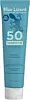
Everyday Humans Oh My Bod! SPF 50 Sunscreen Lotion Versus Blue Lizard Sensitive Mineral Sunscreen SPF 50+
This chemical sunscreen covers most of the UV range, lighter on the deep UVA that drives aging.
This hybrid sunscreen covers the full UV range and blocks ~98% of UVB at SPF 50.


What's inside
What's inside
 Key Ingredients
Benefits
Concerns
Ingredients Side-by-side
Homosalate 10%
Skin Conditioning

Octocrylene 8%
UV Absorber

Ethylhexyl Salicylate 5%
UV Absorber
Butyl Methoxydibenzoylmethane 3%
UV Absorber
Water
Skin ConditioningCera Alba
Emollient




C12-15 Alkyl Benzoate
AntimicrobialPEG-15 Cocamine
EmulsifyingSilica
Abrasive


Sodium Hyaluronate
Humectant



Alteromonas Ferment Extract
Skin Conditioning
Simmondsia Chinensis Seed Oil
Emollient

Carthamus Tinctorius Seed Oil
Masking
Cucumis Sativus Fruit Extract
Emollient
Camellia Sinensis Leaf Extract
Antimicrobial

Aloe Barbadensis Leaf Juice
Skin Conditioning
Tocopheryl Acetate
Antioxidant
Caprylyl Glycol
Emollient
PEG-40 Stearate
Emulsifying
Butylene Glycol
Humectant
Hydroxyethylcellulose
Emulsion StabilisingCarbomer
Emulsion StabilisingCaprylhydroxamic Acid
ChelatingGlycerin
Humectant
Triethanolamine
BufferingParfum
Masking

Homosalate 10%, Octocrylene 8%, Ethylhexyl Salicylate 5%, Butyl Methoxydibenzoylmethane 3%, Water, Cera Alba, C12-15 Alkyl Benzoate, PEG-15 Cocamine, Silica, Sodium Hyaluronate, Alteromonas Ferment Extract, Simmondsia Chinensis Seed Oil, Carthamus Tinctorius Seed Oil, Cucumis Sativus Fruit Extract, Camellia Sinensis Leaf Extract, Aloe Barbadensis Leaf Juice, Tocopheryl Acetate, Caprylyl Glycol, PEG-40 Stearate, Butylene Glycol, Hydroxyethylcellulose, Carbomer, Caprylhydroxamic Acid, Glycerin, Triethanolamine, Parfum
Titanium Dioxide 8%
Cosmetic Colorant
Zinc Oxide 10%
Cosmetic Colorant
1,2-Hexanediol
Skin Conditioning
Aloe Barbadensis Leaf Juice Powder
Skin Conditioning
Alumina
Abrasive
Aluminum Stearate
Cosmetic ColorantButyloctyl Salicylate
Skin Conditioning
C12-15 Alkyl Benzoate
AntimicrobialCaprylyl Glycol
Emollient
Cetyl Dimethicone
Emollient
Cetyl PEG/PPG-10/1 Dimethicone
Emulsifying
Dimethicone
Emollient
Disodium EDTA
ChelatingEthylhexyl Palmitate
Emollient
Ethylhexyl Stearate
Emollient
Euphorbia Cerifera Wax
Hexyl Laurate
Emollient
Hydroxyacetophenone
Antioxidant
Methyl Glucose Dioleate
Emollient
Octyldodecyl Neopentanoate
EmollientPEG-7 Hydrogenated Castor Oil
Emulsifying
Polyglyceryl-4 Isostearate
Emulsifying
Polyhydroxystearic Acid
Emulsifying
Propanediol
Solvent
Tocopherol
Antioxidant
Tocopheryl Acetate
Antioxidant
Triethoxycaprylylsilane
Trimethylsiloxysilicate
Emollient
Vp/Hexadecene Copolymer
Water
Skin ConditioningTitanium Dioxide 8%, Zinc Oxide 10%, 1,2-Hexanediol, Aloe Barbadensis Leaf Juice Powder, Alumina, Aluminum Stearate, Butyloctyl Salicylate, C12-15 Alkyl Benzoate, Caprylyl Glycol, Cetyl Dimethicone, Cetyl PEG/PPG-10/1 Dimethicone, Dimethicone, Disodium EDTA, Ethylhexyl Palmitate, Ethylhexyl Stearate, Euphorbia Cerifera Wax, Hexyl Laurate, Hydroxyacetophenone, Methyl Glucose Dioleate, Octyldodecyl Neopentanoate, PEG-7 Hydrogenated Castor Oil, Polyglyceryl-4 Isostearate, Polyhydroxystearic Acid, Propanediol, Tocopherol, Tocopheryl Acetate, Triethoxycaprylylsilane, Trimethylsiloxysilicate, Vp/Hexadecene Copolymer, Water
Reviews
Ingredients Explained
These ingredients are found in both products.
Ingredients higher up in an ingredient list are typically present in a larger amount.
C12-15 Alkyl Benzoate is a lightweight emollient made by combinig benzoic acid with fatty alcohols that are 12-15 carbons long.
In cosmetics, it plays several roles:
The Cosmetic Review Expert Panel has concluded the alkyl benzoate group to be safe as used in cosmetics; it wasn't found to be a skin irritant and unlikely to be absorbed due to its low water solubility.
This report recorded almost 1000 reported uses with concentrations up to 59% in leave-on products but your cosmetics will typically use 0.5-15% depending on the product.
It's often called a "SPF booster": this is because it keeps UV filters properly dissolved and evenly distributed to support a sunscreen's performance. It doesn't actually raise SPF on its own.
Overall, this ingredient is well tolerated.
This ingredient is fungal acne safe because it is an ester of benzoic acid.
Think of this ingredient as two parts stuck together: an oily part and an acid part. Malassezia only gets a meal when it can snip off a fatty acid to eat. With C12-15 Alkyl Benzoate, the acid part is benzoic acid, which isn't a fatty acid and which the yeast can't use as food.
Benzoic acid is actually used as a preservative to stop yeast from growing.
The oily part is a blend of C12-15 fatty alcohols but fatty alcohols in this size range can support only a little Malassezia growth (mostly for one species of Malassezia as well).
In the ingredient, those alcohols stay locked inside the molecule. The yeast can only reach them by snipping the benzoate bond, and that type of bond is harder for it to cut than a normal fatty bond.
So not much gets released. And whatever does get snipped comes packaged with benzoic acid, which discourages yeast growth.
Learn more about C12-15 Alkyl BenzoateCaprylyl Glycol is a humectant, skin conditioner, emollient, and preservative booster derived from either caprylic acid or synthetically created.
Typical use levels vary from 0.3-1% as a preservative booster and go up to 2% to condition skin.
Because it is not a free-fatty acid, this ingredient is fungal acne safe (there's nothing for Malassezia to feed on).
Learn more about Caprylyl GlycolTocopheryl Acetate is a stable, shelf-friendly form of vitamin E.
Formulators love it because plain vitamin E oxidizes quickly once it hits air. This acetate version stays stable and resists going off, helping to extend a product's shelf life.
It's actually inactive on its own and works like a slow-release "storage" form; the enzymes in your skin called esterases gradually convert it into active vitamin E over time.
One in vivo study showed 5% of the acetate in the living layer of the epidermis converted to vitamin E after 5 days of application. This study also found the skin gained protection against UV damage even though the conversion was slow and small.
Once converted, vitamin E acts as a skin's main fat-soluble antioxidant that fights free radicals to protect skin from damage.
Topical vitamin E generally boosts the skin's photoprotection, and it reduced UV-damage in animal models.
This ingredient has some brightening potential but it's more of a prevention ingredient than spot-fader. Cell studies show it can slow down melanin production but it's worth noting that it's not the most powerful brightener out there.
Overall, it has a pretty solid safety profile and has been found to be non-irritating and non-comedogenic. Allergic reactions may happen but stay rare due to how widely the ingredient gets used.
The concentration will vary depending on the formula; industry data shows 0.1% in baby lotions, 3% in lipsticks, and 5% in foot powders. You can also find this ingredient at 100% in a pure vitamin E oil.
Most leave-on skincare keeps it at the lower end, often between 0.5-1%.
Learn more about Tocopheryl AcetateWater. It's the most common cosmetic ingredient of all. You'll usually see it at the top of ingredient lists, meaning that it makes up the largest part of the product.
So why is it so popular? Water most often acts as a solvent - this means that it helps dissolve other ingredients into the formulation.
You'll also recognize water as that liquid we all need to stay alive. If you see this, drink a glass of water. Remember to stay hydrated!
Learn more about Water

