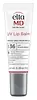
This lip moisturizer is formulated around Petrolatum and Ricinus Communis Seed Oil to hydrate lips.
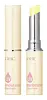
This barrier-repair lip moisturizer is formulated around Limnanthes Alba Seed Oil and Olea Europaea Fruit Oil to strengthen the lip barrier and hydrate lips.


What's inside
What's inside
 Key Ingredients
Benefits
Concerns
Ingredients Side-by-side
Ethylhexyl Methoxycinnamate 7.5%
UV Absorber


Zinc Oxide 7%
Cosmetic Colorant
Petrolatum
Emollient


Ricinus Communis Seed Oil
Masking


Cetearyl Alcohol
Emollient



Water
Skin ConditioningLauryl Laurate
Skin Conditioning
Aroma

Polyethylene
Abrasive
Olea Europaea Fruit Oil
Masking
Hydrogenated Soybean Oil
Emollient
Beeswax
Emulsion Stabilising
Glycerin
Humectant

Glyceryl Behenate
Emollient
Copernicia Cerifera Wax
Euphorbia Cerifera Wax
Hydrogenated Castor Oil
Emollient
Hydrolyzed Caesalpinia Spinosa Gum
AbsorbentMicrocrystalline Wax
Emulsion StabilisingCaesalpinia Spinosa Gum
Skin ConditioningSodium Benzoate
Masking
Potassium Sorbate
Preservative
Ascorbyl Palmitate
Antioxidant


Thioctic Acid
Antioxidant
Tocopheryl Acetate
Antioxidant
Quercetin
Antioxidant
Ethylhexyl Methoxycinnamate 7.5%, Zinc Oxide 7%, Petrolatum, Ricinus Communis Seed Oil, Cetearyl Alcohol, Water, Lauryl Laurate, Aroma, Polyethylene, Olea Europaea Fruit Oil, Hydrogenated Soybean Oil, Beeswax, Glycerin, Glyceryl Behenate, Copernicia Cerifera Wax, Euphorbia Cerifera Wax, Hydrogenated Castor Oil, Hydrolyzed Caesalpinia Spinosa Gum, Microcrystalline Wax, Caesalpinia Spinosa Gum, Sodium Benzoate, Potassium Sorbate, Ascorbyl Palmitate, Thioctic Acid, Tocopheryl Acetate, Quercetin
Lanolin
Emollient
Limnanthes Alba Seed Oil
Skin Conditioning
Euphorbia Cerifera Cera
Astringent
Olea Europaea Fruit Oil
Masking
Hydrogenated Jojoba Oil
Abrasive
Benzophenone-3
UV Absorber
Caprylic/Capric Triglyceride
Masking
Hydrogenated Polyisobutene
EmollientBeeswax
Emulsion Stabilising
Cetyl Lactate
EmollientSqualane
Emollient
Hydrogenated Raspberry Seed Oil
Emollient
Hydrogenated Castor Oil
Emollient
Paraffin
Skin Conditioning
Simmondsia Chinensis Seed Oil
Emollient
Glyceryl Distearate
Emollient
Tocotrienols
Skin Conditioning
Ascorbyl Tetraisopalmitate
Antioxidant
Isostearyl Alcohol
Emollient
Tocopherol
Antioxidant
Stearyl Glycyrrhetinate
Skin ConditioningIsostearoyl Hydrolyzed Collagen
Cleansing
Aloe Barbadensis Leaf Extract
Emollient
Chamomilla Recutita Flower Extract
Masking
Lanolin Wax
Emollient
Butyl Methoxydibenzoylmethane
UV Absorber
Isostearic Acid
Cleansing
Phenoxyethanol
Preservative
Stearic Acid
Cleansing
Lanolin, Limnanthes Alba Seed Oil, Euphorbia Cerifera Cera, Olea Europaea Fruit Oil, Hydrogenated Jojoba Oil, Benzophenone-3, Caprylic/Capric Triglyceride, Hydrogenated Polyisobutene, Beeswax, Cetyl Lactate, Squalane, Hydrogenated Raspberry Seed Oil, Hydrogenated Castor Oil, Paraffin, Simmondsia Chinensis Seed Oil, Glyceryl Distearate, Tocotrienols, Ascorbyl Tetraisopalmitate, Isostearyl Alcohol, Tocopherol, Stearyl Glycyrrhetinate, Isostearoyl Hydrolyzed Collagen, Aloe Barbadensis Leaf Extract, Chamomilla Recutita Flower Extract, Lanolin Wax, Butyl Methoxydibenzoylmethane, Isostearic Acid, Phenoxyethanol, Stearic Acid
Ingredients Explained
These ingredients are found in both products.
Ingredients higher up in an ingredient list are typically present in a larger amount.
Beeswax is natural wax produced by honey bees to build their honeycomb.
Because it forms a protective layer on your skin, it can help lock in moisture and reduce water loss. It is also widely used as a thickener and emulsifier in lip balms and lotions. Research suggests beeswax containing moisturizers can support skin barrier integrity.
In comedogenic testing, Beeswax scored a 0-2, which is on the low end. Whether or not a product clogs your pores really comes down to the formula as a whole (not any single ingredient on its own) and your skin.
Cera Alba is the white, bleached form of this ingredient.
Just so you know, beeswax is not vegan since it is animal-derived. It cannot be removed with water, but can be taken off with an oil cleanser.
People with a known Propolis allergy also report to have reactions from beeswax.
Beeswax's wax esters are derived primarily from palmitic and oleic acid (C16 and C18:1). Both of these fall within the C11-C24 feeding window.
The Malassezia yeast can potentially cleave these esters and release usable fatty acids, so this ingredient may not be fungal acne safe. However, not everyone will react to this ingredient.
Learn more about BeeswaxHydrogenated Castor Oil (aka "castor wax") is what you get when castor oil is turned into a wax.
Its dominant fatty acid is ricinoleic acid, giving it both emollient and mild humectant properties.
According to EU CosIng, this ingredient helps soften skin, keep oil and water stay mixed, and thickens products.
Hydrogenated castor oil at 30% did not trigger a positive patch-test reaction and is well-tolerated.
Since this ingredient is based on an 18-carbon fatty acid, it falls into the chain-length range that Malassezia can feed on and may not be fungal acne safe.
Learn more about Hydrogenated Castor OilThis ingredient is also known as olive oil. It has been used in skincare for centuries and science largely backs up its reputation as a nourishing emollient.
The main components of olive oil are oleic acid (55-83%), linoleic acid (3.5-20%), and palmitic acid (7-20%). Oleic acid promotes skin regeneration and helps regulate inflammatory responses.
Squalene is also naturally present in olive oil and exhibits moisturizing and antioxidant properties.
The polyphenols in olive oil also show anti-aging promise; one clinical study found a measurable improvement in skin appearance after 30 days of topical serum use.
Just be aware that applying olive oil directly to skin can weaken the barrier and cause redness. One study with volunteers found even people without sensitive skin experienced a significant reduction in stratum corneum integrity and induced mild erythema.
It's best to use this ingredient as part of a carefully crafted formula (instead of putting it on skin directly from the bottle).
Because it has a 0-2 on the comedogenic scale, it is low risk for acne-prone skin. Just remember the overall formulation of a product matters more than a few ingredients with comedogenic ratings.
This ingredient may not be fungal acne safe because of the oleic and palmitic acid content. These fall within the C11-24 fatty acid range that the Malassezia yeast can metabolize to grow.
Overall, olive oil is a well-studied and nourishing skincare ingredient.
Learn more about Olea Europaea Fruit Oil

