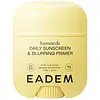
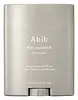
Eadem Sunsuede Daily Sunscreen & Blurring Primer Stick SPF 50+ PA++++ Versus Abib Airy Sunstick Smoothing Bar
This chemical sunscreen covers most of the UV range, lighter on the deep UVA that drives aging.
This chemical sunscreen covers most of the UV range, lighter on the deep UVA that drives aging, though its SPF isn't confirmed on file yet.


What's inside
What's inside
 Key Ingredients
Benefits
Concerns
Ingredients Side-by-side
Diethylhexyl Carbonate
EmollientDimethicone
Emollient

Synthetic Wax
Abrasive

Methyl Methacrylate Crosspolymer

Homosalate
Skin Conditioning

Octocrylene
UV Absorber

Ethylhexyl Salicylate
UV Absorber
Butyloctyl Salicylate
Skin Conditioning
Diphenylsiloxy Phenyl Trimethicone
Skin Conditioning
C12-15 Alkyl Benzoate
AntimicrobialIsopropyl Palmitate
Emollient


Butyl Methoxydibenzoylmethane
UV Absorber
Diisostearyl Malate
EmollientEthylhexyl Isononanoate
EmollientIsoeicosane
EmollientPolyethylene
Abrasive
Polymethylsilsesquioxane
Ethylene/Propylene Copolymer
Abrasive
Dimethicone/Vinyl Dimethicone Crosspolymer
Skin Conditioning
Camellia Japonica Seed Oil
Emollient

Bis-Behenyl/Isostearyl/Phytosteryl Dimer Dilinoleyl Dimer Dilinoleate
EmollientAnanas Sativus Fruit Extract
Skin ConditioningCarica Papaya Fruit Extract
Skin ConditioningGarcinia Mangostana Peel Extract
Skin ConditioningMangifera Indica Fruit Extract
Skin ConditioningMorinda Citrifolia Extract
AstringentMusa Sapientum Fruit Extract
Skin ConditioningNephelium Lappaceum Branch/Fruit/Leaf Extract
Skin ConditioningPsidium Guajava Fruit Extract
AstringentResveratrol
Antioxidant




Zinc PCA
Humectant



Kaolin
Abrasive
Zeolite
AbsorbentAluminum Starch Octenylsuccinate
Absorbent
Caprylic/Capric Triglyceride
Masking
Polyglyceryl-2 Triisostearate
Emulsifying
Silica Dimethyl Silylate
EmollientDimethicone Crosspolymer
Emulsion Stabilising
CI 42090
Cosmetic ColorantCI 19140
Cosmetic ColorantDiethylhexyl Carbonate, Dimethicone, Synthetic Wax, Methyl Methacrylate Crosspolymer, Homosalate, Octocrylene, Ethylhexyl Salicylate, Butyloctyl Salicylate, Diphenylsiloxy Phenyl Trimethicone, C12-15 Alkyl Benzoate, Isopropyl Palmitate, Butyl Methoxydibenzoylmethane, Diisostearyl Malate, Ethylhexyl Isononanoate, Isoeicosane, Polyethylene, Polymethylsilsesquioxane, Ethylene/Propylene Copolymer, Dimethicone/Vinyl Dimethicone Crosspolymer, Camellia Japonica Seed Oil, Bis-Behenyl/Isostearyl/Phytosteryl Dimer Dilinoleyl Dimer Dilinoleate, Ananas Sativus Fruit Extract, Carica Papaya Fruit Extract, Garcinia Mangostana Peel Extract, Mangifera Indica Fruit Extract, Morinda Citrifolia Extract, Musa Sapientum Fruit Extract, Nephelium Lappaceum Branch/Fruit/Leaf Extract, Psidium Guajava Fruit Extract, Resveratrol, Zinc PCA, Kaolin, Zeolite, Aluminum Starch Octenylsuccinate, Caprylic/Capric Triglyceride, Polyglyceryl-2 Triisostearate, Silica Dimethyl Silylate, Dimethicone Crosspolymer, CI 42090, CI 19140
Dimethicone
Emollient
Synthetic Wax
Abrasive
Homosalate
Skin Conditioning
Silica
Abrasive
Isoeicosane
EmollientOctocrylene
UV Absorber
Phenylpropyldimethylsiloxysilicate
EmollientEthylhexyl Salicylate
UV Absorber
Isopropyl Palmitate
Emollient
Diisostearyl Malate
EmollientButyloctyl Salicylate
Skin Conditioning
Isononyl Isononanoate
EmollientButyl Methoxydibenzoylmethane
UV Absorber
Phenethyl Benzoate
Emollient

Diethylhexyl Carbonate
EmollientSynthetic Fluorphlogopite
Hydrogenated Vegetable Oil
Emollient
Polyethylene
Abrasive
Bis-Behenyl/Isostearyl/Phytosteryl Dimer Dilinoleyl Dimer Dilinoleate
EmollientDimethicone/Vinyl Dimethicone Crosspolymer
Skin Conditioning
Ethylene/Propylene Copolymer
Abrasive
Camellia Japonica Seed Oil
Emollient
Silica Dimethyl Silylate
EmollientDimethicone Crosspolymer
Emulsion Stabilising
Euphorbia Cerifera Wax
Vinyl Dimethicone/Methicone Silsesquioxane Crosspolymer
Copernicia Cerifera Wax
Lecithin
Emollient
Pentaerythrityl Tetra-Di-T-Butyl Hydroxyhydrocinnamate
Antioxidant
Allantoin
Skin Conditioning
Ectoin
Skin Conditioning
Helianthus Annuus Seed Oil Unsaponifiables
Emollient
Dimethicone, Synthetic Wax, Homosalate, Silica, Isoeicosane, Octocrylene, Phenylpropyldimethylsiloxysilicate, Ethylhexyl Salicylate, Isopropyl Palmitate, Diisostearyl Malate, Butyloctyl Salicylate, Isononyl Isononanoate, Butyl Methoxydibenzoylmethane, Phenethyl Benzoate, Diethylhexyl Carbonate, Synthetic Fluorphlogopite, Hydrogenated Vegetable Oil, Polyethylene, Bis-Behenyl/Isostearyl/Phytosteryl Dimer Dilinoleyl Dimer Dilinoleate, Dimethicone/Vinyl Dimethicone Crosspolymer, Ethylene/Propylene Copolymer, Camellia Japonica Seed Oil, Silica Dimethyl Silylate, Dimethicone Crosspolymer, Euphorbia Cerifera Wax, Vinyl Dimethicone/Methicone Silsesquioxane Crosspolymer, Copernicia Cerifera Wax, Lecithin, Pentaerythrityl Tetra-Di-T-Butyl Hydroxyhydrocinnamate, Allantoin, Ectoin, Helianthus Annuus Seed Oil Unsaponifiables
Reviews
Ingredients Explained
These ingredients are found in both products.
Ingredients higher up in an ingredient list are typically present in a larger amount.
This ingredient is an emollient and skin conditioning agent.
Also known as Avobenzone, this ingredient is an oil-soluble used to absorb the full spectrum of UVA rays (peak 357 nm).
It's one of the most effective UVA filters available but has a major caveat of photostability: avobenzone is susceptible to photodegradation.
This means it can lose efficacy when exposed to sunlight without the help of a stabilizing agent.
Studies show antioxidants (like vitamin E or vitamin C) and some UV filters (like octocrylene and Tinosorb S) can meaningfully improve its stability in a formulation.
The maximum allowable concentration according to regulation is 3% in the US + Canada, and 5% in the EU, Australia, China, Korea, and ASEAN countries.
It has a well-support safety profile: a comprehensive 2025 review found minimal toxicity with no evidence of carcinogenicity.
Overall, avobenzone is a safe and regulated ingredient used in sunscreen for over 40 years.
Learn more about Butyl MethoxydibenzoylmethaneButyloctyl Salicylate is a chemical UV filter structurally similar to octisalate. It is a photostabilizer, SPF booster, emollient and solvent. This ingredient helps evenly spread out ingredients.
According to a manufacturer, it is suitable for pairing with micro Titanium Dioxide, Zinc Oxide, and pigments.
Photostabilizers help stabilize UV-filters and prevents them from degrading quickly.
Learn more about Butyloctyl SalicylateThis ingredient is also known as Tsubaki oil, or the fixed oil from the seeds of the Japanese camellia.
It's basically a fatty acid delivery system (~75-85% oleic acid) plus some minor extras like squalene, tocopherols, and phytosterols.
That profile makes it a classic emollient; it works by hanging out with the skin's surface lipids, softens, and slows down water loss.
The most cited study on it was done on skin cells in a dish where this oil got them to make more of the building blocks for collagen while also slowing down the enzyme that breaks collagen down. Researchers tested this on human skin too; it didn't cause irritation and helped skin hold onto moisture better.
Another study done on cells and mice found this oil quieted down some of the body's inflammation signals.
These studies are still small, early, and not done on humans, so it's best to think of this ingredient as a great supporting ingredient for the rest of your routine and not the main active.
Concentrations can range from 1-5% in serums to 100% as a single face oil (how it's most traditionally used).
Because this ingredient is a triglyceride of long-chain fatty acids, this ingredient may not be Malassezia safe.
Allergies to this protein are quite rare as the refined seed oil contains very little residual protein. Human irritation testing also came back clean. But it is a plant and as with any botanical ingredient, contact allergy is possible.
Learn more about Camellia Japonica Seed OilThis ingredient is a light oil and multi-tasking emollient.
As an emollient, it helps soften skin by preventing moisture from leaving.
Due to its low viscosity, it is able to help products be more easily spread. It also has great solvency and is especially useful at dissolving crystalline actives.
Learn more about Diethylhexyl CarbonateDiisostearyl Malate is an emollient and most often used in lip products. It comes from isostearyl alcohol, a fatty acid, and malic acid, an AHA.
As an emollient, Diisostearyl Malate helps create a thin film on your skin to trap moisture in. This helps keep your skin soft and smooth.
Dimethicone is a type of synthetic silicone created from natural materials such as quartz. It is also known as polydimethylsiloxane.
What it does:
Dimethicone comes in different viscosities:
Depending on the viscosity, dimethicone has different properties.
Ingredients lists don't always show which type is used, so we recommend reaching out to the brand if you have questions about the viscosity.
This ingredient is unlikely to cause irritation because it does not get absorbed into skin. However, people with silicone allergies should be careful about using this ingredient.
Note: Dimethicone may contribute to pilling. This is because it is not oil or water soluble, so pilling may occur when layered with products. When mixed with heavy oils in a formula, the outcome is also quite greasy.
Learn more about DimethiconeDimethicone Crosspolymer is a silicone created by modifying dimethicone with hydrocarbon side chains. Due to its large size, it does not penetrate skin. It is considered non-occlusive.
Dimethicone Crosspolymer is used to stabilize and thicken products. It also helps give products a silky feel.
This ingredient is a silicone elastomer that works as a texture enhancer, adds a silky slip, and also helps absorb excess oil.
Because it's a large macromolecule that's insoluble in water and chemically inert, it's not expected to penetrate or be absorbed into skin.
Human patch tests with a facial lotion containing 1% of this ingredient found no sensitization.
Learn more about Dimethicone/Vinyl Dimethicone CrosspolymerEthylene/Propylene Copolymer is an exfoliant.
Ethylhexyl Salicylate (also called Octisalate or Octyl Salicylate) is an oil-soluble organic UV filter that's been used in sunscreen since the 1950's.
It absorbs UVB light in the 280-320 nm range with a peak absorbance around 306 nm.
You'll often see it paired with other UV filters to boost overall SPF because octisalate is a fairly week filter on its own.
The reason you'll see it so often is because it can help solubilize and stabilize the trickier filters like oxybenzone and avobenzone.
Unlike these filters, octisalate has pretty good photostability and doesn't create skin-damaging free radicals when exposed to sunlight.
The fatty-alcohol part of the molecule also gives it a light, emollient feel so it doubles as a nice texture enhancer.
Usage levels vary around the world:
Safety-wise, this ingredient has a pretty reassuring track record. The EU's Scientific Committee on Consumer Products (SCCP) found very low skin penetration in human skin tests and negative results for irritation, phototoxicity, and photoallergy.
The real-world allergy risk is pretty low too; a 2012 European study of 1,031 people recorded only 2 reactions to it (a rate of 0.19%).
You might have seen scary headlines about sunscreen getting into your blood.
In 2019, the FDA found that several chemical filters can absorb through the skin and show up in the bloodstream at small but measurable levels.
Here's the important part: these tiny levels are just a cutoff the FDA uses to decide which ingredients need more testing and doesn't mean anything harmful was found.
The researchers were clear that the results are no reason to stop wearing sunscreen.
Learn more about Ethylhexyl SalicylateHomosalate is an oil-soluble organic UVB filter that has been a sunscreen staple for decades. Its job is to absorb UVB rays (~295-315 nm) and protect your skin against sunburn,
This is one of the more photostable organic UV filters; it holds up pretty well under UV and a 2022 quantum-chemistry study found it stays stable in sunlight.
It's actually so reliable that formulators often pair it with shakier ingredients like oxybenzone and avobenzone. Formulators also use it to help dissolve the other UV filters into the oil phase.
One thing to keep in mind: "stable" isn't the same as "strong". On its own, homosalate is actually a pretty weak UV filter so it's better off as a helpful team player that helps boost overall SPF protection.
The safety picture is a bit nuanced but not scary.
This ingredient has a long track record of being gentle and regulators agree it isn't an irritant; EU's Scientific Committee on Consumer Safety found that homosalate is not considered a skin irritant and doesn't raise eye-irritation flags either.
There's talk about homosalate because your skin absorbs a little bit of it into your bloodstream. A 2020 FDA-backed study found homosalate showed up in people's blood levels at the level where the FDA decides to double check.
The EU's Scientific Committee on Consumer Safety (SCCS) also found small amounts in blood and breast milk. They estimated that about 5% of what you apply gets absorbed through the skin.
Due to the debate about whether it might mess with hormones, the SCCS recommended a maximum limit of 0.5% in most products of 7.3% in face creams/pump sprays.
One important thing to keep in mind: in the US, Homosalate is currently labeled "non-GRASE" by the FDA. This sounds alarming but really just means the FDA wants more data to confirm it's safe. It's not confidently saying this ingredient is harmful.
As of now, homosalate is still completely legal and widely used while that research gets done.
The current maximum limits are:
Learn more about HomosalateWe don't have a description for Isoeicosane yet.
Isopropyl Palmitate is a lightweight emollient made by combining isopropyl alcohol and palmitic acid.
It is an emollient that leaves skin feeling smooth and silky without leaving a greasy feel.
Typical usage concentrations range from 1-5%.
Human testing shows it's non-irritating and non-sensitizing, and the EU Scientific Committee on Consumer Safety (SCCS) has cleared it at very high levels (79% in leave-on products).
The one thing worth knowing about its comedogenic score of 3-4 is to keep it in perspective: these ratings come from old rabbit-ear tests using 100% of pure ingredient and doesn't reflect how it behaves at low levels in a finished product.
Because it is an ester of palmitic acid (C16), it falls into the range that the Malassezia yeast can feed on and is considered not fungal acne safe.
Learn more about Isopropyl PalmitateOctocrylene is an oil-soluble organic UV filter that mainly absorbs UVB and short wave UVA II light.
Its real superpower is teamwork: octocrylene is remarkably photostable and is most famous for stabilizing avobenzone (the workhorse UVA filter).
This ingredient is commonly used to enhance both UVB and UVA protection due to its unique property in stabilizing avobenzone. It also pulls double duty by boosting water resistance and giving formulas a smooth, spreadable feel.
The EU's Scientific Committee on Consumer Safety (SCCS) has deemed octocrylene to be safe as a UV-filter at concentrations up to 10% (capped at 9% in propellant sprays). The US also permits it up to 10%.
Two things worth knowing:
You'll usually see this ingredient used in concentrations between 2-10% (higher amounts when used as a stabilizer for avobenzone).
Learn more about OctocrylenePolyethylene is a synthetic ingredient that helps the skin retain moisture. It is a polymer.
It is also typically used within product formulations to help bind solid ingredients together and thicken oil-based ingredients. When added to balms and emulsions, it helps increase the melting point temperature.
This silica is mainly used to thicken oils and suspend particles in oils. It is not water soluble.
According to the manufacturer, it:
The manufacturer also claims this ingredient to be useful in makeup.
In lipstick formulations, this ingredient improves color payoff, reduces pigment settling, and reduces oil bleeding. This ingredient also improves the grip of powder products such as dry shampoos.
Learn more about Silica Dimethyl SilylateSynthetic Wax is a manufactured hydrocarbon wax. In formulas, it works as an occlusive emollient that helps reduce water loss and improves the spreadability of products.
Research comparing synthetic wax to traditional mineral-derived products found that formulas containing it perform as well for skin hydration.
It is considered non-comedogenic and vegan-friendly.
This ingredient has a well-established safety record by the CIR Expert Panel for Cosmetic Ingredient Safety.
Synthetic Waxes are straight/branched-chain hydrocarbons with no ester bond or fatty acids. That means there is nothing for the Malassezia yeast to feed on.
Learn more about Synthetic Wax

