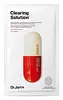
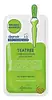
Dr. Jart+ Dermask Micro Jet Clearing Solution Versus Mediheal Essential Mask EX Tea Tree Care Solution
This acne sheet mask is formulated around Niacinamide and Melaleuca Alternifolia Leaf Oil to clear breakouts and refine the look of pores.
This calming sheet mask is formulated around Salix Alba Bark Extract and Melaleuca Alternifolia Leaf Oil to calm redness and clear breakouts.

What's inside
What's inside
 Key Ingredients
Benefits
Concerns
Ingredients Side-by-side
Glycerin
Humectant


Niacinamide
Smoothing









Glycereth-26
Humectant
Sodium Hyaluronate
Humectant
Calcium Pantothenate
Sodium Ascorbyl Phosphate
Antioxidant

Tocopheryl Acetate
Antioxidant
Pyridoxine Hcl
Skin ConditioningMaltodextrin
Absorbent
Sodium Starch Octenylsuccinate
AbsorbentSilica
Abrasive
Trehalose
Humectant
Hydroxyethyl Urea
Humectant
Betaine
Humectant
Erythritol
Humectant
Glutathione
PEG/PPG-17/6 Copolymer
SolventButylene Glycol
Humectant
PEG-14m
Emulsion StabilisingAllantoin
Skin Conditioning
Xanthan Gum
EmulsifyingMelaleuca Alternifolia Leaf Oil
Antioxidant




Salicylic Acid
Masking



Disodium EDTA
Carbomer
Emulsion StabilisingTriethanolamine
BufferingPEG-60 Hydrogenated Castor Oil
Emulsifying
Ethylhexylglycerin
Skin ConditioningPhenoxyethanol
Preservative
Glycerin, Niacinamide, Glycereth-26, Sodium Hyaluronate, Calcium Pantothenate, Sodium Ascorbyl Phosphate, Tocopheryl Acetate, Pyridoxine Hcl, Maltodextrin, Sodium Starch Octenylsuccinate, Silica, Trehalose, Hydroxyethyl Urea, Betaine, Erythritol, Glutathione, PEG/PPG-17/6 Copolymer, Butylene Glycol, PEG-14m, Allantoin, Xanthan Gum, Melaleuca Alternifolia Leaf Oil, Salicylic Acid, Disodium EDTA, Carbomer, Triethanolamine, PEG-60 Hydrogenated Castor Oil, Ethylhexylglycerin, Phenoxyethanol
Water
Skin ConditioningGlycerin
Humectant
Propanediol
Solvent
1,2-Hexanediol
Skin Conditioning
Salix Alba Bark Extract
Astringent
Butylene Glycol
Humectant
Xanthan Gum
EmulsifyingBetaine
Humectant
Trehalose
Humectant
Panthenol
Skin Conditioning
Polysorbate 80
Emulsifying
Allantoin
Skin Conditioning
Arginine
Masking
Carbomer
Emulsion StabilisingDisodium EDTA
Boswellia Serrata Resin Extract
SmoothingMelaleuca Alternifolia Leaf Extract
Perfuming
Dipotassium Glycyrrhizate
Humectant
Tocopheryl Acetate
Antioxidant
Ethylhexylglycerin
Skin ConditioningGlycine Max Seed Extract
Skin ConditioningLavandula Angustifolia Extract
Skin Conditioning
Cymbopogon Schoenanthus Extract
Skin ConditioningRosmarinus Officinalis Leaf Extract
AntimicrobialCentella Asiatica Extract
Cleansing
Salvia Officinalis Extract
Antimicrobial
Houttuynia Cordata Extract
Skin Conditioning
Pisum Sativum Extract
Skin ConditioningChamomilla Recutita Extract
Skin Conditioning
Melaleuca Alternifolia Leaf Oil
Antioxidant
Water, Glycerin, Propanediol, 1,2-Hexanediol, Salix Alba Bark Extract, Butylene Glycol, Xanthan Gum, Betaine, Trehalose, Panthenol, Polysorbate 80, Allantoin, Arginine, Carbomer, Disodium EDTA, Boswellia Serrata Resin Extract, Melaleuca Alternifolia Leaf Extract, Dipotassium Glycyrrhizate, Tocopheryl Acetate, Ethylhexylglycerin, Glycine Max Seed Extract, Lavandula Angustifolia Extract, Cymbopogon Schoenanthus Extract, Rosmarinus Officinalis Leaf Extract, Centella Asiatica Extract, Salvia Officinalis Extract, Houttuynia Cordata Extract, Pisum Sativum Extract, Chamomilla Recutita Extract, Melaleuca Alternifolia Leaf Oil
Reviews
Ingredients Explained
These ingredients are found in both products.
Ingredients higher up in an ingredient list are typically present in a larger amount.
Allantoin is a soothing ingredient known for its protective and moisturizing properties; it's basically a quiet workhorse ingredient you can find in a huge range of cosmetics.
Though it can be derived from the comfrey plant, allantoin is produced synthetically for cosmetic products to ensure purity.
Research shows it can encourage your skin cells to turn over and renew by stimulating keratinocyte and fibroblast proliferation.
It also has mild keratolytic properties to help loosen and shed dead skin cells without being harsh.
Studies also suggest allantoin can help calm inflammation by dialing down some of the chemical signals your skin sends out when it is irritated.
This ingredient is typically used in the 0.1-0.5% range, and the FDA recognizes it as a skin protectant in OTC products up to 2%.
Overall, allantoin is a wonderful addition to most routines; it is stable across a wide pH range (~4-8), works well with other ingredients, and is considered non-sensitizing/non-irritating.
Fun fact: Allantoin is naturally occurring in comfrey root, beets, chamomile, and wheat sprouts. Our bodies even produce it as a byproduct of uric acid metabolism.
Learn more about AllantoinBetaine is a humectant. Like hyaluronic acid, it helps attract and retain moisture in the skin. It’s known for being gentle and for helping the skin maintain balanced hydration.
Betaine is mainly used to improve hydration and support calmer skin. It helps skin cells regulate water balance because it functions as an osmolyte.
Some studies suggest betaine may support making skin tone more even.
Fun fact: Betaine naturally exists in the skin and the body. In cosmetic products, it can be either plant-derived (most commonly from sugar beets) or synthetically produced for consistency and stability.
Betaine is also known as trimethylglycine.
Learn more about BetaineButylene Glycol (or BG) is used within cosmetic products for a few different reasons:
Overall, Butylene Glycol is a safe and well-rounded ingredient that works well with other ingredients.
Though this ingredient works well with most skin types, some people with sensitive skin may experience a reaction such as allergic rashes, closed comedones, or itchiness.
Learn more about Butylene GlycolCarbomer is a synthetic thickening and gelling agent. It's basically the ingredient that gives a lot of serums, gels, creams, and sunscreens their smooth, non-sticky texture.
Although legally permitted at very high levels, carbomers are normally used at concentrations below 1%.
It also needs to be neutralized to actually thicken, and because it is a large molecule, it doesn't really penetrate the skin barrier.
Allergy-wise, the risk is very low. Clinical studies show carbomers have low potential for skin irritation/sensitization even at concentrations up to 100%.
A 2024 UK study patch-tested 1,302 patients and found true allergy to the parent group of carbomer to be rare with no confirmed relevant reactions.
Learn more about CarbomerDisodium EDTA is a chelating agent. It grabs onto and deactivates metal ions that sneak into your products from water, packaging, or air.
This ingredient mainly works behind the scenes and helps with:
On top of that, this ingredient can counteract the effects of hard water by binding to the minerals in it.
One thing worth knowing is that Disodium EDTA has been shown to be a mild penetration enhancer. It can help other ingredients absorb into skin more effectively which can be a double-edged sword (great for actives, but can also make the active too strong if you have sensitive skin).
Clinical patch testing showed no significant skin irritation at typical use concentrations and minimal dermal absorption.
You'll most likely see this ingredient near the end of an ingredient list. It's typically found in concentrations less than 1%.
Learn more about Disodium EDTAEthylhexylglycerin is created from glycerin. It is a multitasker ingredient that:
The CIR Expert Panel found minimal skin absorption or sensitization of any kind in a safety assessment. Though this ingredient is considered well-tolerated, a small number of cases of allergic dermatitis have been published since 2002. Just be sure to patch test if you are unsure.
Industry-reported use ranges from 8% in rinse-off products and 2% in leave-on formulations.
Learn more about EthylhexylglycerinGlycerin (or glycerol) is a compound naturally found in your skin. It's a powerhouse humectant that pulls water into the stratum corneum.
Topically, glycerin does several things at once:
Your skin makes glycerin on its own (mostly from sebaceous oil breakdown) and shuttles it to your outermost layer of skin, or your epidermis, via aquaporin-3.
Aquaporin-3 is a transporter that is essential for normal skin hydration, elasticity, and repair. Interestingly, mice lacking in AQP3 have dry and less elastic skin that can be fully corrected with glycerin.
This ingredient is non-irritating, plays well with almost every ingredient, and works across all skin types. Typical use is anywhere between 3-10% but can go up to 79% in some leave-on products.
Just know very high concentrations (>40%) can feel tacky in low humidity.
Glycerin is the name for this ingredient in American English. British English uses Glycerol/Glycerine.
Learn more about GlycerinThis ingredient is also known as tea tree oil. It has antioxidant, anti-inflammatory, and antimicrobial properties.
Tea tree oil is a complex lipophilic (fat-loving) oil that contains around 100 compounds with terpinen-4-ol being the most abundant (~40%).
Terpinen-4-ol is responsible for tea tree oil's broad-spectrum antimicrobial activity and makes it a well-researched option for acne.
Clinical studies support 5% tea tree oil as an effective topical treatment for mild to moderate acne. A study with 124 patients compared 5% tea tree oil gel to 5% benzoyl peroxide and both reduced acne (though tea tree oil worked more slowly).
Besides acne, it is also seen in anti-dandruff shampoos and scalp treatments for it's antimicrobial and anti-seborrheic properties.
Safety-wise, the allergic potential of low concentrations on healthy skin is considered low. However, oxidized (old or improperly stored) tea tree oil is a stronger sensitizer.
Irritation can also occur if using the undiluted oil on skin; it's best to use this ingredient as part of a carefully crafted cosmetic formula. This is because regulations require tea tree oil in cosmetics to be stabilized to prevent degradation.
This ingredient has been deemed safe up to 2% in shampoo, 1% in cleansers, and 0.1% in face cream by the EU's Scientific Committee on Consumer Safety (SCCS).
There is some lab evidence that tea tree oil is antifungal against Malassezia, but it is a supportive option at best and not a replacement for proven antifungal treatments.
Learn more about Melaleuca Alternifolia Leaf OilTocopheryl Acetate is a stable, shelf-friendly form of vitamin E.
Formulators love it because plain vitamin E oxidizes quickly once it hits air. This acetate version stays stable and resists going off, helping to extend a product's shelf life.
It's actually inactive on its own and works like a slow-release "storage" form; the enzymes in your skin called esterases gradually convert it into active vitamin E over time.
One in vivo study showed 5% of the acetate in the living layer of the epidermis converted to vitamin E after 5 days of application. This study also found the skin gained protection against UV damage even though the conversion was slow and small.
Once converted, vitamin E acts as a skin's main fat-soluble antioxidant that fights free radicals to protect skin from damage.
Topical vitamin E generally boosts the skin's photoprotection, and it reduced UV-damage in animal models.
This ingredient has some brightening potential but it's more of a prevention ingredient than spot-fader. Cell studies show it can slow down melanin production but it's worth noting that it's not the most powerful brightener out there.
Overall, it has a pretty solid safety profile and has been found to be non-irritating and non-comedogenic. Allergic reactions may happen but stay rare due to how widely the ingredient gets used.
The concentration will vary depending on the formula; industry data shows 0.1% in baby lotions, 3% in lipsticks, and 5% in foot powders. You can also find this ingredient at 100% in a pure vitamin E oil.
Most leave-on skincare keeps it at the lower end, often between 0.5-1%.
Learn more about Tocopheryl AcetateTrehalose is a disaccharide made of two glucose molecules (glucose is sugar!). Trehalose is used to help moisturize skin. It also has antioxidant properties.
As a humectant, trehalose helps draw moisture from the air to your skin. This helps keep your skin hydrated.
Due to its antioxidant properties, trehalose may help with signs of aging. Antioxidants help fight free-radical molecules, unstable molecules that may damage your skin.
In medicine, trehalose and hyaluronic acid are used to help treat dry eyes.
Some animals, plants, and bacteria create trehalose as a source of energy to survive freeze or lack of water.
Learn more about TrehaloseXanthan gum is used as a stabilizer and thickener within cosmetic products. It helps give products a sticky, thick feeling - preventing them from being too runny.
On the technical side of things, xanthan gum is a polysaccharide - a combination consisting of multiple sugar molecules bonded together.
Xanthan gum is a pretty common and great ingredient. It is a natural, non-toxic, non-irritating ingredient that is also commonly used in food products.
Learn more about Xanthan Gum

