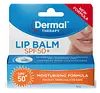
This barrier-repair lip moisturizer is formulated around Petrolatum and Butyrospermum Parkii Butter to strengthen the lip barrier and hydrate lips.
This barrier-repair lip moisturizer is formulated around Petrolatum and Urea to strengthen the lip barrier and hydrate lips.

What's inside
What's inside
 Key Ingredients
Benefits
Concerns
Ingredients Side-by-side
Petrolatum
Emollient



Dibutyl Adipate
EmollientCera Alba
Emollient



Theobroma Cacao Seed Butter
Emollient
Cocos Nucifera Oil
Masking

Diethylamino Hydroxybenzoyl Hexyl Benzoate
UV Filter
Ethylhexyl Methoxycinnamate
UV Absorber
Helianthus Annuus Seed Oil
Emollient
Hydrogenated Castor Oil
Emollient
Butyrospermum Parkii Butter
Skin Conditioning
Undecane
EmollientLaureth-7 Citrate
CleansingPolyglyceryl-2 Dipolyhydroxystearate
Skin Conditioning
C12-15 Alkyl Benzoate
AntimicrobialZinc Oxide
Cosmetic Colorant
Ethylhexyl Triazone
UV Absorber
Bis-Ethylhexyloxyphenol Methoxyphenyl Triazine
UV Absorber
Tridecane
Perfuming
Lauryl Glucoside
CleansingTriethanolamine
BufferingMenthol
Masking

Camphor
Masking
Eugenia Caryophyllus Leaf Oil
Masking
Sucralose
Skin ConditioningAroma
Caprylyl Glycol
Emollient
1,2-Hexanediol
Skin Conditioning
Water
Skin ConditioningEugenol
Perfuming
Petrolatum, Dibutyl Adipate, Cera Alba, Theobroma Cacao Seed Butter, Cocos Nucifera Oil, Diethylamino Hydroxybenzoyl Hexyl Benzoate, Ethylhexyl Methoxycinnamate, Helianthus Annuus Seed Oil, Hydrogenated Castor Oil, Butyrospermum Parkii Butter, Undecane, Laureth-7 Citrate, Polyglyceryl-2 Dipolyhydroxystearate, C12-15 Alkyl Benzoate, Zinc Oxide, Ethylhexyl Triazone, Bis-Ethylhexyloxyphenol Methoxyphenyl Triazine, Tridecane, Lauryl Glucoside, Triethanolamine, Menthol, Camphor, Eugenia Caryophyllus Leaf Oil, Sucralose, Aroma, Caprylyl Glycol, 1,2-Hexanediol, Water, Eugenol
Petrolatum
Emollient
Water
Skin ConditioningTheobroma Cacao Seed Butter
Emollient
Lanolin
Emollient
Carica Papaya Fruit
Skin ConditioningBehenyl Alcohol
Emollient
Glyceryl Stearate
Emollient
Stearic Acid
Cleansing
Urea
Buffering

Cetyl Esters
Emollient
Carica Papaya Seed Oil
Humectant
Cetyl Alcohol
Emollient
Lauryl Alcohol
Emollient
Myristyl Alcohol
Emollient
Palmitic Acid
Emollient
Lecithin
Emollient
Aroma
Rebaudioside A
Skin ConditioningPotassium Sorbate
Preservative
Sodium Benzoate
Masking
Petrolatum, Water, Theobroma Cacao Seed Butter, Lanolin, Carica Papaya Fruit, Behenyl Alcohol, Glyceryl Stearate, Stearic Acid, Urea, Cetyl Esters, Carica Papaya Seed Oil, Cetyl Alcohol, Lauryl Alcohol, Myristyl Alcohol, Palmitic Acid, Lecithin, Aroma, Rebaudioside A, Potassium Sorbate, Sodium Benzoate
Reviews
Ingredients Explained
These ingredients are found in both products.
Ingredients higher up in an ingredient list are typically present in a larger amount.
Aroma refers to an ingredient, or mixture of ingredients, that impart or mask a flavor.
The name is slightly confusing. This is because INCI associates aroma with flavor instead of smell.
Here is the official definition from the The International Cosmetic Ingredient Dictionary and Handbook:
“Aroma is a term for ingredient labeling used to identify that a product contains a material or combination of materials normally added to a cosmetic to produce or to mask a particular flavor.”
INCI shows the only purpose of aroma to be "flavouring".
However, due to regulation differences, some companies may use aroma in place of parfum.
In Canada, this ingredient only has to be listed in concentrations above 1%.
Learn more about AromaPetrolatum is more commonly known as petroleum jelly. It is created by mixing waxes and mineral oils.
This ingredient is effective at reducing water loss by 99%. This is because it is an occlusive. Occlusives create a hydrophobic barrier on the skin to prevent evaporation. This property makes it great for hydrating dry skin.
Pro tip: Use occlusives, such as this ingredient, on damp skin for the best results.
The quality or origin of petrolatum is only known when disclosed by the brand. Most cosmetic petrolatum has gone through several purification stages.
Another benefit of occlusives is it protects your skin against infection or allergies.
Petrolatum is fungal acne safe. It is a hydrocarbon with no fatty acid structure, so Malassezia cannot metabolize it. In-vitro studies support negligible growth stimulation as well.
It's also worth noting that petrolatum has a comedogenic rating of 0. In updated rabbit ear testing (and in human testing), petrolatum was found to be not comedogenic. This means it didn’t promote comedone formation in standard models.
Learn more about PetrolatumThis ingredient is also known as Cocoa butter; it's the fat pressed out of roasted cocoa beans.
Cocoa butter is solid at room temperature and melts right around body temperature, which is why it feels waxy in the jar and slippery on skin.
It has a very saturated profile (stearic acid ~34 to 36%, oleic acid ~30 to 40%, and palmitic acid ~24 to 29%) that makes it a strong occlusive: it sits on top and slows water escaping from skin.
Concentration data shows that it can show up anywhere from a few percent in lotions up to 100% in balms, and the FDA lists cocoa butter as an OTC skin protectant active at 50-100%.
The CIR has reviewed it and concluded it to be safe as used in cosmetics.
This is one of the ingredients with a comedogenic score of 4/5 from the rabbit ear test. Just know that a later human study did find that finished products containing high-comedogenic ingredients like cocoa butter did not increase microcomedone formation.
The fair call here is that this ingredient is most likely fine on body or low-percentage formulas, but can potentially be riskier as a heavy leave-on facial product if you break out easily.
Cocoa butter may not be fungal acne safe; it is a triglyceride of C16-18 fatty acids that the Malassezia yeast can metabolize.
Allergies to cocoa butter are rare and uncommon, but a few cases have been documented (mostly in cases where the person ate chocolate). So if you have a tree nut allergy, be sure to patch test or avoid.
Learn more about Theobroma Cacao Seed ButterWater. It's the most common cosmetic ingredient of all. You'll usually see it at the top of ingredient lists, meaning that it makes up the largest part of the product.
So why is it so popular? Water most often acts as a solvent - this means that it helps dissolve other ingredients into the formulation.
You'll also recognize water as that liquid we all need to stay alive. If you see this, drink a glass of water. Remember to stay hydrated!
Learn more about Water

