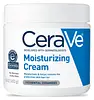
This barrier-repair moisturizer is formulated around Ceramide NP and Ceramide AP to strengthen the skin barrier and hydrate skin.


What's inside
What's inside
 Key Ingredients
Benefits
Concerns
Ingredients Side-by-side
Water
Skin ConditioningGlycerin
Humectant


Cetearyl Alcohol
Emollient






Caprylic/Capric Triglyceride
Masking
Cetyl Alcohol
Emollient
Ceteareth-20
Cleansing
Petrolatum
Emollient

Potassium Phosphate
BufferingCeramide NP
Skin Conditioning



Ceramide AP
Skin Conditioning
Ceramide EOP
Skin Conditioning
Carbomer
Emulsion StabilisingDimethicone
Emollient
Behentrimonium Methosulfate
SurfactantSodium Lauroyl Lactylate
EmulsifyingSodium Hyaluronate
Humectant
Cholesterol
Emollient
Phenoxyethanol
Preservative
Disodium EDTA
ChelatingDipotassium Phosphate
BufferingTocopherol
Antioxidant



Phytosphingosine
Skin Conditioning
Xanthan Gum
EmulsifyingEthylhexylglycerin
Skin ConditioningWater, Glycerin, Cetearyl Alcohol, Caprylic/Capric Triglyceride, Cetyl Alcohol, Ceteareth-20, Petrolatum, Potassium Phosphate, Ceramide NP, Ceramide AP, Ceramide EOP, Carbomer, Dimethicone, Behentrimonium Methosulfate, Sodium Lauroyl Lactylate, Sodium Hyaluronate, Cholesterol, Phenoxyethanol, Disodium EDTA, Dipotassium Phosphate, Tocopherol, Phytosphingosine, Xanthan Gum, Ethylhexylglycerin
Hibiscus Rosa-Sinensis Leaf Extract
BleachingMurraya Exotica Leaf Extract
Antioxidant
Azadirachta Indica Leaf Extract
Skin ConditioningRosmarinus Officinalis Leaf Extract
AntimicrobialAcetum
Sapindus Mukorossi Fruit Extract
Skin ConditioningEmblica Officinalis Fruit Extract
Skin ConditioningAcacia Concinna Fruit Extract
Skin ConditioningBacillus/Coix Lacryma-Jobi Ma-Yuen Seed/Soybean Ferment Filtrate
Antioxidant
Glycine Soja Extract
Skin ConditioningCocos Nucifera Oil
Masking
Caprylic/Capric Triglyceride
Masking
Sodium Lauroyl Sarcosinate
CleansingCocamidopropyl Betaine
Cleansing
Olea Europaea Fruit Oil
Masking
Ananas Sativus Fruit Extract
Skin ConditioningOcimum Sanctum Leaf Extract
Skin ConditioningDecyl Glucoside
Cleansing
Guar Hydroxypropyltrimonium Chloride
Skin ConditioningSodium Cocoyl Isethionate
Cleansing
Polyquaternium-10
Xanthan Gum
EmulsifyingGlycerin
Humectant
Phenoxyethanol
Preservative
Ethylhexylglycerin
Skin ConditioningCellulose Gum
Emulsion StabilisingMagnesium Sulfate
Tocopheryl Acetate
Antioxidant
Hibiscus Rosa-Sinensis Leaf Extract, Murraya Exotica Leaf Extract, Azadirachta Indica Leaf Extract, Rosmarinus Officinalis Leaf Extract, Acetum, Sapindus Mukorossi Fruit Extract, Emblica Officinalis Fruit Extract, Acacia Concinna Fruit Extract, Bacillus/Coix Lacryma-Jobi Ma-Yuen Seed/Soybean Ferment Filtrate, Glycine Soja Extract, Cocos Nucifera Oil, Caprylic/Capric Triglyceride, Sodium Lauroyl Sarcosinate, Cocamidopropyl Betaine, Olea Europaea Fruit Oil, Ananas Sativus Fruit Extract, Ocimum Sanctum Leaf Extract, Decyl Glucoside, Guar Hydroxypropyltrimonium Chloride, Sodium Cocoyl Isethionate, Polyquaternium-10, Xanthan Gum, Glycerin, Phenoxyethanol, Ethylhexylglycerin, Cellulose Gum, Magnesium Sulfate, Tocopheryl Acetate
Reviews
Ingredients Explained
These ingredients are found in both products.
Ingredients higher up in an ingredient list are typically present in a larger amount.
Caprylic/Capric Triglyceride (aka MCT Oil) is a lightweight emollient, solvent, and texture enhancer. It is considered a skin-softener by helping to prevent moisture loss.
Though it behaves like an oil, it is not technically one due to its chemical composition. One perk of this ingredient is that it is very stable, resistant to oxidation, and unlikely to go rancid.
In practice, that translates to a long shelf life and a consistently elegant skin feel.
While there is an assumption Caprylic Triglyceride can clog pores due to it being derived from coconut oil, there is no research supporting this. Just patch test if you have concerns.
Fractionated coconut oil and MCT Oil are both listed as Caprylic/Capric Triglyceride according to INCI. This is because INCI names are based on the ingredient’s final chemical composition and not its marketing name or source.
This ingredient is treated as the gold standard fungal acne safe oil. Even though it is coconut derived, the problematic lauric acid is stripped out.
This leaves just caprylic (C8) and capric (C10) acid. These chain lengths actually trend antifungal; a 2020 study found caprylic acid was enough to disrupt Malassezia furfur cell membrane, with a caprylic acid derivative damaging membrane structures at concentrations as low as 0.2%.
Learn more about Caprylic/Capric TriglycerideEthylhexylglycerin is created from glycerin. It is a multitasker ingredient that:
The CIR Expert Panel found minimal skin absorption or sensitization of any kind in a safety assessment. Though this ingredient is considered well-tolerated, a small number of cases of allergic dermatitis have been published since 2002. Just be sure to patch test if you are unsure.
Industry-reported use ranges from 8% in rinse-off products and 2% in leave-on formulations.
Learn more about EthylhexylglycerinGlycerin (or glycerol) is a compound naturally found in your skin. It's a powerhouse humectant that pulls water into the stratum corneum.
Topically, glycerin does several things at once:
Your skin makes glycerin on its own (mostly from sebaceous oil breakdown) and shuttles it to your outermost layer of skin, or your epidermis, via aquaporin-3.
Aquaporin-3 is a transporter that is essential for normal skin hydration, elasticity, and repair. Interestingly, mice lacking in AQP3 have dry and less elastic skin that can be fully corrected with glycerin.
This ingredient is non-irritating, plays well with almost every ingredient, and works across all skin types. Typical use is anywhere between 3-10% but can go up to 79% in some leave-on products.
Just know very high concentrations (>40%) can feel tacky in low humidity.
Glycerin is the name for this ingredient in American English. British English uses Glycerol/Glycerine.
Learn more about GlycerinPhenoxyethanol is one of the most widely used preservatives in skincare (and for good reason!).
It has a large spectrum of antimicrobial activity and especially effective bacteria, yeast, and mold while only having a weak effect on your skin's natural microbiome.
On a cellular level, it disrupts the cell membranes of microbes by poking holes that make the cell leak. This shuts down the chemical reactions the microbe needs to make energy so it can no longer survive.
Another perk of this ingredient is that it stays functional across a wide pH range (3-10).
You'll often see it paired with boosters like Ethylhexylglycerin; one study showed that a 1:9 ratio of Ethylhexylglycerin to Phenoxyethanol damages bacterial membranes as effectively as doubling the Phenoxyethanol concentration on its own.
Typical use concentrations range from 0.3-1% depending on the formula, and this ingredient is capped at 1% int the EU.
Safety-wise, the fear mongering does not hold up to the evidence. The EU's Scientific Committee on Consumer Safety and FDA consider it safe as a preservative at up to 1%, including for children of all ages.
Adverse systemic effects only showed up in animal studies at exposures roughly 200x higher than what people get from cosmetics. And despite its very widespread use, this ingredient is a rare sensitizer and allergic reactions are uncommon.
Learn more about PhenoxyethanolXanthan gum is used as a stabilizer and thickener within cosmetic products. It helps give products a sticky, thick feeling - preventing them from being too runny.
On the technical side of things, xanthan gum is a polysaccharide - a combination consisting of multiple sugar molecules bonded together.
Xanthan gum is a pretty common and great ingredient. It is a natural, non-toxic, non-irritating ingredient that is also commonly used in food products.
Learn more about Xanthan Gum

