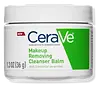
This oil-based makeup remover is made to dissolve makeup, sunscreen, and daily buildup.
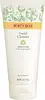
This cream cleanser uses mild cleansing ingredients, but contains alcohol that may feel drying for some.

What's inside
What's inside
 Key Ingredients
Benefits
Concerns
Ingredients Side-by-side
Ethylhexyl Palmitate
Emollient




Polyethylene
Abrasive
PEG-20 Glyceryl Triisostearate
Emollient
Water
Skin ConditioningCeramide NP
Skin Conditioning





Ceramide AP
Skin Conditioning
Ceramide EOP
Skin Conditioning
Carbomer
Emulsion StabilisingTriethyl Citrate
Masking

Sodium Lauroyl Lactylate
EmulsifyingCholesterol
Emollient
Simmondsia Chinensis Seed Oil
Emollient

Phenoxyethanol
Preservative
Tocopherol
Antioxidant



Caprylyl Glycol
Emollient
Phytosphingosine
Skin Conditioning
Xanthan Gum
EmulsifyingPolysorbate 20
Emulsifying
Benzoic Acid
Masking
PEG-30 Dipolyhydroxystearate
Emulsifying
PPG-26-Buteth-26
Skin ConditioningPEG-40 Hydrogenated Castor Oil
Emulsifying
Ethylhexyl Palmitate, Polyethylene, PEG-20 Glyceryl Triisostearate, Water, Ceramide NP, Ceramide AP, Ceramide EOP, Carbomer, Triethyl Citrate, Sodium Lauroyl Lactylate, Cholesterol, Simmondsia Chinensis Seed Oil, Phenoxyethanol, Tocopherol, Caprylyl Glycol, Phytosphingosine, Xanthan Gum, Polysorbate 20, Benzoic Acid, PEG-30 Dipolyhydroxystearate, PPG-26-Buteth-26, PEG-40 Hydrogenated Castor Oil
Water
Skin ConditioningHelianthus Annuus Seed Oil
Emollient
Glycerin
Humectant
Cetyl Alcohol
Emollient
Beeswax
Emulsion Stabilising
Sucrose Stearate
EmollientCetearyl Alcohol
Emollient
Cocos Nucifera Oil
Masking
Gossypium Herbaceum Flower Extract
HumectantOryza Sativa Extract
Absorbent
Beta Vulgaris Root Extract
Skin ConditioningQuillaja Saponaria Bark Extract
CleansingTheobroma Cacao Seed Butter
Emollient
Yucca Schidigera Leaf/Root/Stem Extract
CleansingArtemisia Umbelliformis Extract
Skin ConditioningEuphrasia Officinalis Extract
AntimicrobialHamamelis Virginiana Water
Astringent

Saccharum Officinarum Extract
MoisturisingAloe Barbadensis Leaf Juice
Skin Conditioning
Silica
Abrasive

Sucrose
Humectant
Fructose
Humectant
Glucose
Humectant
Coco-Glucoside
Cleansing
Maltodextrin
Absorbent
Citric Acid
Buffering
Benzoic Acid
Masking
Trehalose
Humectant
Xanthan Gum
EmulsifyingPotassium Sorbate
Preservative
Sodium Benzoate
Masking
CI 77947
Alcohol Denat.
Antimicrobial
Phenoxyethanol
Preservative
Water, Helianthus Annuus Seed Oil, Glycerin, Cetyl Alcohol, Beeswax, Sucrose Stearate, Cetearyl Alcohol, Cocos Nucifera Oil, Gossypium Herbaceum Flower Extract, Oryza Sativa Extract, Beta Vulgaris Root Extract, Quillaja Saponaria Bark Extract, Theobroma Cacao Seed Butter, Yucca Schidigera Leaf/Root/Stem Extract, Artemisia Umbelliformis Extract, Euphrasia Officinalis Extract, Hamamelis Virginiana Water, Saccharum Officinarum Extract, Aloe Barbadensis Leaf Juice, Silica, Sucrose, Fructose, Glucose, Coco-Glucoside, Maltodextrin, Citric Acid, Benzoic Acid, Trehalose, Xanthan Gum, Potassium Sorbate, Sodium Benzoate, CI 77947, Alcohol Denat., Phenoxyethanol
Reviews
Alternatives
Ingredients Explained
These ingredients are found in both products.
Ingredients higher up in an ingredient list are typically present in a larger amount.
Benzoic Acid is an organic acid that shows up in cosmetics as a preservative. It helps keep a product from spoiling by holding back the growth of yeast, mold, and some bacteria.
This ingredient also functions as a fragrance ingredient that helps mask the unpleasant scent of other ingredients.
The way it works is worth understanding; benzoic acid works when the formula is acidic. It is able to sneak into a microbe's cell and mess up how it functions to stop it from growing in an acidic product.
However, the acid switches to an inactive form and stops working if a product isn't acidic enough (above ~5 pH). This is why you'll often see it in low pH products or teamed up with other preservatives to cover the gap.
Safety wise, it's one of the better studied preservatives out there.
The Cosmetic Ingredient Review Expert Panel has concluded this ingredient to be safe for use in cosmetic formulations at concentrations up to 5%.
A large international review found this ingredient had no effects on the human body and had low irritation potential.
Just so you know, real world use is usually much lower than the 5% ceiling (usually 1% of less).
The EU caps it at 2.5% in rinse-off products, 1.7% in oral care, and 0.5% in leave-on products.
One thing worth mentioning (it's nothing to worry about): some people get a little stinging or flushing where they apply it. This isn't a true allergy; it's a temporary and harmless reaction. This is the same kind of mild tingle you might notice from sorbic acid.
Learn more about Benzoic AcidPhenoxyethanol is one of the most widely used preservatives in skincare (and for good reason!).
It has a large spectrum of antimicrobial activity and especially effective bacteria, yeast, and mold while only having a weak effect on your skin's natural microbiome.
On a cellular level, it disrupts the cell membranes of microbes by poking holes that make the cell leak. This shuts down the chemical reactions the microbe needs to make energy so it can no longer survive.
Another perk of this ingredient is that it stays functional across a wide pH range (3-10).
You'll often see it paired with boosters like Ethylhexylglycerin; one study showed that a 1:9 ratio of Ethylhexylglycerin to Phenoxyethanol damages bacterial membranes as effectively as doubling the Phenoxyethanol concentration on its own.
Typical use concentrations range from 0.3-1% depending on the formula, and this ingredient is capped at 1% int the EU.
Safety-wise, the fear mongering does not hold up to the evidence. The EU's Scientific Committee on Consumer Safety and FDA consider it safe as a preservative at up to 1%, including for children of all ages.
Adverse systemic effects only showed up in animal studies at exposures roughly 200x higher than what people get from cosmetics. And despite its very widespread use, this ingredient is a rare sensitizer and allergic reactions are uncommon.
Learn more about PhenoxyethanolWater. It's the most common cosmetic ingredient of all. You'll usually see it at the top of ingredient lists, meaning that it makes up the largest part of the product.
So why is it so popular? Water most often acts as a solvent - this means that it helps dissolve other ingredients into the formulation.
You'll also recognize water as that liquid we all need to stay alive. If you see this, drink a glass of water. Remember to stay hydrated!
Learn more about WaterXanthan gum is used as a stabilizer and thickener within cosmetic products. It helps give products a sticky, thick feeling - preventing them from being too runny.
On the technical side of things, xanthan gum is a polysaccharide - a combination consisting of multiple sugar molecules bonded together.
Xanthan gum is a pretty common and great ingredient. It is a natural, non-toxic, non-irritating ingredient that is also commonly used in food products.
Learn more about Xanthan Gum

