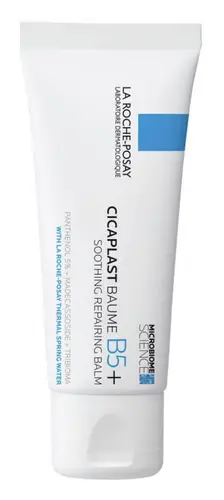
What's inside
What's inside
 Key Ingredients
Benefits
Concerns
Ingredients Side-by-side
Petrolatum 46.5%
Emollient



Paraffinum Liquidum
Emollient
Paraffin
Skin Conditioning
Ozokerite
Emulsion StabilisingDimethicone
Emollient

Ceramide NP
Skin Conditioning




Ceramide AP
Skin Conditioning
Ceramide EOP
Skin Conditioning
Carbomer
Emulsion StabilisingWater
Skin ConditioningSodium Lauroyl Lactylate
EmulsifyingProline
Skin Conditioning
Cholesterol
Emollient
Phenoxyethanol
Preservative
Tocopheryl Acetate
Antioxidant


Tocopherol
Antioxidant
Hydrolyzed Hyaluronic Acid
Humectant
Panthenol
Skin Conditioning
Pantolactone
Humectant
Phytosphingosine
Skin Conditioning
Xanthan Gum
EmulsifyingEthylhexylglycerin
Skin ConditioningPetrolatum 46.5%, Paraffinum Liquidum, Paraffin, Ozokerite, Dimethicone, Ceramide NP, Ceramide AP, Ceramide EOP, Carbomer, Water, Sodium Lauroyl Lactylate, Proline, Cholesterol, Phenoxyethanol, Tocopheryl Acetate, Tocopherol, Hydrolyzed Hyaluronic Acid, Panthenol, Pantolactone, Phytosphingosine, Xanthan Gum, Ethylhexylglycerin
Water
Skin ConditioningTheobroma Cacao Seed Butter
Emollient



Glycerin
Humectant
Propanediol
Solvent
Cetearyl Alcohol
Emollient

Cocoglycerides
Emollient
Butyrospermum Parkii Butter
Skin Conditioning
Polyglyceryl-10 Distearate
Emulsifying
Sorbitan Stearate
Emulsifying
Panthenol
Skin Conditioning
Glyceryl Stearate
Emollient
Squalane
Emollient
Stearic Acid
Cleansing
Camellia Oleifera Seed Oil
Skin Conditioning
Caprylyl Methicone
Skin Conditioning
Dimethicone
Emollient
1,2-Hexanediol
Skin Conditioning
Phytosterols
Skin Conditioning
Tocopheryl Acetate
Antioxidant
Myristoyl/Palmitoyl Oxostearamide/Arachamide Mea
Skin ConditioningEuphorbia Cerifera Wax
Zinc Gluconate
Skin Conditioning



Methyl Caprooyl Tyrosinate
Skin ProtectingTetracarboxymethyl Palmitoyl Dipeptide-12
Skin Conditioning
Xanthan Gum
EmulsifyingAllantoin
Skin Conditioning
Disodium EDTA
Madecassoside
Antioxidant
Caprylyl Glycol
Emollient
Water, Theobroma Cacao Seed Butter, Glycerin, Propanediol, Cetearyl Alcohol, Cocoglycerides, Butyrospermum Parkii Butter, Polyglyceryl-10 Distearate, Sorbitan Stearate, Panthenol, Glyceryl Stearate, Squalane, Stearic Acid, Camellia Oleifera Seed Oil, Caprylyl Methicone, Dimethicone, 1,2-Hexanediol, Phytosterols, Tocopheryl Acetate, Myristoyl/Palmitoyl Oxostearamide/Arachamide Mea, Euphorbia Cerifera Wax, Zinc Gluconate, Methyl Caprooyl Tyrosinate, Tetracarboxymethyl Palmitoyl Dipeptide-12, Xanthan Gum, Allantoin, Disodium EDTA, Madecassoside, Caprylyl Glycol
Reviews
Ingredients Explained
These ingredients are found in both products.
Ingredients higher up in an ingredient list are typically present in a larger amount.
Dimethicone is a type of synthetic silicone created from natural materials such as quartz. It is also known as polydimethylsiloxane.
What it does:
Dimethicone comes in different viscosities:
Depending on the viscosity, dimethicone has different properties.
Ingredients lists don't always show which type is used, so we recommend reaching out to the brand if you have questions about the viscosity.
This ingredient is unlikely to cause irritation because it does not get absorbed into skin. However, people with silicone allergies should be careful about using this ingredient.
Note: Dimethicone may contribute to pilling. This is because it is not oil or water soluble, so pilling may occur when layered with products. When mixed with heavy oils in a formula, the outcome is also quite greasy.
Learn more about DimethiconePanthenol is a common ingredient that helps hydrate and soothe the skin. It is found naturally in our skin and hair.
There are two forms of panthenol: D and L.
D-panthenol is also known as dexpanthenol. Most cosmetics use dexpanthenol or a mixture of D and L-panthenol.
Panthenol is famous due to its ability to go deeper into the skin's layers. Using this ingredient has numerous pros (and no cons):
Like hyaluronic acid, panthenol is a humectant. Humectants are able to bind and hold large amounts of water to keep skin hydrated.
This ingredient works well for wound healing. It works by increasing tissue in the wound and helps close open wounds.
Once oxidized, panthenol converts to pantothenic acid. Panthothenic acid is found in all living cells.
This ingredient is also referred to as pro-vitamin B5.
Learn more about PanthenolTocopheryl Acetate is a stable, shelf-friendly form of vitamin E.
Formulators love it because plain vitamin E oxidizes quickly once it hits air. This acetate version stays stable and resists going off, helping to extend a product's shelf life.
It's actually inactive on its own and works like a slow-release "storage" form; the enzymes in your skin called esterases gradually convert it into active vitamin E over time.
One in vivo study showed 5% of the acetate in the living layer of the epidermis converted to vitamin E after 5 days of application. This study also found the skin gained protection against UV damage even though the conversion was slow and small.
Once converted, vitamin E acts as a skin's main fat-soluble antioxidant that fights free radicals to protect skin from damage.
Topical vitamin E generally boosts the skin's photoprotection, and it reduced UV-damage in animal models.
This ingredient has some brightening potential but it's more of a prevention ingredient than spot-fader. Cell studies show it can slow down melanin production but it's worth noting that it's not the most powerful brightener out there.
Overall, it has a pretty solid safety profile and has been found to be non-irritating and non-comedogenic. Allergic reactions may happen but stay rare due to how widely the ingredient gets used.
The concentration will vary depending on the formula; industry data shows 0.1% in baby lotions, 3% in lipsticks, and 5% in foot powders. You can also find this ingredient at 100% in a pure vitamin E oil.
Most leave-on skincare keeps it at the lower end, often between 0.5-1%.
Learn more about Tocopheryl AcetateWater. It's the most common cosmetic ingredient of all. You'll usually see it at the top of ingredient lists, meaning that it makes up the largest part of the product.
So why is it so popular? Water most often acts as a solvent - this means that it helps dissolve other ingredients into the formulation.
You'll also recognize water as that liquid we all need to stay alive. If you see this, drink a glass of water. Remember to stay hydrated!
Learn more about WaterXanthan gum is used as a stabilizer and thickener within cosmetic products. It helps give products a sticky, thick feeling - preventing them from being too runny.
On the technical side of things, xanthan gum is a polysaccharide - a combination consisting of multiple sugar molecules bonded together.
Xanthan gum is a pretty common and great ingredient. It is a natural, non-toxic, non-irritating ingredient that is also commonly used in food products.
Learn more about Xanthan Gum