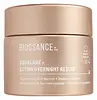
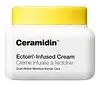
Biossance Squalane + Ectoin Overnight Rescue Deep Repair Night Cream Versus Dr. Jart+ Ceramidin Ectoin-Infused Cream
This barrier-repair night moisturizer is formulated around Squalane and Ectoin to strengthen the skin barrier and hydrate skin.
This barrier-repair moisturizer is formulated around Ectoin and Ceramide NP to strengthen the skin barrier and hydrate skin.


What's inside
What's inside
 Key Ingredients
Benefits
Concerns
Ingredients Side-by-side
Water
Skin ConditioningGlycerin
Humectant


Squalane
Emollient
Shorea Stenoptera Seed Butter
Emollient

Caprylic/Capric Triglyceride
Masking
C12-16 Alcohols
EmollientSodium Acrylates Copolymer
Ectoin
Skin Conditioning


Jojoba Esters
Emollient
Palmitic Acid
Emollient
Phenoxyethanol
Preservative
Hydrogenated Lecithin
Emulsifying
Hydroxyethyl Acrylate/Sodium Acryloyldimethyl Taurate Copolymer
Emulsion StabilisingLecithin
Emollient
Magnesium Chloride
Ethylhexylglycerin
Skin ConditioningSodium Gluconate
Skin ConditioningCaprylyl Glycol
Emollient
Acetyl Hexapeptide-8
Humectant
Water, Glycerin, Squalane, Shorea Stenoptera Seed Butter, Caprylic/Capric Triglyceride, C12-16 Alcohols, Sodium Acrylates Copolymer, Ectoin, Jojoba Esters, Palmitic Acid, Phenoxyethanol, Hydrogenated Lecithin, Hydroxyethyl Acrylate/Sodium Acryloyldimethyl Taurate Copolymer, Lecithin, Magnesium Chloride, Ethylhexylglycerin, Sodium Gluconate, Caprylyl Glycol, Acetyl Hexapeptide-8
Water
Skin ConditioningGlycerin
Humectant
Propanediol
Solvent
Butyrospermum Parkii Butter Extract
Skin Conditioning
Betaine
Humectant
Methylpropanediol
SolventHydrogenated Poly(C6-14 Olefin)
EmollientPentaerythrityl Distearate
Emulsifying
Caprylic/Capric Triglyceride
Masking
Dipropylene Glycol
HumectantDicaprylyl Ether
Emollient
Cetearyl Alcohol
Emollient

Cetearyl Glucoside
Emulsifying
Panthenol
Skin Conditioning
Ectoin
Skin Conditioning
Vinyldimethicone

Argania Spinosa Kernel Oil
Emollient


2,3-Butanediol
HumectantSodium Stearoyl Glutamate
Cleansing1,2-Hexanediol
Skin Conditioning
Glyceryl Stearate
Emollient
Spent Grain Wax
Skin Conditioning
Ceramide NP
Skin Conditioning
Ceramide Ng
Skin Conditioning
Ceramide AP
Skin Conditioning
Ceramide Ns
Skin Conditioning
Ceramide As
Skin Conditioning
Ethylhexylglycerin
Skin ConditioningSodium Hyaluronate
Humectant
Theobroma Cacao Seed Extract
Antioxidant
Pelargonium Graveolens Flower Oil
Masking



Olea Europaea Fruit Oil
Masking
Citrus Aurantium Bergamia Fruit Oil
Masking
Cholesterol
Emollient
Hydrogenated Lecithin
Emulsifying
Sodium Polyacrylate
Absorbent
Hydroxypropyl Starch Phosphate
Glyceryl Stearate Se
Emulsifying
Behenyl Alcohol
Emollient
Dextrin
AbsorbentSalvia Officinalis Oil
Masking
Citronellol
Perfuming
Hydroxyacetophenone
Antioxidant
Tocopherol
Antioxidant

CI 19140
Cosmetic ColorantWater, Glycerin, Propanediol, Butyrospermum Parkii Butter Extract, Betaine, Methylpropanediol, Hydrogenated Poly(C6-14 Olefin), Pentaerythrityl Distearate, Caprylic/Capric Triglyceride, Dipropylene Glycol, Dicaprylyl Ether, Cetearyl Alcohol, Cetearyl Glucoside, Panthenol, Ectoin, Vinyldimethicone, Argania Spinosa Kernel Oil, 2,3-Butanediol, Sodium Stearoyl Glutamate, 1,2-Hexanediol, Glyceryl Stearate, Spent Grain Wax, Ceramide NP, Ceramide Ng, Ceramide AP, Ceramide Ns, Ceramide As, Ethylhexylglycerin, Sodium Hyaluronate, Theobroma Cacao Seed Extract, Pelargonium Graveolens Flower Oil, Olea Europaea Fruit Oil, Citrus Aurantium Bergamia Fruit Oil, Cholesterol, Hydrogenated Lecithin, Sodium Polyacrylate, Hydroxypropyl Starch Phosphate, Glyceryl Stearate Se, Behenyl Alcohol, Dextrin, Salvia Officinalis Oil, Citronellol, Hydroxyacetophenone, Tocopherol, CI 19140
Reviews
Ingredients Explained
These ingredients are found in both products.
Ingredients higher up in an ingredient list are typically present in a larger amount.
Caprylic/Capric Triglyceride (aka MCT Oil) is a lightweight emollient, solvent, and texture enhancer. It is considered a skin-softener by helping to prevent moisture loss.
Though it behaves like an oil, it is not technically one due to its chemical composition. One perk of this ingredient is that it is very stable, resistant to oxidation, and unlikely to go rancid.
In practice, that translates to a long shelf life and a consistently elegant skin feel.
While there is an assumption Caprylic Triglyceride can clog pores due to it being derived from coconut oil, there is no research supporting this. Just patch test if you have concerns.
Fractionated coconut oil and MCT Oil are both listed as Caprylic/Capric Triglyceride according to INCI. This is because INCI names are based on the ingredient’s final chemical composition and not its marketing name or source.
This ingredient is treated as the gold standard fungal acne safe oil. Even though it is coconut derived, the problematic lauric acid is stripped out.
This leaves just caprylic (C8) and capric (C10) acid. These chain lengths actually trend antifungal; a 2020 study found caprylic acid was enough to disrupt Malassezia furfur cell membrane, with a caprylic acid derivative damaging membrane structures at concentrations as low as 0.2%.
Learn more about Caprylic/Capric TriglycerideEctoin is a compound found naturally in some species of bacteria. It can be synthetically created for skincare use.
This ingredient is an osmolyte; Osmolytes help organisms survive osmotic shock (it protects them from extreme conditions). It does this by influencing the properties of biological fluids within cells.
When applied to the skin, ectoin helps bind water molecules to protect our skin. The water forms a sort of armor for the parts of our skin cells, enzymes, proteins, and more.
Besides this, ectoin has many uses in skincare:
A study from 2004 found ectoin to counteract the damage from UV-A exposure at different cell levels. It has also been shown to protect skin against both UV-A, UV-B rays, infrared light, and visible light.
Studies show ectoin to have dual-action pollution protection: first, it protects our skin from further pollution damage. Second, it helps repair damage from pollution.
In fact, ectoin has been shown to help with:
Fun fact: In the EU, ectoin is used in inhalation medication as an anti-pollution ingredient.
Ectoin is a highly stable ingredient. It has a wide pH range of 1-9. Light, oxygen, and temperature do not affect this ingredient.
The chemical name for this ingredient is Tetrahydromethylpyrimidine Carboxylic Acid.
Learn more about EctoinEthylhexylglycerin is created from glycerin. It is a multitasker ingredient that:
The CIR Expert Panel found minimal skin absorption or sensitization of any kind in a safety assessment. Though this ingredient is considered well-tolerated, a small number of cases of allergic dermatitis have been published since 2002. Just be sure to patch test if you are unsure.
Industry-reported use ranges from 8% in rinse-off products and 2% in leave-on formulations.
Learn more about EthylhexylglycerinGlycerin (or glycerol) is a compound naturally found in your skin. It's a powerhouse humectant that pulls water into the stratum corneum.
Topically, glycerin does several things at once:
Your skin makes glycerin on its own (mostly from sebaceous oil breakdown) and shuttles it to your outermost layer of skin, or your epidermis, via aquaporin-3.
Aquaporin-3 is a transporter that is essential for normal skin hydration, elasticity, and repair. Interestingly, mice lacking in AQP3 have dry and less elastic skin that can be fully corrected with glycerin.
This ingredient is non-irritating, plays well with almost every ingredient, and works across all skin types. Typical use is anywhere between 3-10% but can go up to 79% in some leave-on products.
Just know very high concentrations (>40%) can feel tacky in low humidity.
Glycerin is the name for this ingredient in American English. British English uses Glycerol/Glycerine.
Learn more about GlycerinHydrogenated Lecithin is a more stable version of lecithin.
It's made by taking lecithin (a phospholipid commonly found in soybeans and egg yolks) and hydrogenating it. This just means the unsaturated fatty acids are turned into saturated ones so they don't go bad as easily.
This ingredient is an emollient, emulsifier, and penetration enhancer. As an emollient, it helps soften and hydrate skin by trapping moisture within. As an emulsifier, it prevents oil and water ingredients from separating.
Hydrogenated Lecithin can form tiny spherical structures made of phospholipid bilayers called liposomes. These liposomes are able to capture compounds inside their structure and deliver them through the skin barrier.
Because phospholipids are a natural component of our cell membranes, this ingredient is inherently compatible with skin.
A 2021 study found lecithin-based surfactants were less harsh and more tolerable comared to Sodium Lauryl Sulfate (SLS).
Learn more about Hydrogenated LecithinWater. It's the most common cosmetic ingredient of all. You'll usually see it at the top of ingredient lists, meaning that it makes up the largest part of the product.
So why is it so popular? Water most often acts as a solvent - this means that it helps dissolve other ingredients into the formulation.
You'll also recognize water as that liquid we all need to stay alive. If you see this, drink a glass of water. Remember to stay hydrated!
Learn more about Water

