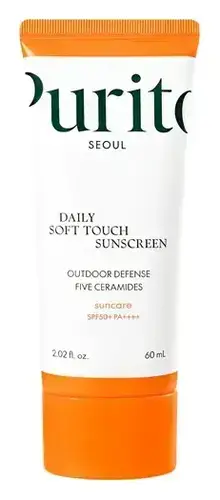
This chemical sunscreen covers the full UV range and blocks ~98% of UVB at SPF 50.
This anti-aging serum is formulated around Niacinamide and Retinol to soften the look of wrinkles and refine skin texture.

What's inside
What's inside
 Key Ingredients
Benefits
Concerns
Ingredients Side-by-side
Water
Skin ConditioningC12-15 Alkyl Benzoate
AntimicrobialDibutyl Adipate
EmollientDiethylamino Hydroxybenzoyl Hexyl Benzoate
UV Filter
Bis-Ethylhexyloxyphenol Methoxyphenyl Triazine
UV Absorber
Diethylhexyl Butamido Triazone
UV Absorber
Dicaprylyl Carbonate
EmollientGlycerin
Humectant


Glyceryl Stearate Citrate
Emollient

Pentylene Glycol
Skin Conditioning
Ethylhexyl Triazone
UV Absorber
Sodium Stearoyl Glutamate
CleansingCellulose
Absorbent
Dicaprylyl Ether
Emollient
Squalane
Emollient
3-O-Ethyl Ascorbic Acid
Skin Conditioning




Panthenol
Skin Conditioning
Fructooligosaccharides
Humectant
Tocotrienols
Skin Conditioning
Beta Vulgaris Root Extract
Skin ConditioningSodium Hyaluronate
Humectant
Tocopherol
Antioxidant

Astaxanthin
Skin Conditioning
Carnosine
Skin Conditioning
Ceramide NP
Skin Conditioning
Ceramide AP
Skin Conditioning
Ceramide As
Skin Conditioning
Ceramide Ns
Skin Conditioning
Ceramide Eos
Skin Conditioning
Cholesterol
Emollient
Potassium Lactate
BufferingLactic Acid
Buffering


Hydrogenated Lecithin
Emulsifying
Helianthus Annuus Seed Oil
Emollient
Glyceryl Stearate
Emollient
Sucrose Distearate
Emollient
Dipropylene Glycol
HumectantXanthan Gum
EmulsifyingWater, C12-15 Alkyl Benzoate, Dibutyl Adipate, Diethylamino Hydroxybenzoyl Hexyl Benzoate, Bis-Ethylhexyloxyphenol Methoxyphenyl Triazine, Diethylhexyl Butamido Triazone, Dicaprylyl Carbonate, Glycerin, Glyceryl Stearate Citrate, Pentylene Glycol, Ethylhexyl Triazone, Sodium Stearoyl Glutamate, Cellulose, Dicaprylyl Ether, Squalane, 3-O-Ethyl Ascorbic Acid, Panthenol, Fructooligosaccharides, Tocotrienols, Beta Vulgaris Root Extract, Sodium Hyaluronate, Tocopherol, Astaxanthin, Carnosine, Ceramide NP, Ceramide AP, Ceramide As, Ceramide Ns, Ceramide Eos, Cholesterol, Potassium Lactate, Lactic Acid, Hydrogenated Lecithin, Helianthus Annuus Seed Oil, Glyceryl Stearate, Sucrose Distearate, Dipropylene Glycol, Xanthan Gum
Water
Skin ConditioningDimethyl Isosorbide
SolventButylene Glycol
Humectant
Pentylene Glycol
Skin Conditioning
Glycerin
Humectant
Niacinamide
Smoothing

3-O-Ethyl Ascorbic Acid
Skin Conditioning
Betaine
Humectant
Trehalose
Humectant
Phospholipids
Skin Conditioning
Panthenol
Skin Conditioning
Retinol
Skin Conditioning
Sodium Retinoyl Hyaluronate
Retinal
Skin Conditioning
Epigallocatechin Gallate
Antioxidant
Tetraacetylphytosphingosine
Skin ConditioningLeuconostoc/Radish Root Ferment Filtrate
Antimicrobial
Glyceryl Citrate/Lactate/Linoleate/Oleate
Emulsifying
Ethyl Oleate
Emollient

Acacia Senegal Gum
MaskingXanthan Gum
EmulsifyingTetrasodium EDTA
Citric Acid
Buffering
Sodium Citrate
BufferingWater, Dimethyl Isosorbide, Butylene Glycol, Pentylene Glycol, Glycerin, Niacinamide, 3-O-Ethyl Ascorbic Acid, Betaine, Trehalose, Phospholipids, Panthenol, Retinol, Sodium Retinoyl Hyaluronate, Retinal, Epigallocatechin Gallate, Tetraacetylphytosphingosine, Leuconostoc/Radish Root Ferment Filtrate, Glyceryl Citrate/Lactate/Linoleate/Oleate, Ethyl Oleate, Acacia Senegal Gum, Xanthan Gum, Tetrasodium EDTA, Citric Acid, Sodium Citrate
Ingredients Explained
These ingredients are found in both products.
Ingredients higher up in an ingredient list are typically present in a larger amount.
3-O-Ethyl Ascorbic Acid is one of the most popular "stable" vitamin C derivatives in skincare.
Plain ascorbic acid is fantastic but notoriously fragile; it browns, oxidizes, and loses potency fast. So attaching an ethyl group to the third carbon of the molecule gives it some cool perks:
In a formula, it does the 3 classic vitamin C jobs: it acts as an antioxidant, helps brighten skin tone by inhibiting tyrosinase, and supports collagen.
The evidence is reasonably solid for a cosmetic ingredient; Liao and colleagues (2018) showed it's significantly more stable than ascorbic acid while still being effective.
A 2021 study by Zerbinati and colleagues tested a serum with 30% 3-O-ethyl-l-ascorbic acid and 1% lactic acid significantly increased collagen production, reduced UVB-induced DNA damage, and decreased melanin on a reconstructed pigmented skin model.
Typical real world usage sits around 0.5-5% (and 1-2% is common for daily serums).
Amounts up to 30% have been shown to be non-irritating on human skin samples, but two isolated cases reported allergic contact dermatitis so a patch test is sensible if you have reactive skin.
Learn more about 3-O-Ethyl Ascorbic AcidGlycerin (or glycerol) is a compound naturally found in your skin. It's a powerhouse humectant that pulls water into the stratum corneum.
Topically, glycerin does several things at once:
Your skin makes glycerin on its own (mostly from sebaceous oil breakdown) and shuttles it to your outermost layer of skin, or your epidermis, via aquaporin-3.
Aquaporin-3 is a transporter that is essential for normal skin hydration, elasticity, and repair. Interestingly, mice lacking in AQP3 have dry and less elastic skin that can be fully corrected with glycerin.
This ingredient is non-irritating, plays well with almost every ingredient, and works across all skin types. Typical use is anywhere between 3-10% but can go up to 79% in some leave-on products.
Just know very high concentrations (>40%) can feel tacky in low humidity.
Glycerin is the name for this ingredient in American English. British English uses Glycerol/Glycerine.
Learn more about GlycerinPanthenol is a common ingredient that helps hydrate and soothe the skin. It is found naturally in our skin and hair.
There are two forms of panthenol: D and L.
D-panthenol is also known as dexpanthenol. Most cosmetics use dexpanthenol or a mixture of D and L-panthenol.
Panthenol is famous due to its ability to go deeper into the skin's layers. Using this ingredient has numerous pros (and no cons):
Like hyaluronic acid, panthenol is a humectant. Humectants are able to bind and hold large amounts of water to keep skin hydrated.
This ingredient works well for wound healing. It works by increasing tissue in the wound and helps close open wounds.
Once oxidized, panthenol converts to pantothenic acid. Panthothenic acid is found in all living cells.
This ingredient is also referred to as pro-vitamin B5.
Learn more about PanthenolPentylene Glycol (1,2-pentanediol) is a multitasking little diol with three main roles in a formula:
Research on alkanediols (the family pentylene glycol belongs to) show they work by disrupting microbial cell membranes. This disruption helps the primary preservative system in a product work more effectively at lower doses.
On the safety side, the Cosmetic Ingredient Review Expert Panel has concluded this ingredient to be safe as used in current cosmetic practices + concentrations.
Typical use levels in a formula run about 1-5%.
Learn more about Pentylene GlycolWater. It's the most common cosmetic ingredient of all. You'll usually see it at the top of ingredient lists, meaning that it makes up the largest part of the product.
So why is it so popular? Water most often acts as a solvent - this means that it helps dissolve other ingredients into the formulation.
You'll also recognize water as that liquid we all need to stay alive. If you see this, drink a glass of water. Remember to stay hydrated!
Learn more about WaterXanthan gum is used as a stabilizer and thickener within cosmetic products. It helps give products a sticky, thick feeling - preventing them from being too runny.
On the technical side of things, xanthan gum is a polysaccharide - a combination consisting of multiple sugar molecules bonded together.
Xanthan gum is a pretty common and great ingredient. It is a natural, non-toxic, non-irritating ingredient that is also commonly used in food products.
Learn more about Xanthan Gum