Advanced Clinicals Retinol Advanced Firming Cream Versus Advanced Clinicals Plant Based Collagen Multi-Lift Moisturizer
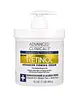
This anti-aging body lotion is formulated around Retinol to soften the look of wrinkles and refine skin texture.
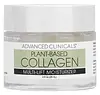
This anti-aging moisturizer is formulated around Oryza Sativa Extract and Palmitoyl Tripeptide-1 to soften the look of wrinkles and hydrate skin.

What's inside
What's inside
 Key Ingredients
Benefits
Concerns
Ingredients Side-by-side
Water
Skin ConditioningParaffinum Liquidum
Emollient


Cetearyl Alcohol
Emollient





Glyceryl Stearate Se
Emulsifying
Butylene Glycol Myristate
EmollientGlycerin
Humectant


Ceteareth-20
Cleansing
Caprylic/Capric Triglyceride
Masking
Retinol
Skin Conditioning







Tocopherol
Antioxidant


Anthemis Nobilis Flower Extract
Masking

Camellia Sinensis Leaf Extract
Antimicrobial
Aloe Barbadensis Leaf Juice Powder
Skin Conditioning
Phenoxyethanol
Preservative
Caprylyl Glycol
Emollient
Acrylates/C10-30 Alkyl Acrylate Crosspolymer
Emulsion StabilisingTetrasodium Glutamate Diacetate
ChelatingSodium Hydroxide
BufferingIodopropynyl Butylcarbamate
Preservative
BHT
Antioxidant
Water, Paraffinum Liquidum, Cetearyl Alcohol, Glyceryl Stearate Se, Butylene Glycol Myristate, Glycerin, Ceteareth-20, Caprylic/Capric Triglyceride, Retinol, Tocopherol, Anthemis Nobilis Flower Extract, Camellia Sinensis Leaf Extract, Aloe Barbadensis Leaf Juice Powder, Phenoxyethanol, Caprylyl Glycol, Acrylates/C10-30 Alkyl Acrylate Crosspolymer, Tetrasodium Glutamate Diacetate, Sodium Hydroxide, Iodopropynyl Butylcarbamate, BHT
Water
Skin ConditioningPropanediol
Solvent
Glycerin
Humectant
Pyrus Malus Fruit Extract
Skin Conditioning
Dimethicone
Emollient
Sclerocarya Birrea Seed Oil
Humectant
Ammonium Acryloyldimethyltaurate/Vp Copolymer
Oryza Sativa Extract
Absorbent
Aloe Barbadensis Leaf Juice
Skin Conditioning
Butylene Glycol
Humectant
Sodium Hyaluronate
Humectant
Glycine Max Seed Extract
Skin ConditioningCaulerpa Lentillifera Extract
Rosa Centifolia Flower Extract
Astringent
Panax Ginseng Root Extract
Emollient
Lactobacillus Ferment
Skin Conditioning
Glucosamine Hcl
Camellia Sinensis Leaf Extract
Antimicrobial
Hydroxyethylcellulose
Emulsion StabilisingDaucus Carota Sativa Root Extract
Skin Conditioning
Chenopodium Quinoa Seed Extract
Skin Conditioning
Citrus Paradisi Peel Oil
Masking

Oryza Sativa Bran Extract
Skin Conditioning
Rosmarinus Officinalis Leaf Extract
AntimicrobialPhenoxyethanol
Preservative
Helianthus Annuus Extract
Emollient
Palmitoyl Tripeptide-1
Skin Conditioning
Palmitoyl Tetrapeptide-7
Skin Conditioning
Carbomer
Emulsion StabilisingTetrasodium Glutamate Diacetate
ChelatingAscorbic Acid
Antioxidant
Polysorbate 20
Emulsifying
Tocopherol
Antioxidant
Maltodextrin
Absorbent
Caprylyl Glycol
Emollient
Ethylhexylglycerin
Skin ConditioningSodium Hydroxide
BufferingHexylene Glycol
EmulsifyingCitric Acid
Buffering
Water, Propanediol, Glycerin, Pyrus Malus Fruit Extract, Dimethicone, Sclerocarya Birrea Seed Oil, Ammonium Acryloyldimethyltaurate/Vp Copolymer, Oryza Sativa Extract, Aloe Barbadensis Leaf Juice, Butylene Glycol, Sodium Hyaluronate, Glycine Max Seed Extract, Caulerpa Lentillifera Extract, Rosa Centifolia Flower Extract, Panax Ginseng Root Extract, Lactobacillus Ferment, Glucosamine Hcl, Camellia Sinensis Leaf Extract, Hydroxyethylcellulose, Daucus Carota Sativa Root Extract, Chenopodium Quinoa Seed Extract, Citrus Paradisi Peel Oil, Oryza Sativa Bran Extract, Rosmarinus Officinalis Leaf Extract, Phenoxyethanol, Helianthus Annuus Extract, Palmitoyl Tripeptide-1, Palmitoyl Tetrapeptide-7, Carbomer, Tetrasodium Glutamate Diacetate, Ascorbic Acid, Polysorbate 20, Tocopherol, Maltodextrin, Caprylyl Glycol, Ethylhexylglycerin, Sodium Hydroxide, Hexylene Glycol, Citric Acid
Reviews
Ingredients Explained
These ingredients are found in both products.
Ingredients higher up in an ingredient list are typically present in a larger amount.
Camellia Sinensis Leaf Extract (tea extract) is one of the most well-researched plant extracts in skincare with an impressive resume.
Black tea, green tea, and oolong tea are all harvested from the Camellia Sinensis plant.
Studies show green tea extract and its catechins (like epigallocatechin gallate (EGCG)) help your skin cells product energy more efficiently and reducing the number of free-radicals that can damage your skin from the inside.
In lab-grown skin models, this translated to younger, healthier, and stronger skin.
There's also good sun protection data; researchers saw less DNA damage and redness on human skin when green tea was applied before UVB exposure. And the more they applied, the better the protection.
Needless to say, this ingredient shouldn't replace your sunscreen. But it is a great supportive ingredient that you can already find in many sunscreens and antioxidant serums.
A 2009 study found a 2% green tea lotion was effective for mild-to-moderate acne thanks to its anti-inflammatory and mild antimicrobial activity.
The quality of the extract matters a lot here:
Good extracts contain 50-90% catechins while lower quality ones are mostly there for marketing. We recommend reaching out to the brand if you have questions about the quality or source of their ingredients.
Human Repeated Insult Patch Testing showed no irritation or sensitization at use concentrations (0.86% in leave-on products and up to 30% as leaf water).
Learn more about Camellia Sinensis Leaf ExtractCaprylyl Glycol is a humectant, skin conditioner, emollient, and preservative booster derived from either caprylic acid or synthetically created.
Typical use levels vary from 0.3-1% as a preservative booster and go up to 2% to condition skin.
Because it is not a free-fatty acid, this ingredient is fungal acne safe (there's nothing for Malassezia to feed on).
Learn more about Caprylyl GlycolGlycerin (or glycerol) is a compound naturally found in your skin. It's a powerhouse humectant that pulls water into the stratum corneum.
Topically, glycerin does several things at once:
Your skin makes glycerin on its own (mostly from sebaceous oil breakdown) and shuttles it to your outermost layer of skin, or your epidermis, via aquaporin-3.
Aquaporin-3 is a transporter that is essential for normal skin hydration, elasticity, and repair. Interestingly, mice lacking in AQP3 have dry and less elastic skin that can be fully corrected with glycerin.
This ingredient is non-irritating, plays well with almost every ingredient, and works across all skin types. Typical use is anywhere between 3-10% but can go up to 79% in some leave-on products.
Just know very high concentrations (>40%) can feel tacky in low humidity.
Glycerin is the name for this ingredient in American English. British English uses Glycerol/Glycerine.
Learn more about GlycerinPhenoxyethanol is one of the most widely used preservatives in skincare (and for good reason!).
It has a large spectrum of antimicrobial activity and especially effective bacteria, yeast, and mold while only having a weak effect on your skin's natural microbiome.
On a cellular level, it disrupts the cell membranes of microbes by poking holes that make the cell leak. This shuts down the chemical reactions the microbe needs to make energy so it can no longer survive.
Another perk of this ingredient is that it stays functional across a wide pH range (3-10).
You'll often see it paired with boosters like Ethylhexylglycerin; one study showed that a 1:9 ratio of Ethylhexylglycerin to Phenoxyethanol damages bacterial membranes as effectively as doubling the Phenoxyethanol concentration on its own.
Typical use concentrations range from 0.3-1% depending on the formula, and this ingredient is capped at 1% int the EU.
Safety-wise, the fear mongering does not hold up to the evidence. The EU's Scientific Committee on Consumer Safety and FDA consider it safe as a preservative at up to 1%, including for children of all ages.
Adverse systemic effects only showed up in animal studies at exposures roughly 200x higher than what people get from cosmetics. And despite its very widespread use, this ingredient is a rare sensitizer and allergic reactions are uncommon.
Learn more about PhenoxyethanolSodium Hydroxide is also known as lye or caustic soda. It is used to adjust the pH of products; many ingredients require a specific pH to be effective.
In small amounts, sodium hydroxide is considered safe to use. However, large amounts may cause chemical burns due to its high alkaline.
Your skin has a natural pH and acid mantle. This acid mantle helps prevent harmful bacteria from breaking through. The acid mantle also helps keep your skin hydrated.
"Alkaline" refers to a high pH level. A low pH level would be considered acidic.
Learn more about Sodium HydroxideTetrasodium Glutamate Diacetate is a chelating agent. Chelating agents help prevent metal ions from binding to other ingredients. This helps prevent unwanted effects and reactions from a product. These metal ions may come from water and are found in miniscule amounts.
Tetrasodium Glutamate Diacetate can also help other preservatives be more effective.
Tocopherol is a fat-soluble antioxidant known as Vitamin E.
You'll find this ingredient in the vast majority of skincare (for good reason). It works to neutralize free radicals, or unstable molecules generated by UV exposure, pollution, and other environmental stressors, before they can cause oxidative damage to your skin cells.
Topically applied tocopherol has been shown to protect against UV damage by ramping up the skin's own natural defense enzymes.
It also acts as a skin conditioning agent; some studies show that regular topical use can improve the skin's water-binding capacity over 2-4 weeks.
This ingredient is especially loved for being a team player. When combined with Vitamin C, the photoprotective effect of both ingredients roughly doubles and the combo also helps reduce UV-induced DNA damage.
This ingredient has some brightening potential but it's more of a prevention ingredient than spot-fader. Cell studies show it can slow down melanin production but it's worth noting that it's not the most powerful brightener out there.
In formulations, it also serves as a stabilizer that helps protect other oxidation-prone ingredients from degrading.
Concentrations usually range from 0.1-1% in most leave-on products.
Learn more about TocopherolWater. It's the most common cosmetic ingredient of all. You'll usually see it at the top of ingredient lists, meaning that it makes up the largest part of the product.
So why is it so popular? Water most often acts as a solvent - this means that it helps dissolve other ingredients into the formulation.
You'll also recognize water as that liquid we all need to stay alive. If you see this, drink a glass of water. Remember to stay hydrated!
Learn more about Water

