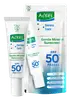
This hybrid sunscreen covers the full UV range and blocks ~98% of UVB at SPF 50.
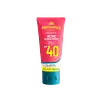
This chemical sunscreen covers the full UV range and blocks ~98% of UVB at SPF 40.


What's inside
What's inside
 Key Ingredients
Benefits
Concerns
Ingredients Side-by-side
Water
Skin ConditioningZinc Oxide
Cosmetic Colorant


Cyclopentasiloxane
Emollient
Caprylyl Methicone
Skin Conditioning
Butyloctyl Salicylate
Skin Conditioning
Propanediol
Solvent

Polymethyl Methacrylate
Polyglyceryl-3 Diisostearate
Emulsifying




Dimethicone
Emollient
Disteardimonium Hectorite
StabilisingSodium Chloride
MaskingLauryl PEG-9 Polydimethylsiloxyethyl Dimethicone
Skin Conditioning
Bis-Isobutyl PEG/PPG-10/7/Dimethicone Copolymer
Emulsifying
Acrylates/Dimethicone Copolymer
Skin Conditioning
Dimethicone Crosspolymer
Emulsion Stabilising
Triethoxycaprylylsilane
Phenoxyethanol
Preservative
Hydrolyzed Jojoba Esters
Skin Conditioning
Bisabolol
Antioxidant


O-Cymen-5-Ol
Antimicrobial
Tocopherol
Antioxidant



Water, Zinc Oxide, Cyclopentasiloxane, Caprylyl Methicone, Butyloctyl Salicylate, Propanediol, Polymethyl Methacrylate, Polyglyceryl-3 Diisostearate, Dimethicone, Disteardimonium Hectorite, Sodium Chloride, Lauryl PEG-9 Polydimethylsiloxyethyl Dimethicone, Bis-Isobutyl PEG/PPG-10/7/Dimethicone Copolymer, Acrylates/Dimethicone Copolymer, Dimethicone Crosspolymer, Triethoxycaprylylsilane, Phenoxyethanol, Hydrolyzed Jojoba Esters, Bisabolol, O-Cymen-5-Ol, Tocopherol
Water
Skin ConditioningAloe Barbadensis Leaf Water
MaskingEthylhexyl Methoxycinnamate
UV Absorber
Camellia Sinensis Leaf Extract
Antimicrobial
Silica
Abrasive
Butylene Glycol
Humectant
Glycerin
Humectant
Butyl Methoxydibenzoylmethane
UV Absorber
Dibutyl Adipate
EmollientEthylhexyl Salicylate
UV Absorber
Octocrylene
UV Absorber
Pentylene Glycol
Skin Conditioning
Methylene Bis-Benzotriazolyl Tetramethylbutylphenol
UV Filter
1,2-Hexanediol
Skin Conditioning
C12-15 Alkyl Benzoate
AntimicrobialCaprylyl Methicone
Skin Conditioning
Diisopropyl Adipate
EmollientMethyl Methacrylate Crosspolymer
Panthenol
Skin Conditioning
Salix Alba Bark Extract
Astringent
Rosmarinus Officinalis Leaf Extract
AntimicrobialBrassica Oleracea Italica Extract
AstringentAloe Barbadensis Leaf Extract
Emollient
Solanum Lycopersicum Fruit Extract
Antioxidant
Ethyl Ferulate
Antioxidant
Tocopherol
Antioxidant
Bioflavonoids
Skin ConditioningHelianthus Annuus Seed Oil
Emollient
Polyglyceryl-3 Methylglucose Distearate
Emulsifying
Behenyl Alcohol
Emollient
Sodium Acrylates Crosspolymer-2
AbsorbentAcrylates/C10-30 Alkyl Acrylate Crosspolymer
Emulsion StabilisingHydroxyacetophenone
Antioxidant
Poly C10-30 Alkyl Acrylate
Emulsion StabilisingTromethamine
BufferingDecyl Glucoside
Cleansing
Phenoxyethanol
Preservative
Ammonium Acryloyldimethyltaurate/Vp Copolymer
Ethylhexylglycerin
Skin ConditioningPropanediol
Solvent
Xanthan Gum
EmulsifyingBHT
Antioxidant
Ethyl Hexanediol
SolventWater, Aloe Barbadensis Leaf Water, Ethylhexyl Methoxycinnamate, Camellia Sinensis Leaf Extract, Silica, Butylene Glycol, Glycerin, Butyl Methoxydibenzoylmethane, Dibutyl Adipate, Ethylhexyl Salicylate, Octocrylene, Pentylene Glycol, Methylene Bis-Benzotriazolyl Tetramethylbutylphenol, 1,2-Hexanediol, C12-15 Alkyl Benzoate, Caprylyl Methicone, Diisopropyl Adipate, Methyl Methacrylate Crosspolymer, Panthenol, Salix Alba Bark Extract, Rosmarinus Officinalis Leaf Extract, Brassica Oleracea Italica Extract, Aloe Barbadensis Leaf Extract, Solanum Lycopersicum Fruit Extract, Ethyl Ferulate, Tocopherol, Bioflavonoids, Helianthus Annuus Seed Oil, Polyglyceryl-3 Methylglucose Distearate, Behenyl Alcohol, Sodium Acrylates Crosspolymer-2, Acrylates/C10-30 Alkyl Acrylate Crosspolymer, Hydroxyacetophenone, Poly C10-30 Alkyl Acrylate, Tromethamine, Decyl Glucoside, Phenoxyethanol, Ammonium Acryloyldimethyltaurate/Vp Copolymer, Ethylhexylglycerin, Propanediol, Xanthan Gum, BHT, Ethyl Hexanediol
Ingredients Explained
These ingredients are found in both products.
Ingredients higher up in an ingredient list are typically present in a larger amount.
Caprylyl Methicone is a synthetic and lightweight silicone fluid. It gives products a silky, dry-touch finish without the heaviness of pure oils.
Though the EU CosIng Database lists this ingredient as a skin conditioner, it is also used for sensory reasons. It spreads easily, cuts greasiness, and reduces tackiness.
This ingredient is volatile which means it will mostly evaporate (but it evaporates slower than older cyclomethicones, like Cyclotetrasiloxane).
Typical concentration ranges from 1-30% depending on if it's being used to tweak the feel of a product or acting as the main emollient.
Learn more about Caprylyl MethiconePhenoxyethanol is one of the most widely used preservatives in skincare (and for good reason!).
It has a large spectrum of antimicrobial activity and especially effective bacteria, yeast, and mold while only having a weak effect on your skin's natural microbiome.
On a cellular level, it disrupts the cell membranes of microbes by poking holes that make the cell leak. This shuts down the chemical reactions the microbe needs to make energy so it can no longer survive.
Another perk of this ingredient is that it stays functional across a wide pH range (3-10).
You'll often see it paired with boosters like Ethylhexylglycerin; one study showed that a 1:9 ratio of Ethylhexylglycerin to Phenoxyethanol damages bacterial membranes as effectively as doubling the Phenoxyethanol concentration on its own.
Typical use concentrations range from 0.3-1% depending on the formula, and this ingredient is capped at 1% int the EU.
Safety-wise, the fear mongering does not hold up to the evidence. The EU's Scientific Committee on Consumer Safety and FDA consider it safe as a preservative at up to 1%, including for children of all ages.
Adverse systemic effects only showed up in animal studies at exposures roughly 200x higher than what people get from cosmetics. And despite its very widespread use, this ingredient is a rare sensitizer and allergic reactions are uncommon.
Learn more about PhenoxyethanolPropanediol is an all-star ingredient. It softens, hydrates, and smooths the skin.
It’s often used to:
Propanediol is not likely to cause sensitivity and considered safe to use. It is derived from corn or petroleum with a clear color and no scent.
Learn more about PropanediolTocopherol is a fat-soluble antioxidant known as Vitamin E.
You'll find this ingredient in the vast majority of skincare (for good reason). It works to neutralize free radicals, or unstable molecules generated by UV exposure, pollution, and other environmental stressors, before they can cause oxidative damage to your skin cells.
Topically applied tocopherol has been shown to protect against UV damage by ramping up the skin's own natural defense enzymes.
It also acts as a skin conditioning agent; some studies show that regular topical use can improve the skin's water-binding capacity over 2-4 weeks.
This ingredient is especially loved for being a team player. When combined with Vitamin C, the photoprotective effect of both ingredients roughly doubles and the combo also helps reduce UV-induced DNA damage.
This ingredient has some brightening potential but it's more of a prevention ingredient than spot-fader. Cell studies show it can slow down melanin production but it's worth noting that it's not the most powerful brightener out there.
In formulations, it also serves as a stabilizer that helps protect other oxidation-prone ingredients from degrading.
Concentrations usually range from 0.1-1% in most leave-on products.
Learn more about TocopherolWater. It's the most common cosmetic ingredient of all. You'll usually see it at the top of ingredient lists, meaning that it makes up the largest part of the product.
So why is it so popular? Water most often acts as a solvent - this means that it helps dissolve other ingredients into the formulation.
You'll also recognize water as that liquid we all need to stay alive. If you see this, drink a glass of water. Remember to stay hydrated!
Learn more about Water

