Sans Façon The Concealer
Concealer with 29 ingredients that contains exfoliants, retinoid and Vitamin E
We independently verify ingredients, backed by peer-reviewed research. Suggest an update.
What's inside
Ingredients List
Caprylic/Capric Triglyceride
Masking


Bis-Diglyceryl Polyacyladipate-2
Emollient

Vp/Eicosene Copolymer
Microcrystalline Wax
Emulsion StabilisingPolybutene
Kaolin
Abrasive



Methyl Methacrylate Crosspolymer
Octyldodecanol
Emollient
Silica Dimethyl Silylate
EmollientTribehenin
Emollient
Polyglyceryl-3 Diisostearate
Emulsifying


Triethoxycaprylylsilane

Aluminum Dimyristate
Emulsion StabilisingDisodium Stearoyl Glutamate
CleansingCaprylyl Glycol
Emollient
Parfum
Masking


Phenoxyethanol
Preservative
Tocopheryl Acetate
Antioxidant


Retinyl Palmitate
Skin Conditioning


BHT
Antioxidant
Hexylene Glycol
EmulsifyingCarthamus Tinctorius Seed Oil
Masking
Aloe Barbadensis Leaf Extract
Emollient

Panax Ginseng Root Extract
Emollient
Camellia Sinensis Leaf Extract
Antimicrobial
CI 77891
Cosmetic ColorantCI 77491
Cosmetic ColorantCI 77492
Cosmetic ColorantCI 77499
Cosmetic Colorant
Caprylic/Capric Triglyceride, Bis-Diglyceryl Polyacyladipate-2, Vp/Eicosene Copolymer, Microcrystalline Wax, Polybutene, Kaolin, Methyl Methacrylate Crosspolymer, Octyldodecanol, Silica Dimethyl Silylate, Tribehenin, Polyglyceryl-3 Diisostearate, Triethoxycaprylylsilane, Aluminum Dimyristate, Disodium Stearoyl Glutamate, Caprylyl Glycol, Parfum, Phenoxyethanol, Tocopheryl Acetate, Retinyl Palmitate, BHT, Hexylene Glycol, Carthamus Tinctorius Seed Oil, Aloe Barbadensis Leaf Extract, Panax Ginseng Root Extract, Camellia Sinensis Leaf Extract
May Contain:
CI 77891, CI 77491, CI 77492, CI 77499
Key Ingredients
Benefits
Concerns
Ingredients Explained
Caprylic/Capric Triglyceride (aka MCT Oil) is a lightweight emollient, solvent, and texture enhancer. It is considered a skin-softener by helping to prevent moisture loss.
Though it behaves like an oil, it is not technically one due to its chemical composition. One perk of this ingredient is that it is very stable, resistant to oxidation, and unlikely to go rancid.
In practice, that translates to a long shelf life and a consistently elegant skin feel.
While there is an assumption Caprylic Triglyceride can clog pores due to it being derived from coconut oil, there is no research supporting this. Just patch test if you have concerns.
Fractionated coconut oil and MCT Oil are both listed as Caprylic/Capric Triglyceride according to INCI. This is because INCI names are based on the ingredient’s final chemical composition and not its marketing name or source.
This ingredient is treated as the gold standard fungal acne safe oil. Even though it is coconut derived, the problematic lauric acid is stripped out.
This leaves just caprylic (C8) and capric (C10) acid. These chain lengths actually trend antifungal; a 2020 study found caprylic acid was enough to disrupt Malassezia furfur cell membrane, with a caprylic acid derivative damaging membrane structures at concentrations as low as 0.2%.
Learn more about Caprylic/Capric TriglycerideBis-Diglyceryl Polyacyladipate-2 is a synthetic emollient that works as a lanolin substitute.
This ingredient is a great vegan option for those avoiding animal-derived ingredients.
It mostly stays on the surface of skin where it helps hydrate due to its large molecular size and low water solubility.
Due to it being derived from fatty acids, this ingredient may not be Malassezia or fungal acne safe.
Learn more about Bis-Diglyceryl Polyacyladipate-2We don't have a description for Vp/Eicosene Copolymer yet.
Microcrystalline Wax is derived from petroleum through a de-oiling process, then highly refined and purified before use in cosmetics.
In skincare formulations, it is used to improve texture and create a smooth, even consistency. It also helps stabilize products by preventing ingredients from separating.
Polybutene is used to help control the viscosity of a product. This just means it helps adjusts the texture.
It is a polymer and does not get absorbed into the skin due to its large size.
Studies found this ingredient did not irritate skin in concentrations below 15%.
Learn more about PolybuteneKaolin is a clay. It is used for oil control and to help minimize pores. Like other clays, kaolin has the ability to absorb excess sebum or oil. This can help clean out pores and mattify the skin.
Some types of kaolin may have exfoliating properties. When water is added to kaolin, it becomes a paste with small abrasive particles.
Most kaolin is a white color, but may be pink/orange/red depending on where it comes from.
The name 'kaolin' comes from a Chinese village named 'Gaoling'. Kaolin clay comes from rocks rich in kaolinite. Kaolinite, the mineral, has a silicate layered structure. Kaolinite is formed from chemical weathering of aluminum siilicate minerals.
Besides skincare, kaolin is commonly used to make glossy paper, in ceramics, toothpaste, and as medicine to soothe stomach issues.
Learn more about KaolinThis ingredient comes as a powder made up of small, porous, microbeads. It is used to add a silky feel to products and also helps absorb oil.
Octyldodecanol is a fatty alcohol sourced from plant oils like coconut or palm (or made synthetically).
It is:
You'll likely see this in many BHA products because this is the go-to solvent for salicylic acid.
This ingredient is typically used at levels between 2-20%.
Regarding fungal acne:
In 2019, this ingredient was tested against multiple Malassezia species (the yeast that causes fungal acne) and showed no growth.
This silica is mainly used to thicken oils and suspend particles in oils. It is not water soluble.
According to the manufacturer, it:
The manufacturer also claims this ingredient to be useful in makeup.
In lipstick formulations, this ingredient improves color payoff, reduces pigment settling, and reduces oil bleeding. This ingredient also improves the grip of powder products such as dry shampoos.
Learn more about Silica Dimethyl SilylateTribehenin is the triglyceride of glycerin and behenic acid. It is an emollient that helps soften and condition skin.
Safety-wise, this is a well-vetted ingredient. Repeated-insult patch tests of 0.38% tribehenin did not trigger sensitization.
This ingredient may not be fungal acne safe because behenic acid falls into the chain-length range that Malassezia yeasts can feed on.
Learn more about TribeheninPolyglyceryl-3 Diisostearate is a plant-derived, oil-soluble emulsifier. It keeps water-in-oil emulsions stable to prevent the ingredients from separating.
On the safety front, it's considered non-irritating and well-tolerated (it can even be found in formulations for baby skin).
This ingredient may not be fungal acne safe because research has shown that the Malassezia species can grow in the presence of fatty acid esters with chain lengths above C12 (and this one is C18).
While it does have a comedogenic rating of 4, the comedogenic rating scale was developed from rabbit ear models which has limited clinical relevance to human skin. Studies also show that comedogenic ingredients cannot predict how the overall formula will behave on human skin.
Learn more about Polyglyceryl-3 DiisostearateTriethoxycaprylylsilane is a silicon-based surface modifier that makes sunscreens feel silky and makeup stay put.
Its main job is to coat mineral particles like titanium dioxide, zinc oxide, and color pigments in a thin, oily layer so they spread smoothly, don't clump, and stick to skin better.
This ingredient is typically used at low levels (up to 2.5% in eyeshadow and 1% in lipstick).
Learn more about TriethoxycaprylylsilaneAluminum Dimyristate is the salt of myristic acid, a fatty acid. It is used to stabilize a formula, add thickness, or for anti-caking. That's why you'll mostly find this ingredient in makeup products.
Like other aluminum salts in topical products, this ingredient does not significantly penetrate intact skin.
Although “aluminum” in an ingredient name can raise red flags for some consumers, the form and usage context matter significantly.
For typical topical applications, there is no substantial evidence of health risks - such as cancer, neurotoxicity, or systemic “aluminum overload.”
Learn more about Aluminum DimyristateDSG is used as a surfactant.
Surfactants are cleansing ingredients that help remove oil, dirt, and other impurities from the skin. They work by reducing surface tension between water and oils/dirt to allow them to be easily rinsed away.
Caprylyl Glycol is a humectant, skin conditioner, emollient, and preservative booster derived from either caprylic acid or synthetically created.
Typical use levels vary from 0.3-1% as a preservative booster and go up to 2% to condition skin.
Because it is not a free-fatty acid, this ingredient is fungal acne safe (there's nothing for Malassezia to feed on).
Learn more about Caprylyl GlycolParfum is a catch-all term for an ingredient or more that is used to give a scent to products.
Also called "fragrance", this ingredient can be a blend of hundreds of chemicals or plant oils. This means every product with "fragrance" or "parfum" in the ingredients list is a different mixture.
For instance, Habanolide is a proprietary trade name for a specific aroma chemical. When used as a fragrance ingredient in cosmetics, most aroma chemicals fall under the broad labeling category of “FRAGRANCE” or “PARFUM” according to EU and US regulations.
The term 'parfum' or 'fragrance' is not regulated in many countries. In many cases, it is up to the brand to define this term.
For instance, many brands choose to label themselves as "fragrance-free" because they are not using synthetic fragrances. However, their products may still contain ingredients such as essential oils that are considered a fragrance by INCI standards.
One example is Calendula flower extract. Calendula is an essential oil that still imparts a scent or 'fragrance'.
Depending on the blend, the ingredients in the mixture can cause allergies and sensitivities on the skin. Some ingredients that are known EU allergens include linalool and citronellol.
Parfum can also be used to mask or cover an unpleasant scent.
The bottom line is: not all fragrances/parfum/ingredients are created equally. If you are worried about fragrances, we recommend taking a closer look at an ingredient. And of course, we always recommend speaking with a professional.
Learn more about ParfumPhenoxyethanol is one of the most widely used preservatives in skincare (and for good reason!).
It has a large spectrum of antimicrobial activity and especially effective bacteria, yeast, and mold while only having a weak effect on your skin's natural microbiome.
On a cellular level, it disrupts the cell membranes of microbes by poking holes that make the cell leak. This shuts down the chemical reactions the microbe needs to make energy so it can no longer survive.
Another perk of this ingredient is that it stays functional across a wide pH range (3-10).
You'll often see it paired with boosters like Ethylhexylglycerin; one study showed that a 1:9 ratio of Ethylhexylglycerin to Phenoxyethanol damages bacterial membranes as effectively as doubling the Phenoxyethanol concentration on its own.
Typical use concentrations range from 0.3-1% depending on the formula, and this ingredient is capped at 1% int the EU.
Safety-wise, the fear mongering does not hold up to the evidence. The EU's Scientific Committee on Consumer Safety and FDA consider it safe as a preservative at up to 1%, including for children of all ages.
Adverse systemic effects only showed up in animal studies at exposures roughly 200x higher than what people get from cosmetics. And despite its very widespread use, this ingredient is a rare sensitizer and allergic reactions are uncommon.
Learn more about PhenoxyethanolTocopheryl Acetate is a stable, shelf-friendly form of vitamin E.
Formulators love it because plain vitamin E oxidizes quickly once it hits air. This acetate version stays stable and resists going off, helping to extend a product's shelf life.
It's actually inactive on its own and works like a slow-release "storage" form; the enzymes in your skin called esterases gradually convert it into active vitamin E over time.
One in vivo study showed 5% of the acetate in the living layer of the epidermis converted to vitamin E after 5 days of application. This study also found the skin gained protection against UV damage even though the conversion was slow and small.
Once converted, vitamin E acts as a skin's main fat-soluble antioxidant that fights free radicals to protect skin from damage.
Topical vitamin E generally boosts the skin's photoprotection, and it reduced UV-damage in animal models.
This ingredient has some brightening potential but it's more of a prevention ingredient than spot-fader. Cell studies show it can slow down melanin production but it's worth noting that it's not the most powerful brightener out there.
Overall, it has a pretty solid safety profile and has been found to be non-irritating and non-comedogenic. Allergic reactions may happen but stay rare due to how widely the ingredient gets used.
The concentration will vary depending on the formula; industry data shows 0.1% in baby lotions, 3% in lipsticks, and 5% in foot powders. You can also find this ingredient at 100% in a pure vitamin E oil.
Most leave-on skincare keeps it at the lower end, often between 0.5-1%.
Learn more about Tocopheryl AcetateRetinyl Palmitate is a form of retinoid. Retinoids are the superstar class of anti-aging ingredients that include Tretinoin and Retinol.
This particular ingredient has had a bumpy year with its rise and fall in popularity.
First, Retinyl Palmitate is created from Palmitic Acid and Retinol. It is a Retinol ester and considered one of the weaker forms of retinoid.
This is because all retinoids have to be converted to Tretinoin, AKA Retinoic Acid.
Retinyl Palmitate is pretty far down the line and has to go through multiple conversions before its effects are seen. Once it's on your skin, enzymes called esterases convert it into Retinol, then into Retinal, and finally into Retinoic Acid; that's three steps with a little lost at each one.
The benefits of Retinyl Palmitate are debated due to this long and ineffective conversion line.
So why use it at all?
The answer is stability. Retinol and Retinoic Acid break down fast when they hit light, heat, and air, and Retinoic Acid can be pretty irritating on top of that.
Retinyl Palmitate is much more stable and gentler, making it easier to formulate with and easier on sensitive skin (even if it's weaker gram for gram).
Studies show Retinyl Palmitate to help:
Newer research from 2023-2025 also found that Retinyl Palmitate works especially well when paired with Retinol. The two seem to cover each other's weak spots; retinol brings the potency while Retinyl Palmitate brings the stability and gentleness. Together, they repair UV damage better than either one does alone.
This ingredient used to be found in sunscreens to boost the efficacy of sunscreen filters.
The downfall of Retinyl Palmitate was due to released reports about the ingredient being correlated to sun damage and skin tumors.
Most of this traces back to a 2012 US National Toxicology Program (NTP) study where hairless mice coated in Retinyl Palmitate cream and exposed to UV light developed skin tumors faster.
Here's the nuance, though.
When the Cosmetic Ingredient Review (CIR) Expert Panel went back through that study, they found methodological flaws and decided the results couldn't be interpreted as proof of extra risk.
The EU's Scientific Committee on Consumer Safety (SCCS) said the mouse findings might point to a concern but they're hard to apply to humans since hairless mouse skin and human skin behave differently.
While there is a study showing this ingredient to cause DNA damage when exposed to UVA, there is no concrete proof of it being linked to skin cancer. It is completely safe to use when used correctly.
Both the CIR and the SCCS consider it safe at the concentrations used in cosmetics; the SCCS specifically cleared retinoids up to 0.05% in body lotions and 0.3% in face creams, hand creams, and rinse-off products.
As of 2025, the EU has written those limits into law, plus a label warning about your total Vitamin A intake from all sources.
All retinoids increase your skin's sensitivity to the sun in the first few months of usage. Be especially careful with reapplying sunscreen when using any form of retinoid.
One more note: if you're pregnant, high doses of Vitamin A can be a concern, so a lot of people skip topical retinoids (including Retinyl Palmitate) during pregnancy just to be safe. Check with your doctor if you're unsure.
Fun fact: This ingredient is often added to low-fat milk to increase the levels of Vitamin A.
Learn more about Retinyl PalmitateBHT is a synthetic antioxidant and preservative.
As an antioxidant, it helps your body fight off free-radicals. Free-radicals are molecules that may damage your skin cells.
As a preservative, it is used to stabilize products and prevent them from degrading. Specifically, BHT prevents degradation from oxidation.
The concerns related to BHT come from oral studies; this ingredient is currently allowed for use by both the FDA and EU.
However, it was recently restricted for use in the UK as of April 2024.
Learn more about BHTHexylene Glycol is a multitasker ingredient that works as a solvent, humectant, emulsifier, viscosity reducer, and preservative booster.
It is able to dissolve both water and oil-soluble ingredients to stabilize tricky actives and make products spread more easily.
As a humectant, it pulls water into the skin. But it's a pretty minor moisturizing ingredient compared to other humectants, like glycerin.
Interestingly, it can act as a mild penetration enhancer. One in vitro study on human skin found a 12% concentration upped the absorption of mometasone furoate (a medicinal ingredient used to treat inflammatory skin conditions) up to 7%.
This ingredient is typically used at levels of 0.1-10% depending on the role it's playing.
A patch test study on eczema patients didn't find a significant increase in irritation versus the control group, but the potential for irritation rises at higher concentrations.
Learn more about Hexylene GlycolCarthamus Tinctorius Seed Oil comes from the seeds of the safflower plant. It is a skin conditioning agent that helps soften skin and keep it hydrated.
This seed oil has an unusual fatty acid profile: it is one of the highest linoleic acid plant oils out there (~55-77%). It also has low amounts of oleic acid, and this high-linoleic/low-oleic ratio gets people excited.
Linoleic acid helps maintain skin barrier integrity and is a building block for the ceramides in your stratum corneum. Notably, people with acne tend to have lower linoleic acid in their skin lipids as well (and this gets worse as acne gets more severe).
Overall, it's a lightweight, fast-absorbing oil that has a long safety track record. Lab testing has found it to be non-irritating for skin or eyes.
The Malassezia yeast can metabolize the fatty acids in this oil to grow; therefore this ingredient may not be fungal acne safe.
Learn more about Carthamus Tinctorius Seed OilAloe Barbadensis Leaf Extract is a botanical extract pulled from the leaves of aloe vera and one of the most studied plant ingredients in cosmetics.
The inner leaf gel it comes from is mostly water (~99-99.5%) and the remaining fraction is made up of pretty good stuff: polysaccharides, vitamins, phenolics, and enzymes.
Its headline job is hydration.
The star polysaccharide in aloe, acemannan, is a humectant that retains moisture and helps reduce trans-epidermal water loss.
Aloe also has real soothing credentials; it contains anti-inflammatory compounds like bradykinase and C-glucosyl chromone that help calm irritation and redness.
On the repair side, lab work shows that acemannan wakes up your skin's repair cells (fibroblasts), prompting them to multiply and speed up healing.
There's some human data for cosmetic benefit too: a cream containing 10% Aloe Barbadensis leaf extract improved skin hydration and elasticity in a real-use study.
Safety-wise, this ingredient is well-regarded with just one rare downside; there have been some case reports of acute eczema, contact urticaria, and dermatitis in people who applied aloe-derived ingredients topically. Those with a known aloe or Liliaceae sensitivity should patch test.
Typical use levels range widely, from under 1% up to 90%+ depending on the format and the effect you are after.
Learn more about Aloe Barbadensis Leaf ExtractGinseng root is a well-loved ingredient in Asian skincare for good reason. It hydrates the skin, soothes irritation, and helps even out skin tone.
In traditional East Asian medicine, ginseng has been used for centuries both as food and as a healing remedy, and modern research continues to confirm its skin benefits.
One of the standout features of ginseng is its ability to improve blood circulation and oxygen delivery to the skin, bringing a fresh supply of nutrients to support overall skin health. It also has antioxidant and anti-inflammatory properties. This helps to protect your skin against damage from UV exposure, pollution, and daily stress.
Additionally, studies suggest that ginseng may help reduce hyperpigmentation by inhibiting tyrosinase, the enzyme involved in melanin production.
There are different types of ginseng used in skincare, and while they all share core benefits, their potency can vary.
Most products use fresh or white ginseng because it’s more affordable. However, red ginseng, produced by steaming the root, contains higher levels of ginsenosides, which are compounds with proven anti-aging effects. These ginsenosides help reduce the appearance of wrinkles and improve skin elasticity.
Note: All forms of ginseng are listed simply as “Panax ginseng” in ingredient lists. We recommend reaching out to the brand if you have questions about which type of ginseng is used in their ingredients.
For general antioxidant benefits, any ginseng extract will do, but for wrinkle care or firmer skin, red or fermented ginseng is often more effective.
In short, ginseng is a powerhouse ingredient that supports hydration, radiance, and resilience.
Learn more about Panax Ginseng Root ExtractCamellia Sinensis Leaf Extract (tea extract) is one of the most well-researched plant extracts in skincare with an impressive resume.
Black tea, green tea, and oolong tea are all harvested from the Camellia Sinensis plant.
Studies show green tea extract and its catechins (like epigallocatechin gallate (EGCG)) help your skin cells product energy more efficiently and reducing the number of free-radicals that can damage your skin from the inside.
In lab-grown skin models, this translated to younger, healthier, and stronger skin.
There's also good sun protection data; researchers saw less DNA damage and redness on human skin when green tea was applied before UVB exposure. And the more they applied, the better the protection.
Needless to say, this ingredient shouldn't replace your sunscreen. But it is a great supportive ingredient that you can already find in many sunscreens and antioxidant serums.
A 2009 study found a 2% green tea lotion was effective for mild-to-moderate acne thanks to its anti-inflammatory and mild antimicrobial activity.
The quality of the extract matters a lot here:
Good extracts contain 50-90% catechins while lower quality ones are mostly there for marketing. We recommend reaching out to the brand if you have questions about the quality or source of their ingredients.
Human Repeated Insult Patch Testing showed no irritation or sensitization at use concentrations (0.86% in leave-on products and up to 30% as leaf water).
Learn more about Camellia Sinensis Leaf ExtractCi 77891 is a white pigment from Titanium dioxide. It is naturally found in minerals such as rutile and ilmenite.
It's main function is to add a white color to cosmetics. It can also be mixed with other colors to create different shades.
Ci 77891 is commonly found in sunscreens due to its ability to block UV rays.
Learn more about CI 77891Ci 77491 is also hydrated iron III oxide. It's sole purpose is to give a red/pink hue to products.
Iron III oxides are classified as inorganic chemicals for coloring.
Synthetically created Ci 77491 is considered safer than those naturally found. This is because the synthetically created version may contain less impurities. Iron oxides are generally non-toxic and non-allergenic.
Learn more about CI 77491CI 77492 is also hydrated iron III oxide. It's sole purpose is to give a yellow hue to products.
Iron III oxides are classified as inorganic chemicals for coloring.
Synthetically created CI 77492 is considered safer than those naturally found. This is because the synthetically created version may contain less impurities. Iron oxides are generally non-toxic and non-allergenic.
Learn more about CI 77492Ci 77499 is also hydrated iron III oxide. It is created from mixing red and black iron oxides. This helps give shades of darkness to a product.
Iron III oxides are classified as inorganic chemicals for coloring.
Reviews
No written reviews yet. Be the first to review this product.
Recent searches
Search reviews by skin type, ingredient, or keyword.
Where it's from
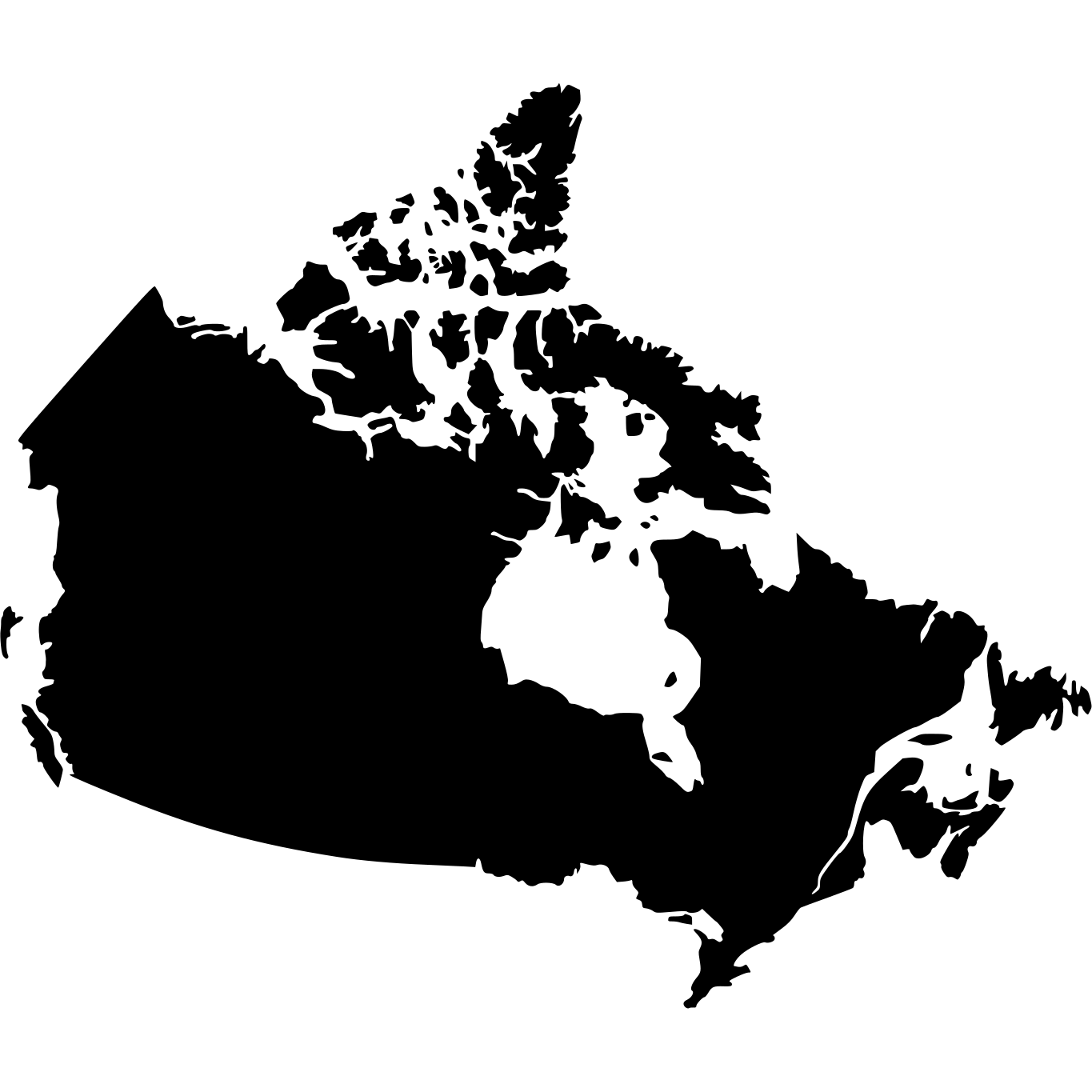
Sans Façon is a Canadian brand
Often compared with

We're dedicated to providing you with the most up-to-date and science-backed ingredient info out there.
The data we've presented on this page has been verified by a member of the SkinSort Team.
Read more about us· Updated April 28, 2025 • Added by tiffanyleblanc


