Helan Linea Dolcezza Apelab Protettivo Antirughe Lip Balm SPF30
A lip moisturizer with 32 ingredients, including vitamin C, spf, and exfoliants.
This anti-aging lip moisturizer is formulated around Butyrospermum Parkii Butter Unsaponifiables and Butyrospermum Parkii Butter to soften the look of wrinkles and hydrate lips.
We independently verify ingredients, backed by peer-reviewed research. Suggest an update.
What's inside
Ingredients List
Caprylic/Capric Triglyceride
Masking


Canola Oil
Emollient





Butyrospermum Parkii Butter Unsaponifiables
Skin Conditioning
Soybean Glycerides
EmollientPrunus Amygdalus Dulcis Oil
Skin Conditioning
Ricinus Communis Seed Oil
Masking
Cera Alba
Emollient
Diethylamino Hydroxybenzoyl Hexyl Benzoate
UV Filter
Ethylhexyl Triazone
UV Absorber
Mel
EmollientButyrospermum Parkii Butter
Skin Conditioning
Polyglyceryl-10 Laurate
Skin Conditioning
Hydrogenated Vegetable Oil
Emollient
Polyglyceryl-3 Diisostearate
Emulsifying
Isoamyl P-Methoxycinnamate
UV Absorber
Hydrogenated Castor Oil
Emollient
Parfum
Masking

Oryzanol
Skin ConditioningTitanium Dioxide
Cosmetic Colorant
Tocopheryl Acetate
Antioxidant


Ethylhexyl Palmitate
Emollient
Dicaprylyl Carbonate
EmollientLecithin
Emollient
Silica
Abrasive


Tocopherol
Antioxidant


Jojoba Esters
Emollient
Polyhydroxystearic Acid
Emulsifying
Trihydroxystearin
Skin Conditioning
Ascorbyl Palmitate
Antioxidant

Sodium Hyaluronate
Humectant
Citric Acid
Buffering
Glucomannan
Skin ConditioningCaprylic/Capric Triglyceride, Canola Oil, Butyrospermum Parkii Butter Unsaponifiables, Soybean Glycerides, Prunus Amygdalus Dulcis Oil, Ricinus Communis Seed Oil, Cera Alba, Diethylamino Hydroxybenzoyl Hexyl Benzoate, Ethylhexyl Triazone, Mel, Butyrospermum Parkii Butter, Polyglyceryl-10 Laurate, Hydrogenated Vegetable Oil, Polyglyceryl-3 Diisostearate, Isoamyl P-Methoxycinnamate, Hydrogenated Castor Oil, Parfum, Oryzanol, Titanium Dioxide, Tocopheryl Acetate, Ethylhexyl Palmitate, Dicaprylyl Carbonate, Lecithin, Silica, Tocopherol, Jojoba Esters, Polyhydroxystearic Acid, Trihydroxystearin, Ascorbyl Palmitate, Sodium Hyaluronate, Citric Acid, Glucomannan
Key Ingredients
Benefits
Concerns
Ingredients Explained
Caprylic/Capric Triglyceride (aka MCT Oil) is a lightweight emollient, solvent, and texture enhancer. It is considered a skin-softener by helping to prevent moisture loss.
Though it behaves like an oil, it is not technically one due to its chemical composition. One perk of this ingredient is that it is very stable, resistant to oxidation, and unlikely to go rancid.
In practice, that translates to a long shelf life and a consistently elegant skin feel.
While there is an assumption Caprylic Triglyceride can clog pores due to it being derived from coconut oil, there is no research supporting this. Just patch test if you have concerns.
Fractionated coconut oil and MCT Oil are both listed as Caprylic/Capric Triglyceride according to INCI. This is because INCI names are based on the ingredient’s final chemical composition and not its marketing name or source.
This ingredient is treated as the gold standard fungal acne safe oil. Even though it is coconut derived, the problematic lauric acid is stripped out.
This leaves just caprylic (C8) and capric (C10) acid. These chain lengths actually trend antifungal; a 2020 study found caprylic acid was enough to disrupt Malassezia furfur cell membrane, with a caprylic acid derivative damaging membrane structures at concentrations as low as 0.2%.
Learn more about Caprylic/Capric TriglycerideCanola Oil is a plant-oil and low-erucic-acid variety of rapeseed. Like other seed oils, it functions as an emollient that softens skin and slows water loss.
Its fatty acid profile is mostly linoleic acid (55-65%) with some oleic, palmitic, and stearic acids. There are also some small amounts of vitamin E and plant sterols.
The sterol content is pretty interesting:
In a controlled human study, a single application of canola oil and especially its sterol-enriched fraction reduced visible irritation, redness, and water loss caused by SLS. Plain canola oil and most other tested oils did little on healthy, un-irritated skin.
It's pretty much just a calm, moisturizing oil that helps with soothing if your skin is already irritated.
Fun fact: Canadian growers bred the low-erucic variety in the 1970's, and the name stands for "Canadian oil, Low Acid").
Since canola oil is made up of C18 fatty acids, it may not be fungal acne safe. The Malassezia yeast feeds on chain lengths C11-24.
This ingredient shows up on a lot of "pore-clogging" lists but there's no real evidence behind that. It doesn't even have a comedogenic rating from an actual study; the numbers you'll find online come from blogs citing other blogs.
Some people still find it breaks them out. So if that's you, definitely trust your skin.
Learn more about Canola OilButyrospermum Parkii Butter Unsaponifiables comes from shea butter.
Unsaponifiables means the butter is not saponified, or it has not been turned into soap using an alkali reaction.
This ingredient contains Vitamin E, sterols, and many antioxidants. These compounds help hydate your skin.
Learn more about Butyrospermum Parkii Butter UnsaponifiablesWe don't have a description for Soybean Glycerides yet.
This ingredient is also known as sweet almond oil. It is a lightweight, cold-pressed oil from the ripe seeds of the sweet almond tree.
Sweet almond oil is rich in skin-nourishing fatty acids such as oleic acid (55-86%) and linolenic acid (7-35%).
As an emollient, it softens and hydrates skin by forming a thin barrier that locks in moisture.
Clinical studies have found it to be non-irritating and non-sensitizing. The CIR Expert Panel has evaluated the available safety data and concluded it is safe for topical use.
Because of the oleic acid content, this ingredient may not be fungal acne safe.
This ingredient does have a comedogenic rating of 3, but this doesn't mean a formula with this ingredient will clog pores.
Human testing has proved that any finished product with a comedogenic ingredient won't automatically make you break out; it really comes down to concentration, formula, and your skin.
Learn more about Prunus Amygdalus Dulcis OilThis ingredient is also known as castor oil. It is a skin conditioning ingredient.
The star component of castor oil is ricinoleic acid, an unusual fatty acid that makes up ~80-92% of its composition.
In skincare, it is an emollient that dries down to a solid film with water-binding properties. This helps keep skin hydrated and helps reduce transepidermal water loss (TEWL).
A 2026 dermatology review pulls together its broader uses:
Human clinical testing found this ingredient to be non-irritating and non-sensitizing.
Because castor oil contains fatty acids in the C11-24 range, this ingredient may not be fungal acne safe.
At this time, the literature does not support castor oil in regrowing hair. A 2022 systematic review found no strong evidence that it supports hair growth and only weak evidence that it improves hair shine.
Castor oil itself carries "perfuming" and "masking" function tags according to the official CosIng database. This is because of its mild odor and odor-dampening properties.
Learn more about Ricinus Communis Seed OilThis is another name for beeswax; it's a natural wax produced by honey bees to build their honeycomb.
Because it forms a protective layer on your skin, it can help lock in moisture and reduce water loss. It is also widely used as a thickener and emulsifier in lip balms and lotions. Research suggests beeswax containing moisturizers can support skin barrier integrity.
In comedogenic testing, Beeswax scored a 0-2, which is on the low end. Whether or not a product clogs your pores really comes down to the formula as a whole (not any single ingredient on its own) and your skin.
Beeswax is not vegan since it is animal-derived. It cannot be removed with water, but can be taken off with an oil cleanser.
People with a known Propolis allergy also report to have reactions from beeswax.
Beeswax's wax esters are derived primarily from palmitic and oleic acid (C16 and C18:1). Both of these fall within the C11-C24 feeding window.
The Malassezia yeast can potentially cleave these esters and release usable fatty acids, so this ingredient may not be fungal acne safe. However, not everyone will react to this ingredient.
Learn more about Cera AlbaDiethylamino Hydroxybenzoyl Hexyl Benzoate (DHHB) is a chemical UV-A absorber. It is formulated for high UVA protection (320-400 nm).
DHHB is well-liked for:
DHHB has been approved by the EU, Japan, Taiwan, and South America for use up to 10%. Unfortunately, it has not been approved for use in the US or Canada due to slow regulatory processes.
This ingredient is soluble in oils, fats, and lipids.
Learn more about Diethylamino Hydroxybenzoyl Hexyl BenzoateEthylhexyl Triazone (aka Octyl Triazone) is an oil-soluble organic UVB filter. It has peak absorption around 314 nm, right in the middle of the UVB range.
This ingredient is described as one of the most effective UVB filters available and small concentrations are enough to deliver a high SPF thanks to its strong UV absorbing power.
Formulators love it for its stability; its ability to filter UV stays practically unchanged even under intense radiation and it can also help boost the photostability of less stable filters like avobenzone.
It's also a great pick for water resistant products because it's insoluble in water and has a good affinity for keratin.
Because it's a big, heavy molecule, the European Scientific Committee has found to to have very low dermal penetration and negative results for allergenicity.
In vitro testing also showed a low absorption rate and clean results on irritation.
Typical use levels are 1-5% with 5% being the maximum in the EU, Japan, and other markets that allow it. However, this ingredient is not approved yet in the US or Canada.
Learn more about Ethylhexyl TriazoneThis ingredient is another INCI name for honey.
Honey mostly shows up in skincare as a humectant and skin conditioning agent. This is because its natural sugars (fructose and glucose) help hold onto water so skin feels softer and more hydrated.
Beyond hydration, honey also has antibacterial and wound-supporting properties. Its antibacterial action comes from a mix of things:
Manuka-type honey has an extra bacteria-killing compound called methylglyoxal, while all Honey contains a natural antibacterial protein called bee defensin-1.
Honey also nudges your immune cells to release signals that start the healing process. This is why medical-grade Honey is actually used in real wound dressings.
Just keep in mind that most of the strong clinical evidence is for wound care and not everyday cosmetic claims.
On concentrations and safety:
According to industry data, honey is used up to 22% in paste/mud packs, 7% as a honey extract in body/hand products, and face skincare levels sit well below that.
A human repeat insult patch test of 7% honey extract in 112 subjects showed no sensitization.
Allergy-wise, honey itself is a rare sensitizer. The bigger culprit is usually propolis that sometimes tags along in less-refined honey.
People allergic to propolis, conifer, poplar, salicylates, or Balsam of Peru are advised to avoid this ingredient due to shared allergens.
You might see this ingredient listed as either Honey or Mel. (they're the same thing). Mel is simply the Latin word for honey.
A lot of people wonder if Honey is vegan, and technically it isn't.
Honey is made by bees; they gather nectar and their natural enzymes turn it into the Honey we know. So because it comes from an animal, it doesn't fit a vegan lifestyle.
And please remember to be kind to bees :). They're vital to so many ecosystems, and many species are struggling so they're worth protecting.
Learn more about MelThis ingredient is also known as shea butter. It is a plant-derived extract from the nuts of the Africa shea tree and one of the most well-studied emollients.
Because it has a high concentration of fatty acids (primarily oleic, stearic, and linoleic) it is able to form a protective barrier on the skin's surface. This helps seal in moisture and prevents transepidermal water loss (TEWL).
In vitro research found an increase in skin hydration by 58% and a decrease in TEWL by 37.8% after 24 hours of applying this ingredient (pretty impressive for a single ingredient!).
Besides hydration, shea butter also contains triterpenes that have anti-inflammatory potential. In particule, lupeol cinnamate has shown the highest anti-inflammatory activity in vivo.
Shea butter also contains vitamins A and E which may contribute to antioxidant activity.
While Shea Butter has an SPF rating of about 3-4, it is not a sunscreen replacement.
This ingredient may not be fungal acne safe because its fatty acids fall within the C11-C24 range that the Malassezia yeast can metabolize.
This ingredient shows up on a lot of "pore-clogging" lists but there's no real evidence behind that. It doesn't even have a comedogenic rating from an actual study; the numbers you'll find online come from blogs citing other blogs.
Ratings for other ingredients mostly come from a 1980s rabbit ear test. This test doesn't translate well to human skin or to real products because the ingredient sits at a much lower percentage.
Some people still find it breaks them out. So if that's you, definitely trust your skin. Just know this one's based on experience and not evidence.
Learn more about Butyrospermum Parkii ButterPolyglyceryl-10 Laurate is a cleansing agent and emulsifier.
It rounds up dirt, oil, and grime, so they can be rinsed off easily as a cleanser.
On the emulsifier side, it keeps your formula smooth and well-mixed by playing peacekeeper for ingredients that don't naturally get along (like oil and water).
Because it has a C12 (lauric acid) fatty acid chain, this ingredient can potentially feed the Malassezia yeast that causes fungal acne. The Malassezia yeast prefers esters with C11-C24 fatty acids.
This ingredient is an ester of lauric acid and Polyglycerin-10.
Learn more about Polyglyceryl-10 LaurateHydrogenated Vegetable Oil isn't a single oil. It's the labeling name for a blend of plant-derived oils that can include canola, rapeseed, safflower, sunflower, sesame, palm, palm kernel, cotton, soybean, olive, and more.
Hydrogenation is the processing step that reduces or removes the unsaturated bonds in the fatty acids to make the oil more resistant to oxidative and thermal damage.
In cosmetics, it acts as a skin conditioner, occlusive, and emollient that give products a rich body.
Concentrations are reported from 0.0004% to 60% with leave-on products going as high as 60% and rinse-off products staying at 8% or below.
The Cosmetic Ingredient Review has concluded this ingredient to be safe as used in cosmetics.
This ingredient does have a comedogenic rating of 3, but this doesn't mean a formula with this ingredient will clog pores. Human testing has proved that any finished product with this ingredient won't automatically make you break out; it really comes down to concentration, formula, and your skin.
Since this ingredient is a triglyceride built mostly from C16 and C18 fatty acids, this ingredient may not be fungal acne safe as that falls into the range the Malassezia yeast can metabolize.
Allergy-wise, the proteins responsible for plant food allergies are taken out of the refined oil. This is why reactions to refined oils are rare even from highly allergenic sources like peanut. Well-designed studies have also shown refined peanut oil is safely tolerated by the vast majority of peanut-allergic people.
However, the issue is with unrefined oils; be sure to reach out to the manufacturer if you have a plant food allergy about the type of oil used in their products.
The other catch for this INCI name is that it doesn't tell you which plants are in the blend so you would need to ask the brand.
Learn more about Hydrogenated Vegetable OilPolyglyceryl-3 Diisostearate is a plant-derived, oil-soluble emulsifier. It keeps water-in-oil emulsions stable to prevent the ingredients from separating.
On the safety front, it's considered non-irritating and well-tolerated (it can even be found in formulations for baby skin).
This ingredient may not be fungal acne safe because research has shown that the Malassezia species can grow in the presence of fatty acid esters with chain lengths above C12 (and this one is C18).
While it does have a comedogenic rating of 4, the comedogenic rating scale was developed from rabbit ear models which has limited clinical relevance to human skin. Studies also show that comedogenic ingredients cannot predict how the overall formula will behave on human skin.
Learn more about Polyglyceryl-3 DiisostearateIsoamyl P-Methoxycinnamate is an oil-soluble chemical UV filter whose main job is to soap up UVB rays (and a tiny bit in the UVA-II range).
It's essentially a cousin of the more common octinoxate. Because it has a cinnamate backbone, it also has some mild antioxidant + free-radical scavenging behavior.
In vitro work measuring its UV-protective efficacy and photostability among 18 EU-approved filters and a peer-review of cosmetic UV filters confirms it performs best as a UVB booster rather than a standalone sunscreen.
Typical use levels sit at or below the EU regulatory cap of 10%, and it usually runs anywhere from 2-10% depending on the target SPF.
This ingredient is approved across the EU, UK, Australia, China, India, and Asia but has not been cleared in the US or Canada yet. This is more of a regulatory backlog situation and not a safety red flag.
Learn more about Isoamyl P-MethoxycinnamateHydrogenated Castor Oil (aka "castor wax") is what you get when castor oil is turned into a wax.
Its dominant fatty acid is ricinoleic acid, giving it both emollient and mild humectant properties.
According to EU CosIng, this ingredient helps soften skin, keep oil and water stay mixed, and thickens products.
Hydrogenated castor oil at 30% did not trigger a positive patch-test reaction and is well-tolerated.
Since this ingredient is based on an 18-carbon fatty acid, it falls into the chain-length range that Malassezia can feed on and may not be fungal acne safe.
Learn more about Hydrogenated Castor OilParfum is a catch-all term for an ingredient or more that is used to give a scent to products.
Also called "fragrance", this ingredient can be a blend of hundreds of chemicals or plant oils. This means every product with "fragrance" or "parfum" in the ingredients list is a different mixture.
For instance, Habanolide is a proprietary trade name for a specific aroma chemical. When used as a fragrance ingredient in cosmetics, most aroma chemicals fall under the broad labeling category of “FRAGRANCE” or “PARFUM” according to EU and US regulations.
The term 'parfum' or 'fragrance' is not regulated in many countries. In many cases, it is up to the brand to define this term.
For instance, many brands choose to label themselves as "fragrance-free" because they are not using synthetic fragrances. However, their products may still contain ingredients such as essential oils that are considered a fragrance by INCI standards.
One example is Calendula flower extract. Calendula is an essential oil that still imparts a scent or 'fragrance'.
Depending on the blend, the ingredients in the mixture can cause allergies and sensitivities on the skin. Some ingredients that are known EU allergens include linalool and citronellol.
Parfum can also be used to mask or cover an unpleasant scent.
The bottom line is: not all fragrances/parfum/ingredients are created equally. If you are worried about fragrances, we recommend taking a closer look at an ingredient. And of course, we always recommend speaking with a professional.
Learn more about ParfumOryzanol is a naturally occurring mixture of ferulic acid esters and plant sterols from rice bran oil. It has skin conditioning properties and is able to soothe and moisturize the skin.
One interesting thing about this ingredient is that it is able boost the photoprotective profile of sunscreen due to its ability to absorb UV radiation in the UVA range.
In-vitro studies have found oryzanol can inhibit melanin production through a dual mechanism, potentially helping in the appearance of uneven skin tone and dark spots over time.
Learn more about OryzanolTitanium Dioxide (TD) is a mineral UV filter widely used in sunscreens and cosmetics.
It's one of only two UV filters officially classified as "mineral" by regulatory agencies (the other being Zinc Oxide).
A really common myth is that mineral filters work by reflecting UV light off your skin like tiny mirrors.
They don't only do that; modern research shows TD protects mostly by absorbing UV radiation, the same way chemical filters do.
When researchers measured this, reflection accounted for only about 4-5% of the protection (and less than SPF 2 on its own). The other ~95% comes from absorption: the UV photons hit the particle and their energy gets soaked up by its semiconductor band gap rather than bouncing off.
So "reflects vs. absorbs" was never really the right way to split mineral from chemical filters.
TD gives broad-spectrum protection that's strongest in the UVB and UVA-2 range and weaker in the UVA-1 range. Its UVA protection isn't quite as strong as Zinc Oxide's which is why you'll often see the two paired together.
Together, they make a solid broad-spectrum system.
TD is a great pick for sensitive, acne-prone, or redness-prone skin because it's non-irritating and chemically inert. Regulatory reviews classify it as a non-sensitizer and mild-to-non-irritant.
It's also unlikely to cause the "eye sting" some chemical filters are known for.
The main trade-off is cosmetic; TD can leave a white cast and has a thicker texture. This is why mineral sunscreens are often less cosmetically elegant than chemical or hybrid formulas (and harder to shade-match on deeper skin tones).
Formulators often use micronized or nano-sized TD to cut down on white case and improve spreadability. Smaller particles scatter less visible light so the formula looks less chalky while still filtering UV.
TD is almost always bundled with coatings like Alumina, Silica, Stearic Acid, or Dimethicone. These coatings do two important jobs:
TD can be used at up to 25% in a finished sunscreen; this is the regulatory ceiling in both the US and the EU.
In practice, the amount in any given product varies a lot depending on the target SPF and whether it's paired with other UV filters.
TD is one of the most heavily vetted sunscreen ingredients out there. It is approved as a UV filter in all major markets worldwide, including the US, EU, UK, Japan, Korea, China, Australia, and Canada.
The safety evidence is solid. There was an old worry that nano particles might absorb through skin into the body but multiple studies (including on damaged, sunburned, and UV-irradiated skin) have shown that TD stays on the surface and the layer of dead skin cells on top of everything else.
There's also no evidence of carcinogenicity, mutagenicity, or reproductive toxicity from dermal exposure of this ingredient.
For those who have seen the headline about a 2022 EU ban on TD, that was on TD as a food additive (a complete separate use from topical sunscreen).
There are ongoing questions about how nano-TD might affect marine ecosystems. As of now, there has been no conclusive evidence that any form of TD (or any other sunscreen filter) harms coral reefs or marine life.
The science is still developing and it's a space worth watching rather than packing over.
However, several destinations have reef-safety sunscreen rules that restrict certain chemical filters and steer visitors toward mineral, non-nano options. If you're traveling somewhere with these rules, a non-nano mineral sunscreen is the safe bet.
Learn more about Titanium DioxideTocopheryl Acetate is a stable, shelf-friendly form of vitamin E.
Formulators love it because plain vitamin E oxidizes quickly once it hits air. This acetate version stays stable and resists going off, helping to extend a product's shelf life.
It's actually inactive on its own and works like a slow-release "storage" form; the enzymes in your skin called esterases gradually convert it into active vitamin E over time.
One in vivo study showed 5% of the acetate in the living layer of the epidermis converted to vitamin E after 5 days of application. This study also found the skin gained protection against UV damage even though the conversion was slow and small.
Once converted, vitamin E acts as a skin's main fat-soluble antioxidant that fights free radicals to protect skin from damage.
Topical vitamin E generally boosts the skin's photoprotection, and it reduced UV-damage in animal models.
This ingredient has some brightening potential but it's more of a prevention ingredient than spot-fader. Cell studies show it can slow down melanin production but it's worth noting that it's not the most powerful brightener out there.
Overall, it has a pretty solid safety profile and has been found to be non-irritating and non-comedogenic. Allergic reactions may happen but stay rare due to how widely the ingredient gets used.
The concentration will vary depending on the formula; industry data shows 0.1% in baby lotions, 3% in lipsticks, and 5% in foot powders. You can also find this ingredient at 100% in a pure vitamin E oil.
Most leave-on skincare keeps it at the lower end, often between 0.5-1%.
Learn more about Tocopheryl AcetateEthylhexyl Palmitate, also known as octyl palmitate, is created from 2-ethylhexyl alcohol and palmitic acid.
In cosmetics, it plays many roles:
One thing worth noting: a controlled study found this ingredient applied under occlusion to acne-prone subjects increased microcomedones. Just keep in mind this was under occlusive conditions and don't reflect how most products are used day-to-day.
For most people, this is a well-tolerated and lightweight ingredient.
This ingredient may not be fungal acne safe because it is an ester of palmitic acid, a C16 fatty acid that falls within the C11-24 range that Malassezia can metabolize.
You'll see this one rated 4 comedogenic all over the internet. That number isn't from a single study, and the actual research is more interesting.
The original rating comes from 1980s rabbit ear tests (which are a shaky basis for anything). But Ethylhexyl Palmitate is one of the few ingredients with real human data behind it. A 2021 controlled trial found this ingredient increased microcomedones by an average of 365% over four weeks.
Just know that test used the pure ingredient under an occlusive pad on back skin; most products use it at much lower levels alongside other ingredients and plenty of people use those with no issue.
Learn more about Ethylhexyl PalmitateDicaprylyl Carbonate comes from carbonic acid and caprylyl alcohol, a fatty alcohol. It is an emollient and gives skin a velvet feel. The sources of Dicaprylyl Carbonate may be synthetic or from animals.
As an emollient, Dicaprylyl Carbonate creates a film on the skin. This film traps moisture in, keeping your skin soft and hydrated.
Lecithin is a term for a group of substances found in the cell membranes of plants, animals, and humans. They are made up of phospholipids.
Thanks to its amphiphilic structure (water-loving head and oil-loving tail), it is a true multitasker:
It plays well with most ingredients and is typically used at 0.1-1%. However, concentrations up to 50% have been reported in moisturizers.
Learn more about LecithinSilica, also known as silicon dioxide, is a naturally occurring mineral. It is used as a fine, spherical, and porous powder in cosmetics.
Though it has exfoliant properties, the function of silica varies depending on the product.
The unique structure of silica enhances the spreadability and adds smoothness, making it a great texture enhancer.
It is also used as an active carrier, emulsifier, and mattifier due to its ability to absorb excess oil.
In some products, tiny microneedles called spicules are made from silica or hydrolyzed sponge. When you rub them in, they lightly polish away dead skin layers and enhance the penetration of active ingredients.
Learn more about SilicaTocopherol is a fat-soluble antioxidant known as Vitamin E.
You'll find this ingredient in the vast majority of skincare (for good reason). It works to neutralize free radicals, or unstable molecules generated by UV exposure, pollution, and other environmental stressors, before they can cause oxidative damage to your skin cells.
Topically applied tocopherol has been shown to protect against UV damage by ramping up the skin's own natural defense enzymes.
It also acts as a skin conditioning agent; some studies show that regular topical use can improve the skin's water-binding capacity over 2-4 weeks.
This ingredient is especially loved for being a team player. When combined with Vitamin C, the photoprotective effect of both ingredients roughly doubles and the combo also helps reduce UV-induced DNA damage.
This ingredient has some brightening potential but it's more of a prevention ingredient than spot-fader. Cell studies show it can slow down melanin production but it's worth noting that it's not the most powerful brightener out there.
In formulations, it also serves as a stabilizer that helps protect other oxidation-prone ingredients from degrading.
Concentrations usually range from 0.1-1% in most leave-on products.
Learn more about TocopherolJojoba Esters is a wax created from Jojoba oil. It is an emollient and film-forming ingredient. In bead form, it is an exfoliator.
This ingredient has high oxidative stability, meaning it doesn't break down when exposed to oxygen.
Its similarity to our skin's natural oils makes it a great emollient. Emollients help soften and soothe our skin by creating a barrier on top. This barrier helps trap moisture in, keeping skin hydrated.
It is created using either the hydrogenation or transesterification processes on jojoba oil.
Learn more about Jojoba EstersPolyhydroxystearic Acid is a vegetable-derived soft wax made from castor oil. It's an emulsion stabilizer, thickener, and film former.
You'll likely see it in sunscreens because it helps disperse pigments and UV-reflecting minerals like titanium dioxide and zinc oxide evenly.
Depending on the concentration, it can drastically change the texture of a product from pasty solid (like lipstick) to sprayable liquid.
The CIR Expert Panel for Cosmetic Ingredient Safety has concluded this ingredient to be safe in cosmetics. The highest reported use concentration is 14.2% in lipsticks.
Learn more about Polyhydroxystearic AcidTrihydroxystearin is what you get when you fully hydrogenate castor oil into a waxy, fine powder.
It's mostly a behind-the-scenes texture enhancer that's especially good at "thixotropic" thing where the product stays thick but applies nicely.
Because of its structure, it also acts as a mild skin conditioning emollient that helps soften skin while preventing moisture loss.
Safety studies show it to be safe and non-irritation in clinical tests. It's typically used in concentrations up to 5%.
Since its an ester of a C18 fatty acid, it falls into the C11-24 range that Malassezia can potentially feed on. This makes it not fungal-acne safe.
Learn more about TrihydroxystearinAscorbyl Palmitate is a fat-soluble form of vitamin C (Ascorbic Acid) made by combining it with palmitic acid.
It is able to blend easily into creams and oil-based formulas because it dissolves in oils rather than water.
As you may know, regular vitamin C is notorious for breaking down when exposed to sunlight and air. Ascorbyl Palmitate is more stable and degrades at a slower rate.
Research on whether it converts efficiently into active vitamin C once it's applied on your skin is still limited.
Some in-vitro studies suggest it may support collagen production, but it is not considered one of the stronger vitamin C derivatives, like:
Due to the palmitic acid base, this ingredient may not be fungal acne safe. Comedogenic studies have also shown this ingredient to have a rating of 2.
It's also worth keeping in mind that comedogenic and irritancy ratings are tested on individual ingredients, not finished formulas. The final product's formulation, concentration, and other ingredients all play a role in how something actually behaves on your skin.
Learn more about Ascorbyl PalmitateSodium Hyaluronate is the salt form of hyaluronic acid. It is a long sugar chain that is naturally found in your skin, joints, and connective tissue that maintains hydration and elasticity.
In skincare, it works as a humectant. It pulls water from the environment and deeper layers of skin and binds it to the surface.
Interestingly, the size of the molecule affects its behavior:
Some clinical evidence links low molecular weight versions to improved wrinkle depth, elasticity, anti-inflammatory effects, and barrier repair.
Many serums use a blend of both weights so you can get surface hydration plus longer-lasting and deeper effects.
You'll typically see concentrations between 0.1-2% for this ingredient.
Learn more about Sodium HyaluronateCitric Acid is an alpha hydroxy acid (AHA) naturally found in citrus fruits like oranges, lemons, and limes.
Like other AHAs, citric acid can exfoliate skin by breaking down the bonds that hold dead skin cells together. This helps reveal smoother and brighter skin underneath.
However, this exfoliating effect only happens at high concentrations (20%) which can be hard to find in cosmetic products.
Due to this, citric acid is usually included in small amounts as a pH adjuster. This helps keep products slightly more acidic and compatible with skin's natural pH.
In skincare formulas, citric acid can:
While it can provide some skin benefits, research shows lactic acid and glycolic acid are generally more effective and less irritating exfoliants.
Most citric acid used in skincare today is made by fermenting sugars (usually from molasses). This synthetic version is identical to the natural citrus form but easier to stabilize and use in formulations.
Rosacea skin has a lower threshold for acids generally, with 62.5% of rosacea subjects in one study reacting to lactic acid in a sting test. This is why we mark citric acid as a potential rosacea trigger.
However, this ingredient shows up as a pH adjuster or chelator at roughly 0.1-1% in many products. These low levels are unlikely to be an issue for rosacea skin and becomes a potential trigger at exfoliating concentrations (20%). Because everybody's skin is unique, we recommend a patch test if you are unsure.
Learn more about Citric AcidGlucomannan is a fiber created from the Konjac plant. It is an emulsifier and thickener.
The high polysaccharide content makes it great at adjusting the texture of products. (Kind of like starch).
Polysaccharides also help our skin stay hydrated.
This ingredient is water-soluble.
Learn more about GlucomannanReviews
No written reviews yet. Be the first to review this product.
Recent searches
Search reviews by skin type, ingredient, or keyword.
Where it's from
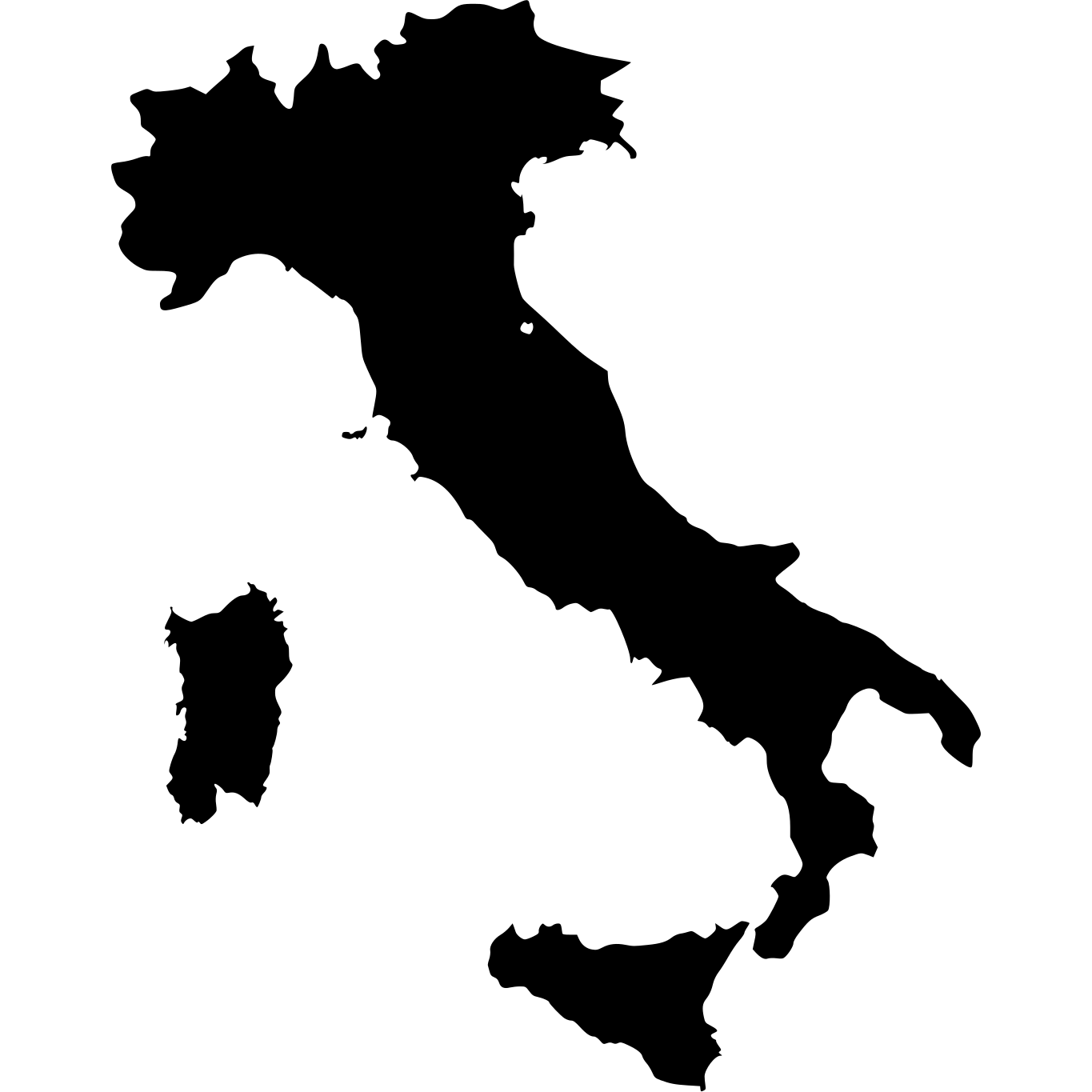
Helan is a Italian brand
30 SPF Rating
With an SPF rating of 30, this product protects against 96.7% of UVB rays
Often compared with

We're dedicated to providing you with the most up-to-date and science-backed ingredient info out there.
The data we've presented on this page has been verified by a member of the SkinSort Team.
Read more about us· Updated July 22, 2025 • Added by lena_skincaring


